


Modern business security cameras have evolved far beyond simple recording devices. Today’s video surveillance systems can deter crime, provide real-time alerts, support investigations, improve workplace safety, and deliver operational insights that help businesses run more efficiently.
However, choosing the right surveillance solution isn’t always straightforward. With countless camera types, storage options, monitoring capabilities, and advanced technologies available, it’s easy to focus on technical specifications while overlooking the factors that have the greatest impact on long-term security performance.
The reality is that the best surveillance system isn’t necessarily the one with the highest resolution or the longest feature list. It’s the one that aligns with your organization’s security goals, integrates with existing infrastructure, and adapts as your business grows.
Whether you’re securing a retail store, warehouse, office building, healthcare facility, educational institution, or multi-site enterprise, understanding the key considerations for business security cameras can help you avoid costly mistakes and build a more effective security strategy.
In this guide, we’ll explore the most important factors every organization should evaluate before investing in a surveillance system.
1. Define Your Security Objectives Before Comparing Cameras
Before reviewing camera models or requesting quotes, identify exactly what you’re trying to accomplish.
Different organizations have different priorities. Some businesses focus on asset protection and theft prevention, while others prioritize employee safety, compliance requirements, access monitoring, or operational oversight.
Questions to Ask
- What assets need protection?
- Where are the highest-risk areas?
- Are you trying to deter incidents or investigate them after they occur?
- Do you need evidence-quality footage for legal or insurance purposes?
- Will multiple locations require centralized monitoring?
Clearly defining your security objectives ensures every surveillance decision supports a specific business goal rather than simply adding technology for technology’s sake.
2. Choose the Right Camera Type for Your Environment
Not all cameras are designed for the same purpose.
Bullet Cameras
Best for:
- Long corridors
- Parking lots
- Perimeter monitoring
- Loading docks
Their visible design can also act as a strong deterrent.
Dome Cameras
Best for:
- Retail stores
- Offices
- Reception areas
- Indoor surveillance
Their discreet appearance makes it difficult for individuals to determine exactly where the camera is pointed.
PTZ Cameras
PTZ cameras (Pan-Tilt-Zoom) allow operators to remotely adjust viewing angles and zoom into incidents in real time.
Ideal for:
- Large facilities
- Campuses
- Warehouses
- Outdoor monitoring
Selecting the right camera type for each area often produces better results than deploying a single model throughout an entire facility.
3. Prioritize Resolution and Image Quality
Image quality directly impacts the usefulness of surveillance footage.
Resolution is often one of the first key considerations for business security cameras because image clarity affects investigations, evidence collection, and incident response.
While 1080p remains common, many organizations now choose 4K cameras for enhanced detail and improved identification capabilities.
Benefits of Higher Resolution
- Improved facial identification
- Better license plate recognition
- More effective incident investigations
- Stronger evidence collection
Keep in mind that higher-resolution footage requires additional bandwidth and storage capacity.
4. Evaluate Low-Light and Night Vision Performance
Many security incidents occur outside normal business hours.
A camera that performs well during daylight but struggles after dark may leave critical gaps in coverage.
Features to Look For
- Night vision
- Infrared technology
- Low-light performance
- Wide Dynamic Range (WDR)
The ability to maintain image clarity in challenging lighting conditions often proves more valuable than raw resolution alone.
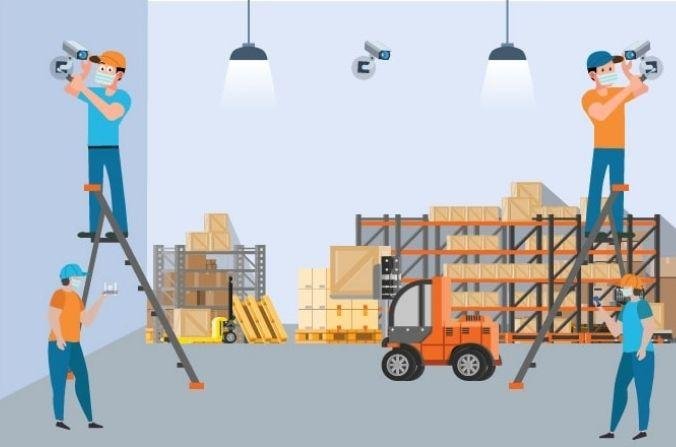
5. Analyze Camera Placement and Coverage Areas
Even the most advanced camera cannot protect areas it cannot see.
Before installation, conduct a coverage assessment to identify:
Critical Monitoring Zones
- Entrances and exits
- Parking lots
- Loading docks
- Cash handling locations
- High-value inventory
- Restricted access zones
Proper camera placement minimizes blind spots and ensures critical areas remain visible during normal operations and emergency situations.
Strategic placement often delivers greater security improvements than simply increasing the number of cameras.
6. Consider Field of View and Lens Selection
Field of View (FOV) determines how much area a camera can monitor.
Wide-Angle Lenses
Benefits:
- Cover larger areas
- Reduce blind spots
- Lower camera counts
Narrow-Angle Lenses
Benefits:
- Capture greater detail
- Improve identification accuracy
- Support long-distance monitoring
The most effective surveillance systems combine different lens types to balance broad surveillance coverage with detailed observation.
7. Determine Whether Remote Monitoring Is Necessary
Modern organizations increasingly require security visibility beyond the physical premises.
Remote monitoring enables authorized personnel to:
- View live video feeds
- Receive alerts
- Investigate incidents
- Manage multiple locations
For businesses operating across multiple facilities, real-time visibility and multi-site monitoring can significantly improve response times and overall security management.
8. Assess AI-Powered Video Analytics Capabilities
AI-powered video analytics have transformed modern surveillance.
Today’s advanced systems can automatically identify and classify events, reducing the burden on security personnel while improving threat detection.
Valuable AI Features
- Person detection
- Vehicle detection
- License plate recognition
- Loitering detection
- Occupancy monitoring
- Object classification
These capabilities help organizations move from reactive investigations to proactive threat detection.
As AI continues to evolve, intelligent analytics are becoming a major differentiator between traditional surveillance systems and modern security platforms.
9. Understand Video Storage Requirements
Video storage strategy is one of the most overlooked aspects of surveillance planning.
Among the most important key considerations for business security cameras is storage planning, which directly impacts retention policies, accessibility, compliance, and long-term operating costs.
Key Questions
- How long should footage be retained?
- Who requires access?
- Are there compliance requirements?
- What are the organization’s investigation needs?
Local Storage
Advantages:
- Direct control
- No recurring cloud fees
- Faster local access
Cloud Storage
Advantages:
- Remote accessibility
- Offsite redundancy
- Easier scalability
Hybrid Storage
Combines cloud storage and local storage for enhanced reliability and flexibility.
For many organizations, hybrid storage provides the strongest balance between resilience and accessibility.
10. Plan for Scalability From Day One
Security needs rarely stay the same.
Businesses grow, facilities expand, and operational requirements evolve.
Consider Future Growth
- Additional cameras
- New locations
- Increased storage requirements
- Expanded monitoring capabilities
Planning for scalability today helps support future growth while reducing the likelihood of expensive system replacements later.
11. Compare Wired, Wireless, and PoE Deployments
Infrastructure requirements play a major role in project success.
Wired Systems
Advantages:
- Reliability
- Consistent performance
- Reduced interference
Wireless Systems
Advantages:
- Faster deployment
- Greater flexibility
- Easier installation
Power over Ethernet (PoE)
Power over Ethernet (PoE) delivers power and data through a single cable, simplifying installation and reducing network infrastructure complexity.
For many commercial environments, PoE provides the ideal balance of performance and deployment efficiency.
12. Evaluate Cybersecurity Protections
As surveillance systems become increasingly connected, cybersecurity becomes a critical consideration.
Business security cameras can become potential attack points if they are not properly secured.
Essential Security Features
- End-to-end encryption
- Multi-factor authentication
- Secure remote access
- User permission controls
- Automatic firmware updates
A secure surveillance platform protects both physical assets and sensitive business data.
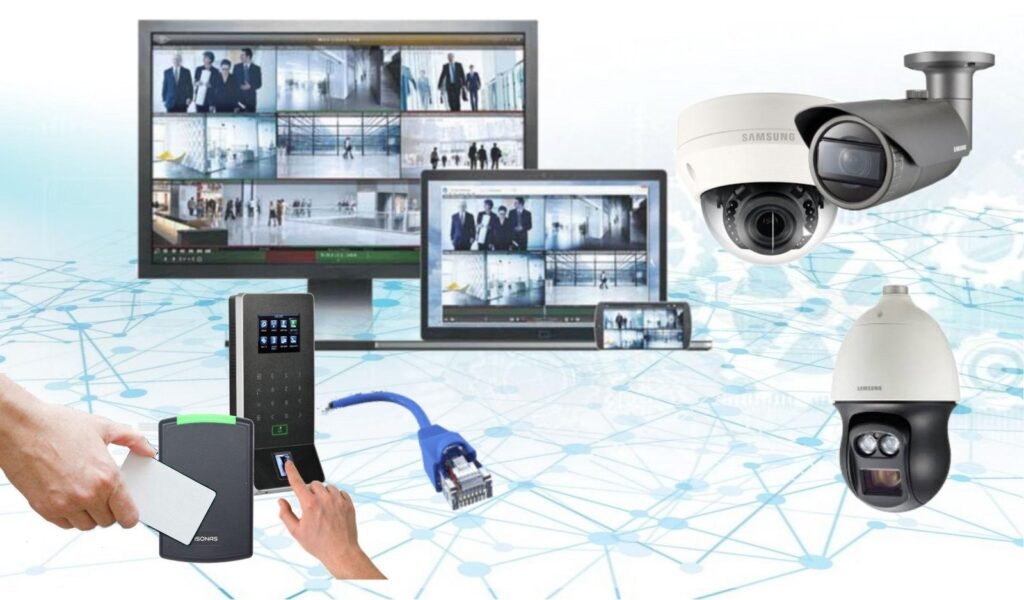
13. Ensure Integration With Other Security Systems
Security cameras deliver greater value when they operate as part of a larger ecosystem.
Modern organizations often integrate surveillance with:
- Access control
- Intrusion detection
- Visitor management
- Intercom systems
- Alarm monitoring services
One of the most important key considerations for business security cameras is how well the surveillance platform integrates with access control, intrusion detection, visitor management, and other security technologies.
A unified security platform improves situational awareness, streamlines operations, and enables faster incident response.
14. Consider Compliance and Privacy Requirements
Businesses must balance security objectives with privacy obligations.
Depending on the industry and location, organizations may need to comply with regulations related to:
- Video retention
- Employee privacy
- Data protection
- Access controls
- Audit requirements
Understanding compliance requirements and privacy regulations early can help prevent legal and operational challenges later.
15. Calculate the Total Cost of Ownership
The initial purchase price represents only part of the investment.
Organizations should evaluate the total cost of ownership rather than focusing solely on upfront expenses.
Include Costs Such As
- Hardware
- Installation
- Maintenance expenses
- Storage subscriptions
- Software licensing
- Future upgrades
Understanding the full financial picture helps organizations make smarter long-term investment decisions.
16. Build a Comprehensive Security Strategy, Not Just a Camera System
One of the biggest mistakes organizations make is treating surveillance as a standalone solution.
Businesses that focus only on camera specifications often overlook several critical key considerations for business security cameras, including integration, cybersecurity, scalability, and operational workflows.
Security cameras are most effective when incorporated into a broader comprehensive security strategy that includes:
- Physical access control
- Threat detection
- Security monitoring
- Incident response
- Cybersecurity protections
The strongest security programs combine technology, processes, and people to create a layered security approach capable of addressing evolving threats.
Rather than asking which camera is best, organizations should ask how surveillance supports their overall security objectives.
How to Select Business Security Cameras That Support Long-Term Growth, Safety, and Operational Resilience
Understanding the key considerations for business security cameras goes far beyond comparing camera specifications. Organizations must evaluate security objectives, camera placement strategies, storage requirements, integration capabilities, cybersecurity protections, and future scalability to build a surveillance system that delivers lasting value.
The most effective video surveillance systems are designed around business outcomes, not just technology features. By taking a strategic approach to planning and deployment, organizations can improve security, reduce vulnerabilities, enhance operational visibility, and maximize the return on their investment.
Whether you’re upgrading an existing system or implementing a new one, focusing on these 16 considerations will help ensure your surveillance solution continues to support your business for years to come.
