


Creating a memorable character has always been one of the most important parts of filmmaking. Whether it is a lead character in a short film, an animated personality, or a recurring digital actor in a series, audiences build connections through familiarity and consistency.
With the growth of AI-assisted filmmaking, creators can now design and develop digital characters faster than ever. However, creating a character once is not the biggest challenge. The real challenge is maintaining that character’s identity across multiple scenes, episodes, and storytelling moments.
A character appearing in one scene should look the same in the next. Their face, hairstyle, clothing, personality, expressions, and movement style need to remain consistent throughout the project.
Traditional filmmaking manages this through costume references, character design documents, continuity teams, and detailed production notes. AI filmmaking workflows are now bringing similar ideas into digital production through character sheets, reference images, and connected creative processes.
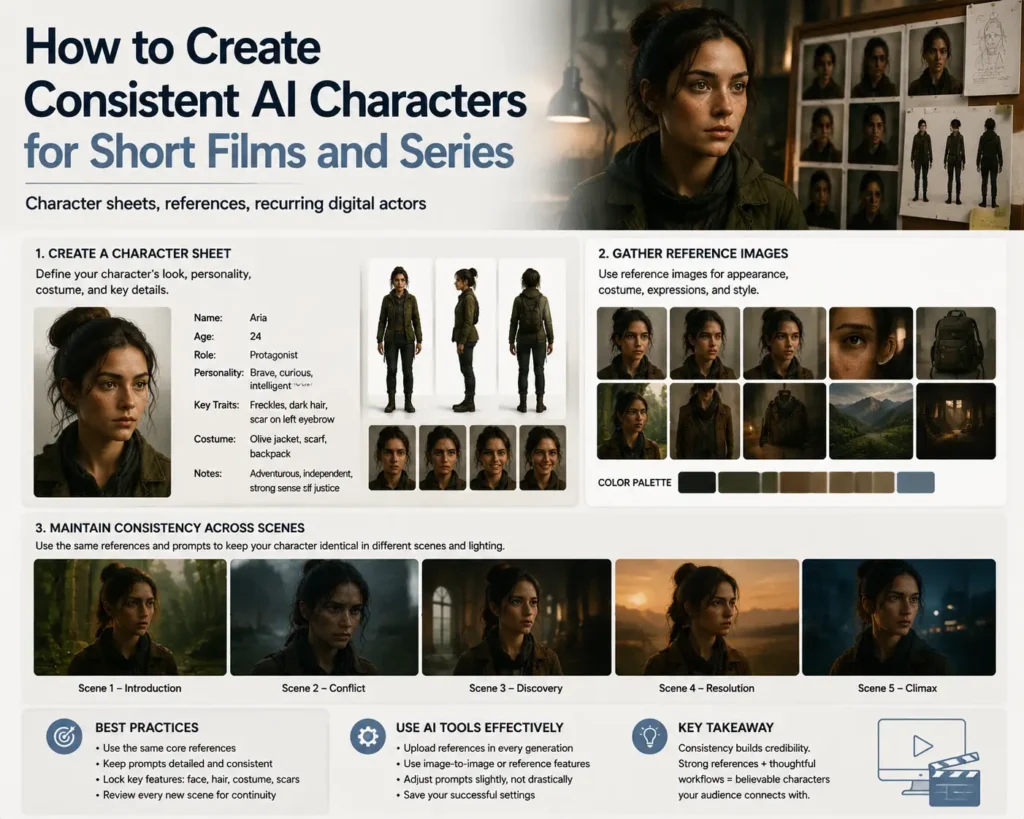
For creators making short films and series, consistent AI characters are becoming essential for building stories that feel professional, immersive, and emotionally engaging.
Why Character Consistency Matters in AI Filmmaking
A strong character is more than just a visual design. Their appearance, behavior, and personality work together to create a recognizable identity.
In traditional productions, viewers naturally expect the same actor to appear consistent from one scene to another. The same expectation applies to AI-generated characters.
If a digital character changes between scenes, audiences may notice differences in:
- Facial structure
- Hair and clothing
- Age and appearance
- Body proportions
- Expressions and emotions
- Overall visual style
These inconsistencies can interrupt storytelling and make the character feel less believable.
For short films and episodic content, this becomes even more important because characters often appear repeatedly across different locations, timelines, and emotional moments.
Building a Strong Character Sheet Before Generation
One of the most effective ways to maintain AI character consistency is by creating a detailed character sheet before production begins.
A character sheet acts as a visual and creative reference that defines who the character is. Instead of relying on a simple text prompt every time, creators can establish a complete identity that can guide future scenes.
A useful character sheet may include details about:
- Facial features
- Hairstyle and color
- Clothing style
- Body type
- Age appearance
- Personality traits
- Emotional expressions
- Movement style
For example, a science fiction character may require specific clothing details, futuristic accessories, and a consistent visual style throughout an entire series. A character sheet helps ensure these elements remain stable.
Using Reference Images to Maintain Visual Identity
Reference images play an important role in AI character creation. They provide visual guidance that helps AI systems understand what the character should look like.
Instead of generating every scene from a completely new prompt, creators can use references to maintain continuity.
This is especially useful when creating:
- Multiple episodes
- Different camera angles
- Emotional scenes
- Action sequences
- New environments
A character should remain recognizable whether they appear in a close-up shot, a wide cinematic scene, or a completely different location.
Strong references help bridge the gap between creative ideas and consistent visual output.
Creating Recurring Digital Actors for Stories
AI characters are increasingly being used as recurring digital actors in short films, series, and branded storytelling.
Unlike one-time generated characters, recurring digital actors need a stronger identity. They need to feel like the same individual across every appearance.
This requires consistency in both appearance and performance.
A recurring AI character should maintain:
- The same visual identity
- Similar voice characteristics
- Consistent personality traits
- Stable emotional behavior
- Recognizable movement patterns
When these elements remain consistent, audiences can develop a connection with digital characters in the same way they connect with traditional actors.
How AI Workflows Help Maintain Character Identity
Creating a consistent character involves managing many creative elements at the same time. Filmmakers need to think about character appearance, scene design, camera choices, lighting, and storytelling direction together.
AI workflows are helping creators manage these elements in a more connected way.
Invideo Agent supports this type of AI-assisted filmmaking workflow by helping creators move from ideas and references to complete video projects. For character-driven stories, it can help maintain creative direction across scenes by connecting visual development, scene creation, editing, and refinement.
This approach is useful for short films and series where the same character needs to appear repeatedly while maintaining a consistent identity throughout the story.
With invideo Agent Two, creators working on larger narrative projects can manage more complex workflows by coordinating different creative areas such as visual planning, cinematography, story development, and effects. This helps teams maintain alignment when building multi-scene stories with recurring characters and detailed worlds.
Maintaining Character Consistency Across Different Scenes
A character may appear in many different situations throughout a story. They may move between locations, experience different emotions, or interact with different characters.
The challenge is ensuring that changes in the scene do not change the character itself.
For example, a character shown in a quiet indoor conversation should still feel like the same person during an outdoor action sequence. Their appearance, personality, and visual style should remain recognizable even when the environment changes.
AI-assisted workflows can help creators track these details and maintain a stronger connection between different scenes.
The Role of Style References in AI Character Creation
Character consistency is not only about the character itself. The surrounding visual style also affects how audiences perceive them.
A character created with a cinematic, realistic style may feel completely different if placed into a cartoon-like environment in the next scene.
Style references help maintain consistency in areas such as:
- Lighting
- Color palette
- Camera style
- Environment design
- Overall visual tone
For short films and series, a consistent visual language helps create a more immersive world.
Creating Emotional Consistency in AI Characters
Visual consistency alone is not enough. Characters also need emotional continuity.
A character who behaves differently in every scene may feel artificial, even if their appearance remains unchanged.
Creators need to define how the character reacts, communicates, and expresses emotions.
For example, a serious character should maintain similar personality traits throughout the story, while a humorous character should have a recognizable style of interaction.
AI tools can support character creation, but human storytelling decisions remain essential for developing believable personalities.
Challenges of Creating Consistent AI Characters
Although AI character creation has improved significantly, challenges still remain.
Long-form storytelling requires stronger control over character identity because small inconsistencies can become more noticeable over time.
Some common challenges include:
- Maintaining the same face across scenes
- Keeping clothing details accurate
- Preserving personality traits
- Matching expressions with emotions
- Creating natural movement
Successful AI filmmaking requires a combination of strong references, creative planning, and consistent workflows.
The Future of AI Characters in Film and Series
AI characters are moving beyond simple generated visuals. Future workflows will focus on creating complete digital performers with consistent appearances, personalities, and storytelling abilities.
Filmmakers will be able to develop characters that exist across multiple episodes, campaigns, and creative projects while maintaining the same identity.
As AI filmmaking tools become more advanced, creators will have more freedom to build larger worlds and tell stories with digital actors that feel connected and believable.
Final Thoughts
Creating consistent AI characters requires more than generating a good-looking image. It requires careful planning, strong references, character sheets, and workflows that maintain identity throughout production.
For short films and series, character continuity is what transforms a digital creation into a believable performer.
AI tools are making this process more accessible by helping creators manage visual consistency, develop recurring digital actors, and build richer stories. The combination of AI-assisted workflows and human storytelling will continue to shape how characters are created and experienced in the future of filmmaking.
