

Managing inventory is one of the biggest challenges for modern businesses, especially in manufacturing, warehousing, and industrial operations. From raw materials to finished products, every item must be tracked accurately to avoid delays, losses, and unnecessary costs. This is where industrial inventory management software becomes a game-changer.
Today, businesses cannot rely on spreadsheets or manual tracking methods alone. They need smarter systems that improve visibility, automate processes, and reduce human error. With the right inventory management tools, companies can improve productivity, optimize stock levels, and maintain smooth production cycles.
Whether you run a manufacturing plant, warehouse, or distribution center, using an advanced inventory tracking system helps you stay competitive in a fast-moving market.
What Is Industrial Inventory Management Software?
Industrial inventory management software is a digital solution designed to monitor, organize, and control inventory across industrial operations. It helps businesses manage raw materials, spare parts, finished goods, warehouse stock, and supply chain movement in real time.
Unlike basic inventory systems, industrial solutions are built to handle complex workflows such as:
- Multi-location warehouse management
- Production inventory management
- Supply chain coordination
- Barcode and RFID tracking
- Vendor and purchase order management
- Real-time stock visibility
This software helps businesses reduce waste, prevent stockouts, and improve operational efficiency.
Why Traditional Inventory Methods No Longer Work
Many businesses still use spreadsheets, handwritten logs, or outdated systems to manage inventory. While this may work for small operations, it creates major problems as businesses grow.
Some common issues include:
1. Human Errors
Manual data entry often leads to mistakes like incorrect stock counts, duplicate records, or missing items.
2. Lack of Real-Time Visibility
Without a live inventory tracking system, businesses struggle to know current stock levels, causing overstocking or shortages.
3. Delayed Production
Poor production inventory management can lead to missing raw materials, which slows down manufacturing schedules.
4. Increased Costs
Holding too much stock ties up capital, while too little stock creates urgent purchasing expenses.
5. Poor Decision-Making
Without accurate reports, managers cannot make informed purchasing or production decisions.
This is why modern businesses are shifting toward the best inventory control software to improve efficiency and reduce risk.
Key Ways Industrial Inventory Management Software Helps Modern Businesses
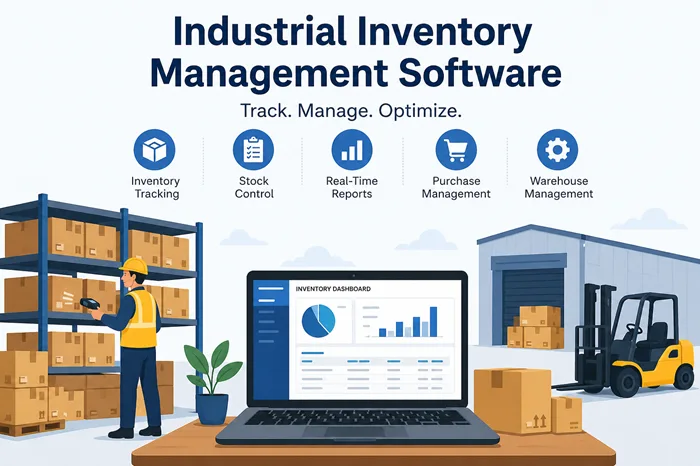
Let’s look at the biggest advantages of implementing industrial inventory management software.
1. Real-Time Inventory Visibility
One of the most valuable benefits is complete visibility across your inventory.
With a powerful inventory tracking system, businesses can monitor:
- Current stock levels
- Incoming shipments
- Outgoing orders
- Raw material usage
- Warehouse movement
- Product availability
This real-time access helps teams make faster and smarter decisions.
For example, if stock levels drop below a set threshold, the system can automatically trigger reorder alerts.
This prevents disruptions and improves overall inventory management efficiency.
2. Better Production Inventory Management
Manufacturers depend heavily on accurate stock planning. If raw materials are unavailable, production stops.
Strong production inventory management ensures:
- Materials are available when needed
- Production schedules stay on track
- Finished goods are delivered on time
- Waste and downtime are minimized
Industrial inventory software helps businesses connect inventory directly with production planning.
This improves workflow coordination and supports lean manufacturing practices.
For businesses focused on manufacturing excellence, this feature is essential.
3. Reduced Human Errors
Manual inventory handling increases the risk of costly mistakes.
Modern software uses automation tools like:
- Barcode scanning
- RFID technology
- Automated stock updates
- Purchase order syncing
- Batch and serial number tracking
This significantly reduces human intervention and improves data accuracy.
When inventory data is accurate, businesses can trust their reports and avoid expensive operational errors.
This is one reason companies invest in the best inventory control software available.
4. Improved Warehouse Efficiency
Warehouse performance directly impacts customer satisfaction and profitability.
Industrial inventory systems improve warehouse operations by helping with:
- Faster stock locating
- Organized storage planning
- Accurate picking and packing
- Shipment tracking
- Reduced handling delays
A reliable inventory tracking system ensures every product is in the right place at the right time.
This leads to smoother workflows and better team productivity.
5. Cost Reduction and Better Cash Flow
Poor inventory planning leads to wasted money.
Common problems include:
- Overstocking
- Dead stock
- Emergency purchasing
- Storage costs
- Expired inventory
With better inventory management, businesses can maintain optimal stock levels and reduce unnecessary expenses.
This improves cash flow because money is not trapped in excess inventory.
Smart purchasing decisions also help businesses negotiate better supplier contracts.
6. Stronger Supply Chain Control
Industrial businesses often work with multiple suppliers, warehouses, and distribution channels.
Inventory software helps centralize supply chain operations by managing:
- Supplier performance
- Purchase orders
- Vendor lead times
- Delivery tracking
- Demand forecasting
This improves planning and helps businesses respond quickly to market changes.
A connected system makes supply chain operations more predictable and efficient.
7. Data-Driven Decision Making
Modern businesses rely on analytics to stay competitive.
The best inventory control software provides reports such as:
- Inventory turnover rates
- Stock valuation
- Supplier performance reports
- Demand forecasting
- Production planning insights
- Purchase trends
These reports help managers make strategic decisions instead of relying on guesswork.
This improves both short-term operations and long-term business planning.
Essential Features to Look for in the Best Inventory Control Software
Not all software solutions offer the same value. When choosing the best inventory control software, businesses should look for these essential features.
1. Real-Time Inventory Tracking
Live inventory updates are critical for fast decision-making.
A strong inventory tracking system should provide accurate stock visibility across all locations.
2. Barcode and RFID Integration
Automation improves speed and accuracy.
Barcode and RFID support reduce manual work and improve warehouse operations.
3. Proti-Warehouse Support
For businesses with multiple locations, centralized stock management is essential.
This improves control and reporting across operations.
5. Automated Reordering
Automatic reorder points prevent stockouts and improve supplier coordination.
This keeps operations running smoothly.
6. Reportingration
The software should integrate easily with ERP, accounting, and procurement systems.
This creates a seamless business workflow.
Industries That Benefit Most from Industrial Inventory Management Software
Many industries depend heavily on inventory accuracy because even small mistakes can lead to delays, financial losses, and operational disruptions. Industrial inventory management software plays a major role in helping these businesses maintain smooth workflows and better stock control.
In the manufacturing industry, inventory software is essential for managing raw materials, work-in-progress items, and finished goods. It helps ensure that production lines continue without interruption and that materials are always available when needed.
Warehousing businesses also benefit greatly from strong inventory systems. Efficient storage, faster picking and packing, and accurate shipping all depend on a reliable inventory process. A good system improves warehouse productivity and reduces delays.
The automotive industry relies on inventory accuracy for spare parts and component tracking. Since even one missing part can delay production or repairs, having a strong inventory management system is critical for smooth operations.
In pharmaceuticals, inventory control is even more important because businesses must manage batch tracking, regulatory compliance, and product expiry dates. Accurate monitoring helps maintain safety standards and prevents costly losses.
The food and beverage industry depends on proper stock rotation and shelf-life management. Inventory software helps businesses reduce waste, track expiration dates, and ensure fresh product availability.
Construction companies also benefit from industrial inventory management software by managing equipment, tools, and project materials across multiple job sites. This improves project planning and reduces unnecessary purchasing.
Each industry has unique operational needs, which is why customized inventory management solutions are important for achieving better efficiency and long-term success.
How Small and Medium Businesses Benefit Too
Many people assume industrial inventory software is only for large enterprises.
That is no longer true.
Small and medium businesses also benefit through:
- Reduced manual workload
- Better inventory accuracy
- Lower operational costs
- Improved customer satisfaction
- Faster order fulfillment
- Better production planning
Cloud-based solutions make advanced inventory tracking systems affordable and scalable for growing businesses.
Even startups can now access the best inventory control software without heavy upfront investment.
Common Mistakes Businesses Make When Choosing Inventory Software
Choosing the wrong system can create new problems instead of solving old ones.
Avoid these common mistakes:
Ignoring Scalability
Choose software that grows with your business.
Focusing Only on Price
Cheap software often lacks important features.
No Production Integration
Manufacturers must prioritize strong production inventory management capabilities.
Poor User Experience
Complex systems reduce adoption among employees.
Lack of Support
Reliable vendor support is critical for smooth implementation.
The right solution should fit your business needs—not just your budget.
Future Trends in Industrial Inventory Management
Inventory technology continues to evolve as businesses look for smarter and faster ways to manage stock. Modern industrial operations require more than basic tracking they need advanced systems that improve forecasting, automation, and decision-making. This is why new technologies are shaping the future of inventory management.
One of the most important trends is AI-powered forecasting. Artificial intelligence helps businesses analyze past sales, seasonal demand, and purchasing patterns to improve stock planning. This reduces overstocking and prevents shortages by making demand forecasting more accurate.
IoT integration is another major development in industrial inventory management. Smart sensors and connected devices can automatically track inventory movement, monitor warehouse conditions, and provide real-time updates without manual effort. This improves accuracy and speeds up operations.
Mobile inventory management is also becoming more popular. Teams can now manage stock, approve purchase orders, and track inventory directly from smartphones and tablets. This improves flexibility and helps staff respond quickly from anywhere.
Cloud-based systems are transforming how businesses access inventory data. Cloud platforms make inventory management more scalable, secure, and accessible across multiple locations. They also reduce the need for expensive on-site infrastructure.
Predictive analytics is helping businesses solve problems before they happen. By identifying patterns and risks early, companies can prevent stock shortages, supplier delays, and production disruptions before they impact operations.
Modern businesses that adopt these responsibilities stay ahead of competitors by improving efficiency, reducing costs, and building stronger inventory systems for long-term growth.
Final Thoughts
Industrial inventory management software is no longer optional it is essential for businesses that want to stay efficient, profitable, and competitive.
From real-time stock visibility to better production inventory management, the benefits are significant. Companies can reduce waste, improve warehouse performance, strengthen supply chains, and make smarter decisions with reliable data.
Whether you are searching for a better inventory tracking system or evaluating the best inventory control software, choosing the right solution can transform your operations.
Strong inventory management is the foundation of successful industrial growth. Businesses that invest in smarter inventory systems today will be better prepared for tomorrow’s challenges.
If your company still relies on outdated tracking methods, now is the right time to upgrade and unlock long-term operational success.
FAQs About Industrial Inventory Management Software
1. What is industrial inventory management software?
Industrial inventory management software is a digital solution used to track, control, and manage inventory across manufacturing plants, warehouses, and industrial operations. It helps businesses monitor raw materials, spare parts, finished goods, and stock movement in real time. This improves overall inventory management and reduces manual errors.
2. Why is an inventory tracking system important for modern businesses?
An inventory tracking system helps businesses maintain accurate stock levels, avoid shortages, and reduce overstocking. It provides real-time visibility into inventory movement, making it easier to plan purchases, improve warehouse efficiency, and support smooth production operations.
3. How does production inventory management improve manufacturing?
Production inventory management ensures that raw materials and components are available exactly when needed for manufacturing. This prevents production delays, reduces downtime, and improves delivery schedules. It also helps manufacturers reduce waste and improve cost control.
4. What features should I look for in the best inventory control software?
The best inventory control software should include real-time tracking, barcode scanning, RFID support, automated reordering, multi-location warehouse management, reporting tools, and ERP integration. For manufacturers, strong production planning and inventory forecasting features are also important.
5. Can small businesses use industrial inventory management software?
Yes, small and medium-sized businesses can benefit greatly from industrial inventory management software. Cloud-based solutions make advanced inventory management tools affordable and scalable. Small businesses can improve stock accuracy, reduce costs, and increase operational efficiency without large upfront investments.
6. How does inventory management software reduce business costs?
Good inventory management software helps businesses avoid overstocking, stock shortages, dead stock, and emergency purchases. It improves stock planning, reduces storage costs, and frees up cash flow by maintaining optimal inventory levels.
7. Is inventory management software useful for multiple warehouses?
Yes, most modern systems support multi-location inventory control. A strong inventory tracking system allows businesses to manage stock across multiple warehouses from one central platform. This improves visibility, coordination, and reporting accuracy.
8. How do I choose the best inventory control software for my business?
Start by identifying your business needs, such as warehouse size, production requirements, reporting needs, and supply chain complexity. Choose the best inventory control software that offers scalability, automation, easy integration, and strong customer support rather than focusing only on price.
9. What industries benefit most from industrial inventory management software?
Industries like manufacturing, warehousing, automotive, pharmaceuticals, food and beverage, and construction benefit greatly from advanced inventory management systems. These industries require accurate stock control to maintain efficiency and avoid costly delays.
10. Can inventory software integrate with ERP systems?
Yes, most advanced inventory systems integrate with ERP, accounting, procurement, and finance software. This creates a connected workflow across departments and improves business efficiency, especially in large-scale industrial operations.
