
Author: Shabir Ahmad

  • The Future of DevOps and Agile in Software Development for current businesses.

    The Future of DevOps and Agile in Software Development for current businesses.

    Today’s businesses must create software products that need to meet two requirements which demand high-quality performance and flexible expandable capabilities. The development process needs to implement DevOps and Agile in software development methodologies. The combination of Agile’s iterative process with DevOps’ collaborative automated system and continuous integration method enables organizations to shorten development time and eliminate development flaws while meeting market demands.

    These two methods work together to deliver products more quickly while making products more stable and improving teamwork efficiency throughout the organization. Businesses need to invest in more than just ready-made solutions if they want to maintain their market position. 

    An early Custom software development services help businesses create specific software solutions which meet their operational requirements and support their future business objectives. Through the combination of DevOps and Agile methods into custom systems businesses gain the ability to expand their operations while developing new capabilities which will help them succeed in the rapidly changing technology environment.

    Understanding DevOps and Agile in Software Growth
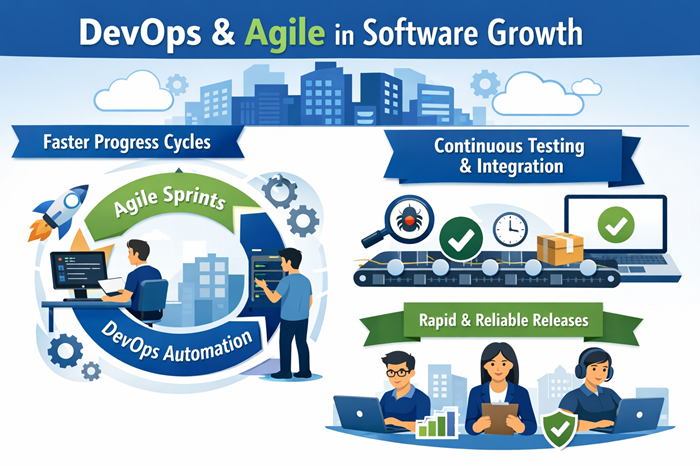
    DevOps and Agile in software growth

    Modern DevOps and Agile in software development methods as essential building blocks for their development processes. Agile development uses iterative processes together with ongoing feedback and flexible methods while DevOps development requires development teams and their operational partners to work together through automated systems and continuous integration. The two methods create an unbroken workflow which enables faster product delivery without sacrificing quality or trustworthiness.

    Organizations that implement Agile DevOps practices, along with Cloud Software Solutions, will experience increased efficiency and project scalability across their software development work particularly when supported by a SaaS Development Company. The system provides its main benefits through three different advantages which it delivers to users.. 

    Faster Progress Cycles: The mixture of Agile sprints with DevOps automated processes allows teams to release features and updates at high speed.

    Continuous Testing and Integration: The combination of automated testing with CI or CD pipelines enables early error detection which leads to dependable software results. 

    The Growing Popularity Of Agile DevOps Practices In Business Operations

    Organizations today experience increasing success through their implementation of DevOps and Agile in Software Development to achieve faster product delivery and better software quality. Businesses that implement Agile DevOps methods gain the ability to adapt to new market conditions while they improve team collaboration and decrease deployment errors. The integrated approach establishes direct communication between development teams testing teams and operations teams which enables their work to progress without interruptions while building a system that continuously generates feedback to achieve greater innovation and efficiency.

    The key advantages that organizations gain from implementing Agile DevOps practices include the following benefits – 

    The implementation of iterative development cycles enables companies to achieve quick feature releases which results in faster time-to-market. 

    The synchronization between developers and testers and operations teams improves their work efficiency by eliminating operational boundaries. 

    The main benefits of Agile DevOps practices frameworks are listed below

    1. Faster Time-to-Market

    The companies must deliver software updates because their development process requires extended time periods for completion. 

    2. Regulatory Improvement

    The teams use ongoing user feedback to create improved products through their continuous feedback process.

    3. Better Collaboration 

    Developers and testers and operations teams work together instead of using separate operational boundaries.

    4. Improved Software Quality

    Continuous checking ensures that bugs and performance problems are addressed early.

    5. Increase Customer fulfillment

    Common updates allow companies to deliver features that customers actually want.

    Organizations that use DevOps for enterprise software development experience better development productivity and improved business results.

    The Role of DevOps in Scalable Software Growth 

    As businesses grow their software systems need to manage higher demands which include more users and additional data. This is where scalable software development becomes critical.

    DevOps enables organizations to scale their operations through its three core functions which include automation and monitoring and infrastructure management.

    Key ways DevOps supports scalability include:

    Automation of Development Processes

    Automated testing and integration and deployment processes eliminate the need for manual work while they also decrease the possibility of errors.

    Continuous Integration and Continuous Delivery(CI or CD)

    Developers use CI/CD pipelines to frequently combine their updated code which enables them to release new software versions within a short time period.

    Infrastructure as Code (IaC)

    Organizations can use programming to manage and expand their infrastructure which enables them to maintain operational uniformity throughout their different computing environments.

    Real-Time Monitoring

    DevOps tools provide teams with application performance monitoring capabilities which help them find application issues before these problems impact user experience.

    The Key Technologies Which Define DevOps Future Development

    Emerging technologies which improve automation capabilities and intelligent systems and operational effectiveness will determine the future of DevOps and Agile in Software Development.

    The most important technologies which shape the present and upcoming future include the following technologies:

    AI and Machine Learning

    AI-powered tools can analyze code quality, predict system failures and automate testing processes. Teams extending this automation into agent behavior can also use RL environments to evaluate whether iterative changes improve task performance.

    Cloud-Native Development

    Cloud platforms enable developers to create applications with instant access to scalable infrastructure resources.

    Containerization and Microservices

    Developers use container and microservice technologies to create applications that can grow and function independently through their component parts.

    Infrastructure Automation

    Deployments become more efficient and dependable through the use of tools that handle infrastructure management tasks automatically.

    The Growing vital of Custom Software Development

    Custom software development services & Solutions have become increasingly vital because businesses need specialized software solutions that match their particular working needs and corporate goals

    This is where custom software development services become essential. 

    Custom solutions offer several advantages. 

    Software designed specifically for business processes. 

    The system provides organizations with increased flexibility to expand their operations and control their software resources. The system enables organizations to connect their current software solutions. 

    The system protects data while delivering superior operational capabilities. The system delivers cost benefits to organizations throughout their entire operational lifespan.

    Challenges in Performing DevOps and Agile

    Organizations face difficulties when they try to implement method DevOps and Agile for software development work even though these methods provide advantages.

    Common challenges include:

    Cultural Resistance

    Traditional development teams will oppose any new collaborative methods which they have not previously used.

    Skill Gaps

    DevOps professionals need to learn three specific areas which include automation tools, cloud platforms and CI/CD pipeline implementation. For businesses that face these skill gaps, the most practical solution is to Hire DevOps Engineers, experienced professionals who bring ready-made expertise in CI/CD pipelines, cloud infrastructure, and automation tools from day one.

    Integration Complexity

    The process of integrating new DevOps tools with existing legacy systems creates major challenges.

    Security Concerns

    Fast development processes need complete security measures which stop potential weaknesses from emerging.

    Upcoming Trends in Agile and DevOps

    The upcoming trends in Agile and DevOps will determine the future development of software creation. The upcoming software development process will rely on changing DevOps and Agile work methods. 

    The following trends are currently developing in the market: 

    DevSecOps Integration

    Development pipelines will achieve full security integration through security practices. 

    AI-Powered Development Automation

    The development process will receive automated testing and code review and deployment through AI tools.

    Platform Engineering

    The engineering teams will utilize internal development platforms to enhance their work management process. 

    Low-Code and No-Code Growth 

    These platforms will enable application development through their low coding requirements which allow users to build applications. 

    Continuous Everything 

    All development and testing and monitoring and security functions will become permanent processes. 

    The new innovations will improve scalable software development capabilities which enable businesses to develop new products at a faster pace while providing superior digital customer experiences.

    Conclusion 

    Businesses that want to achieve efficient operations and create new products should adopt both DevOps and Agile methods in software development processes. The implementation of Agile DevOps practices enables organizations to deliver products faster because their teams work together better while maintaining software quality. Companies that work with professionals from custom software development services can create flexible software solutions which adapt to changing market needs, enabling them to succeed in the current digital business environment. 

  • What Actually Speeds Up Website Creation for businesses in [this_year]

    What Actually Speeds Up Website Creation for businesses in [this_year]

    Building a website faster isn’t just about typing code more quickly. In [this_year], the teams and solo builders who consistently ship on time are doing a few specific things differently and most of it has nothing to do with raw technical skill. It’s about how they plan, what they reuse, and where they let tools handle the repetitive work so they can focus on the decisions that actually matter. 

    Why Website Development Still Takes Too Long 

    work on website creation

    Despite better tools than ever, most website projects still run over schedule. The reasons haven’t changed much: unclear requirements, too many revision cycles, and a tendency to solve problems from scratch that have already been solved a hundred times before. 

    Scope creep is the most common culprit. A project starts as a five-page site and quietly becomes twelve pages with custom animations and third-party integrations nobody planned for. By the time anyone notices, the timeline is already broken. 

    The second issue is tool overload. Developers now have access to more frameworks, plugins, and platforms than ever before and choosing between them takes time. Picking the wrong stack early can cost weeks of rework later. Speed starts with making fewer bad decisions up front, not just executing faster once you’ve started. 

    Better Planning Is Now a Bigger Time-Saver Than Better Coding 

    The fastest website projects in [this_year] aren’t the ones with the best developers they’re the ones where everyone agreed on what was being built before anyone opened a code editor. 

    A solid planning phase includes a clear sitemap, defined content requirements, and agreed-upon design direction before development begins. When developers know exactly what each page needs to do, they don’t waste time building placeholder sections or waiting for copy to arrive. 

    Wireframing tools and collaborative design platforms have made this easier. A shared prototype that clients can click through and approve early prevents the most expensive kind of rework: changing something that’s already been built. 

    Even for solo builders, spending a day mapping out the full project before writing a single line of code consistently results in shorter total build times. The upfront investment pays back quickly. 

    Reusable Components Cut Production Time Across the Whole Project 

    Component-based development isn’t new, but the discipline around it has improved significantly. Teams that maintain a well-organized library of reusable UI components buttons, cards, navigation patterns, form layouts can assemble new pages in a fraction of the time it takes to build from scratch. 

    The key word is “maintained.” A component library that’s outdated or inconsistently built creates more problems than it solves. The investment is in keeping it clean and documented so anyone on the team can use it without guessing. 

    Design systems work the same way. When typography, spacing, colors, and interactive states are defined once and applied consistently, designers and developers stop re-solving the same visual problems on every project. 

    For smaller projects, even a lightweight set of reusable blocks a hero section, a feature grid, a testimonial layout can cut build time in half compared to starting fresh every time. 

    AI Helps Most When It Supports Workflow, Not When It Replaces It 

    AI in website creation

    AI tools have found a real place in website creation, but not quite in the way the early hype suggested. The biggest gains don’t come from fully automated builds they come from AI handling the parts of the process that are slow and repetitive, while humans stay in control of the decisions that shape the final result. 

    Generating a starter layout, drafting placeholder copy, or suggesting component structures are all tasks where AI genuinely saves time. Tools like an AI website builder are most effective when they’re used to eliminate the blank-page problem giving builders a structured starting point they can refine, rather than a finished product they’re supposed to just accept. 

    Where AI tends to slow things down is when it’s used to make decisions it’s not well-suited to make: brand direction, content strategy, UX choices that depend on knowing the audience. Treating AI output as a first draft rather than a final answer keeps the workflow moving without sacrificing quality. 

    The teams getting the most out of AI in 2026 are the ones who’ve identified exactly which parts of their process benefit from automation and protected the parts that don’t. 

    Choosing the Right CMS and Tech Stack Prevents Slowdowns Later 

    The technology decisions made at the start of a project have a disproportionate impact on how fast everything goes afterward. A CMS that’s well-matched to the client’s content model makes updates straightforward. One that’s a poor fit turns every change into a workaround. 

    The same applies to the broader tech stack. Using a framework your team knows well is almost always faster than adopting something new for the sake of it. The performance gains from the latest tooling rarely outweigh the ramp-up cost when a deadline is involved. For businesses in the print space, choosing the right foundation matters even more, platforms like DesignNBuy are purpose-built web to print storefront solution that eliminate the need to bolt on complex customization layers to a generic CMS. 

    Hosting and deployment choices matter too. Projects that use automated CI/CD pipelines spend less time on manual updates and catch errors earlier. Setting this up properly at the start of a project is overhead that pays off every single time something needs to change. 

    The goal isn’t to use the most impressive stack — it’s to use the one that creates the fewest surprises between kickoff and launch. 

    Conclusion 

    Speed in website creation comes from removing friction, not from working harder. Better planning eliminates expensive rework. Reusable components reduce repetitive work. AI handles the tedious parts so builders can focus on the meaningful ones. And the right tech stack keeps things running smoothly from start to finish. 

    None of these are dramatic breakthroughs — they’re disciplined habits that compound across every project. In 2026, the builders who ship fastest aren’t necessarily the most talented. They’re the most organized. 

    FAQ 

    1. What is the single biggest time-waster in website projects? 

    Unclear requirements at the start. When the scope isn’t defined before development begins, teams end up rebuilding sections multiple times to match shifting expectations. A thorough planning phase — even a short one eliminates more wasted hours than any tool or shortcut applied later in the process. 

    2. How much time can AI realistically save in website creation? 

    It depends heavily on how it’s used. For generating starter layouts, writing initial copy, or producing boilerplate code, AI can cut early-stage work by 30–50%. But those gains disappear quickly if the output isn’t reviewed carefully. The net time saved is real — as long as AI is treated as a starting point, not a finished deliverable. 

    3. Is it worth building a component library for a small project? 

    For a one-off site, probably not. But if you build more than two or three websites a year, even a lightweight component library pays for itself quickly. Start small — a consistent button style, a card layout, a responsive navigation — and grow it project by project. The time savings compound the more you use it. 

  • How to Win the Dubai Mobile Commerce Market with the Right App Strategy

    How to Win the Dubai Mobile Commerce Market with the Right App Strategy

    A Friday afternoon used to be a visit to Carrefour or Spinneys; now, it would more likely be an interaction of a half-minute with a mobile application – and delivery to the door before the next episode of the show. It was not an anomaly that occurred after the pandemic and in a reversed manner. It sped up, made a mass shift, and became the default behavior of a generation of urban UAE consumers who have simply determined that physical shopping of groceries is an unproductive utilization of their time.

    mobile display and cart

    The Market Opportunity Is Extraordinary and Still Early

    The grocery and beverage category is predicted to have 15.2% CAGR until 2030, which is the fastest growth of any product category in the UAE eCommerce due to an increase in quick commerce, meal delivery apps, and social media-driven grocery trends that have shifted the norm toward ordering groceries and meals online rather than going to stores.

    The UAE online grocery market was USD 3.43 billion, and is expected to grow to USD 18.35 billion by 2024, with a 20.5% CAGR, one of the highest growth rates of any grocery market in the world.

    The UAE quick commerce market is dominated by grocery and essentials, and has a 45% share in 2026 because of the buying behavior that is frequent and based on everyday household needs; consumers like quick delivery of fresh groceries, packaged items, beverages, and household supplies that need to be renewed on a regular basis.

    For grocery brands operating in the UAE, the strategic response to this shift is clear: the app is no longer a secondary sales channel. It is the primary one. Investing in the right mobile commerce app development built around speed, personalisation, and frictionless checkout is no longer optional for brands that want to compete for the UAE’s digitally native grocery shoppers.

    This is not a market that is entering the maturity stage of a brand dealing with grocery in the UAE. It remains a market that is in its most commercially explosive stage yet, and those that are developing the proper mobile commerce infrastructure at this time are acquiring the customer relationships, purchase data, and app loyalty that will be market leadership in the next 10 years.

    The Infrastructure Shift That Changes Everything

    The competitive environment of mobile commerce in the UAE grocery industry changed radically in April 2025, when a major infrastructural investment redefined the economic dynamics of last-mile delivery in the nation.

    The April 2025 ADNOC-Noon agreement transformed 50 fuel stations into micro-fulfillment centers, meaning that 15-minute coverage over large catchment zones was achieved – a move which both broadened the reach of Noon with regard to quick commerce, and also established a new standard of speed of delivery, answering which all competing grocery applications must now react.

    During 2024-2025, an estimated USD 1.2b of eCommerce and logistics investments were made by Abu Dhabi Investment Authority and Mubadala, underwriting the automation, cold-chain upgrades, and fleet electrification, which are now starting to compress down the per-order economics of fast delivery and result in 15-minute grocery fulfillment becoming commercially viable over a larger geographic area than at any point in history.

    This change in infrastructure is a threat as well as an opportunity for independent grocery brands to develop their mobile commerce development strategy. The threat: Individual brands cannot implement infrastructure on the scale presented by Talabat, Noon, and Amazon Fresh. The opportunity: the app loyalty, brand attachment, and first-party information that these marketplace sites will never present to their dealer associates.

    What UAE Grocery Shoppers Actually Want From a Mobile App

    To comprehend the commercial opportunity, it must be comprehended on the basis of the behavior that drives it. The UAE grocery app consumers are not mere shoppers out of convenience. They are high-income, very digital, and think high-level time-optimizers, thus, high expectations.

    Tablet Millennials make up nearly half of the 10.08 million residents of the UAE and value convenience over cost – driving the market towards sub-30-minute fulfillment as the new normal and not a high-value differentiator.

    In 2024, 63 percent of UAE customers stated that they were ready to pay a premium to receive their goods the same day – a figure that redefines the whole delivery cost discussion. It is not whether your customers will pay the delivery fee or not. Whether your app experience can warrant the one they are already paying for.

    Free delivery subscriptions increase lifetime customer value by 40 percent over pay-per-order approaches – subscription commerce can be considered one of the highest-ROI business functions that any grocery mobile app development can develop. A subscriber paying AED 50 per month to get free deliveries makes three times the orders compared to a pay-per-order subscriber, orders a higher volume of products and churns at about half the rate.

    The Four Mobile App Features That Separate Winners From Participants

    It is not all grocery apps in the UAE that are increasing at the rate of 15.2 every year. The category average masks a winner-takes-most dynamic with the fastest-growing apps, as compared to that, and weaker implementations stagnate. This distinction boils down to four attributes that have been developed in the right way by the market-leading apps and which most others have underexplored.

    a. Inventory availability and transparency in real time– Nothing kills a grocery app experience more than a six-item cart with the realization of two of the items being out of stock by the time a purchase is made. Retailers that are embracing more sophisticated technologies in their online interfaces to improve operational efficiency and customise the shopping experience are experiencing significantly improved repeat purchase rates – and live inventory sync is the basis on which all other features of personalisation rely.

    b. Subscribing and loyalty architecture– The subscription model is not a payment option – it is a retention engine. In the frictionless digital payment climate of the UAE, subscription schemes are improving the lifetime worth of clients by 30-35 percent, and apps that appear with subscription offers during the appropriate time in the onboarding process are always able to convert a greater proportion of initial purchasers into long-term consumers.

    c. Mobile commerce development that is payment rail-constructed based on the UAE- The Talabat and Noon accepted 78 percent of 2025 orders by using Apple Pay, Samsung Pay, or local wallets, which proves that the users of the grocery apps in the United Arab Emirates have almost completely given up card entry at the checkout. Any grocery application that continues to send most purchases to a manual card form is losing customers on the checkout lines to companies that dropped that pain many years ago.

    d. Personalised reordering and predictive baskets. The most powerful retention feature in any grocery app is the one that removes the need to think. AI-powered predictive baskets that surface a customer’s likely weekly shop based on purchase history — with one-tap reorder — reduce session time, increase basket completion rates, and create a habitual purchasing loop that is extraordinarily difficult for competitors to break.

    The Window for Differentiation Is Narrowing

    The UAE Central Bank’s Digital Payment Strategy targets 90% cashless transactions by 2026, ensuring continued momentum for mobile-first commerce and the brands that have built strong app relationships, subscription bases, and first-party purchase data by the time this cashless transition completes will be positioned to defend their market share against even the best-resourced marketplace competitors.

    The 15.2% CAGR is real. The infrastructure is being built. The consumer behavior is locked in. What remains variable is which brands capture the disproportionate share of that growth and which ones watch their customers order from a competitor’s app instead.

    FAQ

    1. What is grocery mobile commerce in the UAE?

    Grocery mobile commerce refers to buying daily essentials, fresh produce, and grocery items through mobile apps. In the UAE, this sector is growing rapidly due to high smartphone usage and demand for quick delivery services.

    2. Why is a mobile app strategy important for grocery businesses in the UAE?

    A strong mobile app strategy helps businesses offer seamless user experiences, faster checkout, personalized recommendations, and efficient delivery, key factors for attracting and retaining customers in a competitive UAE market.

    3. What features should a grocery mobile app include?

    Essential features include real-time inventory, easy navigation, secure payment options, order tracking, push notifications, and personalized offers to enhance customer engagement and convenience.

    4. How can grocery businesses increase sales through mobile apps?

    Businesses can boost sales by using data-driven marketing, offering discounts and loyalty programs, enabling quick reordering, and optimizing the app for speed and user experience.

    5. What are the latest trends in UAE grocery mobile commerce?

    Key trends include AI-driven recommendations, quick commerce (10–30 minute delivery), contactless payments, subscription-based models, and integration with digital wallets.

  • Inventory Manager Responsibilities: A Complete Guide

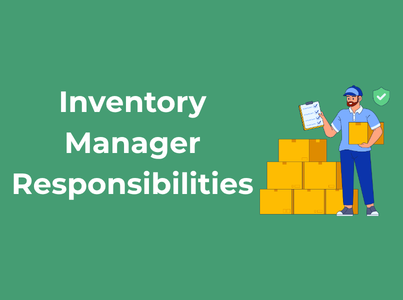
    Inventory Manager Responsibilities: A Complete Guide

    Inventory management is one of those roles that quietly keeps a business running. When done right, everything flows smoothly—products are available, customers are satisfied, and costs stay under control. But when it goes wrong, it can lead to delays, losses, and frustration.

    That’s where an inventory manager comes in. This guide breaks down inventory manager responsibilities in a clear, structured way. You’ll also learn about key duties, skills, and how this role differs from similar positions like stock managers and how inventory management works.

    What Is an Inventory Manager?

    An inventory manager is responsible for overseeing a company’s stock from start to finish. This includes tracking, ordering, storing, and optimizing inventory.

    Key Focus Areas:

    • Stock availability
    • Cost control
    • Inventory accuracy
    • Efficient storage

    The inventory manager job description revolves around balancing supply and demand without wasting resources.

    Why Inventory Management Is Important

    person holds key Infront of inventory

    Inventory is money sitting on shelves. Managing it properly can directly impact profits.

    Benefits of Good Inventory Management:

    • Prevents stockouts and lost sales
    • Reduces excess inventory costs
    • Improves cash flow
    • Enhances customer satisfaction

    A skilled inventory control manager ensures that businesses operate efficiently without unnecessary losses.

    Tools Used in Inventory Management

    In today’s fast-paced business environment, technology plays a crucial role in simplifying and enhancing inventory management processes. Modern tools have transformed how inventory managers track, control, and optimize stock levels, making their work more efficient and accurate. One of the most important tools is inventory management software.

    This software allows businesses to monitor stock levels in real time, track product movement, and generate detailed reports. It eliminates the need for manual record-keeping and significantly reduces the chances of errors. For anyone working under an inventory manager job description, understanding and using such software is no longer optional—it is a necessity.

    Another essential tool is an Enterprise Resource Planning (ERP) system. ERP systems integrate inventory management with other business functions such as finance, procurement, and sales. This integration provides a complete view of business operations, helping inventory managers make informed decisions. For example, they can easily track how inventory levels impact sales performance or financial planning. ERP systems are especially useful for large organizations where managing inventory manually would be nearly impossible.

    Barcode scanners are also widely used in inventory management. These devices help in quickly scanning and updating product information, making stock tracking faster and more accurate. Instead of manually entering data, employees can simply scan barcodes to record stock movement. This reduces human error and improves efficiency, which is a key aspect of inventory manager duties and responsibilities.

    In addition, data analytics platforms have become increasingly important. These tools help inventory managers analyze trends, forecast demand, and identify inefficiencies. By using data-driven insights, businesses can make smarter decisions about purchasing, stocking, and distribution.

    Overall, these tools simplify many inventory manager duties by automating repetitive tasks, improving accuracy, and providing valuable insights. As businesses continue to grow and evolve, the use of advanced technology in inventory management will only become more important.

    Core Inventory Manager Responsibilities

    Let’s explore the main inventory manager responsibilities in a structured way.

    1. Inventory Monitoring and Tracking

    This is the foundation of all inventory manager duties.

    What It Involves:

    • Tracking stock levels in real time
    • Identifying low-stock items
    • Avoiding overstocking

    Without proper tracking, businesses risk running out of products or holding too much inventory.

    2. Stock Replenishment and Ordering

    Reordering stock at the right time is crucial.

    Key Tasks:

    • Forecasting demand
    • Placing purchase orders
    • Managing supplier relationships

    This is a major part of inventory management job responsibilities.

    3. Maintaining Accurate Inventory Records

    Accuracy is everything in inventory management.

    Responsibilities Include:

    • Updating inventory systems
    • Recording stock movement
    • Conducting regular audits

    This aligns closely with a typical stock management job description.

    4. Warehouse and Storage Management

    An inventory manager ensures that stock is stored efficiently and safely.

    Focus Areas:

    • Organized storage systems
    • Proper labeling
    • Space optimization

    Efficient storage improves productivity and reduces handling errors.

    5. Coordination With Teams

    Inventory managers don’t work alone.

    They Collaborate With:

    • Procurement teams
    • Sales departments
    • Warehouse staff

    This coordination ensures smooth operations across departments.

    6. Loss Prevention and Control

    Losses can occur due to theft, damage, or errors.

    Key Responsibilities:

    • Monitoring discrepancies
    • Implementing control systems
    • Reducing shrinkage

    These are critical inventory manager duties and responsibilities.

    7. Using Inventory Management Systems

    Technology plays a big role in modern inventory management.

    Common Tools:

    • Inventory software
    • ERP systems
    • Barcode scanners

    Understanding these tools is essential in today’s inventory manager job description.

    8. Demand Forecasting

    Planning ahead is a key part of the role.

    What Managers Analyze:

    • Past sales trends
    • Seasonal demand
    • Market conditions

    Accurate forecasting ensures better decision-making.

    9. Compliance and Safety Management

    Certain industries require strict compliance.

    Responsibilities Include:

    • Following safety standards
    • Managing expiry dates
    • Ensuring proper storage conditions

    10. Team Management and Leadership

    In larger organizations, inventory managers lead teams.

    Leadership Duties:

    • Training staff
    • Assigning responsibilities
    • Monitoring performance

    This overlaps with stock manager job responsibilities.

    Inventory Manager vs Stock Manager

    Many people confuse these roles, but they have different focuses.

    Key Differences

    AspectInventory ManagerStock Manager
    FocusPlanning and controlPhysical stock handling
    ResponsibilitiesForecasting, tracking, optimizationStorage, movement, organization
    Role LevelStrategic + operationalMostly operational
    ScopeCompany-wide inventoryWarehouse or stockroom

    Both roles share some stock manager responsibilities, especially in smaller businesses.

    Inventory Manager vs Inventory Control Manager

    These roles are closely related but not identical.

    AspectInventory ManagerInventory Control Manager
    Main RoleManaging overall inventoryEnsuring accuracy and control
    FocusOperations + planningSystems and processes
    Key TasksOrdering, tracking, coordinationAuditing, reporting, optimization

    An inventory control manager typically focuses more on improving systems and minimizing errors.

    Advanced Roles in Inventory Management

    As you gain experience, you can move into higher-level roles.

    Inventory Head Job Description

    The inventory head job description includes overseeing the entire inventory function.

    Responsibilities:

    • Strategic planning
    • Budget control
    • Team leadership

    Inventory Director Job Description

    At the top level, the inventory director job description focuses on big-picture decisions.

    Responsibilities:

    • Setting policies
    • Managing large-scale operations
    • Aligning inventory with business goals

    Key Skills Required

    To handle all inventory manager responsibilities, you need a strong skill set.

    a. Analytical Skills

    Helps in forecasting and decision-making.

    b. Attention to Detail

    Prevents costly errors.

    c. Communication Skills

    Ensures smooth coordination with teams.

    d. Technical Knowledge

    Required for using inventory tools and software.

    e. Problem-Solving Ability

    Helps manage unexpected challenges.

    Daily Responsibilities of an Inventory Manager

    A typical day includes a mix of tasks.

    Daily Activities:

    • Checking inventory reports
    • Monitoring stock levels
    • Coordinating with suppliers
    • Inspecting warehouse operations
    • Updating systems

    These define real-world inventory management job responsibilities.

    Challenges in Inventory Management

    a person holds record book

    Inventory management may seem straightforward at first glance, but in reality, it comes with a wide range of challenges that require constant attention and problem-solving. Every business that deals with physical products faces these issues at some level, making it essential for professionals to fully understand and manage them effectively. One of the biggest challenges in inventory management is demand fluctuation. Customer demand is rarely stable it changes based on seasons, trends, market conditions, and even unexpected events.

    For an inventory manager, predicting these changes accurately is not always easy. Overestimating demand can lead to excess stock, increased holding costs, and potential wastage, while underestimating demand can result in stockouts and lost sales. This makes demand forecasting a critical yet challenging part of inventory manager responsibilities.

    Another major issue is supply chain disruption. Businesses today rely heavily on global and local supply chains, and any disruption—such as delays from suppliers, transportation issues, or raw material shortages—can directly impact inventory levels. These disruptions can create a ripple effect, causing delays in production and delivery. Managing such uncertainties is a key part of the inventory manager job description, as it requires quick decision-making and contingency planning. Inventory inaccuracies also pose a serious challenge.

    Even small errors in stock records can lead to significant problems over time. These inaccuracies may arise due to manual errors, system glitches, theft, or mismanagement during stock handling. Ensuring accurate inventory data through regular audits and system updates is an essential responsibility.

    Storage limitations are another common hurdle. Businesses often struggle with limited warehouse space, which can lead to overcrowding, disorganization, and inefficiency. Poor storage management can increase the risk of damaged goods and make it harder to locate items quickly. This directly impacts productivity and operational efficiency. Addressing storage issues requires strategic planning, proper layout design, and efficient space utilization.

    Overall, handling these challenges effectively is a core part of inventory management job responsibilities. A skilled inventory manager must be proactive, adaptable, and capable of solving problems quickly to ensure smooth business operations.

    Career Growth Opportunities in Inventory Management

    Inventory management is not just a job—it is a career path with strong growth potential and numerous opportunities for advancement. Many professionals start at entry-level positions and gradually move up to higher roles as they gain experience and develop their skills. Entry-level roles such as inventory assistant or stock controller are often the starting point.

    In these positions, individuals learn the basics of stock handling, record-keeping, and warehouse operations. These roles provide hands-on experience and a solid foundation for understanding the core aspects of inventory management.

    As professionals gain experience, they can move into more advanced roles such as inventory manager. At this level, responsibilities expand significantly to include planning, forecasting, and team management. The role becomes more strategic, requiring strong analytical and decision-making skills. Another advanced position is that of an inventory control manager.

    This role focuses more on optimizing processes, improving accuracy, and implementing systems to reduce errors and inefficiencies. It is a specialized role that requires a deep understanding of inventory systems and data analysis.

    With further experience and expertise, professionals can advance to leadership positions such as inventory head or inventory director. These roles involve overseeing the entire inventory function of an organization, setting strategies, managing budgets, and leading large teams. The inventory head job description and inventory director job description typically include high-level decision-making and alignment of inventory strategies with overall business goals.

    Each step in this career path comes with expanded inventory manager duties and responsibilities, making it both challenging and rewarding.

    How to Become an Inventory Manager

    Building a career as an inventory manager requires a combination of education, experience, and skill development. The journey usually begins with obtaining a relevant degree. A background in business administration, logistics, supply chain management, or a related field can provide a strong foundation. These programs help individuals understand the basics of operations, inventory systems, and business processes, which are essential for this role.

    After completing formal education, gaining practical experience is the next important step. Many aspiring inventory managers start in warehouse or stock-related roles such as inventory assistant or stock controller. These positions allow individuals to learn how inventory systems work in real-world settings. They also provide exposure to daily operations, stock handling, and coordination with different teams. This hands-on experience is crucial for understanding the practical aspects of inventory management job responsibilities.

    Learning to use inventory tools and systems is another key requirement. Modern inventory management relies heavily on technology, so familiarity with software, ERP systems, and data analysis tools is essential. Professionals who are comfortable with these tools have a significant advantage in the job market. In addition to technical knowledge, developing analytical and leadership skills is equally important. Inventory managers must be able to analyze data, make informed decisions, and lead teams effectively.

    Overall, becoming an inventory manager is a step-by-step process that involves continuous learning and growth. By combining education, experience, and skill development, individuals can build a successful career in this field and take on increasingly complex inventory manager responsibilities over time.

    Conclusion

    An inventory manager plays a crucial role in maintaining business efficiency. From tracking stock to forecasting demand and managing teams, the responsibilities are both diverse and impactful.

    Understanding the complete inventory manager job description, along with inventory manager duties, stock manager responsibilities, and higher roles like inventory head job description or inventory director job description, gives you a clear picture of this career path.

    Whether you’re entering the field or looking to grow, mastering these inventory manager responsibilities is key to long-term success.

  • How B2B Agency Listing Sites Can Assist in Finding Cloud Computing Services

    How B2B Agency Listing Sites Can Assist in Finding Cloud Computing Services

    Finding the right cloud computing services for your business sounds simple until you actually start looking. There are hundreds of service providers out there, each claiming to be the best fit for your needs. And if you are a startup or a growing business without a dedicated IT team, figuring out who to trust becomes a real challenge.

    It’s the task of B2B websites to fill the gap. These types of platforms have transformed the way companies find and evaluate possible technology partners. Rather than relying on weeks of Google searches or just hearsay, we can now visit a B2B directory site and have reviewed, rated, and verified choices right in one place.

    This article walks you through how B2B agency listing sites work, what makes them useful, and how they can help you find the right cloud computing services providers for your business.

    What Are B2B Agency Listing Sites?

    B2B agency listing sites are online platforms that help businesses find, compare, and connect with service providers across different technology categories. Think of them as directories, but much smarter. Instead of just listing company names, these platforms show you ratings, reviews, portfolios, pricing ranges, and verified client feedback.

    They provide services to all sizes of business from the solo founder looking for their first cloud setup to the medium-sized companies that want to scale their operations. The fundamental purpose that a B2B website should share is to help potential buyers find a satisfactory match easier and without a long indeterminate process.

    Most of these platforms cover a wide range of service categories across multiple countries, making them a practical starting point for businesses looking to connect with cloud computing services providers quickly and with confidence.

    Why Finding Cloud Computing Services Is Harder Than It Looks

    Cloud computing is no longer just about storing files online. Today, businesses use cloud platforms for billing, payroll, inventory management, data backup, ERP systems, tax compliance, and a lot more. That is a wide range of needs, which means the vendor landscape is equally wide.

    To understand just how large this market has become, consider this: worldwide end-user spending on public cloud services is forecast to reach $723.4 billion in 2025, up from $595.7 billion in 2024 Gartner a growth of 21.5% in a single year. That level of investment tells you just how central cloud has become to how modern businesses operate.

    And the complexity is only growing. Gartner predicts that 90% of organizations will adopt a hybrid cloud approach through 2027, meaning most businesses will not be working with just one provider. They will need service providers who understand how different cloud environments connect and work together.

    The number of cloud computing service providers keeps growing every year. Some specialize in infrastructure, others in SaaS tools, and some focus on industry-specific solutions. When you add development agencies that build custom cloud solutions into the mix, the choices become even more overwhelming.

    Without a structured way to evaluate these options, many businesses end up making poor vendor choices. They either go with the flashiest website, the cheapest quote, or a name they happened to come across. None of these is a reliable way to find a long-term technology partner.

    How B2B Sites Help You Find the Right Cloud Computing Service Providers

    This is where B2B listing platforms genuinely earn their place in the process. Here is how they make the search smarter and faster.

    A. Centralized Search with Useful Filters

    Instead of running separate searches for every type of vendor, you can visit a single platform and filter results by service type, location, budget range, team size, and industry experience. Looking specifically for cloud computing service providers? You can narrow it down to exactly that, without wading through unrelated results.

    This saves a significant amount of time, especially when you have a tight deadline or a specific technical requirement.

    B. Verified Reviews and Ratings

    B2B review platform and rating sites put real client feedback at the center of every listing. Before you reach out to any service provider, you can read what their previous clients thought about the quality of work, communication, timelines, and overall experience.

    This matters a lot because it shifts the power back to the buyer. You are not relying on a vendor’s own marketing materials. You are reading honest feedback from businesses that have actually worked with them.

    Good B2B review and rating sites take verification seriously by confirming that every reviewer is genuinely connected to the project they are reviewing. This means the feedback you read is far more trustworthy than a random online comment.

    C. Side-by-Side Comparisons

    Most B2B sites let you compare multiple service providers at once. You can look at their service focus, client reviews, pricing range, and past projects side by side. This makes it much easier to create a shortlist without having to visit five different websites and try to keep track of everything in a spreadsheet.

    D. Detailed Agency and Provider Profiles

    Each listing on a good B2B platform gives you a proper picture of what a company offers. We can check their portfolios, industries in which they have worked, technologies they specialize in, and any certifications they hold. This is particularly important for cloud-related searches, as you would like to know if a provider has experience with the specific tools or infrastructure that your business applies.

    When evaluating development agencies for cloud projects, having this level of detail upfront cuts down a lot of back-and-forth communication before you even get to a proposal stage.

    E. Category-Specific Listings

    B2B sites do not just offer a general technology category. They break things down by specific service types. Whether you need public cloud infrastructure, cloud ERP, SaaS billing tools, payroll automation, or data backup services, you can find listings tailored to that exact need.

    Understanding the Ranking Methodology on B2B Listing Sites

    Not all listings are created equal, and understanding how platforms rank service providers can help you use them more effectively.

    Most trustworthy B2B listing sites place agencies upon a structured rating system, which takes into account their service excellence, verified client reviews, profile completeness, and overall industry credibility. Through this, the qualified agencies shine as they have honestly won their rank instead of buying visibility.

    You can usually find details about a platform’s ranking methodology on their website. A trustworthy platform will be transparent about what factors go into their scores and how sponsored or featured listings are handled separately from organic rankings.

    This transparency is what differentiates trustworthy online B2B reviews and rating platforms from ordinary directories. When results are measured, only then you, as a viewer, would perceive them as being more convincing and less precluding than one would have figured when the top result appears to be the best business.

    A good ranking system typically looks at how much of an agency’s work is dedicated to a specific service, the quality and consistency of client feedback over time, how verified and complete a profile is, and the agency’s broader market reputation. Platforms that balance all of these factors tend to produce more reliable results for buyers.

    What to Look for in a Cloud Computing Services Provider

    Once you start browsing listings, it helps to know what actually matters when evaluating a provider. Here are the key things to keep an eye on.

    Scalability is one of the first things to check. Your cloud solution should grow with your business, not require a full migration every time you add new users or expand into a new market.

    Security and data compliance are of most importance in those businesses that deal with invoicing, payroll, or tax data. Providers should be chosen based on the provider’s adherence to firm encryption standards and backup policies and to comply with the certifications under compliance.

    Integration capability is often overlooked. A cloud service provider that cannot connect smoothly with your existing tools, whether that is your billing software, ERP system, or inventory platform, will create more friction than it solves.

    Pricing transparency is another green flag. Good providers are upfront about costs and do not hide fees in the fine print.

    Customer support quality can make or break your experience, especially in the early stages of implementation. Check reviews specifically for mentions of post-sales support, not just the onboarding experience.

    Choosing a Long-Term Partner, Not Just a Vendor

    There is an important difference between hiring a vendor and finding a real technology partner. A vendor delivers a product or service and moves on. A partner is invested in your long-term success and grows with you over time.

    B2B sites help you identify which service providers are likely to become genuine partners. Look for agencies that have multiple reviews spanning a long time period. Consistent positive feedback over the years is a much stronger signal than a burst of five-star reviews in a single month.

    Also pay attention to the quality of communication described in reviews. Providers who communicate clearly, set realistic expectations, and handle problems professionally tend to be far better long-term partners than those who only impress during the sales process.

    Given that Gartner projects most organizations will be managing hybrid cloud environments by 2027, picking a partner who understands multi-cloud setups today will save your business a lot of headaches down the road.

    Tips for Getting the Most Out of B2B Sites

    To make your search more effective, keep these practical tips in mind.

    1. Use specific filters rather than browsing broad categories. The more precise your search, the more relevant your results will be.

    2. Read both positive and critical reviews. A provider with mostly great reviews but a few constructive complaints is often more trustworthy than one with nothing but five stars, because real client relationships always have some friction.

    3. Check when reviews were last posted. Cloud technology evolves fast, and a provider that was excellent three years ago may have shifted focus since then.

    4. Understand the ranking methodology of whatever B2B site you are using. Knowing what goes into a score helps you interpret results with better judgment.

    5. Shortlist at least three cloud computing service providers before making a final decision. Getting proposals from multiple vendors gives you useful context for comparing value, not just price.

    Wrapping Up

    The way businesses find and evaluate technology partners has changed significantly. B2B agency listing sites have made it much easier to cut through the noise and find cloud computing service providers that are verified, reviewed, and genuinely capable of supporting your business needs.

    With global cloud spending surpassing $723 billion in 2025 and nearly every organization moving toward hybrid cloud environments, the stakes around choosing the right provider have never been higher. Using a structured platform to guide that search is simply a smarter approach than going in blind.

    If you are a startup and setting up your first cloud environment, or you are a growing business and looking to upgrade your operating system, B2B sites could give you the tools, the data, and the transparency to make a confident decision. They help you seek out a tech partner for the long-term.

  • How Should You Handle the Bookkeeping for Properties with Multiple Income Streams?

    How Should You Handle the Bookkeeping for Properties with Multiple Income Streams?

    You bought a property with multiple income streams to build wealth. Maybe it is a duplex. Maybe a house with a granny flat out back. Or maybe it is a commercial shopfront downstairs with two residential flats upstairs.

    Whatever the setup is, you bought it for the cash flow. You did not buy it to become a stressed out part-time accountant. But the moment you add a second or third income stream to a single title, your bookkeeping complexity multiplies.

    If you mess this up, you leak money. You miss tax deductions. You pay your accountant double to untangle your mess at the end of the financial year.

    Here is exactly how you need to handle the books to keep the ATO happy and your sanity intact.

    person doing paper work and seems confused

    Separate the Chaos Immediately

    You cannot treat a multi-income property like a standard single household rental. You just cannot.

    Take the current trend of a co living investment model. People love the high yields of renting out a property room by room. It looks great on paper. But think about the daily reality. You have four different tenants paying rent on different days. You have shared electricity bills. You have internet costs. You have a cleaner coming in every fortnight for the common areas.

    If you dump all of that income and all of those expenses into one generic ledger code, you are flying completely blind. How do you know if Room B is actually turning a profit after maintenance? You have absolutely no idea.

    You need to track income and direct expenses per lease agreement. Set up tracking categories in your software. Tag every single dollar of rent to the specific tenant or space it belongs to.

    One Property Means One Bank Account

    This sounds incredibly basic. Yet you would be shocked at how many smart investors fail here.

    Never run your rental property income through your personal everyday bank account. When you mix your Friday night beer money with your tenant’s water bill payment, you create a nightmare.

    The last time I tried fixing a client’s DIY spreadsheet for a triplex, I found personal grocery bills mixed up with legitimate plumbing repairs. It took me three full days to untangle. 

    Open a dedicated bank account for the property. Every cent of rent goes in there. Every council rate, strata levy, and repair bill comes out of there. If you need to pay yourself the profit, transfer a lump sum to your personal account and label it clearly. Keep the transaction trail pristine.

    Ditch the Spreadsheet and Pay for Software

    Spreadsheets are free right up until the ATO audits you. Then they become very expensive.

    Stop using manual data entry. It is 2026. You need a proper cloud-based accounting ledger. I always push my clients towards Xero or QuickBooks because they integrate directly with your bank.

    Connect your property bank account to the software. Set up bank rules. When the property management fee comes out, the software recognizes it and codes it automatically.

    I moved a client off a messy spreadsheet and onto a proper cloud ledger with receipt capture late last year. We cut their monthly admin time from 18 hours down to just four. That is 14 hours they got back every single month just by paying a cheap software subscription. Buy the right tools.

    Hold Your Property Manager Accountable

    Many investors think having a property manager means they do not need to do bookkeeping. This is a massive trap.

    Property managers handle the rent collection and basic maintenance. They send you a monthly statement. But their statement is not a substitute for your own financial records.

    I have seen property management agencies make mistakes. They charge the wrong commission rate. They accidentally pay a repair bill for someone else’s property using your rental income. If you blindly hand their end of financial year summary to your accountant without checking it, you pay for their mistakes.

    You must reconcile their monthly statements against your actual bank deposits. Make sure the numbers match exactly. Keep them honest.

    Apportioning Shared Expenses the Right Way

    arial view of residential place

    Properties with multiple streams usually share single bills. You might get one council rates notice for a house and a granny flat. You might get one water bill.

    How do you split it? You cannot just guess.

    You need a clear and documented apportionment method. Usually, this is based on floor area. If the main house is 150 square meters and the granny flat is 50 square meters, you split the shared bills 75 percent to 25 percent.

    Document this formula. Keep it on file. Apply it consistently to every shared expense. If the tax man comes knocking, you just hand them the formula. No panic. No stress.

    This applies to depreciation too. Your quantity surveyor must provide a breakdown for each income-producing space. You claim the wear and tear on the granny flat appliances completely separately from the main house.

    The Compliance Nightmare You Want to Avoid

    Multi-income properties get even stickier when you hold them in complex structures.

    Let us say you hold a mixed commercial and residential building inside an SMSF Property investment structure. The auditor is going to scrutinize every single cent of that property. The rules governing self-managed super funds are brutally strict.

    You have to prove all transactions are at arm’s length. You have to ensure commercial rent is entirely separated from residential rent because the compliance rules treat them differently. If your bookkeeping is sloppy and you mix fund money with personal money, you breach compliance. The penalties for this are massive.

    Pristine records are not optional here. They are your only defense against getting penalized.

    Stop Bleeding Cash on Avoidable Mistakes

    Good bookkeeping is not sexy. It does not get clicks on property blogs. But it absolutely pays the bills.

    Clear systems protect your assets. They ensure you claim every single tax deduction you are legally entitled to. They stop you from paying your accountant a small fortune just to clean up your mess.

    Get your bank accounts sorted. Buy proper software. Stop treating your property portfolio like a casual hobby. Treat it like a business.

  • How Do You Navigate the Complex Tax Rules for Corporate Commodity Holdings?

    How Do You Navigate the Complex Tax Rules for Corporate Commodity Holdings?

    Look. I get it. You read an article about inflation eating your corporate cash reserves. You panicked. Now you want to buy hard assets. Welcome to the club.

    But holding commodities in a Pty Ltd company is not like stacking silver coins in your personal safe. The Australian Taxation Office does not care about your doomsday prep. They care about compliance. They care about intention. And they definitely care about getting their cut.

    Every week, I see business owners screw this up. They treat company money like personal money. They buy physical assets without a plan. Then tax time rolls around and they are staring down a massive headache.

    Let us talk about what actually works.

    people having discussion with screen

    The ATO Cares About Intention

    Are you trading commodities or holding them as an investment? The answer changes your entire tax reality.

    If your company buys and sells metals regularly to make a quick profit, you are trading on a revenue account. That means your profits are taxed at your standard company tax rate. Currently, that sits at 25% for base rate entities or 30% for the big players. Your losses are fully deductible against your other income. Sounds great, right?

    Wrong.

    Most businesses are not set up to trade. You are probably holding assets to hedge against currency devaluation. That puts you on a capital account. The ATO treats this as a Capital Gains Tax asset. You buy it. You hold it. You sell it later. You pay CGT on the profit.

    Here is the kicker. Companies do not get the 50% CGT discount that individuals get. Not a single cent. You pay the full company tax rate on every dollar of that capital gain.

    The GST Trap with Precious Metals

    gold bars

    This is where things get genuinely messy. You really have to pay attention here.

    Let us say you are looking to diversify your corporate treasury. You start researching your options and you end up purchasing gold bullion in Brisbane from a local dealer. You think you just swapped cash for metal. Simple, the ATO begs to differ.

    If you buy the wrong type of metal, you are paying Goods and Services Tax. The only way you avoid GST on physical metals is if they meet the strict definition of a precious metal under the GST Act. For gold, it must be at least 99.5% pure. For silver, it requires 99.9% purity. It also must be in an investment form. Think stamped bars or recognised coins.

    If you buy a neat little collector coin or some weird commemorative token, you just bought a taxable supply. You pay an extra 10% right out of the gate. If your company is registered for GST, you might be able to claim it back on your next BAS. But why go through the cash flow chokehold in the first place?

    Stick to investment grade bullion. Always check the purity stamp. If a dealer cannot provide a proper certification of purity, walk out the door. The ATO ruling GSTR 2003/10 is very clear on this. Do not test them.

    Storage Costs and CGT Headaches

    You bought the asset. Now where do you put it?

    You cannot leave corporate assets sitting in the bottom drawer of your desk. You need a secure vault. Vaults cost money. Insurance costs money.

    Here is a fun fact about holding commodities in a capital account. Those ongoing holding costs are usually not immediately tax deductible. You cannot claim the vault fees as a normal operating expense if the asset sits on a capital account.

    Instead, those holding costs get added to the cost base of the asset.

    What does that mean? It means you only get the tax benefit when you finally sell the asset. If you hold a block of gold for ten years, you are paying out of pocket for storage the entire time. You only recoup the tax benefit of those costs a decade later when you liquidate.

    Does your company have the cash flow to sustain dead weight expenses for years? Be honest with yourself. I see perfectly good businesses strain their cash flow because they locked up capital in a vault and forgot about the ongoing fees.

    When the Numbers Stop Making Sense

    Let me give you a reality check. I spend half my life cleaning up messy ledgers for ambitious entrepreneurs.

    Business owners love the romance of physical assets. They hate the paperwork. Tracking cost bases, recording separate vaulting fees, and valuing the assets at the end of the financial year for director reports takes serious effort.

    If you are dropping $5,000 on a tiny bar of gold, the administrative cost of tracking it will destroy your return on investment. The fees you pay for proper business accounting services to correctly audit and report that single asset will outpace any potential gains you might see over a five year period.

    You need scale for this to make sense. If you are not moving at least $50,000 or $100,000 of corporate cash into commodities, do not bother. Leave the money in a high yield business account. Buy a term deposit. Keep it boring.

    Boring is highly underrated in corporate finance. Boring scales. Boring passes an audit without a single red flag.

    Keep It Clean or Pay the Price

    If you decide to pull the trigger anyway, keep the paperwork flawless.

    The ATO loves an audit. They love picking apart Pty Ltd companies that suddenly look like hedge funds.

    Keep the purchase invoice. Keep the storage receipts. Document exactly why the company bought the asset in a formal director resolution. Write it down. Date it. Put it in the company register. If the ATO asks questions three years from now, you hand them the resolution and tell them to have a nice day.

    Do not mix personal and company assets. This is the biggest sin of all. If your company buys a physical commodity, the company owns it. Not you. If you take that company owned asset and put it in your personal safety deposit box, you just created a massive Division 7A problem.

    The ATO will view that as an unfranked dividend paid to you personally. You will pay personal income tax on the entire value of the asset. You will also pay a penalty.

    It is a rookie mistake. Do not make it. Make a plan. Stick to the rules. Keep the receipts. Treat corporate money with the respect it demands.

  • What Is a Business Expense Report? Format and Best Practices

    What Is a Business Expense Report? Format and Best Practices

    Managing business finances can feel overwhelming—especially when expenses start piling up from different departments, employees, and projects. Whether you’re a small business owner, freelancer, or part of a growing company, keeping track of where your money goes is essential.

    That’s where a business expense report comes in.

    In this comprehensive guide, you’ll learn:

    • What a business expense report is
    • Why it matters for your business
    • The ideal expense report format
    • Best practices to streamline your reporting process

    What Is a Business Expense Report?

    Business Expense Report

    A business expense report is a document that tracks and records all the expenses incurred by a company or its employees over a specific period.

    It typically includes details such as:

    • Date of expense
    • Amount spent
    • Category (travel, meals, office supplies, etc.)
    • Business purpose
    • Payment method
    • Supporting receipts

    In simple words, it’s a structured way to answer one key question:
    “Where is the business money going?”

    According to financial best practices, expense reports help businesses track spending, manage budgets, and ensure accurate reimbursements for employees.

    Why Are Business Expense Reports Important?

    You might think expense tracking is just for accountants—but it plays a much bigger role in your business.

    1. Better Financial Control

    Expense reports give you a clear overview of your spending. This helps you identify unnecessary costs and make smarter financial decisions.

    2. Accurate Employee Reimbursements

    When employees spend their own money for business purposes, expense reports ensure they get reimbursed quickly and fairly.

    3. Budget Planning and Forecasting

    Tracking expenses helps you understand spending patterns and plan future budgets more effectively.

    4. Tax Compliance

    Proper documentation ensures you can claim deductions and stay compliant with tax regulations.

    5. Fraud Prevention

    A structured expense report makes it easier to detect duplicate or unauthorized expenses.

    6. Business Insights

    Expense reports help identify trends and patterns in spending, allowing businesses to make data-driven decisions.

    Types of Business Expense Reports

    Before diving into the format, it’s helpful to understand the different types of expense reports businesses commonly use:

    1. Travel Expense Reports

    Used for tracking travel-related costs like flights, hotels, meals, and transportation.

    2. Employee Expense Reports

    Submitted by employees for reimbursement of business-related purchases.

    3. Project-Based Expense Reports

    Used to track expenses tied to a specific project or client.

    4. Monthly or Quarterly Expense Reports

    Provide a summary of all business expenses over a specific period.

    Business Expense Report Format (Step-by-Step)

    A well-structured expense report is easy to read, verify, and approve. The best format follows a logical flow: context first, numbers second, and exceptions last.

    Here’s the ideal structure:

    1. Header Section (Basic Information)

    This section provides context about the report.

    Include:

    • Employee name
    • Employee ID or department
    • Report submission date
    • Reporting period (e.g., March 1–15)
    • Manager or approver name

    These details help identify who submitted the report and for what time frame.

    2. Expense Summary

    This is a quick overview of total expenses.

    Include:

    • Total amount spent
    • Total reimbursable amount
    • Number of transactions

    This section helps reviewers quickly understand the overall expense value.

    3. Itemized Expense Table

    This is the most important part of the report.

    A standard table should include:

    • Date of transaction
    • Vendor or merchant name
    • Expense category
    • Description or business purpose
    • Amount (including taxes)
    • Payment method (cash, card, etc.)
    • Receipt status

    A structured table ensures consistency and makes it easier to audit expenses.

    4. Expense Categories

    Categorizing expenses helps in budgeting and analysis.

    Common categories include:

    • Travel
    • Meals and entertainment
    • Office supplies
    • Software subscriptions
    • Marketing expenses

    5. Receipts and Supporting Documents

    Every expense should be backed by proof.

    This can include:

    • Receipts
    • Invoices
    • Tickets or booking confirmations

    Many companies now use digital tools to attach scanned receipts.

    6. Approval Section

    This section includes:

    • Manager approval
    • Finance team verification
    • Signature or digital approval

    It ensures accountability and compliance.

    7. Notes or Exceptions

    Use this section to explain:

    • Unusual expenses
    • Missing receipts
    • Policy exceptions

    Example of a Business Expense Report

    Here’s a simple example format:

    DateCategoryDescriptionAmountPayment MethodReceipt
    01/03/2026TravelTaxi to client meeting$25CardYes
    02/03/2026MealsLunch with client$40CashYes
    03/03/2026Office SuppliesPrinter ink$60CardYes

    Total: $125

    How to Create a Business Expense Report

    Creating an expense report doesn’t have to be complicated. Follow these steps:

    Step 1: Choose a Format

    You can use:

    • Excel spreadsheets
    • Accounting software
    • Expense management tools

    Step 2: Add Basic Details

    Start with employee and reporting information.

    Step 3: Record Expenses Regularly

    Don’t wait until the end of the month—log expenses as they occur.

    Step 4: Attach Receipts

    Always include proof of purchase.

    Step 5: Review and Submit

    Double-check entries before submission.

    Best Practices for Business Expense Reports

    To make your expense reporting process efficient and error-free, it’s important to follow a set of proven best practices. These not only simplify the process but also improve accuracy, save time, and ensure compliance with company policies.

    First, always keep your expense reports simple and clear. Avoid overly complicated formats or unnecessary details that can confuse employees and reviewers. A clean, well-structured report makes it easier to understand, speeds up approvals, and reduces the chances of errors.

    It’s equally important to standardize your format across the organization. Using the same template for all expense reports ensures consistency and makes it easier for finance teams to review and process them. When everyone follows the same structure, it minimizes confusion and improves efficiency.

    Submitting reports on time is another essential habit. Delayed submissions can slow down reimbursements and disrupt accounting workflows. Setting clear deadlines and encouraging employees to stick to them helps maintain a smooth financial process.

    Maintaining accurate records is equally critical. Every expense report should include correct dates, precise amounts, and proper categorization. Even small mistakes can lead to compliance issues or delays in approval, so attention to detail is key.

    Tracking expenses in real-time is a smart approach that many businesses are adopting. Recording expenses as they occur helps prevent missed entries and reduces the stress of compiling reports at the end of the month. It also ensures better accuracy and transparency.

    Regular audits are another important practice. Periodic reviews of expense reports help identify duplicate entries, detect potential fraud, and ensure compliance with company policies. This adds an extra layer of control and accountability.

    Key Components of an Expense Report

    A well-structured business expense report includes several essential components that ensure clarity, accuracy, and easy processing. Understanding these key elements helps both employees and finance teams maintain consistency and avoid errors.

    1. Employee and Report Details
    This section includes basic information such as the employee’s name, department, employee ID (if applicable), and the reporting period. It provides context and helps identify who submitted the report and for what timeframe.

    2. Expense Summary
    The summary gives a quick overview of the total expenses incurred. It typically includes the total amount spent, the reimbursable amount, and sometimes the number of transactions. This helps reviewers quickly assess the overall report.

    3. Itemized Expense List
    This is the core of the expense report. Each expense is listed individually with important details such as the date, vendor name, category, description or business purpose, amount, and payment method. Itemization ensures transparency and makes verification easier.

    4. Expense Categories
    Categorizing expenses—such as travel, meals, office supplies, or software—helps in organizing data and analyzing spending patterns. It also ensures alignment with company policies and budgets.

    5. Receipts and Supporting Documents
    Every expense should be backed by proof, such as receipts, invoices, or booking confirmations. These documents validate the expense and are essential for audits and reimbursements.

    6. Approval and Authorization
    This section includes manager or supervisor approval, along with finance team verification if required. It ensures that all expenses comply with company policies before reimbursement.

    7. Notes or Additional Comments
    Sometimes, certain expenses may need further explanation—such as missing receipts or unusual charges. This section allows employees to provide context and clarify any exceptions.

    By including these key components, businesses can create clear, organized, and reliable expense reports that streamline approvals and improve financial control.

    Common Mistakes to Avoid

    Even with the best systems, mistakes can happen. Here are some common ones to watch out for:

    1. Missing Receipts

    Always keep proof of purchase.

    2. Incorrect Categorization

    Misclassifying expenses can lead to inaccurate reports.

    3. Delayed Submissions

    Late reports slow down reimbursements.

    4. Incomplete Information

    Missing details can lead to rejection of reports.

    5. Ignoring Company Policies

    Not following guidelines can result in non-reimbursement.

    Manual vs Automated Expense Reporting

    manual vs automated reporting

    Final Thoughts

    A business expense report is more than just a document—it’s a powerful financial tool that helps you stay in control of your business spending. By using the right format and following best practices, you can simplify expense tracking, improve accuracy, save valuable time, and ensure compliance with financial regulations. 

    Whether you’re running a startup or managing an established company, building a strong and efficient expense reporting system is essential for long-term success and sustainable growth.

    FAQs

    a. What is included in a business expense report?

    It includes expense details such as date, amount, category, business purpose, and receipts.

    b. How often should expense reports be submitted?

    Most businesses require monthly submissions, but it can vary depending on company policy.

    c. Can small businesses use expense reports?

    Yes, they are especially useful for small businesses to track spending and manage budgets.

    d. What is the best tool for expense reporting?

    Excel works for beginners, but automated tools are better for scaling businesses.

  • TOP UPFLUENCE COMPETITORS IN [this_year]

    TOP UPFLUENCE COMPETITORS IN [this_year]

    Influencer marketing remains one of the most effective growth channels for Shopify, DTC, and rapidly scaling eCommerce brands in [this_year]. While Upfluence is widely known for influencer discovery and campaign management, many brands now require more advanced capabilities than traditional influencer databases provide.

    Today’s marketing teams expect complete revenue visibility, automation, affiliate enablement, deep integrations, and centralized workflow management. As a result, businesses are increasingly exploring platforms that offer broader functionality and greater scalability.

    Leading competitors to Upfluence now typically offer:

    • Transparent, scalable pricing
    • Advanced creator performance analytics
    • Automated outreach and gifting systems
    • Affiliate tracking with revenue attribution
    • Native eCommerce integrations
    • Centralized influencer CRM capabilities
    • End-to-end reporting dashboards

    In this guide, we review the top Upfluence competitors in [this_year], highlighting their strengths, limitations, and ideal use cases.

    Why Brands Are Exploring Upfluence Competitors

    As influencer programs mature, brands often reassess their tech stack. Several factors are driving companies to evaluate alternatives to Upfluence:

    1. Scaling Costs & Feature Gaps

    As campaigns grow, pricing structures and feature limitations can impact scalability and forecasting.

    2. Revenue-Centric Marketing Needs

    Brands increasingly demand tools that provide:

    • Clear influencer ROI measurement
    • Affiliate attribution systems
    • Live sales dashboards
    • Revenue-level reporting

    3. Stronger eCommerce & CRM Integrations

    Modern platforms now integrate seamlessly with:

    • Shopify
    • WooCommerce
    • Klaviyo
    • HubSpot
    • Meta Ads

    4. Automation-First Workflows

    Teams prioritize automation for:

    • Influencer outreach
    • Product seeding
    • Contract and payment processing
    • Affiliate link creation

    5. All-in-One Platform Strategy

    Rather than juggling multiple tools, many brands now prefer unified systems that combine:

    • Influencer marketing
    • Affiliate marketing
    • UGC management
    • Creator payments

    Top Upfluence Competitors in 2026

    1. Influencer Hero

    Influencer screenshot

    Best For: DTC and eCommerce brands seeking complete influencer + affiliate automation
    Ideal Users: In-house marketing teams managing creator programs

    Influencer Hero ranks as the most comprehensive Upfluence competitor in 2026. It delivers a full influencer lifecycle solution — from discovery to revenue tracking — within a single platform.

    Key Advantages

    • 450M+ creator database with advanced filters
    • AI-powered influencer search
    • Complete campaign management system
    • 30+ integrations including Shopify & WooCommerce
    • Built-in influencer CRM
    • Automated outreach workflows
    • Affiliate link & discount tracking
    • Revenue and ROI dashboards
    • UGC content management tools

    Pricing

    • Standard: Starts at $649/month (1 seat, up to 1,000 influencer reach-outs)
    • Pro: Around $1,049/month with higher outreach limits and additional features
    • Business: Approximately $2,490/month for larger teams and advanced campaign capabilities
    • Enterprise: Custom pricing based on team size and campaign requirements

    Free Trial? No

    Limitations

    • No paid ad whitelisting
    • May require onboarding time for new users

    Overall Ranking: #1 Upfluence Competitor in 2026

    2. CreatorIQ

    creatoriq screenshot

    Best For: Enterprise and multinational brands

    CreatorIQ is built for large-scale campaigns requiring compliance, structured workflows, and executive-level reporting.

    Pros

    • Highly accurate influencer data
    • Enterprise-grade reporting
    • Advanced integrations
    • Strong compliance infrastructure

    Pricing

    Enterprise-only pricing model.

    • Annual enterprise contracts starting around $35,000 – $60,000 per year
    • Higher-tier enterprise plans can exceed $100,000+ annually depending on data access and global campaign requirements
    • Pricing varies based on creator database access, reporting modules, and API integrations

    Free Trial? No

    Cons

    • Premium pricing
    • Longer onboarding process
    • Not ideal for smaller teams

    3. Aspire

    aspire screenshot

    Best For: Marketplace-style influencer collaborations

    Aspire simplifies influencer sourcing and gifting campaigns through its marketplace-driven model.

    Pros

    • Built-in influencer marketplace
    • Automated gifting systems
    • UGC-focused tools
    • Smooth creator collaboration

    Pricing

    • Starter plans begin around $2,000 – $3,000 per month
    • Professional plans range between $4,000 – $7,000 per month
      Enterprise packages are custom priced for large-scale influencer programs

    Additional costs may apply for automation modules, advanced analytics, and additional campaign seats.

    Free Trial? No

    Cons

    • Costs scale quickly
    • Limited effectiveness for cold outreach campaigns

    4. Grin

    grin homepage screenshot

    Best For: Long-term ambassador programs

    Grin is strong in managing established influencer relationships rather than discovery-heavy campaigns.

    Pros

    • Robust influencer CRM
    • Native Shopify integration
    • Ideal for ambassador management

    Pricing

    • Annual contracts starting around $25,000 – $40,000 per year
    • Higher tiers can exceed $50,000+ annually depending on creator volume and integrations
    • Pricing scales based on influencer relationship volume and platform integrations

    Free Trial? No

    Cons

    • No built-in influencer discovery engine
    • Premium pricing structure

    5. Modash

    modash screenshot

    Best For: Cost-efficient influencer discovery

    Modash is a practical alternative for brands that primarily need creator search capabilities.

    Pros

    • Strong search and filtering tools
    • Reliable audience insights
    • Competitive pricing

    Pricing

    • Essentials: Starts around $299/month
    • Growth: Around $599/month with expanded search limits and analytics
    • Professional: $999+/month for teams managing larger influencer programs

    Pricing scales based on search volume, analytics access, and number of team members.

    Free Trial? Yes (limited trial available)

    Cons

    • No CRM system
    • Limited outreach automation

    6. Tagger by Sprout Social

    sproutsocial

    Best For: Agencies and performance-driven teams

    Tagger integrates within the Sprout Social ecosystem and is built for data-heavy campaign environments.

    Pros

    • Extensive influencer database
    • Advanced reporting dashboards
    • Agency-friendly collaboration tools

    Pricing

    • Enterprise plans starting around $25,000 – $50,000 per year
    • Higher-tier contracts for agencies and global brands can exceed $75,000+ annually
    • Pricing depends on reporting modules, campaign scale, and API access

    Free Trial? Demo available upon request

    Cons

    • Learning curve
    • Premium cost

    7. Klear

    Best For: Analytics-focused enterprise brands

    Klear leverages AI-powered data insights for audience and influencer evaluation.

    Pros

    • Advanced audience analytics
    • AI-driven recommendations
    • Strong enterprise reporting

    Pricing

    • Starter plans beginning around $1,000 – $2,000 per month
    • Advanced analytics plans ranging between $3,000 – $6,000 per month
    • Enterprise pricing available for global teams managing large influencer programs

    Pricing depends on creator database access, analytics depth, and integrations.

    Free Trial? No

    Cons

    • Higher pricing tiers
    • Limited automation features

    8. Julius

    Best For: PR teams and influencer research

    Julius provides detailed influencer profiles and media-focused outreach capabilities.

    Pros

    • Extensive influencer database
    • Strong for PR outreach campaigns

    Pricing

    • Plans starting around $1,200 – $2,500 per month
    • Agency packages can reach $3,500 – $6,000 per month depending on database access and user seats
    • Custom enterprise plans available for large teams

    Free Trial? Demo available

    Cons

    • Minimal automation
    • Smaller integration ecosystem

    9. UpPromote

    Best For: Affiliate-first Shopify brands

    UpPromote focuses primarily on affiliate marketing rather than full influencer lifecycle management.

    Pros

    • Easy affiliate setup
    • Shopify-native solution
    • Reliable commission tracking

    Pricing

    • Free plan available with limited affiliate management features
    • Growth: Around $29/month
    • Professional: Around $89/month
    • Enterprise plans starting around $199/month

    Pricing scales based on number of affiliates and advanced automation features.

    Free Trial? Yes (free plan available)

    Cons

    • Limited influencer discovery
    • No comprehensive CRM tools

    10. HypeAuditor

    Best For: Fraud detection and audience verification

    HypeAuditor remains valuable for deep analytics and fake follower detection.

    Pros

    • Industry-leading fraud detection
    • Detailed audience breakdowns
    • Large global database

    Pricing

    • Basic analytics plans starting around $399/month
    • Professional plans ranging from $1,000 – $2,000 per month
    • Enterprise packages priced custom based on API access, analytics depth, and report volume

    Additional add-on costs may apply for API access, fraud detection modules, and large-scale reporting.

    Free Trial? Limited trial or demo available

    Cons

    • Limited campaign management
    • Add-on pricing structure
    • Minimal automation capabilities

    Comparison Overview (2026)

    PlatformDiscoveryOutreach AutomationAffiliate TrackingShopify IntegrationBest For
    Influencer HeroAll-in-One eCommerce
    CreatorIQ⭐⭐Enterprise
    AspireMarketplace Campaigns
    GrinAmbassadors
    Modash⭐⭐Discovery
    Tagger⭐⭐Agencies
    KlearAnalytics
    JuliusPR Teams
    UpPromote⭐⭐⭐⭐Affiliates
    HypeAuditor⭐⭐Fraud Detection

    Which Upfluence Competitor Should You Choose?

    Choose Influencer Hero if:
    ✔ You need influencer, affiliate, and UGC tools in one system
    ✔ Revenue attribution is critical
    ✔ You operate a Shopify or DTC brand
    ✔ Automation and scalability are top priorities

    Choose CreatorIQ or Klear if:
    ✔ You manage enterprise-scale campaigns
    ✔ Compliance and analytics are essential
    ✔ Budget flexibility is available

    Choose Aspire if:
    ✔ Marketplace-driven campaigns are your focus
    ✔ Gifting and UGC are central strategies

    Choose Grin if:
    ✔ You prioritize ambassador programs

    Choose Modash if:
    ✔ Influencer discovery is your main requirement

    Choose UpPromote if:
    ✔ Affiliate marketing drives your growth strategy

    Final Thoughts

    Selecting the right Upfluence competitor in 2026 depends on:

    • Program maturity
    • Automation requirements
    • Budget structure
    • eCommerce stack
    • Campaign scale
    • International growth plans

    While several platforms excel in analytics or discovery, Influencer Hero stands out as the most balanced and scalable solution. Its blend of discovery, outreach automation, affiliate infrastructure, CRM functionality, UGC tools, and revenue reporting makes it especially valuable for modern DTC and eCommerce brands.

    For businesses seeking a robust, future-proof alternative to Upfluence, Influencer Hero emerges as the leading all-in-one platform in 2026.

  • ERP for Automotive Industry: Complete Guide to Digital Transformation

    ERP for Automotive Industry: Complete Guide to Digital Transformation

    The automotive industry is undergoing one of the biggest transformations in its history. From electric vehicles and connected cars to complex global supply chains and just-in-time manufacturing, automotive companies are under constant pressure to innovate while maintaining efficiency and quality.

    Managing production lines, suppliers, inventory, customer demands, and compliance requirements simultaneously is no small task. This is where ERP for automotive industry plays a crucial role.

    Modern automotive ERP solutions help manufacturers streamline operations, reduce production costs, and improve decision-making with real-time data. Whether you are an OEM manufacturer, a Tier-1 supplier, or an auto parts manufacturer, implementing the right automotive ERP software can transform the way your organization operates.

    In this complete guide, we will explore how ERP systems support digital transformation in the automotive sector, the benefits they bring, and how businesses can choose the best ERP for automotive industry needs.

    Understanding ERP in the Automotive Industry

    erp analysis in automative industry

    Enterprise Resource Planning (ERP) is an integrated software platform that connects different business functions into one centralized system. For automotive companies, this means managing manufacturing, procurement, inventory, finance, quality control, and supply chain processes within a single platform.

    A modern erp system for automotive industry helps companies coordinate production schedules, manage supplier relationships, and track inventory in real time.

    Unlike generic enterprise software, automotive manufacturing ERP is designed specifically to support the complex workflows involved in vehicle production and component manufacturing.

    These solutions help automotive businesses:

    • Monitor production lines
    • Track inventory and parts
    • Manage supplier networks
    • Optimize logistics
    • Maintain compliance with industry regulations
    • Improve forecasting and planning

    Because of these capabilities, automotive ERP systems are becoming essential tools for manufacturers aiming to remain competitive in an increasingly digital marketplace.

    Why the Automotive Industry Needs ERP

    Automotive manufacturing is one of the most complex industrial sectors in the world. A single vehicle can contain thousands of components sourced from hundreds of suppliers.

    Without proper coordination, inefficiencies can quickly arise. Production delays, inventory shortages, or supply chain disruptions can significantly impact profitability.

    Implementing erp software for automotive industry helps organizations overcome these challenges by creating a unified platform for managing operations.

    1. Complex Supply Chains

    Automotive supply chains involve multiple suppliers, manufacturers, distributors, and service providers. A robust automotive supplier software system ensures that all stakeholders stay connected and informed.

    With integrated supply chain management features, companies can monitor supplier performance, track shipments, and ensure timely delivery of parts.

    2. Just-In-Time Manufacturing

    The automotive sector relies heavily on just-in-time manufacturing to reduce inventory costs. This requires precise coordination between suppliers and production lines.

    An advanced automotive production software solution helps companies plan production schedules accurately while minimizing waste and excess inventory.

    3. Quality and Compliance Requirements

    Automotive manufacturers must comply with strict safety and quality standards. ERP platforms help enforce quality control procedures and maintain documentation for audits and compliance checks.

    A well-implemented automobile industry software solution ensures that every component meets regulatory standards.

    Key Features of Automotive ERP Software

    ERP

    Modern automotive ERP software includes specialized modules designed to support automotive manufacturing processes.

    a. Manufacturing Management

    A powerful automotive manufacturing software platform helps companies manage production planning, work orders, and shop floor operations.

    Manufacturers can track production performance in real time and identify bottlenecks before they impact output.

    b. Supply Chain Integration

    Automotive companies rely heavily on supplier networks. With integrated automotive tier suppliers ERP, businesses can coordinate procurement, logistics, and supplier collaboration.

    This improves visibility across the entire supply chain and helps reduce disruptions.

    c. Inventory Management

    Effective inventory management is essential for automotive production. ERP systems allow companies to track parts and components across warehouses and production facilities.

    An automotive parts ERP platform ensures that the right parts are available at the right time.

    d. Financial Management

    Financial modules help automotive companies track costs, revenue, and profitability across departments.

    A unified automobile ERP software solution allows finance teams to monitor expenses, manage budgets, and generate accurate reports.

    e. Quality Management

    Quality assurance is critical in the automotive sector. ERP systems track product defects, manage inspections, and maintain compliance with industry standards.

    Benefits of ERP for Automotive Manufacturers

    Implementing erp for auto industry provides numerous advantages that extend beyond operational efficiency.

    1. Improved Operational Efficiency

    An integrated erp auto platform connects different business functions and eliminates data silos. This reduces manual work and improves collaboration between departments.

    2. Better Production Planning

    With advanced planning capabilities, automotive manufacturing ERP systems allow manufacturers to forecast demand and adjust production schedules accordingly.

    3. Enhanced Supply Chain Visibility

    A modern automotive supplier software solution provides real-time insights into supplier performance, delivery timelines, and inventory levels.

    This allows companies to respond quickly to disruptions.

    4. Cost Reduction

    By optimizing production processes and reducing inventory waste, automotive ERP systems help companies lower operational costs.

    5. Data-Driven Decision Making

    ERP platforms provide real-time analytics that help managers make informed decisions.

    With a centralized automobile industry software platform, businesses gain better visibility into operations and performance metrics.

    ERP for Auto Parts Manufacturing

    Auto parts manufacturers face unique challenges compared to vehicle manufacturers. They must manage large volumes of components, maintain quality standards, and coordinate with multiple OEM clients.

    A specialized auto parts manufacturing ERP solution is designed to handle these requirements.

    This type of ERP system helps companies:

    • Track raw materials and components
    • Manage production orders
    • Maintain product traceability
    • Ensure compliance with automotive standards

    Using a dedicated automotive parts ERP, manufacturers can streamline operations while meeting strict delivery deadlines.

    ERP for Automotive Tier Suppliers

    Tier suppliers play a critical role in the automotive ecosystem. They supply essential components to OEM manufacturers and must maintain high levels of efficiency and quality.

    Implementing automotive tier suppliers ERP helps suppliers manage complex manufacturing processes and maintain close collaboration with OEM partners.

    An ERP system allows tier suppliers to:

    • Manage supplier relationships
    • Track component production
    • Coordinate logistics
    • Maintain product traceability

    By adopting specialized automotive supplier software, suppliers can strengthen their position within the automotive value chain.

    Cloud ERP in Automotive Manufacturing

    Cloud technology is rapidly transforming the way automotive companies implement ERP systems.

    Traditional ERP systems often require significant upfront investment in infrastructure and IT resources. Cloud-based automotive ERP solutions eliminate these challenges by offering scalable and flexible deployment options.

    Benefits of cloud-based automotive ERP software include:

    • Lower infrastructure costs
    • Faster implementation
    • Remote accessibility
    • Automatic updates
    • Improved security

    Many manufacturers are now shifting toward cloud ERP to support digital transformation initiatives.

    How ERP Supports Digital Transformation in the Automotive Industry

    Digital transformation involves integrating digital technologies across all areas of a business.

    A modern erp system for automotive industry serves as the foundation for this transformation.

    By connecting manufacturing systems, supply chains, and financial operations, ERP enables organizations to operate more efficiently and adapt to changing market demands.

    ERP systems also integrate with other digital technologies such as:

    • IoT devices
    • AI-powered analytics
    • predictive maintenance tools
    • connected vehicle platforms

    With these integrations, automotive companies can unlock new levels of efficiency and innovation.

    Choosing the Best ERP for Automotive Industry

    Selecting the best ERP for automotive industry requires careful evaluation of business needs, operational complexity, and long-term goals.

    Here are some key factors to consider when choosing automotive ERP systems.

    a. Industry-Specific Functionality

    Choose an ERP solution that includes features specifically designed for automotive manufacturing.

    A robust automotive manufacturing ERP should support production planning, quality management, and supplier collaboration.

    b. Scalability

    Automotive companies often experience rapid growth. The chosen erp software for automotive industry should be able to scale as the business expands.

    c. Integration Capabilities

    ERP systems should integrate with other tools such as manufacturing execution systems (MES), CRM platforms, and supply chain software.

    d. User Experience

    A modern automobile ERP software solution should have an intuitive interface that simplifies daily operations for employees.

    e. Vendor Expertise

    Choose vendors with experience delivering automotive ERP solutions to manufacturers and suppliers.

    ERP for Automotive Service Companies

    While ERP systems are commonly associated with manufacturing, they are also valuable for service-based automotive businesses.

    Dealerships, maintenance providers, and repair centers can benefit from ERP platforms that manage service operations, inventory, and customer relationships. Implementing field operations software can enhance scheduling accuracy and reduce routing conflicts by providing real-time updates and better technician communication.

    Some companies even look for the best ERP for service companies that also supports automotive service operations.

    These systems can help service businesses manage:

    • repair scheduling
    • spare parts inventory
    • customer records
    • billing and payments

    With the right erp auto solution, service providers can deliver better customer experiences while improving operational efficiency.

    Challenges in ERP Implementation

    Although ERP offers numerous benefits, implementation can be complex.

    Common challenges include:

    1. High Initial Investment

    ERP systems often require significant upfront costs. However, the long-term benefits usually outweigh the initial investment.

    2. Change Management

    Employees must adapt to new workflows and processes. Training programs are essential to ensure successful adoption.

    3. Data Migration

    Migrating data from legacy systems to a new automotive ERP software platform requires careful planning.

    Future Trends in Automotive ERP

    The automotive industry continues to evolve rapidly, and ERP systems are evolving with it.

    Some emerging trends include:

    • AI-Driven ERP

    Artificial intelligence is being integrated into ERP platforms to improve forecasting and decision-making.

    • IoT Integration

    Connected sensors on manufacturing equipment provide real-time data that integrates directly into automotive production software platforms.

    • Advanced Analytics

    Modern ERP systems provide deeper insights into operations, helping companies identify opportunities for improvement.

    • Smart Manufacturing

    With the rise of Industry 4.0, automotive manufacturing software solutions are becoming smarter and more connected.

    Conclusion

    The automotive industry is entering a new era of digital transformation. As manufacturing processes become more complex and supply chains more global, businesses must adopt advanced technology solutions to stay competitive.

    Implementing erp for automotive industry enables manufacturers, suppliers, and service providers to streamline operations, improve visibility, and enhance decision-making.

    Whether it’s managing suppliers with automotive supplier software, optimizing production through automotive production software, or improving inventory tracking with automotive parts ERP, ERP systems play a vital role in modern automotive businesses.

    By selecting the best ERP for automotive industry, organizations can build a strong digital foundation that supports innovation, efficiency, and long-term growth.

    As the industry continues to evolve, companies that invest in advanced automotive ERP systems will be better positioned to adapt to new technologies, changing customer expectations, and global market demands.