Author: Shabir Ahmad

  • What is Gonzay.com Business Software and How Does It Work?

    What is Gonzay.com Business Software and How Does It Work?

    Businesses rely heavily on software to manage operations, improve productivity, and reduce manual work. From project management and team collaboration to reporting and workflow automation, modern business software has become an essential part of daily operations.

    One name that has recently gained attention online is Gonzay.com Business Software. Many business owners, entrepreneurs, and professionals are searching for information about what Gonzay.com offers, how it works, and whether it can help improve business efficiency.

    In this guide, we’ll explore Gonzay.com Business Software in detail, including its features, benefits, working process, potential use cases, advantages, limitations, and alternatives. By the end, you’ll have a clear understanding of whether this software solution fits your organization’s needs.

    Understanding Gonzay.com Business Software
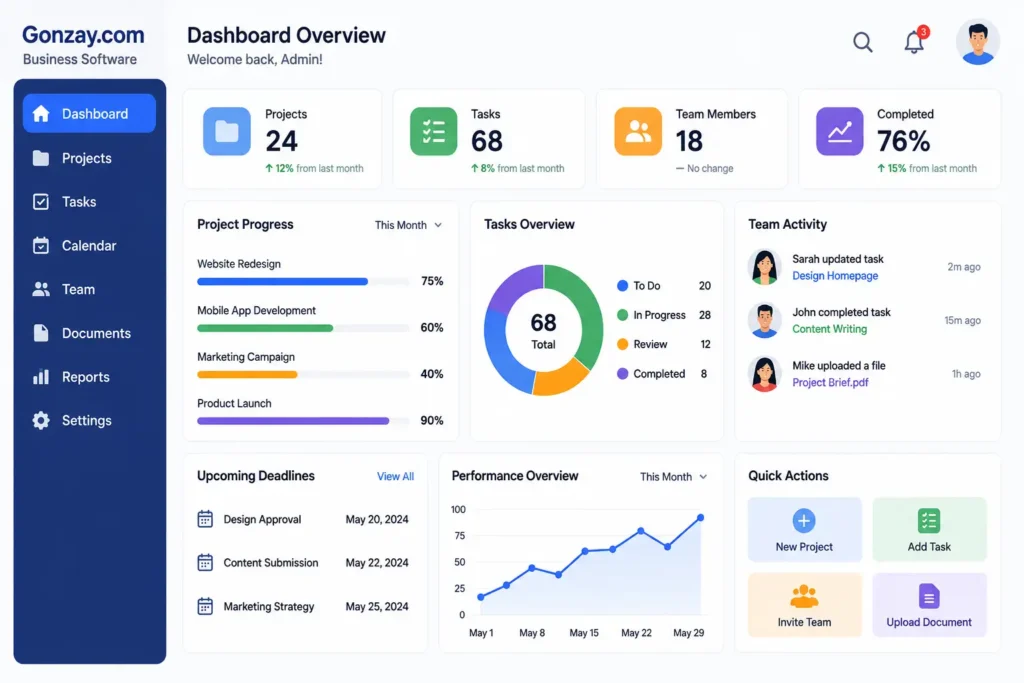
    gonzay.com dashboard

    Gonzay.com Business Software appears to be a business management platform designed to help organizations streamline their daily operations through digital tools and automation. Various online reviews describe it as a solution that combines task management, collaboration, reporting, workflow organization, and business process optimization into a single platform.

    Like many modern business applications, Gonzay.com aims to reduce operational inefficiencies by centralizing information, improving communication, and providing better visibility into projects and workflows.

    Instead of relying on multiple disconnected tools, businesses can potentially manage several functions from one dashboard, making it easier to monitor performance and coordinate teams.

    Why Businesses Need Software Like Gonzay.com

    As companies grow, managing operations manually becomes increasingly difficult.

    Businesses often face challenges such as:

    • Scattered information across multiple systems
    • Missed deadlines
    • Poor team communication
    • Lack of project visibility
    • Inefficient reporting
    • Repetitive administrative tasks
    • Difficulty tracking performance metrics

    Business management software addresses these problems by creating a centralized workspace where employees can collaborate and access important information in real time.

    This is where solutions like Gonzay.com become valuable.

    Key Features of Gonzay.com Business Software

    Although available information about the platform is limited, multiple analyses suggest that Gonzay.com may include several core business management capabilities.

    1. Project Management

    Project management is one of the most valuable features found in modern business software. Gonzay.com Business Software is believed to provide tools that help organizations plan, organize, and oversee projects from start to finish. Users can create projects, assign responsibilities to team members, set deadlines, monitor progress, and track completion rates through a centralized dashboard. 

    By providing clear visibility into ongoing work, project management features help teams stay aligned, improve accountability, and ensure projects are delivered on time.

    2. Task Management

    Effective task management is essential for maintaining productivity and ensuring that work gets completed efficiently. Gonzay.com may offer task management capabilities that allow businesses to create and assign tasks, establish priorities, set due dates, and track progress in real time. Team members can update task statuses as work advances, making it easier for managers and colleagues to understand project developments. 

    This organized approach reduces confusion, improves communication, and helps businesses maintain smoother daily operations.

    3. Team Collaboration

    Successful organizations rely heavily on collaboration and communication among employees. Gonzay.com Business Software may include collaboration features designed to keep teams connected regardless of their physical location. Shared workspaces, internal messaging systems, team discussions, file-sharing capabilities, and real-time notifications can help employees communicate more effectively. 

    By centralizing communication and project-related information, businesses can reduce misunderstandings, encourage teamwork, and improve overall productivity.

    4. Workflow Automation

    Workflow automation has become a key driver of business efficiency, helping organizations eliminate repetitive manual processes. Gonzay.com may provide automation tools that streamline routine tasks such as approvals, notifications, task assignments, and data entry. By automating these activities, businesses can improve consistency, reduce the risk of human error, and accelerate operational processes. 

    As a result, employees can spend more time focusing on strategic initiatives and high-value work rather than administrative tasks.

    5. Reporting and Analytics

    Data-driven decision-making is critical for modern businesses, and reporting tools play an important role in achieving that goal. Gonzay.com Business Software may offer reporting and analytics features that provide insights into project performance, employee productivity, operational efficiency, revenue trends, and overall business growth. 

    Through visual dashboards and customized reports, managers can monitor key performance indicators and identify opportunities for improvement. Access to real-time business intelligence enables organizations to make more informed and strategic decisions.

    6. Document Management

    Managing business documents efficiently is increasingly important as organizations generate large amounts of digital information. Gonzay.com may include document management capabilities that help businesses securely store, organize, and share files within a centralized system. Features such as version control and easy document retrieval can improve collaboration while reducing the time employees spend searching for important records. 

    A structured document management system also helps maintain consistency and improves information accessibility across teams.

    7. User Permissions and Access Controls

    Security remains a top priority for businesses handling sensitive information. Gonzay.com Business Software may offer user permissions and access control features that allow administrators to define who can view, edit, manage, or share specific data and resources. Role-based access ensures that employees only have access to the information necessary for their responsibilities. 

    This approach helps protect confidential business data, enhances security, and reduces the risk of unauthorized access.

    8. Mobile Accessibility

    As remote and hybrid work models continue to grow, mobile accessibility has become an essential feature of business software. Gonzay.com may provide a mobile-friendly experience that allows users to access projects, update tasks, communicate with team members, and review reports from smartphones or tablets. 

    This flexibility enables employees to remain productive while traveling, working remotely, or operating outside traditional office environments. Mobile accessibility ensures that important business information remains available whenever and wherever it is needed.

    How Does Gonzay.com Business Software Work?

    Understanding how the software operates can help businesses determine whether it aligns with their workflow requirements.

    Step 1: Account Setup

    The process typically begins with creating an account and configuring the workspace.

    Businesses may:

    • Add company information
    • Invite team members
    • Define departments
    • Set user roles

    This establishes the foundation for managing operations.

    Step 2: Organizing Projects and Tasks

    After setup, users create projects and divide them into manageable tasks.

    Managers can:

    • Assign responsibilities
    • Set deadlines
    • Define milestones
    • Monitor progress

    This creates transparency across teams.

    Step 3: Centralizing Information

    A major benefit of business software is information centralization.

    Instead of storing data across multiple spreadsheets, emails, and documents, organizations can maintain everything within a unified system.

    This improves accessibility and reduces information silos.

    Step 4: Automating Workflows

    Businesses can create automated processes for repetitive tasks.

    Examples include:

    • Approval requests
    • Status updates
    • Notification triggers
    • Task assignments

    Automation minimizes errors while saving time.

    Step 5: Monitoring Performance

    Dashboards and analytics provide visibility into business performance.

    Managers can track:

    • Project completion rates
    • Employee workloads
    • Resource allocation
    • Operational efficiency

    This supports data-driven decision-making.

    Step 6: Continuous Optimization

    Businesses can use software-generated insights to refine processes and improve productivity over time.

    This ongoing optimization is often where organizations achieve the greatest return on investment.
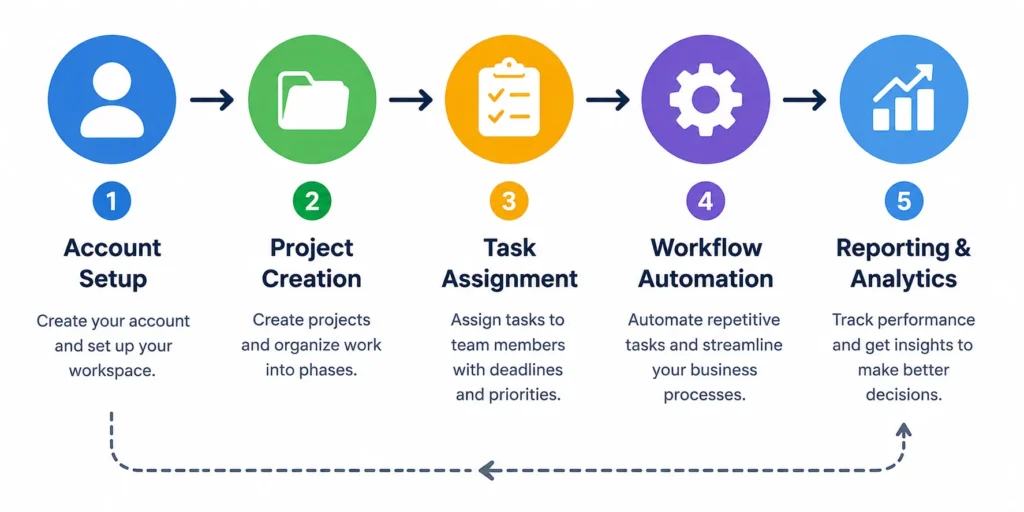
    six step to show workflow

    Benefits of Using Gonzay.com Business Software

    Improved Productivity

    By organizing tasks and automating workflows, employees can spend less time on administrative work and more time on strategic initiatives.

    Better Team Communication

    Centralized communication reduces misunderstandings and keeps everyone aligned.

    Increased Operational Efficiency

    Businesses can streamline processes and eliminate unnecessary steps.

    Enhanced Visibility

    Managers gain a clearer view of ongoing projects and organizational performance.

    Reduced Human Error

    Automation helps minimize mistakes associated with manual data entry and repetitive tasks.

    Scalability

    As businesses grow, software platforms can often scale to support additional users, projects, and processes.

    Who Can Use Gonzay.com Business Software?

    The platform may be suitable for a wide range of organizations.

    A. Small Businesses

    Small companies often need affordable solutions that improve efficiency without requiring extensive technical expertise.

    B. Startups

    Startups can benefit from organized workflows and collaboration tools while managing rapid growth. During that growth, job-change tracking helps sales and recruiting teams spot when prospects or candidates switch roles, surfacing high-intent moments to reach out.

    C. Professional Service Firms

    Consultants, agencies, and service providers can use project management features to coordinate client work.

    D. Remote Teams

    Distributed teams require centralized communication and task tracking to remain productive.

    E. Growing Companies

    Businesses experiencing expansion often need software capable of handling increasing operational complexity.

    Potential Use Cases

    Marketing Agencies

    Agencies can manage campaigns, client deliverables, content schedules, and team assignments.

    Software Development Teams

    Development teams can track projects, bugs, releases, and collaboration efforts.

    Consulting Firms

    Consultants can manage client projects, deadlines, and reporting requirements.

    E-commerce Businesses

    Online retailers can coordinate operations, inventory planning, marketing activities, and customer support processes.

    Educational Organizations

    Schools and training providers can use project and workflow management tools to coordinate staff activities.

    Advantages of Gonzay.com Business Software

    Some potential advantages include:

    • Unified business management environment
    • Collaboration tools
    • Reporting capabilities
    • Workflow automation
    • Project visibility
    • Reduced administrative workload
    • Improved decision-making

    These benefits align with the goals of modern business management systems.

    Possible Limitations

    No software solution is perfect.

    Businesses should also consider potential limitations such as:

    • Learning curve for new users
    • Integration restrictions
    • Customization limitations
    • Feature availability differences
    • Scaling requirements for larger enterprises

    Organizations should evaluate their specific needs before adopting any business software platform.

    Gonzay.com Business Software vs Traditional Management Methods

    FeatureTraditional MethodsGonzay.com Software
    Task TrackingManualAutomated
    CollaborationEmail-BasedCentralized
    ReportingTime-ConsumingReal-Time
    Document StorageScatteredOrganized
    Workflow ManagementManual ProcessesAutomated
    Performance MonitoringLimited VisibilityDashboard-Based

    The shift from manual processes to digital platforms can significantly improve operational efficiency.

    Best Practices for Successful Implementation

    To maximize value from business software:

    Define Clear Objectives

    Understand what problems you want the software to solve.

    Train Employees

    Provide sufficient onboarding and training resources.

    Start Small

    Begin with core processes before expanding usage.

    Monitor Adoption

    Ensure team members actively use the platform.

    Review Performance Regularly

    Use analytics and reports to identify improvement opportunities.

    Alternatives to Gonzay.com Business Software

    Businesses evaluating software solutions may also consider platforms such as:

    • LivePlan
    • Monday.com
    • Bizplan
    • IdeaBuddy
    • Enloop
    • GoSmallBiz

    Each solution offers unique strengths depending on business requirements.

    Is Gonzay.com Business Software Worth It?

    The value of Gonzay.com Business Software depends on your organization’s goals, budget, and operational challenges.

    For businesses seeking:

    • Better organization
    • Workflow automation
    • Improved collaboration
    • Enhanced reporting
    • Increased productivity

    A business management platform can provide substantial benefits.

    The key is ensuring the software aligns with your company’s processes and long-term growth objectives.

    Final Thoughts

    Gonzay.com Business Software appears to be a business management solution focused on helping organizations streamline operations, improve collaboration, automate workflows, and gain better visibility into performance. While detailed public information about the platform remains limited, available analyses suggest that it offers features commonly found in modern business management systems, including project tracking, workflow automation, reporting, document management, and team collaboration.

    As businesses continue to embrace digital transformation, tools like Gonzay.com can play an important role in improving efficiency and supporting growth. Before making a decision, businesses should carefully assess their needs, test available features, and compare alternative solutions to determine the best fit.

    Frequently Asked Questions

    What is Gonzay.com Business Software?

    Gonzay.com Business Software is a business management platform that appears to provide tools for project management, collaboration, workflow automation, reporting, and operational organization.

    Is Gonzay.com suitable for small businesses?

    Yes. Available information suggests it may be particularly useful for small and medium-sized businesses looking to improve productivity and organization.

    Does Gonzay.com offer workflow automation?

    Reports indicate that workflow automation is one of its core capabilities, helping businesses reduce manual work and improve efficiency.

    Can remote teams use Gonzay.com?

    Yes. Collaboration and mobile accessibility features make it suitable for remote and distributed teams.

    What are the main benefits of business management software?

    Common benefits include improved productivity, better communication, centralized information management, enhanced reporting, and workflow automation.

    Are there alternatives to Gonzay.com?

    Yes. Alternatives include LivePlan, Bizplan, Monday.com, Enloop, IdeaBuddy, and other business planning and management software solutions.

    How do I choose the right business software?

    Evaluate your business goals, required features, scalability needs, budget, integration requirements, and team size before making a decision.

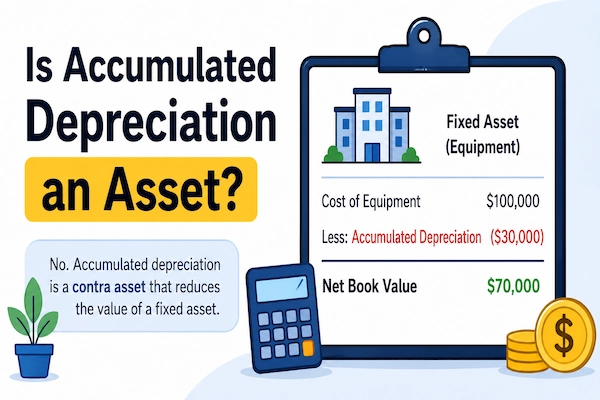
  • Is Accumulated Depreciation an Asset? A Simple Guide for Business Owners and Students

    Is Accumulated Depreciation an Asset? A Simple Guide for Business Owners and Students

    If you’ve ever looked at a balance sheet and wondered, “Is accumulated depreciation an asset?” you’re not alone. This is one of the most common accounting questions among students, small business owners, and even new accountants.

    The short answer is: No, accumulated depreciation is not an asset. It’s known as a contra asset account, which means it reduces the value of a fixed asset on the balance sheet.

    That answer sounds simple, but understanding why accumulated depreciation exists and how it works is what really matters.

    What Is Accumulated Depreciation?

    Accumulated depreciation is the total depreciation recorded for an asset since the day it was purchased and used by a business.

    Businesses buy long-term assets such as:

    • Machinery
    • Vehicles
    • Buildings
    • Computers
    • Office furniture
    • Equipment

    These assets lose value over time because of:

    • Wear and tear
    • Aging
    • Obsolescence
    • Daily use

    Instead of recording the entire cost as an expense immediately, businesses spread the cost over the asset’s useful life. This process is called depreciation.

    Accumulated depreciation simply keeps track of the total amount depreciated so far.

    For example:

    • A company buys a machine for $50,000
    • The machine depreciates by $5,000 every year
    • After 3 years, accumulated depreciation becomes $15,000

    This means the machine’s book value is now:

    $50,000 − $15,000 = $35,000

    So while the machine still appears on the balance sheet at its original cost, accumulated depreciation reduces its carrying value.

    Is Accumulated Depreciation an Asset?

    No, accumulated depreciation is not an asset.

    It is classified as a:

    Contra Asset Account

    A contra asset account is an account that offsets or reduces the balance of another asset account.

    In accounting:

    • Regular asset accounts usually have a debit balance
    • Contra asset accounts carry a credit balance

    Accumulated depreciation reduces the recorded value of fixed assets to show a more realistic current value.

    For example:

    AssetAmount
    Equipment$100,000
    Less: Accumulated Depreciation($30,000)
    Net Book Value$70,000

    In this case:

    • Equipment is the actual asset
    • Accumulated depreciation is reducing that asset’s value
    • Net book value is the remaining carrying amount

    That’s why accumulated depreciation is not considered an independent asset.

    Why Businesses Use Accumulated Depreciation

    Accumulated depreciation exists to help businesses follow the matching principle in accounting.

    The matching principle says expenses should be recorded in the same period as the revenue they help generate.

    Imagine buying machinery for $120,000 that lasts 10 years.

    If the company recorded the entire $120,000 as an expense in Year 1:

    • Year 1 profits would look unusually low
    • Future years would show inflated profits

    That wouldn’t accurately represent business performance.

    Instead, the company spreads the cost over the asset’s useful life.

    So if annual depreciation is $12,000:

    • Every year records $12,000 depreciation expense
    • Accumulated depreciation grows each year
    • Financial statements stay more accurate

    This creates a fairer picture of profitability and asset value.

    Where Does Accumulated Depreciation Appear on the Balance Sheet?

    Accumulated depreciation appears under the assets section of the balance sheet.

    However, it’s shown as a negative figure directly below the related fixed asset.

    Example:

    Fixed AssetsAmount
    Building$500,000
    Less: Accumulated Depreciation($80,000)
    Net Building Value$420,000

    This format helps investors, lenders, and business owners understand:

    • Original asset cost
    • Total depreciation taken
    • Remaining book value

    The net value gives a clearer picture of what the asset is worth from an accounting perspective.

    Is Accumulated Depreciation a Liability?

    No, accumulated depreciation is not a liability either.

    Liabilities represent obligations or debts a business owes, such as:

    • Loans
    • Accounts payable
    • Taxes payable
    • Wages payable

    Accumulated depreciation does not represent money owed to anyone.

    Instead, it simply tracks how much of an asset’s value has been used over time.

    That’s why accountants classify it as a contra asset account rather than a liability.

    Is Accumulated Depreciation an Expense?

    This is another area where people get confused.

    Depreciation Expense vs Accumulated Depreciation

    These two terms are related but not identical.

    Depreciation ExpenseAccumulated Depreciation
    Recorded for one accounting periodTotal depreciation since purchase
    Appears on income statementAppears on balance sheet
    Temporary accountPermanent balance sheet account
    Reduces annual profitReduces asset carrying value

    Think of it this way:

    • Depreciation expense is the yearly charge
    • Accumulated depreciation is the running total

    For example:

    Year 1

    • Depreciation expense = $5,000
    • Accumulated depreciation = $5,000

    Year 2

    • Depreciation expense = $5,000
    • Accumulated depreciation = $10,000

    Year 3

    • Depreciation expense = $5,000
    • Accumulated depreciation = $15,000

    The expense resets every year, but accumulated depreciation keeps growing.

    How to Calculate Accumulated Depreciation

    The most common method is the straight-line depreciation method.

    Straight-Line Depreciation Formula

    Annual Depreciation Expense =

    (Asset Cost − Salvage Value) ÷ Useful Life

    Where:

    • Asset Cost = purchase price
    • Salvage Value = estimated value at end of useful life
    • Useful Life = estimated years of use

    Example Calculation

    A company purchases office equipment for:

    • Cost = $20,000
    • Salvage Value = $2,000
    • Useful Life = 6 years

    Step 1: Calculate Annual Depreciation

    ($20,000 − $2,000) ÷ 6 = $3,000 per year

    Step 2: Calculate Accumulated Depreciation

    YearAnnual DepreciationAccumulated Depreciation
    1$3,000$3,000
    2$3,000$6,000
    3$3,000$9,000
    4$3,000$12,000

    After 4 years, accumulated depreciation equals $12,000.

    Journal Entry for Accumulated Depreciation

    Every time depreciation is recorded, businesses make this journal entry:

    AccountDebitCredit
    Depreciation ExpenseXXX
    Accumulated DepreciationXXX

    Example:

    If annual depreciation is $4,000:

    AccountDebitCredit
    Depreciation Expense$4,000
    Accumulated Depreciation$4,000

    This entry:

    • Increases expenses on the income statement
    • Increases accumulated depreciation on the balance sheet
    • Reduces net income
    • Reduces asset carrying value

    Types of Assets That Use Accumulated Depreciation

    Accumulated depreciation is mainly used for tangible fixed assets.

    Examples include:

    1. Buildings

    Commercial properties lose value over time because of aging and usage.

    2. Machinery

    Manufacturing equipment becomes less efficient over time.

    3. Office Equipment

    Computers, printers, and office furniture lose value as technology changes.

    4. Factory Equipment

    Industrial assets wear down from continuous production.

    Assets That Do Not Use Depreciation

    Not every asset is depreciated.

    1. Land

    Land generally does not lose value through normal use, so businesses do not depreciate it.

    2. Intangible Assets

    Items like:

    • Trademarks
    • Patents
    • Copyrights
    • Software licenses

    usually use amortization instead of depreciation.

    Different Methods of Depreciation

    Although straight-line depreciation is most common, businesses can use other methods too.

    1. Straight-Line Method

    Equal depreciation expense every year.

    Best for:

    • Office furniture
    • Buildings
    • General equipment

    2. Declining Balance Method

    Higher depreciation in earlier years.

    Best for:

    • Technology assets
    • Vehicles
    • Equipment that loses value quickly

    3. Double Declining Balance Method

    An accelerated depreciation method that records even higher early-year depreciation.

    4. Units of Production Method

    Depreciation depends on actual usage.

    Best for:

    • Manufacturing machines
    • Production equipment

    No matter which method is used, accumulated depreciation keeps increasing throughout the asset’s life.

    Why Accumulated Depreciation Matters

    Accumulated depreciation is important for several reasons.

    a. Accurate Financial Reporting

    It prevents assets from appearing overvalued on the balance sheet.

    b. Better Profit Measurement

    Businesses spread asset costs across multiple years rather than recording one huge expense.

    c. Tax Benefits

    Depreciation expenses can reduce taxable income.

    d. Asset Management

    Companies can track aging equipment and plan replacements.

    e. Investor Transparency

    Investors get a clearer understanding of how efficiently assets are being used.

    Real-Life Example of Accumulated Depreciation

    Imagine a logistics company buys delivery trucks for $300,000.

    The trucks:

    • Have a useful life of 10 years
    • Have a salvage value of $50,000

    Annual Depreciation

    ($300,000 − $50,000) ÷ 10 = $25,000

    After 4 Years

    Accumulated depreciation becomes:

    4 × $25,000 = $100,000

    Balance Sheet Presentation

    Trucks$300,000
    Less: Accumulated Depreciation($100,000)
    Net Book Value$200,000

    This tells readers that the trucks have already consumed part of their useful value.

    Common Mistakes People Make About Accumulated Depreciation

    Understanding accumulated depreciation becomes easier once you know the common misconceptions.

    Mistake 1: Thinking It’s a Liability

    It’s not money owed to anyone.

    Mistake 2: Thinking It’s an Expense

    Depreciation expense is the yearly charge. Accumulated depreciation is the running total.

    Mistake 3: Assuming It Reflects Market Value

    Accumulated depreciation affects book value, not actual resale value.

    An asset may:

    • Be worth more than book value
    • Be worth less than book value
    • Still function perfectly after full depreciation

    Mistake 4: Forgetting Contra Asset Rules

    Contra asset accounts increase with credits, unlike normal assets.

    Accumulated Depreciation vs Amortization

    People often confuse depreciation and amortization.

    Here’s the difference:

    DepreciationAmortization
    Used for tangible assetsUsed for intangible assets
    Applies to machinery, vehicles, buildingsApplies to patents, trademarks, software
    Creates accumulated depreciationCreates accumulated amortization

    Both concepts reduce the carrying value of long-term assets over time.

    What Happens When an Asset Is Sold?

    When a business sells an asset:

    • The asset account is removed
    • Accumulated depreciation is removed
    • Any gain or loss is recorded

    Example

    A machine originally cost $40,000.

    Accumulated depreciation = $25,000.

    Book value = $15,000.

    If the machine sells for $18,000:

    • The company records a $3,000 gain

    If it sells for $10,000:

    • The company records a $5,000 loss

    This process helps businesses maintain accurate accounting records.

    How Accumulated Depreciation Impacts Financial Statements

    Accumulated depreciation affects multiple financial statements.

    Balance Sheet

    Reduces fixed asset value.

    Income Statement

    Depreciation expense lowers net income.

    Cash Flow Statement

    Depreciation is added back because it’s a non-cash expense.

    This is why depreciation matters heavily in business valuation and financial analysis.

    Can Accumulated Depreciation Exceed Asset Cost?

    No, accumulated depreciation cannot exceed the depreciable value of an asset.

    Once the asset reaches its salvage value:

    • Depreciation stops
    • Accumulated depreciation stops increasing

    For example:

    • Asset cost = $50,000
    • Salvage value = $5,000
    • Maximum accumulated depreciation = $45,000

    Why Investors and Accountants Pay Attention to Accumulated Depreciation

    Accumulated depreciation can reveal important business insights.

    Aging Assets

    High accumulated depreciation may suggest equipment is old and may soon need replacement.

    Capital Expenditure Trends

    Investors can see whether a company regularly invests in new assets.

    Profitability Analysis

    Depreciation affects net income and earnings.

    Tax Planning

    Businesses use depreciation strategies to manage taxable income.

    Frequently Asked Questions

    1. Is accumulated depreciation a current asset?

    No. It is a contra asset account connected to long-term fixed assets.

    2. Is accumulated depreciation debit or credit?

    Accumulated depreciation normally carries a credit balance.

    3. Why is accumulated depreciation negative on the balance sheet?

    Because it reduces the value of fixed assets.

    4. Is depreciation an expense?

    Yes. Depreciation expense appears on the income statement.

    5. Is accumulated depreciation a permanent account?

    Yes. It remains on the balance sheet until the asset is sold or removed.

    6. Does accumulated depreciation affect cash?

    No directly. Depreciation is considered a non-cash expense.

    7. Can land have accumulated depreciation?

    No. Land is generally not depreciated.

    Final Thoughts

    So, is accumulated depreciation an asset? The answer is clearly no.

    Accumulated depreciation is a contra asset account used to reduce the carrying value of fixed assets over time.

    It helps businesses:

    • Follow accounting principles
    • Present more accurate financial statements
    • Match expenses with revenue
    • Track asset usage and aging
    • Calculate realistic book values
  • Best Accounting Software for Analytics: Top Tools to Turn Financial Data Into Smarter Business Decisions

    Best Accounting Software for Analytics: Top Tools to Turn Financial Data Into Smarter Business Decisions

    Businesses no longer use accounting software only for bookkeeping and tax filing. Modern companies want real-time dashboards, advanced reporting, cash flow forecasting, AI-powered insights, and data-driven financial planning. That is why the demand for accounting software with strong analytics features is growing rapidly.

    Whether you run a startup, small business, eCommerce store, agency, or enterprise company, the right accounting software can help you understand your numbers better and make faster business decisions.

    In this guide, we’ll explore the best accounting software for analytics in [this_year], compare their features, pricing, strengths, and limitations, and help you choose the right platform for your business.

    Why Analytics Matter in Accounting Software

    bar graph analysis on screen

    Traditional accounting software mainly focused on recording transactions. Today, businesses need much more than that.

    Modern accounting analytics help companies:

    • Track revenue trends
    • Monitor expenses in real time
    • Forecast future cash flow
    • Identify profit leaks
    • Analyze customer profitability
    • Create financial dashboards
    • Generate custom reports instantly
    • Make faster strategic decisions

    Instead of waiting until month-end reports arrive, business owners can now monitor performance daily.

    For example, a retail business can instantly see which product categories generate the highest profit margins. A marketing agency can track client profitability in real time. An eCommerce store can monitor inventory costs and cash flow before problems appear.

    This shift from reactive accounting to proactive financial intelligence is why analytics-driven accounting software and custom software development service solutions have become essential for modern businesses

    What to Look for in Accounting Software With Analytics

    Before choosing suitable accounting software, it’s important to understand which analytics features truly matter.

    1. Real-Time Dashboards

    Good accounting software should provide visual dashboards showing:

    • Revenue
    • Expenses
    • Cash flow
    • Profit margins
    • Outstanding invoices
    • Budget performance

    Real-time visibility helps business owners react quickly.

    2. Custom Reporting

    Every business tracks different KPIs. Look for software that allows customizable reports instead of fixed templates.

    3. AI and Predictive Insights

    Many modern platforms now use AI for:

    • Cash flow forecasting
    • Expense categorization
    • Fraud detection
    • Budget predictions
    • Trend analysis

    These tools reduce manual work and improve accuracy.

    4. Integrations

    The best accounting software connects with:

    • CRM platforms
    • Payroll systems
    • eCommerce platforms
    • Banking apps
    • ERP systems
    • BI tools like Power BI and Tableau or other Omni Analytics alternatives.

    Integrations create a centralized data ecosystem.

    5. Scalability

    Choose software that grows with your business. Switching accounting systems later can become expensive and complicated.

    6. Ease of Use

    Advanced analytics should not require a finance degree. The ideal software offers powerful insights with a clean interface.

    Best Accounting Software for Analytics in [this_year]

    Here are the top accounting software platforms for analytics and Knowledge Base Software tools, evaluated based on features, usability, scalability, integrations, and reporting capabilities.

    1. QuickBooks Online Advanced

    Best Overall Accounting Software for Analytics

    QuickBooks Online Advanced remains one of the strongest accounting platforms for businesses that want a balance of usability and analytics.

    Its reporting system gives businesses access to customizable dashboards, advanced KPI tracking, revenue analysis, and detailed cash flow reporting.

    Key Analytics Features

    • Real-time business dashboards
    • Advanced custom reporting
    • Revenue and expense tracking
    • Automated financial insights
    • Cash flow forecasting
    • KPI monitoring
    • Integration with Power BI and other analytics tools

    Pros

    • Easy to use
    • Strong reporting features
    • Excellent third-party integrations
    • Suitable for small and mid-sized businesses
    • Cloud-based accessibility

    Cons

    • Advanced plans can become expensive
    • Limited deep enterprise analytics compared to ERP systems

    Best For

    Small and medium-sized businesses that need strong reporting without enterprise-level complexity.

    Pricing

    Starts with lower-tier plans, while Advanced plans cost more depending on users and features.

    2. Xero

    Best for Visual Financial Dashboards

    Xero has become extremely popular because of its user-friendly interface and visual analytics tools.

    The platform simplifies complex financial data into understandable reports, making it ideal for business owners who are not accounting experts.

    Key Analytics Features

    • Interactive dashboards
    • Business snapshot analytics
    • Cash flow prediction tools
    • Financial performance reports
    • Budget tracking
    • Bank reconciliation insights
    • Real-time financial monitoring

    Pros

    • Very intuitive dashboard
    • Strong mobile experience
    • Excellent integrations
    • Good collaboration features
    • Ideal for startups and freelancers

    Cons

    • Some advanced analytics require add-ons
    • Payroll features vary by country

    Best For

    Startups, freelancers, agencies, and growing small businesses.

    Pricing

    Affordable entry-level plans with scalable premium options.

    3. Zoho Books

    Best Budget-Friendly Analytics Accounting Software

    Zoho Books offers impressive analytics capabilities at a much lower price than many competitors.

    Its reporting engine is especially useful for small businesses that need strong insights without paying enterprise-level costs.

    Key Analytics Features

    • Custom financial dashboards
    • Profit and loss analytics
    • Expense analysis
    • Inventory insights
    • Project profitability tracking
    • Workflow automation
    • AI-powered business assistance

    Pros

    • Affordable pricing
    • Strong automation tools
    • Excellent ecosystem integrations
    • Good mobile apps
    • Easy to customize

    Cons

    • Some advanced features require higher plans
    • Less popular among large enterprises

    Best For

    Small businesses, freelancers, consultants, and online businesses.

    Pricing

    Offers free and low-cost plans with scalable upgrades.

    4. Sage Intacct

    Best for Advanced Financial Analytics

    Sage Intacct is designed for companies that require deeper financial intelligence and multi-dimensional reporting.

    Unlike basic accounting software, Sage Intacct focuses heavily on advanced financial analysis.

    Key Analytics Features

    • Multi-entity reporting
    • Advanced dimensional analysis
    • AI-powered financial forecasting
    • Real-time KPI dashboards
    • Automated financial consolidations
    • Compliance reporting
    • Custom business intelligence tools

    Pros

    • Enterprise-grade reporting
    • Powerful automation
    • Excellent scalability
    • Highly customizable analytics
    • Strong security and compliance

    Cons

    • Higher learning curve
    • Expensive for small businesses

    Best For

    Mid-sized and enterprise businesses with complex financial operations.

    Pricing

    Custom enterprise pricing.

    5. NetSuite ERP

    Best Enterprise Accounting and Analytics Platform

    NetSuite combines accounting, ERP, CRM, and analytics into one ecosystem.

    Large organizations choose NetSuite because it delivers a unified view of business performance across departments.

    Key Analytics Features

    • Enterprise dashboards
    • Real-time business intelligence
    • Advanced forecasting
    • Multi-currency reporting
    • Global financial consolidation
    • AI-powered analytics
    • Inventory and operational insights

    Pros

    • All-in-one enterprise solution
    • Highly scalable
    • Strong automation
    • Advanced data visualization
    • Excellent global business support

    Cons

    • Expensive
    • Requires implementation expertise
    • Can feel overwhelming for small teams

    Best For

    Large businesses and enterprises with global operations.

    Pricing

    Custom pricing based on company requirements.

    6. FreshBooks

    Best for Freelancers and Service Businesses

    FreshBooks is known for simplicity, but it also includes useful analytics for freelancers and service-based companies.

    Its clean interface makes financial reporting easy to understand.

    Key Analytics Features

    • Revenue tracking
    • Expense monitoring
    • Invoice analytics
    • Time tracking reports
    • Client profitability analysis
    • Tax summary reporting

    Pros

    • Extremely beginner-friendly
    • Great invoicing tools
    • Excellent customer experience
    • Useful for service businesses

    Cons

    • Limited enterprise analytics
    • Not ideal for complex inventory management

    Best For

    Freelancers, consultants, agencies, and creative professionals.

    Pricing

    Monthly subscription plans based on features and clients.

    7. Microsoft Dynamics 365 Finance

    Best for Large Businesses Using Microsoft Ecosystems

    Businesses already using Microsoft products often prefer Dynamics 365 because of its integration with Power BI, Excel, Teams, and Azure.

    This creates a powerful analytics environment.

    Key Analytics Features

    • AI-powered financial insights
    • Advanced forecasting
    • Real-time dashboards
    • Deep Power BI integration
    • Budget analysis
    • Enterprise-level reporting
    • Operational analytics

    Pros

    • Excellent Microsoft integration
    • Powerful analytics capabilities
    • Enterprise scalability
    • Strong automation features

    Cons

    • Complex implementation
    • Higher costs
    • Requires technical expertise

    Best For

    Large enterprises already invested in Microsoft systems.

    8. Wave Accounting

    Best Free Accounting Software With Basic Analytics

    Wave is one of the best free accounting solutions for startups and solo entrepreneurs.

    Although it lacks advanced enterprise analytics, it still provides useful financial reporting features.

    Key Analytics Features

    • Basic financial dashboards
    • Revenue tracking
    • Expense categorization
    • Cash flow summaries
    • Invoice reporting

    Pros

    • Free core accounting tools
    • Simple interface
    • Good for startups
    • Easy setup process

    Cons

    • Limited advanced reporting
    • Fewer integrations
    • Not ideal for scaling businesses

    Best For

    Freelancers, startups, and very small businesses.

    Comparison Table: Best Accounting Software for Analytics

    SoftwareBest ForAnalytics StrengthEase of UseScalability
    QuickBooks Online AdvancedSMBsStrongEasyHigh
    XeroDashboards and startupsStrongVery EasyMedium
    Zoho BooksBudget-conscious businessesGoodEasyMedium
    Sage IntacctAdvanced finance teamsExcellentModerateVery High
    NetSuite ERPEnterprisesExcellentModerateExcellent
    FreshBooksFreelancersBasic to ModerateVery EasyMedium
    Dynamics 365 FinanceLarge enterprisesExcellentModerateExcellent
    Wave AccountingStartupsBasicVery EasyLow

    Best Accounting Software by Business Type

    characters doing case study and euro symbol

    Choosing software based only on popularity is a mistake. The best solution depends on your business model.

    a. Best for Small Businesses

    • QuickBooks Online
    • Xero
    • Zoho Books

    These platforms balance affordability, automation, and reporting.

    b. Best for Enterprises

    • NetSuite ERP
    • Sage Intacct
    • Dynamics 365 Finance

    These systems support complex financial structures and large datasets.

    c. Best for Freelancers

    • FreshBooks
    • Wave Accounting

    They simplify invoicing, expense tracking, and client reporting.

    d. Best for eCommerce Businesses

    • QuickBooks Online
    • Xero
    • NetSuite ERP

    Strong integrations with Shopify, Amazon, and inventory systems are essential.

    e. Best for Agencies and Service Businesses

    • FreshBooks
    • Zoho Books
    • Xero

    Project profitability tracking becomes especially important here.

    How Analytics Improve Financial Decision-Making

    Analytics-driven accounting software changes how businesses operate.

    Faster Reporting

    Instead of manually building spreadsheets, businesses can instantly generate reports.

    Better Cash Flow Management

    Predictive forecasting helps businesses avoid liquidity problems.

    Improved Profitability

    Analytics identify:

    • Unprofitable products
    • Expensive processes
    • Overspending areas
    • High-performing revenue channels

    Smarter Budget Planning

    Historical financial data helps companies build more accurate budgets.

    Real-Time Monitoring

    Business owners can monitor performance daily instead of waiting until month-end.

    Accounting Software Trends in [this_year]

    The accounting software industry is evolving rapidly.

    Here are the biggest trends shaping the future.

    A. AI-Powered Accounting

    Artificial intelligence is automating repetitive accounting tasks like:

    • Invoice processing
    • Expense categorization
    • Fraud detection
    • Financial forecasting

    AI also improves reporting accuracy.

    B. Predictive Analytics

    Modern platforms now predict future financial outcomes using historical data patterns.

    C. Cloud-Based Financial Management

    Cloud accounting continues dominating because it allows:

    • Remote access
    • Real-time collaboration
    • Automatic updates
    • Better security

    D. Integration With Business Intelligence Tools

    Companies increasingly connect accounting platforms with:

    • Power BI
    • Tableau
    • Looker
    • Qlik Sense

    This enables deeper data analysis.

    E. Automation and Workflow Optimization

    Businesses want software that reduces manual work and saves time.

    Automation is now a core buying factor.

    Common Mistakes to Avoid When Choosing Accounting Software

    Many businesses choose software too quickly and regret it later.

    Here are common mistakes to avoid.

    1. Choosing Based Only on Price

    Cheap software may lack important reporting features.

    2. Ignoring Scalability

    A system that works for five employees may fail when your company grows to fifty.

    3. Overlooking Integrations

    Disconnected systems create data silos and manual work.

    4. Ignoring User Experience

    Complicated software reduces team adoption.

    5. Not Considering Analytics Depth

    Some accounting tools offer only basic reports, while others provide advanced business intelligence.

    Always evaluate your long-term reporting needs.

    How to Choose the Right Accounting Analytics Software

    Here’s a simple framework to make the right decision.

    Step 1: Identify Your Business Needs

    Ask yourself:

    • Do you need inventory management?
    • Do you require multi-currency support?
    • Will multiple departments use the system?
    • Do you need advanced forecasting?

    Step 2: Define Your Budget

    Consider:

    • Monthly subscription costs
    • Add-on expenses
    • Implementation fees
    • Training costs

    Step 3: Test the User Experience

    Most platforms offer free trials.

    Test:

    • Dashboard usability
    • Reporting speed
    • Navigation simplicity
    • Mobile accessibility

    Step 4: Evaluate Integrations

    Check compatibility with your existing business tools.

    Step 5: Compare Analytics Features

    Focus on:

    • Custom reports
    • KPI dashboards
    • AI insights
    • Predictive forecasting
    • Visualization quality

    Final Verdict: Which Accounting Software Is Best for Analytics?

    The best accounting software for analytics depends on your business size, budget, and reporting needs. Small and medium-sized businesses will benefit most from QuickBooks Online Advanced and Xero because they offer strong dashboards, automation, integrations, and easy-to-use reporting tools. Businesses looking for a budget-friendly option can choose Zoho Books, while freelancers and service providers may prefer FreshBooks for its simplicity and client-focused features.

    For larger organizations with complex financial operations, platforms like NetSuite ERP, Sage Intacct, and Microsoft Dynamics 365 Finance provide advanced analytics, forecasting, and enterprise-level reporting capabilities.

    Modern accounting software does far more than basic bookkeeping. It helps businesses track performance, forecast cash flow, improve profitability, and make smarter financial decisions using real-time insights. As AI and automation continue shaping the accounting industry, choosing the right analytics-focused platform can give businesses a major competitive advantage in 2026 and beyond.

    Frequently Asked Questions

    1. What is the best accounting software for analytics?

    QuickBooks Online Advanced, Xero, Sage Intacct, and NetSuite are among the best accounting software platforms for analytics.

    2. Which accounting software has the best dashboards?

    Xero and QuickBooks Online provide highly visual and user-friendly dashboards.

    3. What is the best free accounting software with analytics?

    Wave Accounting is one of the best free accounting tools with basic analytics capabilities.

    4. Can accounting software integrate with Power BI?

    Yes. QuickBooks, Dynamics 365, NetSuite, and several other platforms integrate with Power BI.

    5. Which accounting software is best for small businesses?

    QuickBooks Online, Xero, and Zoho Books are excellent options for small businesses.

    6. Is cloud accounting software better for analytics?

    Yes. Cloud accounting platforms offer real-time data access, automation, remote collaboration, and easier integration with analytics tools.

  • What is Commerce Inspector, the most talked-about ecommerce intelligence tool.

    What is Commerce Inspector, the most talked-about ecommerce intelligence tool.

    Commerce Inspector is an ecommerce competitor research and market intelligence tool designed mainly for Shopify stores. It helps users analyze ecommerce businesses by collecting publicly available data from online stores, advertisements, product catalogs, traffic sources, and social media channels.

    The platform is commonly used by:

    • Shopify store owners
    • Dropshippers
    • Ecommerce marketers
    • Product researchers
    • Amazon and ecommerce sellers
    • Digital agencies
    • Entrepreneurs launching online stores

    Commerce Inspector gives users access to important ecommerce insights such as:

    • Estimated store revenue
    • Best-selling products
    • New product launches
    • Store traffic estimates
    • Facebook and social ads
    • Shopify apps used by competitors
    • Product trends
    • Marketing strategies
    • Social media engagement

    The tool became popular because it simplifies competitor research. Instead of manually studying dozens of ecommerce websites, users can quickly gather useful data in one place.

    Today, Commerce Inspector is often compared to tools like Koala Inspector, SimilarWeb, BuiltWith, Dropship.io, and BigSpy.

    How Commerce Inspector Works

    shopify store and tool

    Commerce Inspector works by scanning publicly available ecommerce data from Shopify stores and digital platforms.

    The platform uses automated technology and AI-based analysis to identify patterns and ecommerce insights.

    Here is a simple breakdown of how it works:

    1. Data Collection

    Commerce Inspector collects data from various public sources, including:

    • Shopify storefronts
    • Facebook ads
    • Instagram pages
    • Pinterest activity
    • Product pages
    • Social engagement metrics
    • Website technologies
    • Public traffic signals

    The system continuously updates this information to monitor changes in ecommerce stores. This becomes much easier with the best API for Instagram scraping, which can help ensure this kind of tracking stays accurate and reliable as the platform evolves.

    2. Data Processing

    Once the data is collected, Commerce Inspector organizes and analyzes it.

    The platform estimates:

    • Product popularity
    • Sales trends
    • Store growth
    • Traffic performance
    • Marketing strategies
    • Ecommerce technology stacks

    Although the numbers are estimates rather than exact analytics, they still provide valuable direction for ecommerce research.

    3. User Dashboard

    Users can search for Shopify stores, products, or niches through the Commerce Inspector dashboard or browser extension.

    The dashboard displays:

    • Trending products
    • Estimated revenue
    • Store insights
    • Product launches
    • Competitor analysis
    • Ad tracking
    • Installed Shopify apps

    This makes it easier for businesses to understand what competitors are doing successfully.

    Main Features of Commerce Inspector

    Commerce Inspector offers several features designed specifically for ecommerce competitor analysis.

    Let’s explore the most important ones.

    A. Product Research

    One of the biggest reasons people use Commerce Inspector is product research.

    The platform helps users identify:

    • Trending products
    • Fast-growing products
    • Best-selling items
    • New product launches
    • Popular product categories

    This feature is especially useful for dropshipping businesses looking for winning products.

    Instead of guessing what might sell, users can analyze real market trends.

    B. Store Tracking

    Commerce Inspector allows users to track competitor Shopify stores.

    Users can monitor:

    • Product changes
    • New launches
    • Sales activity
    • Traffic changes
    • Marketing campaigns

    This gives ecommerce brands a better understanding of competitor strategies.

    For example, if a competitor suddenly launches multiple new products, it may indicate a seasonal trend or a successful niche.

    C. Revenue Estimation

    Commerce Inspector provides estimated store revenue and sales data.

    While these numbers are not always perfectly accurate, they help users identify:

    • High-performing stores
    • Fast-growing businesses
    • Popular product categories
    • Profitable niches

    Revenue estimation is one of the most attractive features for beginners trying to understand ecommerce opportunities.

    D. Traffic Analysis

    The platform also estimates website traffic.

    Users can analyze:

    • Visitor trends
    • Traffic sources
    • Social traffic
    • Search traffic
    • Engagement metrics

    This helps marketers understand where competitors get their customers.

    For example:

    • A store receiving large traffic from Pinterest may focus heavily on visual marketing.
    • A store getting Facebook traffic may rely on paid ads.
    • A store ranking on Google may have strong SEO strategies.

    E. Ad Intelligence

    Commerce Inspector can help users analyze competitor advertising.

    This includes:

    • Facebook ad creatives
    • Product advertisements
    • Social campaigns
    • Marketing approaches

    Studying competitor ads helps ecommerce businesses improve:

    • Product positioning
    • Ad copy
    • Creative ideas
    • Customer targeting
    • Offer strategies

    F. Shopify App Detection

    Another useful feature is app detection.

    Commerce Inspector identifies the Shopify apps used by ecommerce stores.

    This helps businesses learn:

    • Which apps competitors use
    • Which tools improve conversions
    • What technologies successful stores rely on

    Examples include:

    • Upsell apps
    • Email marketing tools
    • Review apps
    • Subscription systems
    • Analytics platforms

    This feature is valuable for store optimization.

    G. Chrome Extension

    Commerce Inspector also offers a Chrome extension.

    The extension allows users to instantly analyze Shopify stores directly from the browser.

    With one click, users can view:

    • Product information
    • Store technologies
    • Traffic estimates
    • Competitor insights

    This makes competitor analysis faster and more convenient.

    Why Ecommerce Businesses Use Commerce Inspector

    The ecommerce industry is extremely competitive.

    Thousands of new Shopify stores launch every day, and many businesses struggle because they do not understand:

    • What products are trending
    • How competitors market products
    • Which niches are profitable
    • What customers actually want

    Commerce Inspector helps solve these problems.

    Faster Product Discovery

    Finding profitable products manually takes a lot of time.

    Commerce Inspector speeds up the process by showing trending and successful products.

    This reduces guesswork.

    Better Competitor Research

    Competitor analysis is one of the most important parts of ecommerce success.

    Commerce Inspector helps businesses understand:

    • What competitors sell
    • How competitors market products
    • Which products perform well
    • What technologies competitors use

    This information helps businesses improve their own stores.

    Improved Marketing Strategies

    By studying successful stores, businesses can learn:

    • Better ad strategies
    • Better product pages
    • Better social media techniques
    • Better SEO approaches

    Instead of starting from zero, ecommerce businesses can learn from proven strategies.

    Time Savings

    Manual ecommerce research can take hours or even days.

    Commerce Inspector automates much of this work.

    Users can quickly gather important insights without researching every store manually.

    Benefits of Using Commerce Inspector

    Commerce Inspector offers several advantages for ecommerce businesses.

    Easy to Use

    The platform has a beginner-friendly interface.

    Even users with little ecommerce experience can understand the dashboard and start researching stores quickly.

    Useful for Beginners

    Commerce Inspector simplifies competitor analysis.

    New ecommerce entrepreneurs can learn:

    • Product trends
    • Marketing ideas
    • Store structures
    • Ecommerce strategies

    This helps beginners avoid common mistakes.

    Helps Discover Winning Products

    Product research is often the hardest part of ecommerce.

    Commerce Inspector helps identify products with growing demand.

    This improves product selection decisions.

    Valuable Market Insights

    The platform provides insights into:

    • Ecommerce trends
    • Customer behavior
    • Advertising patterns
    • Traffic strategies

    These insights help businesses make smarter decisions. On the consumer side, shoppers increasingly use platforms for comparing prices across multiple retailers before making a purchase decision.

    Competitive Advantage

    Businesses that understand competitors usually perform better.

    Commerce Inspector gives users access to information that can improve:

    • Product selection
    • Marketing
    • Branding
    • SEO
    • Conversion optimization

    Limitations of Commerce Inspector

    Although Commerce Inspector is useful, it is not perfect.

    Users should understand its limitations before relying on it completely.

    Revenue Estimates Are Not Exact

    The platform estimates store revenue based on available data.

    Actual sales numbers may differ.

    Users should treat revenue estimates as directional insights rather than exact financial reports.

    Some Data Can Be Delayed

    Not every metric updates instantly.

    Some information may lag behind real-time store activity.

    This is common with many ecommerce intelligence tools.

    Paid Plans Can Be Expensive

    Commerce Inspector pricing may be costly for beginners or small businesses.

    Many users start with the free extension before upgrading.

    Limited Free Features

    The free version offers basic functionality.

    Advanced features such as full product tracking and detailed analytics require paid plans.

    Not a Guaranteed Success Tool

    Commerce Inspector provides insights, but success still depends on:

    • Product quality
    • Marketing execution
    • Branding
    • Customer service
    • Pricing
    • SEO strategy

    Simply copying competitors rarely creates long-term success.

    Commerce Inspector Pricing

    Commerce Inspector offers both free and paid options.

    Free Version

    The free Chrome extension provides limited features.

    Users can access:

    • Basic store information
    • Some app detection
    • Limited competitor insights

    This version is useful for beginners testing the platform.

    Paid Plans

    Paid plans provide advanced features such as:

    • Product tracking
    • Revenue estimates
    • Ad monitoring
    • Trend analysis
    • Store following
    • Advanced competitor research

    Pricing may vary depending on:

    • Number of tracked stores
    • Feature access
    • Team size
    • Data limits

    Businesses should compare plans carefully before subscribing.

    How to Use Commerce Inspector Effectively

    Many beginners use Commerce Inspector incorrectly.

    Instead of copying competitors directly, the best approach is to study patterns and improve your own business.

    Here are some smart ways to use Commerce Inspector.

    Analyze Successful Stores

    Study stores that:

    • Have strong branding
    • Use professional product pages
    • Run successful ads
    • Generate high engagement

    Look for patterns instead of copying everything.

    Study Product Trends

    Focus on products showing consistent growth.

    Avoid chasing short-term viral products with no long-term demand.

    Look for:

    • Evergreen products
    • Problem-solving products
    • Passion niches
    • Seasonal trends

    Learn Marketing Strategies

    Study competitor:

    • Product descriptions
    • Ad copy
    • Images
    • Video marketing
    • Landing pages

    Use the insights to improve your own content.

    Improve Your SEO

    Commerce Inspector can also help with ecommerce SEO research.

    Study:

    • Product keywords
    • Store categories
    • Content strategies
    • Product naming
    • Search trends

    This helps improve organic search visibility.

    Combine with Other Tools

    Commerce Inspector works best when combined with:

    • Google Trends
    • SimilarWeb
    • Ahrefs
    • SEMrush
    • TikTok Creative Center
    • Facebook Ad Library

    Using multiple tools creates a more complete research strategy.

    Commerce Inspector Alternatives

    Although Commerce Inspector is popular, several alternatives exist.

    1. Koala Inspector

    Koala Inspector is one of the biggest competitors.

    It offers:

    • Shopify store tracking
    • Product research
    • Traffic analysis
    • App detection

    Many users prefer it because of its affordable options.

    2. SimilarWeb

    SimilarWeb focuses mainly on website traffic analysis.

    It helps businesses understand:

    • Traffic sources
    • Visitor behavior
    • Search traffic
    • Competitor performance

    3. BuiltWith

    BuiltWith specializes in technology tracking.

    It helps users identify:

    • Ecommerce platforms
    • Website technologies
    • Marketing tools
    • Analytics software

    4. BigSpy

    BigSpy focuses on advertising intelligence.

    It allows users to monitor:

    • Facebook ads
    • TikTok ads
    • Instagram campaigns
    • Ecommerce creatives

    5. Dropship.io

    Dropship.io is designed for product research and dropshipping insights.

    It helps users:

    • Discover winning products
    • Analyze competitors
    • Monitor trends
    • Research product demand

    Is Commerce Inspector Legal?

    One common question is whether Commerce Inspector is legal.

    The short answer is yes.

    Commerce Inspector collects publicly available data from ecommerce stores and digital platforms.

    It does not hack stores or access private customer information.

    However, users should use competitor research ethically.

    Copying products exactly or stealing branding can create legal and business problems.

    The best approach is to:

    • Learn from competitors
    • Improve strategies
    • Build unique branding
    • Create better customer experiences

    Successful ecommerce brands focus on differentiation rather than imitation.

    Who Should Use Commerce Inspector?

    Commerce Inspector is suitable for many types of ecommerce users.

    Shopify Store Owners

    Store owners can monitor competitors and discover growth opportunities.

    Dropshippers

    Dropshippers can identify trending products and profitable niches.

    Ecommerce Marketers

    Marketers can analyze competitor advertising and traffic strategies.

    SEO Professionals

    SEO experts can study ecommerce keyword trends and content structures.

    Agencies

    Digital agencies can use Commerce Inspector for client research and competitor analysis.

    Beginners

    Beginners can learn ecommerce fundamentals by studying successful stores.

    Final Verdict

    Commerce Inspector is a useful tool for Shopify competitor research and ecommerce analysis. It helps businesses discover trending products, track competitors, analyze ads, and understand store strategies more easily.

    While the platform provides valuable insights, ecommerce success still depends on strong branding, quality products, SEO, and smart marketing. Instead of copying competitors, businesses should use Commerce Inspector to learn market trends and build unique ecommerce brands.

    For beginners and growing Shopify stores, Commerce Inspector can be a great starting point for ecommerce research and product discovery.ector can be an excellent starting point for understanding the competitive landscape.

    Frequently Asked Questions

    What is Commerce Inspector used for?

    Commerce Inspector is used for ecommerce competitor analysis, product research, Shopify store tracking, and market intelligence.

    Is Commerce Inspector free?

    Commerce Inspector offers a limited free Chrome extension, but advanced features require paid plans

    Does Commerce Inspector work with Shopify stores

    Yes. Commerce Inspector mainly focuses on Shopify ecommerce stores.

    Can Commerce Inspector show store revenue?

    It provides estimated revenue data, not exact financial numbers.

    Is Commerce Inspector accurate?

    Commerce Inspector provides useful estimates and trends, but the data may not always be perfectly accurate.

    What are the best Commerce Inspector alternatives?

    Popular alternatives include:

    • Koala Inspector
    • SimilarWeb
    • BigSpy
    • BuiltWith
    • Dropship.io

    Is Commerce Inspector good for beginners?

    Yes. Its beginner-friendly dashboard makes competitor analysis easier for new ecommerce entrepreneurs.

    Can Commerce Inspector help with dropshipping?

    Yes. Many dropshippers use Commerce Inspector to discover trending products and analyze successful stores.

    Does Commerce Inspector track ads?

    Yes. The platform can monitor competitor advertisements and social campaigns.

    Is Commerce Inspector worth it?

    For ecommerce businesses focused on competitor research and product discovery, Commerce Inspector can provide valuable insights and save research time.

  • Accounting Software for Travel Agencies: Complete Guide to Choosing the Right Solution.

    Accounting Software for Travel Agencies: Complete Guide to Choosing the Right Solution.

    Running a travel agency involves far more than planning itineraries and booking flights or hotels. Behind every successful travel business is a complex financial system that manages invoices, supplier payments, commissions, taxes, refunds, and customer transactions. As travel businesses grow, handling these financial operations manually becomes increasingly difficult.

    This is why accounting software for travel agencies has become an essential business tool rather than an optional upgrade. Modern travel accounting software helps agencies automate financial tasks, reduce errors, manage cash flow, and improve profitability. Whether you run a small tour company, an online travel agency, or a large travel management business, having the right accounting system can save time and significantly improve operational efficiency.

    The travel industry is unique compared to many other sectors. Travel agencies deal with multiple vendors, international payments, fluctuating currencies, seasonal income, customer cancellations, and commission-based revenue models. Generic accounting tools may handle basic bookkeeping, but they often fail to address travel-specific financial challenges.

    After analyzing top-ranking search engine results, one trend is very clear. Most successful content focuses on automation, GST compliance, commission tracking, cloud accounting, booking integrations, and multi-currency support. These are the areas travel agency owners are actively searching for when looking for accounting software.

    In this guide, we will explore why travel agencies need specialized accounting software, the key features to look for, the best accounting software options available, and how to choose the right solution for your business.

    best accounting software for travel

    Why Travel Agencies Need Specialized Accounting Software

    Travel agencies operate in a highly dynamic business environment where financial transactions happen constantly. Unlike traditional businesses that may deal with straightforward sales and expenses, travel companies manage multiple layers of transactions within a single booking.

    For example, when a customer books a travel package, the agency may need to collect payment from the customer, pay hotels and airlines, process taxes, calculate commissions, manage refunds if cancellations occur, and reconcile payments with suppliers. Doing all of this manually can quickly create confusion and increase the risk of accounting errors.

    This is where specialized accounting software becomes valuable. Instead of relying on spreadsheets or traditional bookkeeping methods, agencies can automate financial operations and centralize all accounting activities in one platform.

    Modern accounting systems help travel agencies generate invoices automatically, track vendor payments, calculate commissions, manage taxes, and monitor cash flow in real time. These tools not only reduce administrative workload but also improve financial accuracy.

    Another important reason travel agencies need specialized accounting software is the increasing demand for compliance. In countries like India, GST regulations have made tax reporting more complicated for travel businesses. Accounting software simplifies GST calculations and helps agencies maintain accurate tax records.

    In addition, many travel businesses now operate globally. They work with international customers and overseas suppliers, which means handling different currencies and exchange rates. Specialized accounting software helps agencies manage multi-currency transactions without manual calculations.

    Common Accounting Challenges Faced by Travel Agencies

    Understanding these challenges helps explain why accounting software matters so much in the travel industry.

    Managing Refunds and Cancellations

    Travel businesses frequently deal with cancellations, partial refunds, and itinerary changes.

    Manual tracking often creates confusion and accounting errors.

    Automated systems simplify refund handling and keep financial records accurate.

    Tracking Supplier Payments

    Travel agencies work with multiple suppliers:

    • Airlines
    • Hotels
    • Tour operators
    • Visa agencies
    • Transport vendors

    Without automation, vendor reconciliation becomes extremely time-consuming.

    Seasonal Revenue Fluctuations

    Travel demand changes throughout the year.

    Accounting software helps agencies forecast revenue, monitor cash flow, and prepare for off-season periods.

    Multi-Branch Accounting

    Growing agencies often operate from multiple locations.

    Cloud accounting systems centralize financial data and improve visibility across branches.

    Human Errors in Manual Bookkeeping

    Manual accounting increases the risk of:

    • Duplicate entries
    • Wrong tax calculations
    • Missing invoices
    • Delayed payments

    Automation dramatically reduces these issues.

    Key Features to Look for in Accounting Software for Travel Agencies

    Choosing accounting software is an important decision because the right platform can directly impact business efficiency and profitability. However, not all accounting tools are designed for travel businesses.

    Travel agencies should look for software that includes features specifically built for the travel industry.

    a. Automated Invoicing

    Travel agencies generate invoices regularly for flights, hotels, holiday packages, visa services, and transportation bookings. Creating invoices manually consumes valuable time and increases the risk of mistakes.

    Modern accounting software automates invoice creation and allows agencies to generate professional invoices within seconds. Many platforms also allow businesses to create recurring invoices, send automated payment reminders, and accept online payments.

    Automated invoicing improves efficiency and ensures customers receive accurate billing information.

    b. Commission Tracking

    Commission management is one of the most important features for travel businesses. Since agencies often work with multiple vendors and sales agents, tracking commissions manually becomes complicated.

    Good accounting software automatically calculates commissions based on booking data. It also generates commission reports that help agencies monitor earnings and partner payouts.

    This feature reduces accounting errors and simplifies financial management.

    c. GST and Tax Compliance

    Tax compliance is critical for travel agencies. In India, GST regulations require businesses to maintain accurate records and generate tax-compliant invoices.

    Accounting software with GST support simplifies tax calculations and reporting. Many platforms also provide automated tax summaries and filing support.

    Using GST-ready software reduces the risk of tax penalties and helps agencies maintain compliance with government regulations.

    d. Multi-Currency Support

    Travel agencies frequently deal with international suppliers and customers. This means handling multiple currencies and exchange rates.

    Accounting software with multi-currency support allows agencies to invoice international clients, track exchange rates, and manage foreign transactions more efficiently.

    This feature is particularly useful for agencies that organize international tours or work with overseas travel vendors.

    e. Expense Management

    Travel agencies have various operational expenses, including hotel payments, transportation costs, employee reimbursements, marketing expenses, and vendor settlements.

    Accounting software helps businesses record, categorize, and track these expenses automatically. This improves financial transparency and helps agency owners monitor profitability.

    f. Booking System Integration

    Many modern accounting platforms integrate directly with booking engines, CRM systems, and Global Distribution Systems (GDS).

    These integrations automatically sync booking data with financial records, reducing manual data entry and improving accounting accuracy.

    For growing travel businesses, booking integration can save hundreds of hours of administrative work each year.

    g. Real-Time Reporting

    Financial visibility is essential for making informed business decisions. Accounting software provides dashboards and reports that help agencies monitor revenue, expenses, profits, outstanding invoices, and cash flow.

    Instead of waiting for monthly reports from accountants, agency owners can access real-time financial insights anytime.

    Best Accounting Software for Travel Agencies

    passport, globe and plane dummy

    There are many accounting solutions available in the market, but some platforms are particularly popular among travel agencies because of their automation features and industry compatibility.

    1. QuickBooks Online

    QuickBooks Online is one of the most widely used accounting platforms for small and medium-sized businesses, including travel agencies.

    The software offers automated invoicing, expense tracking, financial reporting, tax preparation, and cloud access. Many travel agencies prefer QuickBooks because it is easy to use and supports third-party integrations.

    QuickBooks is especially suitable for agencies looking for a flexible accounting solution without investing in expensive enterprise software.

    However, agencies with highly specialized workflows may require additional integrations for advanced commission tracking and booking management.

    2. Xero

    Xero is another popular cloud accounting platform known for its modern interface and strong automation features.

    Travel agencies that deal with international clients often choose Xero because of its excellent multi-currency support. The software also offers automated bank feeds, invoicing, financial reporting, and expense management.

    One of the biggest advantages of Xero is its user-friendly dashboard, which makes it easier for business owners to monitor financial performance.

    The software also integrates with various third-party travel management tools.

    3. Zoho Books

    Zoho Books has become increasingly popular among Indian travel agencies because of its affordability and strong GST compliance features.

    The platform provides automated workflows, invoice generation, tax management, expense tracking, and financial reporting.

    Small and growing travel businesses often choose Zoho Books because it offers excellent value for money while supporting automation.

    Zoho Books also integrates with other Zoho products such as CRM and email marketing tools, making it useful for agencies that want an all-in-one business ecosystem.

    4. FreshBooks

    FreshBooks is designed for simplicity and ease of use. It is especially useful for freelance travel consultants and small travel agencies.

    The platform focuses heavily on invoicing, expense tracking, payment collection, and basic financial management.

    FreshBooks may not offer advanced travel-specific features, but it works well for smaller businesses that need a straightforward accounting solution.

    Its clean interface and mobile accessibility make it attractive for agencies that prefer simple software.

    5. Sage Accounting

    Sage Accounting is a more advanced platform suitable for medium-sized and large travel agencies.

    The software includes payroll management, advanced reporting, automation tools, and compliance features.

    Travel businesses planning long-term growth often choose Sage because of its scalability and strong financial management capabilities.

    However, the software may have a steeper learning curve compared to beginner-friendly tools like FreshBooks or Zoho Books.

    6. Travel-Specific Accounting Software

    In addition to general accounting platforms, several software providers now offer accounting solutions designed specifically for travel businesses.

    These systems usually include travel-focused features such as booking synchronization, supplier reconciliation, itinerary accounting, commission automation, and tour package management.

    Examples include TRAACS, Trawex, Travelopro, and BUSY Accounting Software.

    These platforms are often better suited for large agencies, tour operators, and businesses with complex operational requirements.

    Benefits of Using Cloud-Based Accounting Software

    Cloud accounting software has transformed the way travel agencies manage finances.

    Unlike traditional desktop software, cloud-based systems allow agencies to access financial data from anywhere using the internet.

    This flexibility is especially important in the travel industry, where business owners and employees often work remotely or travel frequently.

    One major benefit of cloud accounting is real-time collaboration. Accountants, managers, and staff members can work on the same financial data simultaneously without sharing spreadsheets manually.

    Cloud software also improves data security. Most modern platforms automatically back up financial records and use advanced encryption to protect sensitive information.

    Another significant advantage is automation. Cloud systems automatically update financial records, sync bank transactions, and generate reports.

    This reduces manual work and improves accounting accuracy.

    Cloud accounting platforms are also highly scalable. As travel businesses grow, they can easily add new users, branches, or integrations without replacing the entire accounting system.

    How Accounting Software Improves Business Efficiency

    Many travel agencies initially view accounting software as a tool for bookkeeping, but modern systems offer much more than basic accounting.

    The right software can improve overall business efficiency by reducing repetitive tasks and streamlining operations.

    For example, automated invoicing saves staff hours that would otherwise be spent creating invoices manually. Expense tracking reduces paperwork and simplifies reimbursement processes.

    Automated financial reporting also helps business owners make faster decisions because they can monitor profits, losses, and cash flow instantly.

    Another important advantage is error reduction. Manual accounting increases the chances of duplicate entries, incorrect tax calculations, and missing invoices.

    Accounting software minimizes these errors by automating calculations and data entry.

    Customer service also improves when agencies use efficient accounting systems. Faster invoicing, quicker refunds, and accurate billing create a better customer experience.

    For agencies managing high booking volumes, accounting automation becomes essential for maintaining smooth operations.

    How to Choose the Right Accounting Software for Your Travel Agency

    There’s no single solution that works for every agency.

    The right choice depends on your:

    • Business size
    • Budget
    • Operational complexity
    • Team size
    • International exposure

    Here are some practical tips.

    1. Choose Based on Business Size

    Small Agencies

    If you’re a startup or solo travel consultant, tools like:

    • QuickBooks
    • FreshBooks
    • Zoho Books

    may be enough.

    Mid-Sized Agencies

    Look for:

    • Automation
    • GST tools
    • Vendor management
    • Better reporting

    Large Agencies

    Enterprise travel businesses should consider specialized ERP or accounting platforms.

    2. Prioritize Automation

    The more manual tasks your software can automate, the more time your team can spend on sales and customer service.

    3. Check Integration Options

    Your accounting software should connect with:

    • Booking systems
    • Payment gateways
    • CRM software
    • Banking systems

    Integration reduces repetitive work and improves accuracy.

    4. Focus on Scalability

    Choose software that can grow with your business.

    Migrating accounting systems later can be expensive and time-consuming.

    SEO Trends and User Intent Behind Travel Accounting Searches

    After reviewing high-ranking search engine results, it is clear that search intent for accounting software for travel agencies is highly practical and solution-focused.

    Users are not simply looking for generic accounting information. They want software that solves real operational challenges.

    Most top-ranking pages focus heavily on topics such as GST compliance, automation, commission tracking, booking integrations, cloud accounting, and real-time reporting.

    This shows that travel agencies are increasingly prioritizing automation and efficiency.

    Another noticeable trend is the growing demand for travel-specific accounting solutions.

    While general accounting tools like QuickBooks and Xero remain popular, many agencies are now searching for software that combines accounting with travel management features.

    This trend reflects the increasing digital transformation happening in the travel industry.

    Travel businesses are no longer satisfied with standalone bookkeeping systems. They want integrated platforms that manage both financial operations and travel workflows.

    For businesses creating SEO content around this topic, addressing these practical concerns is essential for ranking competitively in search results.

    Future of Accounting Software in the Travel Industry

    people discussing on table

    The future of travel accounting software is expected to become even more automation-driven.

    Artificial intelligence, predictive analytics, and smart reporting tools are already being integrated into modern accounting systems.

    In the coming years, travel agencies will likely use AI-powered accounting software to forecast revenue, identify financial risks, automate reconciliations, and generate advanced business insights.

    Mobile accounting is also expected to grow rapidly as more travel business owners manage operations remotely.

    Cloud-based ecosystems will continue replacing traditional desktop software because they offer greater flexibility, scalability, and accessibility.

    Another major trend is the increasing use of integrated travel ERP systems.

    Instead of using separate platforms for accounting, CRM, bookings, and operations, agencies are moving toward unified systems that centralize all business functions.

    This shift will help agencies improve efficiency and reduce operational complexity.

    Final Thoughts

    Managing finances in the travel industry is far more complicated than traditional bookkeeping.

    Travel agencies deal with supplier payments, customer refunds, commissions, taxes, foreign currencies, and fluctuating cash flow on a regular basis.

    Without proper accounting systems, these financial processes can quickly become difficult to manage.

    Accounting software for travel agencies helps businesses automate operations, improve financial accuracy, reduce manual work, and gain real-time visibility into business performance.

    Whether you run a small travel consultancy or a large tour operation, choosing the right accounting software can improve efficiency and support long-term business growth.

    Platforms like QuickBooks, Xero, Zoho Books, FreshBooks, and Sage provide strong accounting capabilities for travel businesses.

    At the same time, travel-specific accounting platforms offer advanced automation and industry-focused features for agencies with more complex requirements.

    Before making a decision, travel agencies should carefully evaluate their business size, operational complexity, integration needs, tax requirements, and growth goals.

    The right accounting software is not just a financial tool. It is an investment in business efficiency, customer satisfaction, and scalability.

    As the travel industry continues evolving, accounting automation will play an even bigger role in helping agencies stay competitive and profitable in the digital era.

    Frequently Asked Questions (FAQs)

    What is accounting software for travel agencies?

    Accounting software for travel agencies is a financial management tool designed to help travel businesses manage invoices, commissions, supplier payments, taxes, refunds, and customer transactions. Unlike general bookkeeping systems, travel accounting software often includes industry-specific features such as booking integration, GST support, and multi-currency management.

    Why do travel agencies need specialized accounting software?

    Travel agencies handle complex financial operations involving airlines, hotels, tour operators, and international vendors. Specialized accounting software helps automate these processes, reduce errors, improve cash flow visibility, and simplify tax compliance.

    Which accounting software is best for small travel agencies?

    Small travel agencies often prefer platforms like QuickBooks, Zoho Books, Xero, and FreshBooks because they are affordable, cloud-based, and easy to use. These tools provide invoicing, expense tracking, tax management, and financial reporting features suitable for growing businesses.

    Does accounting software help with GST compliance?

    Yes, many accounting platforms include GST-ready features that help travel agencies generate tax-compliant invoices, calculate GST automatically, maintain accurate tax records, and simplify tax filing processes.

    Can accounting software track travel agent commissions?

    Most modern accounting systems include commission tracking tools that automatically calculate commissions, manage payouts, and generate commission reports. This helps travel agencies avoid manual calculation errors.

    Is cloud-based accounting software better for travel agencies?

    Cloud-based accounting software offers several advantages for travel businesses, including remote access, real-time collaboration, automatic backups, and scalability. Since travel agencies often operate across multiple locations, cloud systems provide greater flexibility and convenience.

    What features should travel agencies look for in accounting software?

    Travel agencies should look for features such as automated invoicing, commission management, GST compliance, multi-currency support, booking integration, expense tracking, supplier reconciliation, and real-time financial reporting.

    Can accounting software integrate with booking systems?

    Yes, many modern accounting platforms integrate directly with booking engines, CRM systems, and Global Distribution Systems (GDS). These integrations help automate financial workflows and reduce manual data entry.

    How much does travel agency accounting software cost?

    The cost depends on the software provider, features, and business size. Basic cloud accounting tools may start at affordable monthly pricing, while advanced travel ERP and accounting systems can cost significantly more depending on customization and scalability requirements.

    Is accounting software suitable for international travel agencies?

    Yes, many accounting platforms support multi-currency transactions, international invoicing, and foreign exchange tracking. These features make them ideal for agencies handling overseas tours and global travel operations.

  • Accounting Software Business Vertical Classification: A Complete Guide

    Accounting Software Business Vertical Classification: A Complete Guide

    Businesses today rely heavily on accounting software to manage finances, track expenses, generate invoices, handle taxes, and improve financial reporting. However, not every accounting solution is built the same. Different industries have different financial workflows, compliance requirements, operational structures, and reporting needs. This is where accounting software business vertical classification becomes important.

    Understanding how accounting software is classified across business verticals helps companies choose the right platform for their industry. A retail business may need inventory-focused accounting features, while a healthcare organization may require billing compliance and patient payment tracking. Similarly, construction companies often need project-based accounting tools that are very different from what a SaaS company uses.

    In this guide, we will explore accounting software business vertical classification in detail, including types of verticals, industry-specific requirements, benefits, examples, trends, and how to choose the right accounting software for your business.

    What Is Accounting Software Business Vertical Classification?

    checklist notes

    Accounting software business vertical classification refers to the process of categorizing accounting software based on the industries or business sectors they are designed to serve.

    Instead of offering generic accounting functions only, many modern accounting platforms are tailored for specific industries. These vertical-specific solutions include features, workflows, automation tools, and compliance systems that match the operational requirements of a particular sector.

    For example:

    • Retail accounting software focuses on inventory management and POS integration.
    • Manufacturing accounting software supports production costing and supply chain tracking.
    • Healthcare accounting software includes insurance billing and compliance management.
    • Real estate accounting software handles rent tracking and property management.

    This classification helps businesses identify solutions that align with their operational goals.

    Why Business Vertical Classification Matters in Accounting Software

    Many businesses make the mistake of selecting accounting software solely based on price or popularity. However, choosing software without considering industry-specific requirements often leads to inefficiencies.

    Here are the main reasons why vertical classification matters.

    1. Industry-Specific Features

    Every industry follows a different financial workflow, which means accounting requirements also vary from one sector to another. Vertical-specific accounting software is designed to support these unique processes in a more efficient way. For example, restaurants often require ingredient cost tracking and food inventory management, while construction firms depend heavily on job costing and project-based accounting. E-commerce businesses need seamless integrations with online marketplaces and payment gateways, whereas healthcare organizations require patient billing systems and insurance claim management. Using accounting software tailored to a specific industry reduces manual work, improves financial accuracy, and helps businesses operate more efficiently.

    2. Regulatory Compliance

    Many industries operate under strict regulatory frameworks and financial reporting standards. Businesses in healthcare, finance, manufacturing, and payroll-intensive sectors must comply with various tax laws, auditing procedures, and compliance regulations. Vertical accounting software often comes with built-in compliance tools that simplify reporting and reduce the risk of legal penalties. These features help organizations maintain accurate records while staying aligned with industry-specific standards and government requirements.

    3. Better Reporting and Analytics

    Accounting software designed for specific industries provides more meaningful reports and business insights. Retail companies often focus on inventory turnover and sales performance, while SaaS businesses monitor recurring revenue, customer churn, and subscription growth. Construction companies, on the other hand, need detailed project profitability reports and labor cost analysis. These specialized reporting capabilities allow businesses to make smarter financial decisions and improve overall performance.

    4. Workflow Automation

    Industry-based accounting solutions automate repetitive tasks that are common in a specific sector.

    Examples include:

    • Automated subscription billing
    • Payroll automation
    • Inventory synchronization
    • Purchase order processing
    • Vendor payment workflows

    Automation saves time and reduces operational costs.

    Major Business Verticals in Accounting Software Classification

    Accounting software can be classified into several major business verticals. Each vertical comes with specialized features and financial management requirements.

    1. Retail Accounting Software

    Retail businesses deal with inventory management, customer transactions, supplier payments, and multi-channel sales.

    Key Features

    • Inventory tracking
    • POS integration
    • Barcode management
    • Supplier management
    • Sales reporting
    • Multi-store support
    • Tax management

    Best For

    • Supermarkets
    • Fashion stores
    • Electronics retailers
    • Grocery stores
    • Franchise businesses

    Common Challenges Solved

    • Inventory discrepancies
    • Real-time stock updates
    • Sales tax calculation
    • Profit margin tracking

    Retail accounting software integrates financial management with sales and inventory systems.

    2. Manufacturing Accounting Software

    Manufacturing businesses require advanced accounting capabilities due to production costs, raw material management, and supply chain operations.

    Key Features

    • Bill of materials management
    • Production costing
    • Inventory valuation
    • Warehouse management
    • Purchase order tracking
    • Vendor management
    • Supply chain reporting

    Best For

    • Factories
    • Industrial manufacturers
    • Automotive manufacturers
    • Food production companies
    • Textile industries

    Common Challenges Solved

    • Production cost calculation
    • Material wastage tracking
    • Supply chain visibility
    • Cost optimization

    Manufacturing accounting software helps businesses maintain profitability while managing operational complexity.

    3. Healthcare Accounting Software

    Healthcare organizations operate in a highly regulated environment and require specialized financial systems.

    Key Features

    • Patient billing
    • Insurance claims processing
    • HIPAA-compliant reporting
    • Revenue cycle management
    • Payroll management
    • Appointment payment tracking
    • Medical inventory management

    Best For

    • Hospitals
    • Clinics
    • Dental practices
    • Medical laboratories
    • Healthcare networks

    Common Challenges Solved

    • Insurance billing complexity
    • Compliance management
    • Delayed payments
    • Revenue leakage

    Healthcare accounting software improves financial transparency while ensuring regulatory compliance.

    4. Construction Accounting Software

    Construction businesses require project-based accounting systems to manage contracts, labor costs, equipment expenses, and job profitability.

    Key Features

    • Job costing
    • Progress billing
    • Contractor payroll
    • Equipment tracking
    • Project budgeting
    • Expense tracking
    • Retainage management

    Best For

    • Construction companies
    • Infrastructure firms
    • Contractors
    • Engineering companies
    • Architecture firms

    Common Challenges Solved

    • Cost overruns
    • Project profitability tracking
    • Labor cost management
    • Multi-project accounting

    Construction accounting software helps businesses monitor project finances accurately.

    5. Real Estate Accounting Software

    Real estate businesses need financial systems capable of handling rental income, property expenses, and tenant management.

    Key Features

    • Rent collection
    • Property management
    • Lease tracking
    • Expense management
    • Tenant billing
    • Maintenance tracking
    • Tax reporting

    Best For

    • Property management companies
    • Real estate agencies
    • Commercial property owners
    • Residential landlords
    • Real estate investors

    Common Challenges Solved

    • Late rent tracking
    • Property expense monitoring
    • Lease management
    • Cash flow reporting

    Real estate accounting software simplifies property-related financial operations.

    6. E-commerce Accounting Software

    E-commerce businesses operate across multiple online channels, payment gateways, and marketplaces.

    Key Features

    • Marketplace integrations
    • Payment gateway synchronization
    • Inventory tracking
    • Multi-currency support
    • Tax automation
    • Shipping cost tracking
    • Revenue reporting

    Best For

    • Online stores
    • Shopify sellers
    • Amazon sellers
    • Dropshipping businesses
    • Direct-to-consumer brands

    Common Challenges Solved

    • Multi-channel reconciliation
    • International tax management
    • Order tracking
    • Payment synchronization

    E-commerce accounting software supports high-volume digital transactions.

    7. Hospitality Accounting Software

    The hospitality industry includes hotels, restaurants, resorts, and travel businesses.

    Key Features

    • Reservation billing
    • Restaurant POS integration
    • Payroll management
    • Expense tracking
    • Inventory management
    • Guest billing
    • Revenue management

    Best For

    • Hotels
    • Restaurants
    • Resorts
    • Cafes
    • Travel agencies

    Common Challenges Solved

    • Seasonal revenue fluctuations
    • Staff payroll complexity
    • Food cost tracking
    • Guest transaction management

    Hospitality accounting software improves operational efficiency and customer service.

    8. SaaS and Technology Accounting Software

    Software-as-a-Service companies and tech startups have unique accounting needs related to recurring revenue models.

    Key Features

    • Subscription billing
    • Revenue recognition
    • Recurring invoicing
    • Financial forecasting
    • Investor reporting
    • Expense management
    • Multi-currency billing

    Best For

    • SaaS startups
    • IT companies
    • App development firms
    • Cloud service providers
    • Software companies

    Common Challenges Solved

    • Monthly recurring revenue tracking
    • Churn analysis
    • Subscription renewals
    • Revenue forecasting

    Technology accounting software helps businesses scale rapidly while maintaining financial control.

    Popular Accounting Software by Business Vertical

    Here are some common examples of accounting software used across industries.

    Retail

    • QuickBooks Commerce
    • Lightspeed
    • Zoho Inventory

    Manufacturing

    • NetSuite ERP
    • Sage Intacct
    • Acumatica

    Healthcare

    • Kareo
    • AdvancedMD
    • FreshBooks Healthcare Solutions

    Construction

    • Procore
    • Sage 300 Construction
    • Buildertrend

    Real Estate

    • Buildium
    • AppFolio
    • Yardi

    E-commerce

    • Xero
    • A2X
    • QuickBooks Online

    Hospitality

    • Oracle Hospitality
    • Restaurant365
    • M3 Accounting

    SaaS

    • Chargebee
    • Zuora
    • Stripe Billing

    Each solution addresses unique industry challenges.

    Horizontal vs Vertical Accounting Software

    examples of softwares
    FeatureHorizontal Accounting SoftwareVertical Accounting Software
    DefinitionDesigned for general business use across multiple industriesBuilt specifically for a single industry or business sector
    Primary FocusBasic accounting functions for broad usageIndustry-specific financial workflows and operations
    ExamplesBasic bookkeeping platforms, small business accounting tools, generic invoicing systemsConstruction accounting software, healthcare billing systems, retail inventory accounting platforms
    CostUsually lower costGenerally higher cost due to specialized features
    Setup ProcessEasy and quick to implementMore complex implementation process
    CustomizationRequires customization for industry-specific needsComes with built-in industry-focused features
    Compliance SupportLimited compliance capabilitiesIncludes industry-specific compliance tools
    ReportingGeneral financial reportsAdvanced and industry-specific reporting
    AutomationBasic automation featuresSpecialized automation for industry workflows
    FlexibilityFlexible across different industriesLess flexible outside its target industry
    Best ForStartups and small businesses with simple operationsBusinesses with complex or industry-specific operations
    Main AdvantageAffordable and easy to useImproves efficiency with tailored features
    Main LimitationMay lack advanced industry-specific toolsHigher cost and limited cross-industry adaptability

    Key Features Used in Accounting Software Classification

    Several important features determine how accounting software is classified across industries.

    1. Industry Compliance Support

    Compliance features vary depending on industry requirements.

    Examples include:

    • Tax compliance
    • Financial reporting standards
    • Data security regulations
    • Payroll compliance

    2. Integration Capabilities

    Different industries require integrations with specialized systems.

    Examples:

    • POS systems
    • CRM platforms
    • Inventory software
    • ERP systems
    • Payroll systems

    3. Reporting Structure

    Reporting requirements differ significantly between industries.

    For example:

    • Retail focuses on sales reports.
    • Manufacturing focuses on production costs.
    • SaaS focuses on recurring revenue.

    4. Workflow Automation

    Automation capabilities influence software classification.

    Examples:

    • Automated invoicing
    • Recurring billing
    • Expense approvals
    • Inventory synchronization

    5. Scalability

    Some industries require enterprise-grade accounting systems capable of handling high transaction volumes.

    Scalable software supports business growth without affecting performance.

    Benefits of Using Industry-Specific Accounting Software

    analysis

    Choosing accounting software based on business vertical classification offers several advantages.

    Improved Operational Efficiency

    Industry-focused tools reduce manual processes and improve productivity.

    Better Financial Accuracy

    Automated workflows minimize human errors in calculations and reporting.

    Faster Decision-Making

    Real-time dashboards and analytics help businesses make data-driven decisions.

    Enhanced Compliance

    Built-in compliance features reduce legal and regulatory risks.

    Higher Profitability

    Businesses can identify cost-saving opportunities and improve financial planning.

    How to Choose the Right Accounting Software by Business Vertical

    Selecting the right accounting software requires careful evaluation.

    Step 1: Identify Your Industry Requirements

    The first step in choosing accounting software is understanding your business operations and financial challenges. Some businesses require inventory management, while others depend on project-based accounting or recurring billing systems. Certain industries also have strict compliance and reporting requirements that generic software may not support effectively. Evaluating these operational needs helps businesses select software that aligns with their workflow and long-term goals.

    Step 2: Define Your Budget

    Accounting software pricing can vary greatly depending on the features, deployment model, and level of customization required. Businesses should look beyond the monthly subscription fee and also consider implementation costs, employee training, integration expenses, and ongoing maintenance fees. Choosing software solely based on low pricing can lead to operational limitations in the future, so it is important to balance affordability with functionality.

    Step 3: Evaluate Integration Needs

    Modern businesses use multiple digital tools to manage operations, which makes software integration extremely important. Your accounting software should connect smoothly with platforms such as CRM systems, payroll applications, ERP software, and e-commerce tools. Strong integration capabilities reduce data duplication, improve workflow efficiency, and create a centralized financial management system.

    Step 4: Check Scalability

    Choose software that can grow with your business.

    Scalable systems support:

    • Additional users
    • Multiple locations
    • International operations
    • Increased transaction volumes

    Step 5: Analyze Customer Support

    Reliable customer support is critical for smooth implementation and troubleshooting.

    Look for:

    • 24/7 support
    • Live chat
    • Knowledge base
    • Training resources
    • Dedicated account managers

    Emerging Trends in Accounting Software Classification

    The accounting software industry continues to evolve rapidly.

    1. AI-Powered Automation

    Artificial intelligence is transforming financial management.

    AI features include:

    • Predictive analytics
    • Automated reconciliation
    • Fraud detection
    • Smart expense categorization

    2. Cloud-Based Accounting

    Cloud accounting software offers:

    • Remote accessibility
    • Automatic updates
    • Data security
    • Real-time collaboration

    Cloud adoption continues to grow across all business verticals.

    3. Industry-Specific Customization

    Modern platforms provide deeper customization options tailored to industry workflows.

    4. Real-Time Financial Reporting

    Businesses increasingly demand instant access to financial insights.

    Real-time dashboards improve strategic planning.

    5. Mobile Accounting Solutions

    Mobile-friendly accounting platforms allow businesses to manage finances on the go.

    Common Mistakes Businesses Make When Choosing Accounting Software

    Many companies fail to evaluate accounting software properly.

    • Choosing Generic Software for Complex Operations. Generic solutions may lack essential industry-specific features.
    • Ignoring Scalability. Some businesses outgrow their accounting systems quickly.
    • Overlooking Integration Requirements. Poor integrations create data silos and operational inefficiencies.
    • Focusing Only on Price. Low-cost software may result in long-term productivity losses.
    • Neglecting User Training. Even the best accounting software fails without proper employee training.

    Final Thoughts

    Accounting software business vertical classification plays a critical role in helping businesses select the right financial management solution.

    Different industries have unique workflows, compliance requirements, operational challenges, and reporting standards. A one-size-fits-all accounting system often fails to deliver the efficiency and insights modern businesses need.

    By understanding vertical classification, businesses can choose software that aligns with their industry-specific operations. Whether you run a retail store, construction company, healthcare organization, SaaS startup, or manufacturing business, selecting industry-focused accounting software can improve accuracy, streamline operations, enhance compliance, and support long-term growth.

    Frequently Asked Questions (FAQs)

    What is accounting software business vertical classification?

    It refers to categorizing accounting software based on the industries or sectors they are designed to serve.

    Why is industry-specific accounting software important?

    Industry-specific software includes features, compliance tools, and workflows tailored to particular business operations.

    Which industries use vertical accounting software?

    Common industries include retail, healthcare, manufacturing, construction, real estate, hospitality, e-commerce, and SaaS.

    What is the difference between horizontal and vertical accounting software?

    Horizontal software serves multiple industries with general features, while vertical software is customized for specific industries.

    How do I choose the right accounting software?

    Evaluate your industry requirements, scalability needs, integration capabilities, compliance requirements, and budget before selecting a solution.

    Is cloud accounting software better?

    Cloud accounting software offers flexibility, remote access, real-time collaboration, and automatic updates, making it suitable for modern businesses.

  • Top Accounting Software for Real Estate Investors

    Top Accounting Software for Real Estate Investors

    Managing real estate investments is no longer just about collecting rent and tracking property appreciation. Today’s investors handle multiple properties, LLCs, tenants, maintenance costs, mortgage payments, tax deductions, and cash flow reports — often all at once. Without the right accounting software, things can quickly become messy.

    Many platforms now offer automation, investor reporting, tax-ready bookkeeping, and integrations with property management tools. Solutions like QuickBooks, AppFolio, Yardi, Buildium, REI Hub, and Stessa continue to dominate the market because they simplify financial tracking and portfolio management for investors.

    In this guide, we’ll explore the top accounting software for real estate investors in 2026, compare their features, and help you choose the best platform for your business.

    Why Real Estate Investors Need Specialized Accounting Software

    house models and pc

    Real estate accounting is very different from traditional business bookkeeping. Investors deal with:

    • Rental income
    • Security deposits
    • Mortgage interest
    • Depreciation
    • Capital expenditures
    • Property taxes
    • Maintenance expenses
    • Multiple entities and properties
    • Investor distributions
    • 1031 exchanges

    Generic accounting systems often fail to handle these complexities effectively.

    Modern real estate accounting software helps investors:

    • Automate bookkeeping
    • Generate tax-ready reports
    • Track profitability by property
    • Manage cash flow
    • Simplify tenant accounting
    • Reconcile bank transactions
    • Handle multi-property portfolios

    Platforms designed specifically for real estate investors also offer Schedule E reporting, depreciation tracking, and property-level analytics.

    Key Features to Look for in Real Estate Accounting Software

    property management aspects

    Before selecting software, investors should evaluate the following features.

    1. Property-Level Accounting

    The software should allow you to track income and expenses separately for each property.

    This helps you:

    • Measure property performance
    • Identify underperforming assets
    • Analyze ROI accurately

    2. Bank Reconciliation

    Automatic bank feeds and transaction matching reduce manual bookkeeping work and minimize errors.

    3. Tax Preparation Tools

    Tax season becomes easier when your software supports:

    • Schedule E reports
    • Depreciation tracking
    • Expense categorization
    • 1099 reporting

    4. Multi-Entity Support

    Many investors operate through multiple LLCs or partnerships. The ideal platform should support multi-entity accounting and consolidated reporting.

    5. Tenant and Rent Tracking

    Integrated rent collection and tenant management save time and improve organization.

    6. Financial Reporting

    Good software should generate:

    • Profit & loss statements
    • Cash flow reports
    • Balance sheets
    • Investor reports
    • Portfolio performance dashboards

    7. Automation and AI

    In 2026, automation has become essential. Many accounting tools now use AI to automate reconciliation, categorization, and reporting.

    Best Accounting Software for Real Estate Investors

    1. QuickBooks Online

    QuickBooks Online

    QuickBooks Online remains one of the most widely used accounting solutions among real estate investors.

    It is popular because of its flexibility, large integration ecosystem, and strong bookkeeping capabilities. Investors can customize charts of accounts, automate expense tracking, and integrate with property management software.

    QuickBooks works especially well for:

    • Small to medium-sized portfolios
    • Independent landlords
    • Real estate agents
    • Property managers

    Pros

    • Easy bank synchronization
    • Strong reporting tools
    • Extensive third-party integrations
    • Cloud-based access
    • Mobile app support

    Cons

    • Requires customization for real estate use
    • Limited built-in property management features

    QuickBooks continues to dominate the accounting market because of its scalability and broad feature set for small businesses.

    Best For

    Investors who want flexible accounting software with broad integrations.

    2. Stessa

    Stessa

    Stessa has become one of the most popular free accounting platforms for rental property investors.

    The platform is designed specifically for landlords and offers automated income and expense tracking, property performance analytics, and tax-ready financial reports.

    Pros

    • Free to use
    • Real estate-focused dashboard
    • Automated expense tracking
    • Portfolio performance insights
    • Easy setup

    Cons

    • Limited advanced accounting features
    • Not ideal for large enterprise portfolios

    Best For

    Beginner investors and landlords with small portfolios.

    3. REI Hub

    REI Hub

    REI Hub is purpose-built for rental property investors and landlords. Unlike generic bookkeeping platforms, it offers real estate-specific accounting workflows.

    The platform includes:

    • Property-based bookkeeping
    • Real estate chart of accounts
    • Bank reconciliation
    • Document storage
    • Tax reporting

    REI Hub has gained strong popularity because it simplifies bookkeeping for investors without accounting backgrounds.

    Pros

    • Built specifically for rental properties
    • User-friendly interface
    • Tax-ready reports
    • Strong bookkeeping automation

    Cons

    • Smaller integration ecosystem
    • Limited advanced enterprise features

    Best For

    Rental property owners seeking simple, dedicated accounting software.

    4. Buildium

    Buildium

    Buildium combines accounting and property management in one platform.

    It allows investors to:

    • Collect rent online
    • Track maintenance requests
    • Generate owner statements
    • Manage vendors
    • Handle accounting workflows

    Buildium is especially useful for property managers handling multiple tenants and properties.

    Pros

    • All-in-one property management system
    • Automated rent collection
    • Strong reporting tools
    • Scalable for growing portfolios

    Cons

    • Higher pricing for smaller landlords
    • Learning curve for beginners

    Best For

    Property managers and investors managing multiple rental units.

    Buildium remains one of the top recommendations for investors needing both accounting and operational management tools.

    5. AppFolio

    AppFolio

    AppFolio is a premium property management and accounting platform designed for larger portfolios.

    The software offers:

    • Advanced accounting
    • Leasing automation
    • Tenant communication
    • Maintenance workflows
    • Investor reporting

    It’s highly scalable and widely used by professional property managers and institutional investors.

    Pros

    • Excellent automation tools
    • Strong mobile functionality
    • Advanced reporting
    • Enterprise scalability

    Cons

    • Expensive for small investors
    • May be overly complex for beginners

    Best For

    Mid-sized to large real estate investment portfolios.

    AppFolio consistently ranks among the top real estate accounting platforms due to its enterprise-level capabilities.

    6. Yardi Breeze

    Yardi Breeze

    Yardi Breeze is a simplified version of the enterprise-grade Yardi Voyager platform.

    It offers:

    • Property accounting
    • Rent tracking
    • Expense management
    • Reporting tools
    • Maintenance management

    Yardi is widely trusted in commercial real estate and institutional investing.

    Pros

    • Industry reputation
    • Strong accounting tools
    • Good reporting
    • Scalable infrastructure

    Cons

    • More expensive than beginner tools
    • Some features require training

    Best For

    Commercial investors and growing portfolios.

    7. Xero

    Xero

    Xero is another powerful cloud accounting platform that many real estate investors use.

    While not built specifically for real estate, it integrates with many property management systems and provides excellent bookkeeping functionality.

    Pros

    • Clean user interface
    • Excellent automation
    • Strong bank integrations
    • Good mobile experience

    Cons

    • Requires third-party apps for property management
    • Less real estate-focused

    Best For

    Tech-savvy investors who want modern cloud accounting.

    Xero continues to be recognized as one of the top accounting platforms for small businesses and investors.

    Comparison Table: Best Real Estate Accounting Software

    SoftwareBest ForKey StrengthPricing Level
    QuickBooks OnlineSmall to medium investorsFlexibility & integrationsMedium
    StessaBeginner landlordsFree property accountingLow
    REI HubRental property ownersReal estate-specific bookkeepingMedium
    BuildiumProperty managersCombined management & accountingMedium-High
    AppFolioLarge portfoliosEnterprise automationHigh
    Yardi BreezeCommercial investorsAdvanced reportingHigh
    XeroCloud-focused investorsModern accounting interfaceMedium

    How to Choose the Right Accounting Software

    Not every investor needs enterprise-level software.

    The best solution depends on:

    • Portfolio size
    • Budget
    • Technical experience
    • Accounting complexity
    • Property type
    • Growth plans

    Here’s a simple breakdown.

    Choose QuickBooks If:

    You want flexibility and already use other business tools.

    Choose Stessa If:

    You’re a beginner landlord looking for free accounting software.

    Choose REI Hub If:

    You want accounting software designed specifically for rental properties.

    Choose Buildium If:

    You need both accounting and property management features.

    Choose AppFolio If:

    You manage a large portfolio and need advanced automation.

    Choose Yardi Breeze If:

    You operate commercial or institutional real estate investments.

    Choose Xero If:

    You prefer a modern cloud accounting experience.

    Common Mistakes Real Estate Investors Make

    Even with good software, investors often make bookkeeping mistakes.

    Mixing Personal and Business Expenses

    Always separate business and personal accounts.

    Ignoring Monthly Reconciliation

    Waiting until tax season creates errors and confusion.

    Not Tracking Property-Level Performance

    You should always know which properties are profitable.

    Failing to Automate

    Manual bookkeeping wastes time and increases risk.

    Choosing Cheap Software Without Scalability

    Your portfolio may outgrow basic software quickly.

    Benefits of Cloud-Based Accounting Software

    Cloud accounting platforms have become the industry standard because they offer:

    • Real-time access
    • Automatic backups
    • Mobile functionality
    • Easier collaboration with accountants
    • Better integrations
    • AI-powered automation

    Many modern platforms now integrate with banking systems, property management tools, and tax software to create a centralized financial ecosystem.

    The Future of Real Estate Accounting Software

    person and residential place

    Accounting software is rapidly evolving.

    In [this_year], AI and automation are transforming how investors manage finances.

    Emerging trends include:

    • AI bookkeeping assistants
    • Automated transaction categorization
    • Predictive cash flow analysis
    • Smart tax optimization
    • Real-time investor reporting
    • Automated compliance monitoring

    AI-powered accounting startups are already attracting major investment because businesses want faster and more accurate financial management systems.

    We can expect future accounting platforms to become even more intelligent and investor-focused.

    Final Thoughts

    The best accounting software for real estate investors depends on your business model, portfolio size, and operational needs.

    If you’re just starting out, platforms like Stessa or REI Hub can simplify bookkeeping without overwhelming complexity.

    If you manage larger portfolios, Buildium, AppFolio, and Yardi offer powerful enterprise-grade solutions.

    Meanwhile, QuickBooks and Xero remain excellent flexible accounting systems with extensive integrations and scalability.

    The most important thing is choosing software that helps you:

    • Stay organized
    • Automate bookkeeping
    • Reduce tax stress
    • Monitor cash flow
    • Scale your portfolio efficiently

    Frequently Asked Questions (FAQs)

    Q1. What is the best accounting software for real estate investors?

    The best accounting software depends on your portfolio size and investment goals.

    • QuickBooks Online is ideal for flexibility and integrations.
    • Stessa works well for beginner landlords.
    • REI Hub is designed specifically for rental property accounting.
    • Buildium and AppFolio are better for larger portfolios and property management operations.

    Investors should choose software based on scalability, automation, reporting, and ease of use.

    Q2. Is QuickBooks good for real estate investors?

    Yes, QuickBooks Online is one of the most popular accounting tools for real estate investors. It offers strong bookkeeping features, bank synchronization, expense tracking, and customizable reports.

    However, investors often need additional customization or integrations with property management software to fully optimize it for real estate accounting.

    Q3. What accounting method do real estate investors use?

    Most real estate investors use either:

    • Cash basis accounting — records income and expenses when money changes hands.
    • Accrual accounting — records income and expenses when transactions occur.

    Small landlords typically prefer cash basis accounting because it’s simpler, while larger investment firms often use accrual accounting for more accurate financial reporting.

    Q4. Can I use free accounting software for rental properties?

    Yes, some platforms like Stessa offer free accounting tools specifically for rental property investors. These platforms can handle:

    • Expense tracking
    • Income reporting
    • Property performance analysis
    • Tax-ready reports

    Free tools are suitable for beginners, but larger investors may eventually need more advanced software.

    Q5. Why is property-level accounting important?

    Property-level accounting helps investors track the profitability of each individual property.

    It allows you to:

    • Monitor cash flow
    • Identify high-performing assets
    • Analyze ROI
    • Detect overspending
    • Make better investment decisions

    Without property-level reporting, it becomes difficult to measure portfolio performance accurately.

    Q6. What features should real estate accounting software include?

    The best real estate accounting software should include:

    • Automated bookkeeping
    • Bank reconciliation
    • Rent tracking
    • Expense categorization
    • Financial reporting
    • Tax preparation tools
    • Multi-property support
    • Cloud access
    • Investor reporting dashboards

    Advanced platforms may also offer AI-powered automation and predictive analytics

    Q7. Is accounting software necessary for small landlords?

    Yes. Even small landlords benefit from accounting software because it helps organize income, expenses, taxes, and tenant payments.

    Using spreadsheets manually can lead to errors, missed deductions, and time-consuming bookkeeping during tax season.

    Q8. What is the difference between property management software and accounting software?

    Accounting software focuses mainly on:

    • Bookkeeping
    • Financial reporting
    • Tax preparation
    • Expense tracking

    Property management software includes additional features such as:

    • Tenant communication
    • Lease management
    • Maintenance requests
    • Online rent collection

    Some platforms like Buildium and AppFolio combine both functions into one system.

    Q9. Does real estate accounting software help with taxes?

    Yes. Most modern accounting platforms simplify tax preparation by generating:

    • Profit and loss reports
    • Expense summaries
    • Schedule E reports
    • Depreciation records
    • 1099 forms

    This reduces errors and helps investors maximize deductions.

    Q10. Which accounting software is best for multiple rental properties?

    For investors managing multiple properties:

    • Buildium and AppFolio are excellent for large portfolios.
    • REI Hub works well for medium-sized rental businesses.
    • QuickBooks Online can also handle multiple properties with proper setup.

    The right choice depends on how many units you manage and how advanced your reporting needs are.

    Q11. Is cloud-based accounting software better for real estate investors?

    Yes. Cloud-based software offers several advantages:

    • Access from anywhere
    • Automatic backups
    • Real-time reporting
    • Mobile access
    • Easier collaboration with accountants
    • Automated updates

    Most modern investors now prefer cloud accounting platforms because they improve efficiency and flexibility.

    Q12. Can accounting software track rental income automatically?

    Yes. Many real estate accounting platforms integrate with bank accounts and rent collection systems to automatically track rental income and categorize transactions.

    This reduces manual data entry and improves bookkeeping accuracy.

    Q13. Which software is best for beginner real estate investors?

    Beginner investors often prefer:

    • Stessa
    • REI Hub
    • QuickBooks Online

    These platforms are relatively easy to use and provide essential accounting features without overwhelming complexity.

    Q14. How much does real estate accounting software cost?

    Pricing varies based on features and portfolio size.

    • Free tools: Stessa
    • Mid-range platforms: QuickBooks, Xero, REI Hub
    • Premium platforms: Buildium, AppFolio, Yardi

    Monthly costs can range from free to several hundred dollars depending on the number of units and advanced features required.

    Q15. Can accounting software help grow a real estate business?

    Absolutely. Good accounting software helps investors:

    • Understand cash flow
    • Improve budgeting
    • Reduce financial mistakes
    • Make data-driven decisions
    • Save time through automation
    • Scale operations more efficiently

    Accurate financial tracking is essential for long-term real estate investment success.

  • Top Common Account Audit Software Used in Kenya for Businesses

    Top Common Account Audit Software Used in Kenya for Businesses

    Account audit software has become an essential tool for businesses in Kenya because it helps companies manage finances accurately, monitor transactions, detect fraud, and comply with tax regulations. Instead of relying on manual bookkeeping, businesses now use digital accounting and auditing systems to improve efficiency and reduce financial errors.

    Some of the most common account audit software used in Kenya include QuickBooks, Sage Accounting, Tally ERP, Zoho Books, and SAP Business One. These platforms are widely used by small businesses, startups, accounting firms, NGOs, retailers, and large enterprises across the country.

    The growing adoption of audit software in Kenya is mainly driven by the need for better financial transparency, faster reporting, automation, and compliance with Kenya Revenue Authority (KRA) requirements. Businesses are also choosing cloud-based systems because they allow users to access financial data remotely and collaborate more easily with accountants and auditors.

    In this article, we will explore the top common account audit software used in Kenya for businesses, their features, benefits, and why they are becoming increasingly important in modern financial management.

    What Is Account Audit Software?

    financial audit

    Account audit software is a digital tool designed to help businesses review, verify, and monitor financial transactions and accounting records. It helps auditors and finance teams identify errors, track suspicious activities, ensure compliance, and generate financial reports.

    Most modern audit software integrates with accounting systems, making it easier to:

    Analyze financial data

    Detect inconsistencies

    Automate audit workflows

    Improve reporting accuracy

    Ensure tax compliance

    Maintain financial transparency

    In Kenya, businesses are increasingly adopting cloud-based accounting and audit systems because they support remote access, automation, and easier collaboration between finance teams and auditors.

    Top Common Account Audit Software Used in Kenya

    Below are some of the most widely used accounting and audit software solutions in Kenya.

    1. QuickBooks

    QuickBooks is one of the most widely used accounting and audit software solutions in Kenya, especially among small and medium-sized businesses. Many entrepreneurs prefer QuickBooks because it is user-friendly and does not require advanced accounting knowledge to operate. The software is designed to simplify bookkeeping, invoicing, expense tracking, payroll management, and financial reporting.

    One reason QuickBooks has become popular in Kenya is its cloud functionality. Business owners can access their accounts online, track cash flow in real time, and monitor financial activities from mobile devices. This flexibility is especially useful for small business owners who manage operations while constantly on the move.

    QuickBooks also provides audit trail features that allow businesses to monitor changes made to financial records. This helps improve accountability and simplifies auditing processes. The software can generate detailed reports within minutes, making it easier for accountants and auditors to review transactions.

    For small businesses and startups, QuickBooks offers affordable pricing plans compared to larger enterprise systems. However, while it works well for SMEs, some large organizations may require more advanced ERP and auditing features.

    2. Sage Accounting

    Sage Accounting is another highly popular accounting and audit software used by businesses in Kenya. It is commonly adopted by medium-sized companies and accounting professionals because of its strong financial reporting capabilities.

    The software helps businesses manage invoicing, bank reconciliation, expense tracking, payroll processing, and tax compliance. One of its biggest strengths is its ability to generate accurate financial reports quickly. These reports help auditors analyze company performance and identify potential financial issues.

    Sage is also known for supporting business growth. As companies expand, the software can handle larger transaction volumes and multiple users without compromising performance. This makes it a suitable choice for businesses planning long-term growth.

    Many Kenyan businesses also appreciate Sage because it supports VAT management and local financial reporting requirements. This makes tax preparation and compliance much easier for finance departments.

    Despite its advantages, Sage may require some accounting knowledge to operate effectively. Companies often invest in staff training to maximize its features and improve productivity.

    3. Tally ERP

    Tally ERP has remained a trusted accounting solution for many businesses in Kenya for several years. It is widely used in wholesale businesses, distribution companies, and manufacturing industries because of its strong inventory management capabilities.

    Unlike some cloud-only accounting systems, Tally ERP also supports offline functionality, which is useful in areas with unstable internet connectivity. Businesses can continue recording transactions and generating reports even without internet access.

    Tally ERP provides detailed audit features that help businesses track financial transactions and monitor inventory movement. Auditors can review records efficiently and identify discrepancies quickly. The software also supports payroll processing, tax calculations, and financial analysis.

    One of the reasons businesses continue using Tally ERP is its speed in processing large volumes of data. However, compared to modern cloud platforms, its interface may appear outdated to some users.

    4. Zoho Books

    Zoho Books has gained popularity among startups and modern businesses in Kenya due to its cloud-based design and affordability. Many small businesses choose Zoho Books because it combines simplicity with automation.

    The software automates many repetitive accounting tasks such as invoice generation, expense tracking, and payment reminders. This reduces administrative workload and allows business owners to focus more on operations and growth.

    Zoho Books also provides strong audit trail functionality, which helps businesses maintain accurate financial records. Auditors can easily access transaction histories and generate financial reports for review.

    Another reason businesses in Kenya prefer Zoho Books is its integration with other Zoho applications. Companies using Zoho CRM, Zoho Payroll, or other Zoho business tools can create a fully connected business management system.

    Since the software is cloud-based, users can access financial data from anywhere. This makes remote collaboration between accountants and business owners much easier.

    5. SAP Business One

    SAP Business One is commonly used by larger organizations in Kenya that require advanced financial management and enterprise-level auditing capabilities. Unlike smaller accounting tools, SAP combines accounting, inventory management, procurement, human resources, and auditing into one integrated system.

    Large businesses prefer SAP Business One because it offers real-time financial reporting and advanced analytics. Executives can monitor company performance instantly and make informed financial decisions based on accurate data.

    The software also includes strong internal control features that help prevent fraud and unauthorized transactions. Auditors can track every financial activity within the system and generate detailed compliance reports.

    However, SAP Business One is significantly more expensive than smaller accounting software solutions. It also requires technical expertise during implementation and maintenance. As a result, it is mainly used by established enterprises with larger budgets.

    6. Microsoft Dynamics 365

    Microsoft Dynamics 365 is another advanced ERP and accounting platform used by large organizations in Kenya. The software combines financial management, auditing, customer relationship management, and business intelligence features.

    One of its biggest advantages is its integration with Microsoft products such as Excel, Teams, and Power BI. This allows businesses to analyze financial data more effectively and create detailed reports for auditing purposes.

    Dynamics 365 also uses artificial intelligence and automation to improve financial analysis. Businesses can detect unusual transaction patterns and identify financial risks faster.

    Large corporations and financial institutions in Kenya often choose Microsoft Dynamics because of its scalability and advanced security controls. However, the software may be too complex and costly for smaller businesses.

    Key Benefits of Audit Software

    graph analysis on screen

    1. Improved Accuracy

    Automated calculations reduce mistakes that often happen with manual accounting systems.

    2. Faster Audits

    Auditors can quickly access reports, transactions, and supporting documents.

    3. Better Compliance

    Businesses can easily comply with: Kenya Revenue Authority (KRA) requirements, IFRS standards.

    4. Fraud Detection

    Many systems use analytics and monitoring tools to identify suspicious financial activities.

    5. Time and Cost Savings

    Automation reduces paperwork and administrative work.

    6. Cloud Accessibility

    Cloud-based platforms allow business owners and accountants to access records from anywhere.

    Factors to Consider When Choosing Audit Software in Kenya

    1. Business Size

    Business size is one of the most important factors to consider when choosing audit software in Kenya. Small businesses and startups usually require simple and affordable software that can handle basic accounting, invoicing, expense tracking, and financial reporting. Solutions like QuickBooks and Zoho Books are popular among SMEs because they are easy to use and cost-effective.

    On the other hand, large enterprises often deal with more complex financial operations involving multiple departments, branches, and users. Such organizations may require advanced ERP systems like SAP Business One or Microsoft Dynamics 365 that offer detailed reporting, advanced security, and scalability.

    2. Budget

    Budget plays a major role when selecting audit software for your business. Different software providers offer varying pricing structures depending on the features included, the number of users, cloud storage capacity, and technical support services. Small businesses in Kenya often prefer affordable subscription-based cloud software because it reduces upfront costs. However, larger companies may invest more in enterprise-level systems that provide advanced auditing and reporting tools.

    Before purchasing any software, businesses should compare pricing plans carefully and evaluate the long-term costs of upgrades, maintenance, and staff training. Choosing software that fits your financial capacity helps avoid unnecessary expenses while still meeting operational needs.

    3. Compliance Requirements

    Compliance with financial and tax regulations is essential for businesses operating in Kenya. When choosing audit software, companies should ensure the system supports Kenya Revenue Authority (KRA) tax requirements, VAT reporting, and financial reporting standards. Good audit software helps businesses generate accurate tax reports, maintain proper financial records, and reduce the risk of penalties caused by reporting errors.

    Businesses operating internationally may also require software that supports IFRS standards and multi-currency transactions. Selecting compliant software simplifies tax filing processes and improves overall financial transparency.

    4. Ease of Use

    Ease of use is another important consideration when selecting account audit software. A user-friendly system allows employees to learn and operate the software quickly without requiring extensive technical knowledge. Complicated systems can increase training costs and reduce productivity, especially for small businesses with limited accounting staff. Software with simple dashboards, easy navigation, and automated features can significantly improve efficiency.

    Businesses should also consider whether the software provider offers tutorials, customer support, and training materials to help users understand the system better.

    5. Security Features

    Financial information is highly sensitive, which makes security a critical factor when choosing audit software. Businesses should look for software that includes strong data protection features such as encryption, secure cloud storage, backup systems, and user access controls. These features help prevent unauthorized access and reduce the risk of financial data loss or cyberattacks.

    Modern cloud accounting systems also provide automatic backups and advanced cybersecurity protections to ensure business records remain safe. Choosing secure software helps businesses protect confidential financial information and maintain customer trust.

    6. Integration Capabilities

    Good audit software should integrate smoothly with other business systems to improve operational efficiency. Many businesses in Kenya use multiple tools for payroll management, inventory tracking, banking, and customer relationship management (CRM).

    Audit software that supports integration allows data to flow automatically between systems, reducing manual entry and minimizing errors. For example, integrating accounting software with banking systems can automate transaction reconciliation, while payroll integration simplifies salary processing and tax calculations. Businesses should choose software that can easily connect with existing tools and support future business growth.

    How Small Businesses in Kenya Benefit From Audit Software

    person working for audit

    Small businesses often assume audit software is only for large corporations, but that is no longer true.

    Modern accounting tools are affordable and designed for SMEs.

    Benefits for Small Businesses

    • Better expense tracking
    • Faster invoicing
    • Improved tax filing
    • Easier bookkeeping
    • Better financial visibility

    Small businesses using accounting software often make better financial decisions because they can monitor cash flow more effectively.

    Comparing Popular Audit Software Used in Kenya

    SoftwareBest ForCloud-BasedSuitable Business Size
    QuickBooksSMEsYesSmall to Medium
    Sage AccountingMedium BusinessesYesMedium
    Tally ERPInventory-heavy businessesPartialMedium
    Zoho BooksStartupsYesSmall
    SAP Business OneLarge enterprisesYesLarge
    Microsoft Dynamics 365CorporationsYesLarge
    XeroOnline businessesYesSmall to Medium
    CaseWare AuditAudit firmsYesProfessional Firms

    Final Thoughts

    The demand for reliable account audit software in Kenya continues to grow as businesses focus on efficiency, compliance, and financial transparency. Whether you operate a small retail business, a startup, or a large enterprise, investing in the right accounting and audit software can significantly improve your financial management processes.

    Solutions like QuickBooks, Sage Accounting, Zoho Books, and SAP Business One are among the most commonly used tools helping Kenyan businesses streamline accounting and auditing operations.

    Before choosing any software, businesses should carefully assess their budget, operational needs, compliance requirements, and future growth plans.

    FAQs About Common Account Audit Software Used in Kenya

    1. What is account audit software?

    Account audit software is a digital tool that helps businesses track, review, and verify financial transactions and accounting records. It improves accuracy, simplifies audits, and helps companies comply with tax and financial regulations.

    2. Which is the most common account audit software used in Kenya?

    Some of the most commonly used account audit software in Kenya include QuickBooks, Sage Accounting, Tally ERP, Zoho Books, and SAP Business One.

    3. Why do businesses in Kenya use audit software?

    Businesses in Kenya use audit software to improve financial accuracy, reduce fraud, automate reporting, monitor transactions, and comply with Kenya Revenue Authority (KRA) tax requirements.

    4. Is QuickBooks suitable for small businesses in Kenya?

    Yes, QuickBooks is highly suitable for small and medium-sized businesses in Kenya because it is easy to use, affordable, and offers features such as invoicing, expense tracking, payroll management, and financial reporting.

    5. What are the benefits of cloud-based accounting software?

    Cloud-based accounting software allows businesses to access financial records online from any location. It also offers automatic updates, remote collaboration, real-time reporting, and secure data backups.

    6. Which audit software is best for large companies in Kenya?

    Large companies in Kenya often use SAP Business One and Microsoft Dynamics 365 because they provide advanced financial management, reporting, and auditing capabilities.

    7. Can audit software help with tax compliance in Kenya?

    Yes, most accounting and audit software solutions help businesses calculate taxes, generate VAT reports, track payments, and prepare financial statements required by the Kenya Revenue Authority.

    8. Is audit software expensive for small businesses?

    Not all audit software is expensive. Many affordable solutions such as Zoho Books and QuickBooks are designed specifically for startups and small businesses.

    9. What features should businesses look for in audit software?

    Businesses should look for features such as:

    • Financial reporting
    • Audit trails
    • Tax management
    • Bank reconciliation
    • Payroll integration
    • Data security
    • Cloud access
    • Multi-user support

    10. What is an audit trail in accounting software?

    An audit trail is a feature that records every financial activity within the system. It shows who made changes, what changes were made, and when the changes occurred, improving accountability and fraud detection.

    11. Which industries in Kenya commonly use audit software?

    Many industries in Kenya use account audit software, including:

    • Retail businesses
    • Manufacturing companies
    • NGOs
    • SACCOs
    • Schools and universities
    • Hospitals
    • Hotels and hospitality businesses

    12. Can accounting software detect fraud?

    Yes, many modern audit software systems include monitoring and analytics tools that help identify suspicious transactions, unauthorized activities, and financial irregularities.

    13. Is training required to use audit software?

    Some software solutions are easy to use, while others may require staff training. Advanced ERP systems like SAP Business One often require professional implementation and training.

    14. What is the difference between accounting software and audit software?

    Accounting software mainly focuses on recording and managing financial transactions, while audit software is designed to review, analyze, and verify financial records for compliance and accuracy. Many modern platforms combine both functions.

    15. How do businesses choose the right audit software in Kenya?

    Businesses usually choose audit software based on factors such as budget, business size, ease of use, cloud capabilities, security features, and compliance with local tax regulations.

  • How to Build an MVP for Your Inventory or Billing SaaS: A Step-by-Step Guide for Founders

    How to Build an MVP for Your Inventory or Billing SaaS: A Step-by-Step Guide for Founders

    Let me be straight with you, most SaaS founders overthink the build. They spend six months designing a full-featured platform, burn through the runway, and launch to crickets. I’ve seen it happen more times than I’d like to count.

    The smarter path? Build a lean, focused MVP, a minimum viable product that solves one real pain point exceptionally well. When it comes to inventory or billing SaaS, this is especially true. Businesses switching from spreadsheets or legacy software don’t need bells and whistles on day one. They need reliability, speed, and clarity.

    This guide walks you through exactly how to build that MVP from understanding what features actually matter, to choosing the right tech stack, to launching something businesses will pay for. Whether you’re working with an mvp development company or building in-house, these steps apply.

    how to build an MVP

    What Are the Core Benefits of Using Cloud-Based Inventory?

    Before you build anything, it helps to understand why businesses are actively moving away from on-premise systems. This shapes what your MVP needs to deliver.

    Cloud-based inventory gives businesses real-time visibility across multiple locations without requiring an IT department to maintain servers. A warehouse manager in Surat and a procurement lead in Mumbai can look at the same stock data at the same moment that kind of synchronization used to cost six figures to implement. Now it’s a monthly subscription.

    Other benefits that your target customers will immediately recognize:

    • Automatic updates without downtime or manual patches
    • Scalability- pay for what you use, grow without migrating data
    • Accessible from any device – desktop, tablet, phone
    • Built-in redundancy – no more losing data when a local drive fails
    • Integration-ready APIs for connecting to accounting, e-commerce, and logistics tools

    What Key Functionalities Should a Business Look for in Cloud Inventory Software?

    Here’s something most SaaS founders get wrong; they build what they think users want rather than what users actually shop for. When a small business evaluates cloud inventory software, here’s what they’re ticking off their checklist:

    • Real-time stock tracking with low-stock alerts
    • Multi-location support
    • Barcode scanning compatibility
    • Purchase order and supplier management
    • Reporting dashboards — movement history, dead stock, turnover rates
    • Integration with billing or accounting tools

    Your MVP doesn’t need all of these at launch. But it needs to do two or three of them so well that users don’t want to go back to their old system. That’s your entry point.

    What Are the Essential Features for an Inventory Management MVP?

    When you’re working with SaaS software developers or an internal team, scope creep is your biggest enemy during the MVP phase. Here’s the honest list of what belongs in version one and what doesn’t.

    Must-have for MVP launch:

    • User authentication with role-based access (admin, staff, read-only)
    • Product catalog with SKU management
    • Inbound and outbound stock recording
    • Current stock level dashboard
    • Basic reporting (stock summary, movement log)
    • CSV import for existing product data

    Leave for version two:

    • Predictive reorder suggestions
    • Advanced analytics and forecasting
    • Native mobile app

    Top Features to Include in an Inventory Management MVP

    If you’re partnering with an mvp development company having a clear feature specification saves weeks of back-and-forth. Here’s how I’d prioritize the build:

    1. Smart Dashboard — A single-screen overview showing total SKUs, low-stock items, recent activity, and pending orders. This is the first thing users see every day — make it count.

    2. Inventory Movements Log — Every stock in and out, timestamped and attributed to a user. This builds trust fast because businesses can audit what happened without calling anyone.

    3. Low-Stock Alerts — Automated notifications (email or in-app) when stock drops below a threshold the user sets. Simple, but this feature alone gets people to switch from spreadsheets.

    4. Supplier & Purchase Order Module — Let users raise POs directly from the platform, track expected delivery dates, and auto-update stock on receipt confirmation.

    5. AI-Powered Suggestions (lightweight) — Even at MVP stage, integrating a basic AI-powered MVP solution for reorder suggestions based on historical sales velocity is a strong differentiator. It doesn’t need to be complex — a simple algorithm trained on the user’s own data works well enough to impress in demos.

    What Are the Benefits of Using a SaaS Accounting Platform?

    If your MVP includes billing functionality or you’re building a standalone billing SaaS — this is worth understanding from your customers’ point of view.

    A SaaS accounting or billing platform removes the friction that kills small business cash flow. Late invoices, manual reconciliation errors, chasing payments across WhatsApp threads — these are real, daily frustrations. When your SaaS platform development solves even one of these consistently, retention numbers hold up.

    Core advantages that make the sale:

    • Automated invoice generation and delivery
    • Tax calculation and GST compliance (critical for the Indian market)
    • Payment gateway integration (Razorpay, Stripe, PayU)
    • Recurring billing support for subscription businesses
    • Financial reports that actually make sense to a non-accountant

    How Do I Migrate My Existing Billing System to a Cloud-Based SaaS Platform?

    This question comes up in every sales call, and how your MVP handles it determines whether deals close or stall. Migration fear is real — businesses worry about losing historical data, confusing their accountants mid-year, or breaking workflows that have worked (messily) for years.

    Your MVP needs to reduce that fear. Here’s the migration process your platform should support:

    Step 1 — Data audit and export. Help users export their existing data from Tally, Excel, or legacy software in CSV or JSON format.

    Step 2 — Mapping and cleaning. Provide a simple mapping tool or template that lets users align their old data fields to your platform’s structure. Errors here are costly — build in validation logic.

    Step 3 — Parallel running period. Let users run both systems side by side for 30 days. This sounds counterintuitive but dramatically improves confidence and conversion to paid plans.

    Step 4 — Cutover and training. Provide a short onboarding checklist, not a 40-page manual. Video walkthroughs work far better for SMB customers.

    For founders building mvp development for startups in this space, including even a basic data import wizard in your MVP puts you miles ahead of competitors who treat migration as an afterthought.

    The Step-by-Step Build Plan

    Alright, here’s how to actually put it all together — from idea to first paying customer.

    Week 1-2: Customer Discovery. Talk to 20 potential customers. Understand their current workflow, where it breaks, and what they’d pay to fix it. Don’t skip this. Everything else depends on it.

    Week 3-4: Define MVP Scope. Write a one-page feature list. Prioritize ruthlessly. If a feature doesn’t solve a problem you heard in customer interviews, it doesn’t make version one.

    Week 5-10: Build. Whether you engage SaaS development services externally or build internally, keep sprint cycles short (one week). Ship something testable every sprint. For founders considering external partnership, partnering with an MVP Development Company like Acquaint Softtech ensures fast iteration without compromising quality. Good tech choices for this stack: React or Next.js frontend, Node.js or Django backend, PostgreSQL, hosted on AWS or GCP.

    Week 11-12: Beta Testing. Get five to ten real users using the product daily. Sit in on their sessions if you can. The bugs you’ll find in 48 hours of real usage outstrip anything QA catches in testing.

    Week 13+: Launch and Iterate. Launch publicly, charge from day one (even a small amount separates serious users from casual tire-kickers), and iterate based on what your paying customers ask for.

    Where AI Fits Into Your MVP Strategy

    This is where things get interesting for founders in 2025. SaaS AI Development services have come down dramatically in cost, and what used to require a data science team can now be plugged in via API.

    For an inventory MVP, consider these practical AI additions:

    • Demand forecasting — predict stock requirements based on historical patterns and seasonality
    • Anomaly detection — flag unusual stock movements that could indicate theft or data entry errors
    • Natural language querying — let users ask “how much did we sell last month in Mumbai” in plain text

    These aren’t gimmicks. Businesses that have tried AI-powered MVP solutions report faster user adoption because the product feels intuitive rather than transactional.

    Final Thought

    The founders who win in the inventory and billing SaaS space aren’t the ones who built the most features. They’re the ones who understood a specific customer’s pain so deeply that their MVP — even a rough one — felt like it was built just for them.

    Start narrow. Solve one thing well. Then expand. That’s the whole game.

    Whether you’re working with a full SaaS platform development team or bootstrapping solo, the framework stays the same: validate the problem, define the minimum scope, build fast, and charge real money. Everything else is commentary.

  • Latest Marketing Campaign Ideas & Trends, You Must Try in [this_year]

    Latest Marketing Campaign Ideas & Trends, You Must Try in [this_year]

    Marketing in [this_year] is no longer about ads—it’s about creating moments people want to share. The most successful brands aren’t just selling products; they’re building experiences, leveraging AI, and becoming part of internet culture.

    From viral stunts to AI-generated ads, this guide covers the latest innovative marketing campaigns and trends you can work for your own strategy.

    Recent Innovative Marketing Examples [this_year]

    Example 1: AI-Powered Marketing Campaigns- Durex

    The commercial presents a lively blend of traditional cooking and modern technology, featuring bustling kitchen scenes with chefs preparing pasta. It captures the excitement of a restaurant atmosphere, culminating in a woman at a table, poised to enjoy her dish, evoking the joy of dining and culinary artistry. 81K views

    Key takeaway

    AI-powered campaigns blend storytelling with scalable production, combining emotional visuals and automation. They recreate real-world experiences (like dining) while optimizing delivery through data. Key takeaway: AI enables brands to produce high-quality, engaging ads quickly, personalize them at scale, and evoke emotion—driving stronger audience connection and higher conversion rates. 

    Example2: Creator & Influencer-Led Campaigns -Heinz

    In this video, singer-songwriter Ed Sheeran shares a humorous pitch for a Heinz Tomato Ketchup commercial. He recounts a fictional story about dining at an overly pretentious, “super posh” restaurant filled with chandeliers and excessive silverware (0:04-0:12). After enduring a waiter’s long-winded description of “farm-to-table” gourmet specials (0:25-0:40), Ed feels the meal is missing something. The comedy peaks when he pulls a bottle of Heinz Ketchup from his bag, causing the restaurant staff to react with dramatic horror (0:46-1:06). Ed concludes by presenting this concept to the Heinz team, asking if they are ready to film it (1:13-1:15). . 11M views


    Key takeaway

    Brands now prefer long-term creator partnerships instead of one-off promotions. The video suggests that an effective marketing campaign can be built around the personal experiences and genuine fandom of a brand ambassador. Ed Sheeran explains that his idea for the Heinz commercial is based on his own real-life habit of wanting ketchup even in upscale dining environments (0:01-0:46). By leaning into this authentic “super fan” connection, the brand highlights how a product can be integrated into a relatable, humorous narrative.


    Example 3: Experiential & Viral Stunt Marketing- Coca Cola

    Coca-Cola launched a creative marketing campaign featuring bottles with special caps that required two people to open. This innovative approach aimed to combat student shyness on the first day of classes, encouraging interaction and fostering connections among students in a fun and engaging way. 6M views

    Key takeaway

    The campaign shows that great marketing doesn’t rely on tech—it relies on human insight. By turning a product into a social tool, Coca-Cola encouraged real interaction. Design campaigns that solve a real emotional or social problem—when your product creates experiences, not just consumption, engagement becomes natural and memorable.

    Example 4: Immersive (AR/VR) Marketing- Tommy Hilfiger

    Get ready for a shopping revolution as Tommy Hilfiger takes the lead with cutting-edge AR try-on mirrors powered by ZERO10’s technology.  Say goodbye to rushed shopping trips – now you can try on outfits without even stepping into the fitting room. 7K views

    Key takeaway

    Tommy Hilfiger’s AR try-on with ZERO10 shows how immersive tech can remove friction from the buying journey.Marketing should double as experience—use technologies like AR to make interactions convenient, engaging, and personalized, turning discovery into instant trial and boosting both confidence and conversions.

    Example 5: Entertainment-First Marketing – Booking.com

    This short promotional video for Booking.com highlights the platform’s versatility in catering to diverse travel preferences. Whether you are looking for a rustic cabin in the woods (0:02) or a different type of accommodation, the service emphasizes its ability to help users find the perfect stay for their specific needs. The message is clear: Booking.com offers a wide variety of options to ensure every traveler—from fashionistas to those looking for a fishing getaway—can find exactly what they are “booking for” (0:09).

    Key takeaway

    Use fast-paced, relatable storytelling to entertain while showcasing product variety. When audiences enjoy the content, they stay engaged longer, absorb the message naturally, and connect emotionally—making the brand memorable and increasing the likelihood of conversion. 

    Example 6: Culture-Driven & Meme Marketing -Netflix

    The video highlights the effectiveness of using engaging, high-stakes clips from popular content to emphasize that shows are worth watching because they are ‘so good’ (0:47-0:56). The key takeaway is to focus on creating content that generates social buzz and curiosity, as the speaker emphasizes that these are the shows ‘everyone is talking about’ (0:22). Would you like to know more about the specific shows mentioned in the video?  725K Views

    Key Takeaway:

    Culture-driven marketing wins by aligning content with what people are already talking about. Highlight moments that spark conversation, tap into trends early, and amplify social proof (“everyone’s watching”). When a campaign feels part of culture—not separate from it—it drives curiosity, relevance, and organic buzz.

    Example 7: Personalization at Scale -Tinder

    This short Tinder advertisement, “Taxi | It Starts with a Swipe™,” captures a candid conversation between a couple reflecting on their relationship. They playfully debate the concept of “love at first sight” (0:04-0:18), illustrating the humorous dynamic of modern dating. The ad highlights that while the classic “meet cute” remains a beloved cinematic trope, contemporary connections often begin digitally (0:20-0:24). By positioning Tinder as the platform where meaningful relationships start, the video concludes that real-world romance happens every day, even if it doesn’t follow a traditional Hollywood script. 30K views

    Key takeaway:

    Tinder uses humor and relatable storytelling to modernize a classic romance idea. Blend entertainment with cultural relevance—by reflecting real-life experiences in a light, engaging way, brands can make digital actions feel emotional and meaningful, turning everyday moments into memorable narratives that resonate deeply with audiences.

    Example 8: Story-Driven Campaigns -Doritos

    A new kid nervously boards the bus, unsure of how to fit in. He breaks the ice by sharing Doritos, instantly sparking excitement among the other kids. This simple gesture helps him connect with his peers, turning a moment of fear into one of friendship and enjoyment. 76K views

    Key Takeaway:

    Doritos shows how powerful simple storytelling can be. Focus on relatable, emotional moments—small actions (like sharing food) can symbolize bigger human connections. When audiences see themselves in the story, the brand becomes part of that emotion, making the message more memorable, authentic, and impactful.

    Example 9: Conversational & Chat-Based Marketing-

    Carl Ball explains that mastering web chat is essential as consumers increasingly avoid phone calls. He outlines five key strategies to close more deals through chat. First, answer questions directly—especially pricing—without delaying or deflecting. Second, keep conversations active by guiding prospects with follow-up questions to maintain momentum. Third, use qualifying questions to understand customer needs, intent, and opportunities for upselling. Fourth, never judge leads based on superficial cues like email domains, as high-value clients can come from unexpected sources. 

    Finally, be overtly friendly and human in tone, since many users initially interact with bots. This helps build trust and differentiate your brand. Overall, the approach emphasizes clarity, responsiveness, personalization, and human connection to turn chat interactions into successful sales opportunities.

    Key takeaway:

    Treat every chat like a live sales conversation—answer directly, guide the interaction with purposeful questions, and build trust through a friendly, human tone. The faster and more personal the experience, the higher the chances of converting leads into customers. 

    Example 10: Social Commerce & Shoppable Content -Tik Tok

    TikTok Shop has rapidly evolved into a major social commerce player in the U.S. since its 2023 launch, adding millions of buyers and outperforming platforms like Facebook and Instagram. Its growth is driven by a “flywheel” effect—leveraging high user engagement to seamlessly integrate shopping into content. Unlike Amazon, TikTok’s algorithm promotes products based on viewing behavior, making ads feel native and discovery-driven. 

    A key factor is the creator economy, where influencers act as affiliates, turning content into direct sales through “shop-tainment.” Health and beauty dominate sales, reflecting strong consumer demand. However, regulatory challenges, including pressure on parent company ByteDance, create uncertainty. Looking ahead, TikTok aims to improve seller quality and expand live shopping, positioning itself for continued growth in social commerce. 

    Key Takeaway:

    Build campaigns that blend entertainment, creators, and seamless purchasing. When discovery is driven by algorithms and influencers within native content, shopping becomes effortless—turning attention into instant conversion without disrupting the user experience. 

    Avoid Common Mistakes While Campaigning for Brands and Products

    Even the most creative campaigns fail—not because of bad ideas, but because of execution mistakes. Here are the biggest ones to avoid:

    1. Focusing on the Brand Instead of the Audience

    Many campaigns talk at people instead of to them. Modern marketing works when the audience feels involved.
    Fix: Build campaigns around customer pain points and emotions, not just product features.

    2. Ignoring Platform-Specific Content

    What works on Instagram won’t work on LinkedIn or YouTube.
    Fix: Customize content for each platform’s behavior and format.

     3. Overusing AI Without Human Creativity

    AI-generated campaigns are trending, but purely automated content often feels robotic.
    Fix: Use AI as a support tool, not a replacement for storytelling.

    4. Lack of Clear Messaging

    If your campaign tries to say everything, it ends up saying nothing.
    Fix: Focus on one core idea or emotion per campaign.

    5. Ignoring Data & Analytics

    Running campaigns without tracking results is like shooting in the dark.
    Fix: Monitor:

    • CTR (Click-through rate)
    • Engagement rate
    • Conversion rate

    6. Chasing Trends Blindly

    Jumping on every viral trend can hurt brand identity.
    Fix: Only adopt trends that align with your brand voice and audience.

    How to Leverage Your Competitors’ Campaigns

    1. Reverse-Engineer Their Success

    To outperform your competitors, start by understanding what’s already working for them. Analyze their top-performing campaigns by looking at engagement metrics, messaging style, and platform distribution. Identify which types of content generate the most interaction—whether it’s videos, reels, or long-form posts—and how they position their brand. Tools like SEMrush and Ahrefs can help uncover their traffic sources, keywords, and content strategies. This insight gives you a proven foundation to build upon instead of starting from scratch.

    For businesses running paid advertising, competitor analysis should also extend beyond organic search. Tools like AdSpyder help marketers analyze competitor ad creatives, uncover profitable keyword opportunities, study landing page strategies, and monitor active advertising campaigns across multiple channels. This provides actionable insights that can strengthen campaign planning and reduce wasted ad spend.

    2. Identify Gaps They Missed

    Even the most successful campaigns have weaknesses, and that’s where your opportunity lies. Look for areas your competitors have overlooked, such as untapped audience segments, underutilized platforms, or weak storytelling elements. For example, they may be active on Instagram but ignoring LinkedIn or YouTube, or targeting a broad audience instead of a niche. By identifying these gaps, you can position your campaign as a more complete and relevant solution that fills the missing pieces.

    3. Improve, Don’t Copy

    Copying a competitor’s campaign rarely leads to success—in fact, it often makes your brand look unoriginal. Instead, focus on improving what already exists. Take a campaign idea and enhance it by making the visuals more engaging, drawing on resources like nano banana prompts, refining the messaging, or adding a stronger call-to-action. The goal is to create something that feels familiar yet significantly better. Always ask yourself, “How can I make this 10x more impactful?” That mindset is what separates average campaigns from standout ones.

    4. Target Their Audience More Precisely

    Most competitors aim for broad audiences, which leaves room for you to win through precision. By narrowing your focus to micro-niches and tailoring your messaging to specific audience segments, you can create more relevant and engaging campaigns. Personalized content resonates more deeply with users, leading to higher engagement and conversions. Instead of trying to reach everyone, concentrate on reaching the right people with the rightmessage.

    5. Use Faster Execution

    In today’s fast-paced digital landscape, timing can be just as important as creativity. Trends evolve quickly, and brands that act fast often gain the most visibility. If you notice a competitor launching a campaign around a trending topic, don’t wait—adapt the idea and launch your version quickly while the trend is still relevant. Faster execution allows you to stay ahead of the curve and capture audience attention before the market becomes saturated.

    6. Monitor Customer Feedback

    One of the easiest ways to improve on competitor campaigns is by listening to their audience. Dive into the comments, reviews, and social media discussions surrounding their campaigns to understand what people like and dislike. Pay close attention to recurring complaints or unmet expectations. These insights are incredibly valuable because they reveal exactly what your target audience wants. By addressing those pain points in your own campaign, you can position your brand as the better alternative.

    Conclusion

    Marketing today is not about who spends more—it’s about who connects better.

    Avoiding common mistakes like unclear messaging, poor targeting, and over-reliance on trends can save your campaign from failure. At the same time, analyzing competitors gives you a powerful shortcut to discovering what already works.

    The winning strategy in [this_year] is simple:

    • Learn from others
    • Improve strategically
    • Execute creatively

    Because in modern marketing, success belongs to brands that are not just visible—but valuable and memorable.

    FAQs 

    1. What are the biggest mistakes in marketing campaigns?

    The most common mistakes include poor audience targeting, unclear messaging, ignoring analytics, and blindly following trends without strategy.

    2. How can I analyze my competitors’ marketing strategies?

    You can use tools like SEMrush and Ahrefs to study keywords, traffic sources, and campaign performance.

    3. Is it okay to copy competitors’ campaigns?

    No. Instead of copying, you should analyze and improve their strategies to create something unique and more effective.

    4. How can I make my marketing campaign stand out?

    Focus on:

    • Strong storytelling
    • Personalization
    • Creative execution
    • Audience-first approach

    5. Why do some marketing campaigns fail?

    Campaigns often fail due to lack of planning, poor audience understanding, weak messaging, and failure to adapt to market trends.