
Category: Blog

  • 8 Highly Rated Voice of Customer Software  – Pros and Cons

    8 Highly Rated Voice of Customer Software  – Pros and Cons

    You are gathering feedback, but it is all over the place. Surveys and support tickets in one place, and some messages floating around in DMs. And yet, somehow, you keep missing what the customers feel.

    This is exactly where the voice of customer (VoC) software can help. It helps you gather, collect, and work on those actual customer perceptions. However, there are probably dozens of tools all vying to do the same job, so your hardest challenge is not even finding a tool, but choosing the right one.

    This guide breaks down eight top-rated VoC tools, clearly outlining their pros and real limitations, as well as the best fit for each. It refines your choices so you won’t spend on features you’ll never use or insights you can’t act upon. Let’s dive in.

    Highly Rated Voice of Customer Software to Try in 2025 

    No tools are the same. Everyone is good on their own, but it all depends on your business needs. Here, we have handpicked the top-rated voice of customer software and tools that are worth checking out in 2025: 

    1. Crescendo.ai

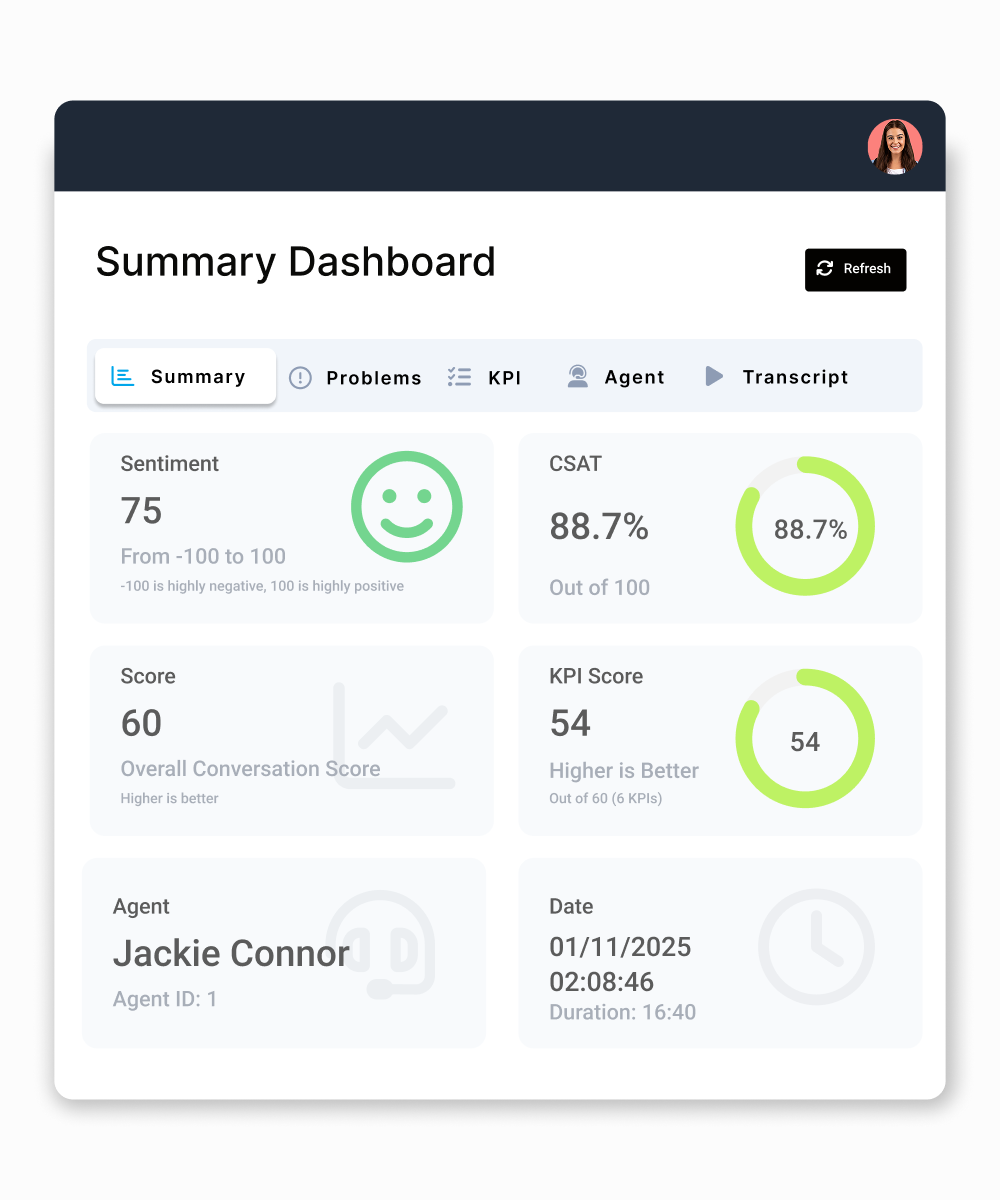
    Crescendo.ai has a robust AI-powered Voice of Customer (VoC) platform for customer support tickets received via chat, e-mails, SMS, and voice. Its unique power is its capacity to analyse all the conversations and calculate CSAT, and perform sentiment analysis in real-time using AI without the need for manual surveys. 

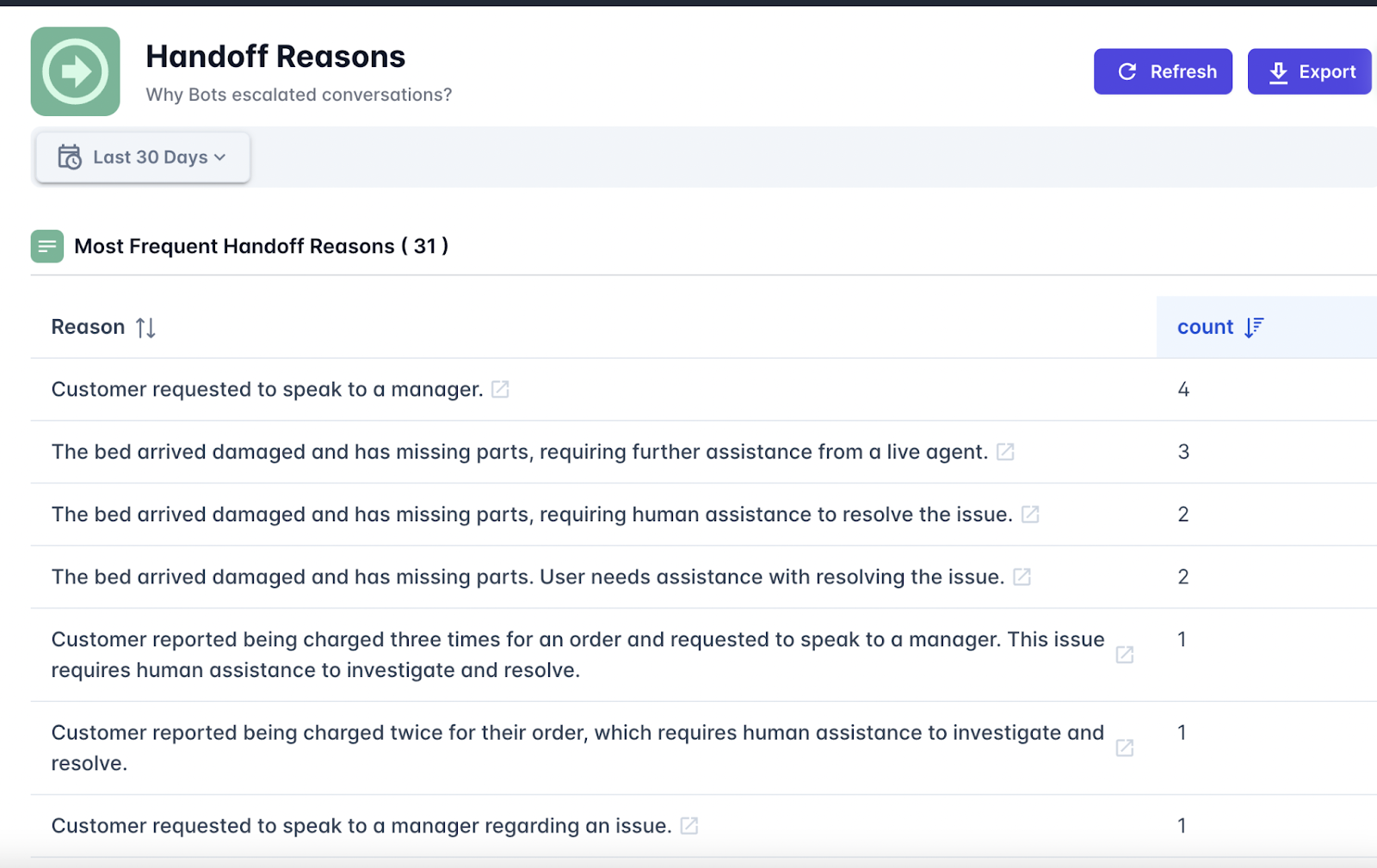
    So, say goodbye to scattered feedback and unreliable surveys with Cresendo.ai. It is an entirely automated and AI-powered Voice of the Customer platform that provides you with deep and instant insights. Whether sorting queries or drilling down into the reasons behind handoffs, it does all the work of converting raw conversations into actionable information, hands down for you, all without ever asking for a bit of physical effort. 

    On the other hand, it is a full-fledged CX support platform in itself, offering helpdesk software, AI-powered support agents, and outsourcing service with real human agents.

    Image source: Crescendo.ai

    Pros 

    • Auto-calculates CSAT and sentiment for 100% of conversations without surveys.
    • Categorizes issues like billing, refunds, or tech errors for actionable insights.
    • Flags reasons for human handoffs to improve workflows and agent training.
    • Detects critical issues like fraud, duplicate accounts, or failed transactions.
    • CX leaders get an opportunity to measure the surges in specific customer issues across categories.
    • Offers multilingual support with seamless integration of translation across 50+ languages.
    • It combines AI and human-backed outsourcing services to provide high empathy and context-aware accuracy.
    • Starts from $2.99, which is a cost-efficient pricing without sacrificing quality.
    • Achieves up to 90% instant resolution rate with 99.8% accuracy, which is the highest in the industry.

    Cons 

    • No social listening and employee review capacity. Its VoC is made just for customer support queries.
    • Though the dashboard is easy to navigate, it might be overwhelming if you are unfamiliar with AI-driven analytics.
    1. Zonka Feedback

    Zonka Feedback is an AI Voice of Customer platform that converts multi-channel unstructured customer feedback into crystal-clear and actionable intelligence. It ingests data from surveys, chats, reviews, tickets, and other sources. It organizes all the information into a single dashboard. Thematic analysis, sentiment scoring, impact mapping, and role-based dashboards are some of the features that help teams go very deep in identifying root causes, align on actions, and close the feedback loop with practically zero manual work. Zonka brings clarity across locations, teams, and touchpoints.

    Pros

    • Auto-tags feedback by location, team, service type, or issue owner so that they can be routed faster.
    • Role-based dashboards show only the most important insights to stakeholders.
    • AI-driven insights highlight performance drivers linked to NPS, CSAT, CES, and churn.
    • Smart workflows automatically assign tasks, escalate issues, and trigger follow-ups.
    • Built-in case management tracks progress on resolution and accountability.

    Cons 

    • Delays in syncing large datasets from third-party platforms.
    • Some of the advanced AI capabilities are locked behind a premium tier, which may be prohibitive for smaller teams.
    1. Medallia

    Being one of the leading Voice of Customer and experience management platforms, Medallia captures feedback signals from a multitude of channels — surveys, social media, contact centers, and web — and turns those inputs into real-time, AI-driven insights. Its built-in AI engine, Athena, allows businesses to deliver experiences akin to personalization at scale, automate workflows, and predict behaviors. Medallia allows front-line and internal teams to close the loop faster, drive retention improvements, and tie feedback into real revenue or cost-savings outcomes across journeys and touchpoints.

    Pros

    • Offers real-time AI-driven coaching to front-line teams based on conversation analysis.
    • Strong role-based reporting ties every stakeholder to actionable CX steps.
    • Gives organizations the power to orchestrate hyper-personalized customer journeys using behavior data.
    • Includes industry-specific modules strong in execution and insight (e.g., healthcare, retail, telecom).
    • ROI-proven with an application to directly link CX improvements to revenue and cost savings. 

    Cons 

    • A long and winding initial setup and onboarding process for large organizations.
    • Some dashboard customizations can only be completed by the vendor rather than being completed through self-service.
    1. Qualtrics

    Qualtrics is an Experience Management (XM) or Voice of Customer (VoC) platform used to collect and analyze feedback from customers, employees, and markets and act thereupon. Format-wise, Qualtrics holds tools for CX, EX, and market research to knit together signals across channels to optimize every single touchpoint. Its AI engine can identify sentiments, pinpoint issues, and empower teams to realize context-specific actions, thus making experiences personal, measurable, and scalable throughout your organization.

    Pros

    • Industry-specific CX, EX, and research modules in one platform.
    • Insight generation uses AI-based and role-specific criteria for managers, agents, and product teams.
    • Integrates voice, text, survey, and behavioral data for 360-degree visibility of feedback.
    • Has excellent dashboarding and reporting capabilities powered by advanced, customizable analytics.
    • Trusted by over 20,000 enterprises across the globe and proven in domains such as retail, airlines, and finance.

    Cons 

    • Learning curve for non-technical users, especially when dealing with complex logic.
    • It feels laggy sometimes to load all the info within dashboards or to navigate among them, and its performance drops when handling big data from multi-country setups.
    1. SentiSum

    SentiSum is a real-time Voice of Customer platform designed for fast-paced teams requiring instant, lucid insights from customer feedback. Employing advanced AI, it scrutinizes every ticket, chat, review, and survey to identify burgeoning concerns, classifies them automatically, and sets up alerts for brands to act before problems escalate. It brings data together from across channels with minimal setup and high adoption due to its intuitive design. SentiSum allows businesses to repair problems today and build customer loyalty for tomorrow, without complicated setups.

    Pros

    • Real-time scanning of support tickets, chats, and reviews
    • Automated alerting to identify unexpected issues (product, service, delivery)
    • Consolidates feedback from every touchpoint into one transparent dashboard
    • Setup is done in anywhere 2 weeks, with adoption from more than 90% of teams
    • Minimal training needed because it’s all very intuitive

    Cons

    • Heavy focus on support channels, limited CX journey tools
    • A limited number of integrations outside of support platforms such as Zendesk or Intercom
    1. UserTesting

    UserTesting is an enterprise-grade, top-rated VoC software enabling organizations to rapidly test digital experiences, marketing campaigns, or product ideas and tune them according to real customer feedback. In the broader landscape of enterprise testing, having access to the most robust global participant network and an AI-powered analytical suite means teams can validate and de-risk decisions and launches, working alongside their users in real time. From product to marketing, and to CX, UserTesting helps make faster and wiser decisions, which improves customer satisfaction, enhances revenue, and builds brand loyalty, all without traditional research that takes months. 

    Pros

    • Feedback from actual customers and target users in real-time
    • Good for validating messages, product designs, and digital flows
    • Increases speed of decision-making by up to 5x
    • 6x ROIs have been recorded according to some customers’ (Microsoft, Walmart) studies
    • Used by multiple teams such as marketing, UX, CX, and production.

    Cons

    • Deep UX-level research capabilities are mostly utilized by enterprises
    • Live testing formats can add friction to high-speed development cycles
    1. AskNicely

    AskNicely is a customer loyalty platform optimized for NPS-powered frontline engagement. It, powered by conversational AI, surveys people over email, SMS, and web, then turns the responses into actionable insights with suggestions for next steps and leaderboards. Real-time feedback is featured, from which frontline teams can set priorities. Designed to fit in the regular flow of work, it connects with Salesforce, Slack, or Microsoft Teams. AskNicely assists customer-facing teams in prioritizing problems, retention, and improving online reviews—all with little effort and great involvement.

    Pros

    • The conversational style of the survey helps in getting more responses.
    • Real-time dashboards and leaderboards keep teams motivated. 
    • Suggested follow-up actions help reps to close the feedback loop.
    • Good CRM and collaboration tools integrations – e.g., Salesforce, Slack.
    • AI-driven insights automatically highlight key themes.

    Cons 

    • Integration issues: Users have reported glitches, or at times, they have had to use workarounds. 
    • Analytics: Reporting does not support strong trend analysis or dashboard customization.
    1. SurveySparrow 

    SurveySparrow is an omnichannel Voice of Customer platform that provides businesses with multiple ways to collect feedback through conversational surveys, WhatsApp, emails, social media, and website spot checks. It has AI-powered smart analytics (CogniVue) that interprets sentiment, key themes, and brand reputation, whereas ticketing, reviews, and reputation management tools close the feedback loop. Its elegant designs and conversational formats promise strong engagement and response rates.

    Pros

    • Integrated ticketing and reputation management tools close the feedback loop.
    • Over 2,000 integrations make the platform flexible to embed into your existing tech stack.
    • Strong white-labeling features to ensure brand consistency.
    • The Wings AI assistant helps managers with survey creation and review responses.
    • Supports multilingual surveys and sentiment tagging in real time.

    Cons 

    • Somewhat limited customization options (especially in lower-tier and free plans) 
    • The learning curve can be a little steep for beginners in conversational and AI-powered survey logic.

    Wrapping Up on VoC Software

    All these great VoC platforms provide an opportunity for brands to tap customer sentiment, close feedback loops, and really effect change. They make listening, learning, and responding easy for businesses, from real-time alerts to insights generated by AI. Choose the platform that not only hears your customers but also truly understands them.

  • What is a VAT number

    What is a VAT number

    Let’s dive into the basics—what exactly does VAT stand for, and why does it matter? VAT, or Value Added Tax, is a consumption tax added to goods and services at various stages of production or distribution. Think of it as the tax component of the price you pay when you purchase something, but with an important difference: it’s charged at each stage of the supply chain.

    Sounds straightforward enough, right? But let’s break it down further to really understand its purpose. The goal of a VAT system is to ensure that tax is collected incrementally as value is added to a product or service. Essentially, at every step of the process—from raw material suppliers to manufacturers, wholesalers, retailers, and finally, to consumers—VAT ensures a slice for the government. Simply put, everyone chips in a bit.

    Why is it Called “Value Added” Tax?

    Great question! The “value added” part refers to the extra worth created at any particular stage of production or service delivery. Imagine a simple example: a furniture maker buys wood from a supplier, builds a chair, and sells it to a retailer. At each step, value is being added—the wood supplier provides the raw material, the carpenter transforms it into a usable product, and the retailer makes it available to customers. VAT is calculated and applied to the value added at each of these steps.

    What makes this special is that each business in the supply chain can usually claim back the VAT they’ve paid, as long as they have a registered VAT number (more on that in another section). This mechanism prevents “double taxation” and keeps the system fair. Ultimately, the end user—the consumer—is the one who bears the full tax cost, since they can’t reclaim VAT.

    VAT vs. General Tax: Why Should You Care About the Difference?

    Unlike income taxes or corporate taxes that are based on earnings, VAT is all about spending. In fact, when you see VAT listed on a receipt, it’s a clear example of a tax you are directly contributing to, rather than a behind-the-scenes deduction. The process is often a lot more visible if you’ve ever looked closely at the breakdown of costs on an international invoice or receipt.

    Some Fun (and Useful!) Points About VAT:

    • It’s nearly global: Over 160 countries use VAT in some form. So, knowing about this tax system can give you a leg up when traveling or conducting international business.
    • Not every country calls it VAT: For instance, Canada uses something called GST (Goods and Services Tax) in a similar way, and some U.S. states operate on a sales tax model instead.
    • Businesses acting as tax collectors: Whether you’re a small business or a multinational, if you charge VAT, you’re essentially collecting taxes on behalf of your government. Kind of cool, right?

    A Closer Look: The Difference Between VAT and Sales Tax

    If taxes were people at a party, VAT and sales tax would be the two guests everyone mixes up. Sure, they’re both consumption taxes, but their styles and “personalities” couldn’t be more different. Let’s break it down and demystify the key differences between these two commonly misunderstood contenders.

    What is a VAT number

    It’s All About How They Get Collected

    Picture this: you’re buying your favorite new gadget. If you’re in a place with **sales tax**, the tax gets tacked on at the end of your purchase—you see it on your receipt, plain and simple. Businesses collect that extra bit from the customer and then pass it along to the government.

    With **VAT (Value Added Tax)**, it’s a little more intricate. VAT is applied at every stage of the supply chain whenever value is added—hence the name! Producers, suppliers, wholesalers, and retailers all play a role in collecting and paying VAT based on value added at their level. By the time your gadget reaches you, the consumer, the VAT has been built into the price you pay. No extra math at checkout for you!

    Sales Tax: Straightforward, But Limited

    Sales tax keeps things simple. It’s applied only at the final point of sale to the end consumer. For businesses, it’s clear-cut: they don’t pay sales tax on items they buy for resale. However, simplicity has its weaknesses. Sales tax is more prone to evasion since it largely depends on retailers properly reporting and remitting the tax.

    VAT: Complex, Yet Comprehensive

    The VAT system, though more complex, closes many loopholes. Each party in the chain applies VAT on their sales and claims credits for VAT paid on their purchases. This step-by-step system ensures compliance while creating a transparent paper trail for tax agencies. Businesses don’t just act as collectors—they’re also taxpayers themselves in the process.

    Who Uses What?

    • Many countries, especially in Europe (e.g., the UK, Germany, France), thrive on VAT systems. It’s the go-to tax model for large parts of the world.
    • Sales tax is mostly a North American phenomenon, used extensively in the United States. (Fun fact: the U.S. doesn’t have a federal VAT system!)

    Which is “Better”?

    Good question! It really depends on the perspective. Consumers might favor sales tax for its “add it once and done” simplicity. Governments and tax authorities, however, often favor VAT for its reduced potential for tax evasion and its broader reach. Businesses? Well, they might find VAT a bit more of a headache due to its administrative demands, but it evens the playing field by spreading tax responsibilities across the system.

    Who Needs a VAT Number? Clarifying the Criteria

    Let’s get straight to it: a VAT number isn’t something every business owner needs to worry about, but for some, it’s an absolute must. Whether you’re just starting out or scaling your operations, knowing whether you need a VAT number is crucial for compliance and success. So, who exactly needs a VAT number? Let’s break it down into clear, digestible bits.

    1. Businesses Exceeding the VAT Threshold

    For starters, if your business is based in a country with Value Added Tax (VAT) regulations—like those in the European Union (EU)—you’ll typically need a VAT number if your annual turnover exceeds a specific threshold. This threshold varies by country. For example:

    • In the UK, the VAT registration threshold as of 2023 is £85,000.
    • In Germany, it’s €22,000.
    • Other countries may have much lower or higher limits, so always check your local rules.

    If your sales figures cross this threshold, registering for a VAT number isn’t optional; it’s a legal requirement.

    2. Businesses Selling Across Borders

    It gets a little more complex with international trade. If you’re a business owner selling goods or services to other countries, particularly within the EU or areas that require VAT collection, you’ll likely need a VAT number. This applies if:

    • You sell products or services to customers in the EU, even if you’re based outside of it.
    • You store goods in a foreign country and sell them locally.
    • You engage in distance selling. For instance, if you sell online and exceed a country’s VAT threshold, you’ll need to register in that country.

    International business can be tough to navigate, but having the right VAT setup in place helps smooth the transaction process and makes you compliant with the local tax authorities. No one wants to face hefty fines for skipping this step!

    3. Freelancers or Small Businesses Might Also Need It

    Even if you’re not earning bucketloads of revenue just yet, you may voluntarily register for a VAT number as a freelancer, consultant, or small business. Why? Registering could make your business appear more legitimate to clients, especially if it’s in a B2B (business-to-business) space. Plus, it may allow you to reclaim VAT on expenses for goods or services you’ve purchased, which could save you money in the long run!

    4. E-commerce and Digital Service Providers

    If you’re an e-commerce wizard or offer digital services—like selling software, online courses, or subscriptions—you might fall under a new category that is required to register for VAT. Digital businesses often face rules like the EU’s VAT MOSS (Mini One-Stop Shop), where you collect and remit VAT based on your customer’s location rather than your company’s. If this sounds like you, it’s worth checking the specifics for your industry and marketplace.

    5. Businesses in Certain Industries with No Threshold

    In some sectors, the VAT threshold does not apply at all. This often includes industries dealing with high-value goods (e.g., art or precious metals) or professional services. If your business falls into one of these niches, double-check whether you need to register immediately, even at low turnover levels.

    Your Checklist: Do You Need a VAT Number?

    If you’re still unsure after all that, here’s a quick checklist to help:

    • Are you exceeding your country’s VAT threshold?
    • Do you sell goods or services internationally?
    • Do you sell digital products to customers in other countries?
    • Would voluntarily registering be beneficial for your business?

    If you answered “yes” to any of the above, it’s time to dig a little deeper into the process of registration (don’t worry, we’ll get to that in another section!).

    How VAT Numbers Work: Breaking Down the Process

    VAT numbers might sound like a dry, complicated topic—but don’t worry; they’re not as scary as they seem! Let’s break it down in simple terms so that you can clearly understand how they work and why they’re so important for businesses.

    What Exactly Is a VAT Number?

    First things first: a VAT number is a unique identification number assigned to businesses that are registered for Value Added Tax (VAT). Think of it like a tax ID for VAT purposes—it’s used by governments to track businesses and the VAT they collect or reclaim.

    Businesses use VAT numbers when dealing with other companies, customers, or revenue authorities. The number ensures that the right amount of VAT is charged, collected, and paid—or refunded—at every step of the process. Without a VAT number, a business would quickly run into issues when conducting taxable activities.

    How Does the Process Work?

    In essence, VAT is applied at every stage of the supply chain where value is added to a product or service. Here’s a quick breakdown:

    1. A Business Registers for VAT
      Businesses apply for a VAT number with their local tax office once they surpass a certain revenue threshold (this varies by country). Once registered, they’re issued a unique VAT identification number.
    2. Charging VAT on Sales
      When the business sells its goods or services, it adds VAT to the price. For example, if the VAT rate is 20%, a product priced at $100 would have an additional 20% VAT added, making the final price $120.
    3. Reclaiming VAT on Purchases
      Here’s where things get interesting. Businesses can reclaim VAT they’ve paid on their own purchases (as long as those purchases are used for business purposes). Essentially, they deduct the VAT they’ve paid from the VAT they’ve collected.
    4. Filing a VAT Return
      At regular intervals (monthly, quarterly, or annually, depending on the country), businesses file a VAT return. This return shows:

      • How much VAT was charged to customers
      • How much VAT was paid on business-related purchases

      If the business collected more VAT than it paid, it owes the difference to the tax authorities. If it paid more VAT than it collected, it gets a refund!

    Why Is the VAT Number Such a Big Deal?

    The VAT number is what makes this entire process run smoothly. It provides clear identification and ensures transparency in transactions between businesses. For example:

    • Business-to-business (B2B) transactions: If two VAT-registered companies are trading with each other, the seller doesn’t charge VAT as long as the buyer provides their valid VAT number. This system prevents double taxation.
    • Compliance: The VAT number ensures that businesses are complying with their legal obligations. Failing to register for VAT, or using an incorrect VAT number, could result in penalties.

    Fun Fact: VAT Numbers Are Like Fingerprints!

    Did you know that VAT numbers are unique across countries and regions? Each VAT number contains specific information, such as a country code and digits that identify the business. For example, in the UK, VAT numbers start with “GB,” while in Germany, they start with “DE.” It’s like a fingerprint for your business in the world of taxes!

    VAT Numbers Across Borders: What to Know for International Business

    Running a business internationally? That’s exciting! But when it comes to taxes, things can get tricky, particularly with Value Added Tax (VAT) numbers. If you’re dealing with customers or suppliers across borders, you’ll want to ensure you understand what a VAT number means in the global context. Let’s dive into the essentials, so you’re ready to seize those international opportunities without the fear of tax-related hiccups!

    1. What is a VAT Number in an International Setting?

    In simple terms, a VAT number is a unique identifier issued to businesses for tax purposes. When you cross borders, this number becomes even more crucial, as it helps track and manage the VAT associated with cross-border transactions. Governments across countries use VAT numbers to ensure compliance, facilitate fair taxation, and prevent fraud.

    For example, if your business is based in the European Union (EU) and you engage in transactions with businesses or customers in other EU countries, your VAT number plays a central role in managing VAT reporting. Similarly, for non-EU businesses trading with the EU, a VAT number may be required to register and remit VAT on goods or services.

    2. VAT Systems Vary by Country

    Not all countries handle VAT in the same way. While around 160 countries globally use some form of VAT or a GST (Goods and Services Tax) system, the rules and requirements can differ quite a bit.

    • In the EU: Each member state has its standard VAT rates and policies for cross-border transactions. Purchases between VAT-registered businesses often fall under the reverse charge mechanism, meaning the buyer accounts for VAT rather than the seller.
    • Non-EU Countries: Countries like Canada (GST) or Australia (GST) have their distinct regimes. Importantly, places like the United States don’t use VAT at all. Instead, they rely on a sales tax system—which means no VAT numbers there!
    • Thresholds Vary: Some countries set a revenue threshold before requiring VAT registration for foreign businesses, while others need you to register as soon as you trade on their turf.

    3. Why International Businesses Need a VAT Number

    So, why exactly do international businesses need VAT numbers? Here are a few reasons:

    1. Compliance: Many countries require businesses, including foreign ones, to register for VAT to avoid fines or penalties.
    2. Reputation: A VAT registration number signals professionalism and compliance, which can improve trust with partners and clients across borders.
    3. Reclaiming VAT: With a valid VAT number, you can often reclaim VAT paid on qualifying expenses in foreign countries, boosting your bottom line.

    4. Tips for Navigating VAT Across Borders

    Here are some friendly tips to help you get VAT right for global business:

    • Do Your Homework: Research the tax rules in each country where you operate. You may need to hire a tax expert or use software to simplify compliance.
    • Keep Records Organised: When dealing with multiple VAT systems, track invoices, payments, and VAT numbers meticulously to ensure accurate reporting.
    • Communicate Clearly: If you’re working with clients abroad, let them know if VAT applies to your transactions or if they’re responsible for accounting for VAT.

    Common Misconceptions About VAT Numbers

    Let’s get right to it—VAT numbers often get a bad rap for being confusing, overly complex, or even downright intimidating. But don’t worry, we’re here to clear up some common misconceptions about VAT numbers and make things a lot less daunting. By the end, you’ll see that they’re not so scary after all!

    1. Only big businesses need a VAT number.

    One of the biggest myths about VAT numbers is that they’re exclusively for giant corporations with sprawling international operations. Not true! In many areas, small businesses are required to register for a VAT number if their taxable turnover exceeds the local VAT threshold, which varies depending on the country you’re operating in. Even sole proprietors or freelancers may need a VAT number if they meet the criteria. So, it’s not just about size—it’s about taxable activity.

    2. Once I have a VAT number, I’ll always have to charge VAT.

    False! While having a VAT number allows you to handle VAT transactions, the obligation to charge VAT depends on the specific circumstances of each sale. For instance, if you’re selling goods or services to VAT-exempt entities or outside the scope of VAT regulations (such as specific exports), you may not have to charge VAT. It’s not a one-size-fits-all rule. Knowing when and how to apply VAT is key, and your VAT number is just a tool in that process.

    3. VAT numbers and tax IDs are the same thing.

    Confusing them is quite common, but they’re not the same. Tax identification numbers (TINs) are more general and are typically used for overall tax purposes, while a VAT number is specifically linked to VAT-related transactions. If you’re running a business, think of your VAT number as a specialized ID for handling VAT obligations. Same family, but different jobs!

    4. A VAT number is only relevant in my home country.

    Not exactly. If you’re engaging in cross-border trade, especially in the European Union or other regions with VAT frameworks, your VAT number becomes essential. Many laws require you to exchange and validate VAT numbers when working with other businesses internationally. In these cases, your VAT number can save you headaches, time, and potentially penalties, especially when it comes to avoiding VAT charges or proving your exempt status. So yes, it travels with you (or your business) across borders!

    5. I’ll get penalized immediately if I make a mistake with VAT.

    This one’s scary-sounding but isn’t entirely true. While it’s important to comply with VAT laws, the vast majority of tax authorities understand that mistakes happen, especially for businesses new to the system. Often, errors can be corrected without penalties, provided they’re not evidence of intentional fraud or gross negligence. The key here is honesty—if something goes wrong on a VAT return, reach out to the relevant authorities to fix it as soon as possible.

    What is a VAT number

     How to Apply for a VAT Number: Step-by-Step Guide

    So, you’ve realized you need to apply for a VAT number—awesome! Whether you’re a business owner expanding your horizons or launching a new venture, securing this number is a key step in staying compliant and thriving in the world of taxes. Don’t worry; while applying for a VAT number may sound complicated, it’s actually quite manageable if you follow each step carefully. Let’s break it down together!

    Step 1: Determine If You Really Need a VAT Number

    Before diving into the application process, double-check your eligibility. Typically, businesses are required to register for VAT if their taxable turnover exceeds a certain threshold set by their local authorities. This includes many industries — for example, construction businesses that may need to register for Construction VAT. For instance, in the UK, this limit is £85,000, but it varies from country to country. For smaller businesses or sole traders, VAT registration might be optional unless you operate internationally.

    Tip: If you’re unsure, reach out to a tax advisor or consult your national tax authority’s website—you’ll find plenty of straightforward information to help you out.

    Step 2: Have the Necessary Documents Ready

    Like with any official process, applying for a VAT number means you’ll need to provide the right paperwork. Here’s a handy checklist of what you may need:

    • Your company’s legal name and address.
    • Your business registration details (e.g., company registration number).
    • Details of your taxable supplies, which are essentially the goods and services your business provides.
    • Estimated turnover figures (if applicable).

    Having this info at your fingertips will make the application process smoother and quicker.

    Step 3: Decide How You’ll Apply

    Most countries offer multiple ways to register for VAT—online, via mail, or even through a tax consultant. For instance, platforms like HMRC (in the UK) or similar portals allow businesses to register online. Many find this to be the simplest and fastest method. If you’re a bit old-school or find comfort in detail-heavy forms, mail-in applications are also an option.

    Pro Tip: Double-check if your national tax authority offers a VAT helpline. These are usually free services where you can ask about specific questions during your registration process.

    Step 4: Fill Out the Application

    When it’s time to complete the VAT application form, pay close attention and take it step by step. Ensure all your business details, taxable supply info, and contact information are accurate. Mistakes can delay the approval process, so it’s better to err on the side of caution here.

    Some typical areas you’ll need to complete include:

    • The date when your business started trading.
    • An estimate of VAT-taxable activities (goods or services you’ll supply).
    • The bank account where tax refunds (if eligible) will be processed.

    Step 5: Submit and Wait

    Once you’ve double-checked everything, hit submit (or pop the form in the mail) and let the tax authorities take over. Processing times vary—online applications may receive VAT numbers within days, while paper forms can take longer. Be patient, but don’t hesitate to follow up if you feel there’s been a delay.

    Step 6: Keep Your VAT Number Handy

    The finish line is finally in sight! Once your VAT number is issued, you’ll receive official confirmation, either via email or letter. This number is like your business tax ID badge—it’s unique to you, and you’ll need it for invoices, filing VAT returns, and other transactions.

  • Operating profit margin

    Operating profit margin

    Let’s dive into the heart of what Operating Profit Margin really is—and don’t worry, we’ll keep it simple and engaging. Think of this metric as the ultimate business health check-up. It’s the figure that reveals, in percentage terms, how much profit a company makes from its core operations after covering operating expenses. Intrigued? Let’s break it down further!

    When you hear “Operating Profit Margin,” don’t be scared off by the financial lingo. At its core, it’s a measure of how efficiently a company is running its primary business activities. It’s calculated using this straightforward formula:

    A Metric with Many Stories to Tell

    But wait—it’s not just about numbers. Your operating profit margin tells a broader story of strategic choices. For example:

    • Pricing Power: Companies with higher margins often have strong pricing power. This could stem from brand recognition or a unique product offering that customers are willing to pay a premium for.
    • Cost Management: It also reflects a company’s ability to keep expenses in check. Are they finding cost-efficient ways to manufacture products? Are they avoiding unnecessary overheads?
    • Business Model: Different industries operate differently. A software company (which relies on digital products) often boasts higher margins than a grocery chain (which deals with physical goods and tight competition).

    How to Measure Operational Efficiency Through This Metric

    Measuring operational efficiency is critical for any business, large or small. One of the best tools to analyze this is the operating profit margin. Why? Because it gives you a direct insight into how well your company is managing its core operations to generate profitability. So, let’s break down how you can use this metric effectively.

    Understanding the Formula

    The first step to measuring operational efficiency through the operating profit margin is understanding and applying its formula:

    Operating Profit Margin = (Operating Income ÷ Revenue) × 100

    Operating profit margin

    Here’s what that really means: Take your operating income—the profit left after deducting expenses directly tied to your business operations like salaries, rent, and production costs. Then, divide it by your total revenue and multiply by 100 to express it as a percentage. Easy, right?

    The higher the operating profit margin, the more efficient your business is in converting revenue into actual profit.

    Why Does Operational Efficiency Matter?

    Operational efficiency isn’t just a buzzword; it’s the beating heart of a successful business. Here’s why this matters:

    • Your ability to consistently generate profit indicates strong management and sound financial health.
    • It helps you spot inefficiencies that might be eating into your earnings, like excessive costs or poor pricing strategies.
    • An efficient operation gives you a competitive edge, meaning you can invest in growth, innovation, or even weather economic uncertainties.

    What Does This Metric Reveal?

    When you calculate your operating profit margin, it reveals two major things:

    1. How well you’re controlling costs: A declining margin might hint at bloating expenses that need attention.
    2. The effectiveness of your revenue generation: A solid margin suggests that your pricing strategies and sales performance are on point.

    Setting Benchmarks

    An important part of measuring operational efficiency is having a benchmark to compare your margin against. While these benchmarks vary by industry, tracking your own historical data is equally critical. Regularly monitoring trends can help you identify whether your efficiency is improving, deteriorating, or staying consistent.

    Making Sense of Fluctuations

    Fluctuations in your operating profit margin are natural—don’t panic if the percentage changes slightly here and there. The key is to investigate major shifts. A sudden drop? Time to dig into your expenses and revenue streams. A big increase? Awesome! But it’s also worth understanding why—you might have stumbled upon a winning strategy you can replicate elsewhere.

    The Role of Operating Profit Margin in Financial Health Assessment

    Let’s take a moment to zoom in on one of the most telling indicators of a company’s financial well-being: the operating profit margin. More than just a number on a financial report, this metric is like a health check for your business — revealing just how efficiently it’s running and how strong it truly is. Whether you’re an investor, a business owner, or someone fascinated by finance, understanding its role gives you clarity and confidence in assessing financial health. Let’s break it all down!

    What Is Operating Profit Margin Telling You?

    At its core, the operating profit margin showcases how much money a company is keeping as profit from its core operations, after covering operational costs like labor, utilities, and materials — but before accounting for taxes and interest. Think of it as a snapshot of a company’s ability to generate profit while keeping its daily operations humming smoothly.

    If a company has a strong operating profit margin, it signals that it runs efficiently. Expenses are in check, and the business generates healthy profits on each dollar of revenue. Alternatively, a low or declining margin serves as a caution flag: operational inefficiencies, market competition, or rising costs could be eroding profitability.

    Why Is Operating Profit Margin Vital for Financial Health?

    Imagine a business as a living organism, and operating profit margin is one of its vital signs. It offers insights that go beyond a company’s revenue figure. After all, just because a business has high revenues doesn’t mean it’s financially healthy — it’s the profitability of those revenues that truly counts. Here’s why:

    • Operational Excellence: Businesses with higher operating profit margins demonstrate a streamlined operation, where resources are used wisely, waste is minimized, and costs are well-managed. This reflects outstanding planning and execution.
    • Resilience During Tough Times: In economic downturns or highly competitive markets, companies with robust margins are better equipped to withstand setbacks. They have a cushion to absorb shocks like price pressure or rising input costs.
    • Attracting Investment: Smart investors watch operating profit margins to gauge a company’s long-term potential. A consistently high margin suggests that the company isn’t only surviving — it’s thriving and likely to continue doing so.

    How to Use Operating Profit Margin in Decision-Making

    So, how does one interpret operating profit margin to assess financial health practically? Here are some key points to consider:

    1. Trend Analysis: Look at changes over time. Is the margin improving, holding steady, or slipping? Growth in the margin usually indicates positive momentum, whereas a declining trend could be a red flag.
    2. Benchmarking Against Competitors: Compare the margin to industry peers. Some industries naturally have higher or lower operating profit margins (more on that under Heading IV), so context matters!
    3. Understanding Cost Structures: Dive deeper into operational costs. Identify and control areas where inefficiencies may be dragging down margins — think bloated overhead costs or supply chain inefficiencies.

    Industry Variations: Why Context Matters for Margins

    Ever heard the saying, “It’s all relative”? Well, it couldn’t be truer than when talking about operating profit margins! You see, not all industries are created equally, and understanding the context around margins is key to interpreting them properly. Let’s dive into why the numbers shouldn’t be reviewed in isolation and how industry nuances play a massive role in shaping what’s considered a “healthy” margin.

    Why Industry-Specific Context Is Critical

    First things first, operating profit margins are the result of how a business manages its revenue and operational expenses. But here’s the kicker: Not every industry functions under the same cost structure or competitive environment. For example:

    • Retail or Grocery Chains: Think massive sales volume but slim profit margins, often hovering between 1%-5%. Why? Because of fierce competition and thin markups. Even names like Walmart keep operating profit margins on the low end!
    • Technology and Pharmaceuticals: On the flip side, industries characterized by innovation often hit higher margins, like 20%-40%. Their output (software, patented drugs, etc.) has high value but relatively low production costs.
    • Manufacturing: Margins tend to fall somewhere in between, as this sector faces significant costs around materials, labor, and logistics.

    So, comparing the operating profit margin of, say, a grocery chain to a pharmaceutical company would be like comparing apples to oranges. The key takeaway? Always analyze margins within the context of industry standards before making any sweeping judgments.

    The Impact of Market Dynamics

    Next up, let’s sprinkle in some nuance. Market dynamics—like the level of competition, customer demand, and supplier relationships—can significantly sway operating profit margins within a particular industry. For instance:

    1. Highly Competitive Markets: Industries like airlines or fast food often set razor-thin margins because businesses race to attract price-sensitive customers.
    2. Specialized Niches: A luxury brand in fashion can maintain high operating profit margins thanks to perceived exclusivity and high price points. Customers are willing to pay a premium!
    3. Economic Cycles: During economic booms, margins often improve across industries. But in a recession, businesses in discretionary spending markets (like tourism) might see margins shrink as demand drops.

    By understanding these dynamics, you can better assess whether a business’s operating profit margin reflects peak performance or room for improvement.

    Don’t Forget the Global Perspective

    In today’s interconnected economy, geography matters too! For example, margins in industries like automotive manufacturing may vary widely between businesses operating in high-cost regions like Europe versus low-cost areas like Southeast Asia. Labor costs, taxes, and even cultural preferences can all play a role in shaping profitability.

    For companies with international operations, analyzing margins may even get trickier as currency exchange rates can impact costs and revenues, further muddying the waters.

    An Expert Tip: Use Benchmarks Wisely

    The best way to assess whether an operating profit margin is strong? Compare it to industry benchmarks. Industry reports, financial advisors, or online tools often provide average or top-performing margin figures broken down by sector.

    For instance, if you’re analyzing a restaurant chain and see it has a margin of 8%, but the industry standard is 15%, something might be off. Is the chain overpaying on ingredients? Are operating costs like rent too high? These insights help frame strategic decisions.

    Analyzing the Influences: Key Factors Affecting Margins

    Operating profit margin is an essential metric for evaluating a company’s efficiency, but have you ever wondered why these margins fluctuate so much? Various factors can have a profound impact, and understanding these influences is the secret to decoding the true story behind the numbers. Let’s dive in and explore some of the key drivers.

    1. Revenue Growth and Pricing Power

    At its core, operating profit margin is a simple calculation: operating income divided by revenue. That means how much money is coming in plays a big role. Companies with strong pricing power—think luxury brands or tech innovators—can command higher price tags, boosting margins. However, when pricing competition gets fierce, as it often does in saturated industries, margins can shrink.

    Tip: **If your pricing power is limited, consider differentiating your product or service to justify higher prices without alienating your customers.**

    2. Cost of Goods Sold (COGS)

    COGS refers to the direct cost of producing goods or services sold by your business. As you’d expect, if production costs rise but sales prices stay the same, margins will take a hit. Factors like raw material price volatility, supply chain inefficiencies, or higher labor costs all feed into this equation. For instance, rising energy prices might unexpectedly crank up production costs for manufacturers.

    What can you do about it? **Keep an eye on supplier contracts and look for ways to streamline operations. Bulk purchasing or renegotiating terms can make a considerable difference over time.**

    3. Economies of Scale (or Lack Thereof)

    Economies of scale can be either a friend or a foe. When businesses grow, they often find that fixed costs get spread over a wider revenue base, helping to widen profit margins. Conversely, smaller businesses or startups might struggle in the beginning, as they’re unable to take advantage of these efficiencies.

    4. Industry-Specific Dynamics

    Not all industries are created equal when it comes to operating profit margins. For example, grocery retailers operate with notoriously slim margins due to high competition and low pricing, while tech firms might see margins soar thanks to high-value offerings with relatively low variable costs.

    To level-set your expectations, **compare your margins against industry benchmarks rather than against other sectors. This ensures you’re being fair to your business and making actionable comparisons.**

    5. Economic and Regulatory Factors

    Macroeconomic trends, from inflation to currency exchange rates, can nudge margins up or down. Meanwhile, rising regulation or changes to tax laws might add compliance costs that eat into profits. For instance, if new environmental policies require companies to adopt green technologies, businesses may need to spend more on compliance, temporarily tightening their margins.

    6. Operational Decisions and Strategies

    The choices you make about operations, from staffing levels to marketing spend, also weigh heavily on your operating profit margin. Overspending on non-essential areas? That’ll leave your bottom line gasping for air. On the flip side, cutting too much in critical areas might harm customer satisfaction or product quality, hurting revenue.

    Operating profit margin

    Common Missteps in Interpreting Operating Profit Margins

    Operating profit margin is a fantastic tool for evaluating a business’s efficiency and profitability, but let’s be honest – it’s not immune to misinterpretation. Even seasoned pros can trip up when interpreting this metric if they’re not careful. Here, we’ll take a deep dive into the most common mistakes people make when looking at operating profit margins and how to avoid falling into these traps yourself.

    1. Assuming Bigger is Always Better

    Let’s start with the most classic misconception: thinking that a higher operating profit margin is always a sign of success. Sure, who wouldn’t want a big, shiny number on their financial statements? But context matters! A business operating in an industry with low margins (think supermarkets) will naturally have a lower operating profit margin than, say, a software company with high pricing power. Comparing these two directly without considering the industry norms is like comparing apples to oranges – both are delicious, but they taste completely different.

    2. Ignoring the Bigger Picture

    It’s easy to zoom in on one number and neglect the story behind it. A rising operating profit margin can look fantastic at first glance – but is it sustainable? Maybe it increased because of drastic cost-cutting measures, like layoffs or deferred maintenance, which could hurt the company in the long run. Similarly, a drop in the margin might not be disastrous if it’s due to strategic investments that’ll pay off later.

    Pro Tip: Always analyze operating profit margins alongside other metrics, such as revenue growth or investment spending, to paint a balanced picture.

    3. Overlooking Non-Recurring Items

    Sometimes, an unusual event (such as selling off assets or winning a legal settlement) can give the appearance of a healthy operating profit margin. These one-time windfalls can inflate the numbers for a while but don’t represent the company’s true performance. Failing to strip out these anomalies can lead to an overly optimistic interpretation.

    4. Ignoring Scale and Growth Phases

    Young, fast-growing companies often have slim operating margins because they’re heavily investing in growth. By contrast, mature companies may enjoy larger margins due to their established operations. Comparing these directly could cause you to unfairly criticize early-stage companies or overvalue stable ones – both approaches being missteps.

    Pro Tip: Assess the stage of the company’s growth cycle before forming conclusions about their operating margins.

    5. Forgetting External Factors

    A company’s operating profit margin doesn’t operate in a vacuum – it’s influenced by external factors like raw material prices, supply chain disruptions, and even currency fluctuations. For instance, an increase in commodity prices could hit a manufacturer’s margin hard, with no fault of poor management. Ignoring these outside elements could lead to unfair assessments.

    Pro Tip: Stay informed about external economic trends and factor them into your analysis.

    6. Over-relying on Single Period Data

    Another frequent mistake? Analyzing operating profit margins for just one financial period. A single quarter or year doesn’t tell the full story. A one-time issue could skew the results, making the margin look worse (or better) than it actually is over time.

     Real-world Strategies to Improve Operating Profit Margin

    So, you’re interested in learning how to boost your Operating Profit Margin? Great move! This key financial metric provides insights into your business’s profitability and operational efficiency, which can greatly influence your future success. The good news is, there are plenty of practical ways to enhance it, and we’re here to break it down for you in a simple and approachable way.

    1. Streamline Your Operational Costs

    If you’re trying to improve your margins, the first place to look is at your operating costs. Sometimes, businesses let small inefficiencies slip through the cracks, and over time, these can add up to big expenses. Identify areas where costs can be cut without sacrificing quality. For example:

    • Switch to more cost-effective suppliers.
    • Negotiate better rates with existing vendors.
    • Automate repetitive tasks to reduce labor costs.

    Remember, trimming the fat doesn’t mean cutting corners—it’s all about being smarter with your expenses.

    2. Adjust Your Pricing Strategy

    Could it be time to rethink how you price your products or services? If your offerings are underpriced, you might be leaving money on the table. At the same time, overpricing could drive away customers. A sweet balance is key.

    1. Analyze your competitors: Check what similar businesses charge and understand how your pricing compares.
    2. Highlight value over cost: If you offer premium quality, emphasize that to justify a reasonable price hike.

    Even small percentage increases in product or service prices can lead to a noticeable improvement in your profit margin without drastically impacting your customer base.

    3. Focus on Upselling and Cross-Selling

    Boosting your revenue doesn’t always mean finding new customers—it can also come from getting more out of your existing ones. Enter upselling and cross-selling. Let me explain:

    • Upselling: Convince customers to upgrade to a higher-tier product or service.
    • Cross-selling: Suggest complementary items that enhance the main purchase (like a phone case for a smartphone).

    These strategies foster customer satisfaction (since they’re getting more value) and simultaneously improve your margins.

    4. Improve Your Inventory Management

    Inventory can be one of the sneakiest contributors to lower operating profit margins—too much stock ties up cash, while too little may lead to missed sales opportunities. Consider these tips:

    • Adopt inventory management tools to track stock more accurately.
    • Reduce excess inventory through promotions or discounts on slow-moving items.
    • Implement just-in-time (JIT) inventory practices, if suited for your business model.

    When managed well, your inventory becomes a profit booster rather than a cost burden.

    5. Invest in Employee Training

    Your people are your most valuable resource. Employees equipped with better skills are more efficient, make fewer costly errors, and can sometimes even find innovative ways to save money or work smarter. Regular training sessions, skill-building opportunities, and clear communication go a long way in improving productivity—which, in turn, positively impacts margins.

    6. Keep a Close Eye on Profitability Metrics

    This may sound obvious, but tracking your Operating Profit Margin consistently is a habit you can’t afford to skip. By reviewing performance regularly, you can quickly spot red flags and address inefficiencies before they spiral. Make it a point to leverage financial tools or accounting software that presents this data clearly so you can make informed decisions.


  • How Cloud-Based Solutions Can Make Healthcare Data More Accessible

    How Cloud-Based Solutions Can Make Healthcare Data More Accessible

    cloud based solutions

    Today’s healthcare environment demands access to timely, accurate data, as it can make the difference between good and poor outcomes. Hospitals, clinics, and private practices all rely on information to manage diagnoses, treatment plans, and medications. Yet too often, this data is fragmented, outdated, or simply unavailable when it’s needed most.

    Cloud-based solutions are quietly changing that. A $752.44 billion global industry, cloud computing and solutions can help make healthcare data more readily accessible to the public and healthcare providers.

    Here’s how. 

    Bridging the Information Gap Between Patients and Providers

    For decades, many patients had to request physical copies of their records from various clinics and departments. These files could take days or weeks to transfer, often arriving too late to inform crucial treatment decisions. Cloud systems eliminate those delays.

    The global healthcare cloud computing market alone is a $19.6 billion industry. A cloud-based platform can give patients access to their health history in seconds.

    Whether it’s routine lab results, detailed diagnostics such as an NGS report from genetic testing, vaccination status, or current prescriptions, all patient information is available instantly through the cloud. For any healthcare software development company, integrating advanced data management solutions has become essential to support this. Modern LIMS software platforms play a critical role here by organizing, tracking, and securely sharing laboratory data in real time, ensuring that clinicians can access accurate test results without delays.

    This means a clinician can review a patient’s genomic data alongside other health records in real time, enabling more precise, personalized treatment decisions without waiting days for physical reports.

    It also means fewer errors. When information is centralized, different doctors no longer work in isolation. Allergies, pre-existing conditions, and past treatments are visible to every healthcare provider involved in a patient’s care. This reduces the risk of misdiagnoses and helps avoid harmful drug interactions.

    Medications

    Transparency on Medications is Now Possible

    Too often, patients start a new drug without understanding its full list of side effects. They rely on brief conversations during appointments or hard-to-read labels that don’t tell the whole story.

    With cloud access, healthcare providers can attach detailed medication profiles to each patient record. This includes known side effects, risk categories, studies, and patient-reported outcomes. By partnering with a reputable healthcare software consultancy, providers can implement and optimize cloud-based solutions that integrate seamlessly with electronic health records, enabling informed decision-making and personalized patient care.

    When a new medication is prescribed, patients can view this information immediately. As providers modernize their digital infrastructure, healthcare software development plays a key role in creating secure, interoperable tools that enhance data accessibility and support clinical workflows. Providers, too, can easily compare options and make more informed decisions. This level of visibility is long overdue, particularly in cases where a lack of transparency has caused harm. One such example is Depo-Provera, an injectable form of birth control.

    According to TorHoerman Law, many users were not fully warned about the serious risks linked to long-term Depo-Provera use. In recent years, Depo-Provera lawsuits have surfaced across the country, with former users seeking compensation for bone density loss and other health problems. People were left to suffer without knowing the full scope of what they were taking. 

    Some have now chosen to join the Depo lawsuit in the hope of receiving justice and compensation. The Depo-Provera lawsuit settlements underscore what happens when manufacturers withhold essential safety data from healthcare providers and patients. Cloud-based tools offer a path forward by storing and sharing these warnings with every prescription, making blind trust a thing of the past.

    Improving Continuity of Care for Chronic Conditions

    For patients with long-term illnesses like asthma, arthritis, or cancer, seeing multiple specialists is normal. But those appointments often happen in different locations and at different times. Without cloud integration, test results can fall through the cracks, and treatment plans may conflict.

    Cloud-based healthcare platforms solve this. A rheumatologist in one city can review imaging ordered by a general practitioner elsewhere. An oncologist can adjust chemotherapy based on a scan taken the week before. Everyone involved is working with the same information at the same time.

    This continuity doesn’t just improve care; it saves time and lowers costs. There’s no need to repeat tests or guess about previous procedures. Patients get answers faster and avoid redundant or harmful interventions. Patient reminder software built into cloud platforms helps maintain this continuity by automatically notifying patients about upcoming appointments, medication refills, and follow-up tests across all their providers, reducing missed visits that can disrupt carefully coordinated treatment plans. For clinics, choosing the right appointment reminder software ensures GDPR compliance alongside automated patient notifications. It also relieves families from the burden of managing stacks of paperwork or repeating medical histories at every visit.

    Accessing Care in Rural and Underserved Areas

    Healthcare in rural America is still in a poor state. For people in such remote or underserved regions, traveling for care is not always feasible. Specialist care may require hours of driving, lost wages, or childcare arrangements. In some cases, patients delay appointments or give up entirely.

    Cloud-based solutions can help bridge this divide. Doctors can review charts, lab work, and progress reports without the patient being physically present. 

    Through telemedicine paired with cloud data, a nurse in a rural clinic can connect with a specialist hundreds of miles away. This gives the patient access to expert care close to home.

    This doesn’t just help in emergencies. It allows for long-term monitoring, medication management, and follow-up care for people who otherwise wouldn’t get it. It brings equity to healthcare in a way that wasn’t possible before the rise of digital recordkeeping.

    Protecting Privacy

    Protecting Privacy While Expanding Access

    Of course, access doesn’t mean a compromise on privacy. Cloud systems are built with secure encryption, authentication layers, and constant monitoring. Patients can control who sees their data, for how long, and for what purpose. A provider must request access, and those logs are recorded.

    This level of transparency builds trust. People know their records aren’t being misused or handed off without consent. At the same time, patients benefit from the collaborative, real-time nature of cloud storage. The balance between privacy and access is finally starting to tip in the patient’s favor.

    However, healthcare data breaches in the US have recently been on the rise. Hence, cloud providers must also take extra precautions in protecting patient data. Cloud-based systems allow healthcare providers to securely store and access patient information from multiple locations. When integrated with on-site technologies such as a healthcare kiosk, these systems can further streamline patient check-ins and real-time data retrieval.

    Frequently Asked Questions (FAQs)

    Why does healthcare data need to be accessible?

    Accessible healthcare data through a modern hospital management system ensures that doctors, nurses, and specialists can provide timely, accurate, and coordinated care. With integrated healthcare software, it helps prevent medical errors, supports personalized treatment, and improves patient outcomes.
    When patient records flow efficiently between providers and digital hospital systems, patients benefit from quicker diagnoses, better continuity of care, and reduced duplication of tests or procedures.
    Such medical data management solutions drive safer, smarter, and more connected digital hospital solutions for improved healthcare delivery. When combined with operational tools such as queue management systems like WaitWell or digital self-check-in hospital solutions from Axel Health, these platforms can further improve patient flow, reduce wait times, and enhance the overall care experience.

    How can healthcare data be exploited?

    Healthcare data can be exploited through breaches, unauthorized sharing, or data mining without consent. This approach has proven to convert to high client satisfaction for Registered Dietitians (RD), who benefit from streamlined documentation, easier follow-ups, and more efficient use of digital tools when delivering nutrition care. Hackers may sell personal medical records on the dark web, and some companies might use data for targeted ads or insurance discrimination. Misuse erodes trust in the system and puts patients’ privacy, safety, and financial well-being at risk.

    Do pharmaceutical companies misuse patient data?

    Pharmaceutical companies have faced criticism for using patient data without full transparency or consent, especially when partnering with tech firms or data brokers. While not always illegal, such practices can raise ethical concerns. Responsible data use requires clear privacy policies, patient consent, and strong regulation to prevent exploitation for profit-driven motives.

    Cloud-based healthcare is reshaping how we share, understand, and act on medical information. Whether it’s providing clarity or bringing care to remote communities, these solutions are helping healthcare systems serve people more completely.

    In a world where too many have suffered because of miscommunication and hidden risks, transparent, accessible data is not just a convenience. It’s a necessity. With the right technology and ethical commitment, we can make healthcare more open, more inclusive, more connected, and far more human.

  • Janitor.ai for Business: Is It Worth the Investment?

    Janitor.ai for Business: Is It Worth the Investment?

    Hiring more staff to answer basic queries or handle repetitive tasks? That’s one way to grow—but not the smartest. Janitor.ai offers an alternative: an AI tool that can manage conversations, automate tasks, and work 24/7 without burnout or training costs.

    But does it actually help your business grow? Or is it just another tool that looks good on paper but adds no real value?

    This article breaks down what Janitor.ai does, how businesses are using it, and whether it’s a smart investment based on results, not just features.

    I. Breaking Down Modern Business Operations

    Let’s tackle the big question right away: what exactly does Janitor.ai bring to the table for businesses? At its core, Janitor.ai is an AI-powered solution designed to streamline operations, improve efficiency, and reduce time spent on repetitive tasks.

    But what does this actually mean in plain business terms? Let’s break it down so you can understand the true value proposition it offers you.

    1. Smart Automation of Mundane Tasks

    We all know those mindless tasks that eat up hours of precious productivity—stuff like sorting emails, managing customer queries, or consolidating data entries. Janitor.ai excels here by automating administrative chores and freeing up your team’s time for more strategic efforts.

    Imagine reducing the need for manual data input or having routine emails composed without a second thought. Time-consuming? Not anymore.

    2. Personalized AI-Powered Insights

    Beyond the basics, Janitor.ai doesn’t just do tasks; it learns from your team’s workflows. This learning capability allows the AI to provide insights tailored specifically to your operation.

    Whether it’s making proactive suggestions for improving response times or identifying patterns that might otherwise go unnoticed, Janitor.ai thrives on creating personalized recommendations for better decision-making.

    3. Improving Scalability Without Overwhelming Resources

    As businesses grow, so do their operational complexities. The beauty of Janitor.ai lies in its ability to scale alongside you, taking on more processes as your needs evolve without requiring a significant increase in resources or hiring additional staff. This can be a game-changer for small to medium-sized enterprises looking to grow sustainably.

    4. Multitasking Beyond Human Capabilities

    Let’s face it: no employee, no matter how efficient, can juggle handling customer service, organizing data, AND optimizing workflows simultaneously.

    Janitor.ai, however, effortlessly performs multiple tasks concurrently. It acts as your behind-the-scenes multitasking superhero, keeping everything running smoothly without burning out (unlike human workers).

    5. Integrating Seamlessly

    You don’t need to completely overhaul your existing operations for Janitor.ai to work. One of its standout features is its ability to easily integrate into your current systems. Whether you’re using CRM tools, email services, or data organization platforms, Janitor.ai plugs in with minimal disruption.

    Why This All Matters

    What does all this boil down to for you as a business leader? Simply put, Janitor.ai offers efficiency improvements with a transformative edge. It handles the tedious, scales with you, provides insights, and integrates seamlessly. But, and this is important, all these benefits only hold their weight if they align specifically with your business’s unique challenges and goals.

    So, before proceeding, it’s crucial to evaluate exactly how these strengths might apply to your needs. Are there inefficiencies in your current operations that automated AI could address? Do you have processes that need to scale, but your current team can’t handle the additional workload? If the answer to these questions is yes, Janitor.ai might just be a perfect fit.

    II. How Janitor.ai Fits into Modern Business Operations

    Emerging technologies like Janitor.ai are transforming how organizations function, helping to minimize inefficiencies and maximize output. But how exactly does Janitor.ai slot into the intricate puzzle of modern business operations? Let’s explore.

    Understanding Its Role in Automation

    At its core, Janitor.ai is designed to tackle repetitive, time-consuming tasks, enabling businesses to save time and resources. Whether it’s processing customer tickets, organizing datasets, or managing backend systems, this AI tool automates tedious workflows. As businesses shift towards leveraging automation, tools like Janitor.ai become less of a luxury and more of a necessity.

    Think about it this way: if key members of your team no longer need to handle monotonous processes, they can focus on creativity, strategy, and high-priority business goals. It’s like giving your team a turbo-boost, enhancing both productivity and morale.

    Streamlining Communication and Collaboration

    In many businesses, communication between teams, departments, or even clients can lead to bottlenecks. Janitor.ai steps in here by acting as a bridge. It doesn’t just automate tasks—it can also gather and analyze information, summarizing it in a way that’s easy for humans to act on. This fosters smoother collaboration across teams.

    For example, it can notify your sales team when a lead is ready, or alert your technical department of patterns in customer complaints, saving valuable response time. It’s like having a reliable assistant, ensuring everyone stays on the same page.

    Enhancing Decision-Making Through Data Insights

    Data drives the modern world, and businesses are flooded with it daily. But let’s be honest: raw data alone isn’t much help. This is where Janitor.ai shines. By organizing and interpreting complex datasets quickly, it delivers actionable insights that help leaders make informed decisions.

    For instance, Janitor.ai can analyze customer behavior patterns, suggest optimization strategies, and even project potential outcomes based on historical trends—all without requiring a data scientist on staff. It’s a smart partner for smarter decisions.

    Scalability for Growing Businesses

    One of Janitor.ai’s standout traits is its scalability. As your business grows, this tool evolves with you. Whether you’re handling a hundred clients or a hundred thousand, Janitor.ai adjusts to meet your needs, ensuring you’re not constantly outgrowing your solutions.

    This makes it particularly appealing to startups and SMBs with big ambitions. Why? Because investing in flexible tools now means fewer headaches later when your operations expand.

    Adapting to Industry-Specific Requirements

    Another way in which Janitor.ai integrates seamlessly into business operations is its adaptability to industry-specific demands. From retail to healthcare, Janitor.ai can be fine-tuned to meet unique business parameters. Its architecture is designed to accommodate customization, making it a powerhouse for businesses wanting tailored performance.

    III. Comparing Janitor.ai with Your Current Workflow Solutions

    When it comes to deciding whether to embrace a new tool like Janitor.ai for your business, the first step is seeing how it stacks up against what you’re already using. Is it really a step forward, or just a shiny new toy? Let’s break that down.

    Automation: Streamlining vs. Overcomplicating

    Janitor.ai prides itself on automation, designed to handle repetitive and time-consuming tasks with minimal manual intervention. If your current workflow involves manual data entry, task tracking, or even customer issue resolution, Janitor.ai could lighten your team’s workload significantly. The trick here is to evaluate how much of your team’s day-to-day involves tasks that could be automated.

    Key question: Are you spending valuable hours on processes that could be handled by an intelligent tool?

    If your team already utilizes automation solutions, you’ll want to focus on how Janitor.ai integrates with what’s already in place. Standard tools like CRMs or scheduling apps may have specific workflows, and Janitor.ai’s integration capabilities—like seamlessly connecting with platforms such as Slack or Asana—could make or break its functionality in your environment.

    User Experience: Friend or Foe?

    No matter how advanced the functionality, if a tool is a nightmare to use, no one will want to use it. Here’s a tip: Compare the intuitiveness of Janitor.ai with your current tools. Does your team have to struggle with clunky interfaces day in and day out?

    One of the things Janitor.ai gets right is offering an interface where key tasks are easy to set up, monitor, and adjust. For comparison, if your team currently needs weeks of training to adapt to your existing workflow systems, Janitor.ai’s user-friendly design could be a winning factor in fostering quicker adoption and better utilization.

    Customization and Scalability

    Your current tools might work fine—but do they grow alongside your business? This is where Janitor.ai really shines. Its customization options allow you to mold the tool according to your business’ needs, ensuring processes can evolve without making your workflow feel static or outdated.

    Example: Let’s say you frequently deal with customer inquiries. Janitor.ai allows you to train its AI to handle patterns specific to your business’ frequent pain points instead of relying on rigid, one-size-fits-all processes that some tools impose.

    If scalability is a buzzword in your strategy meetings, Janitor.ai poses an important question: Can your current solutions adapt dynamically when your business grows? Moving to an AI solution often ensures you’re future-proofing your processes without requiring big overhauls down the line.

    Productivity Metrics: Numbers Don’t Lie

    Your current workflow solutions might feel like they’re doing the job, but do they prove it? One of Janitor.ai’s biggest selling points is the data-driven insights it provides into efficiency. Think dynamic reports and performance forecasting that allow you to track real productivity growth in real-time.

    If your present tools don’t have this kind of visibility, you might be working hard but not smart. With Janitor.ai, you’ll have solid productivity benchmarks to measure whether tasks are being completed faster, communication between teams has improved, or customer satisfaction numbers are on the rise.

    Integration with Existing Tools: The Make-or-Break Factor

    Don’t overlook this aspect! Your current workflow tools likely rely on a web of interconnected systems. Janitor.ai is designed to integrate smoothly with a variety of platforms, but it’s still worth verifying if it supports the tools you’re already heavily reliant upon. For instance:

    • Does it sync with your project management tool, like Trello or Jira?
    • How well does it pair with your CRM, such as Salesforce deployments?
    • Does it allow bidirectional communication with communication platforms like Microsoft Teams or Google Workspace?

    Compare how Janitor.ai handles integrating these platforms with how your current tools perform. A seamless ecosystem can save you headaches in the transition phase—and going forward.

    IV. The Costs and What You’re Really Paying For

    Let’s talk about everyone’s favorite topic: money. When it comes to investing in Janitor.ai for your business, understanding the costs—and more importantly, what you’re getting in return—is crucial. After all, every tool you choose needs to bring more to the table than it takes away. So, is Janitor.ai worth it? Let’s break it down together.

    Understanding the Pricing Structure

    To start with, Janitor.ai typically offers pricing tiers based on the size of your business and the number of features you want to leverage. Smaller businesses may have access to basic plans with core functionalities, whereas enterprise-level operations shell out more for customization, integrations, and advanced analytics.

    Generally speaking, you’re looking at a subscription-based model, billed monthly or annually. While we all dread monthly fees, annual plans might save you a significant percentage in the long run if you’re willing to commit upfront.

    Tips: Before you click “subscribe,” make sure you fully understand what’s included in each tier of pricing. There’s no sense in paying for premium features you won’t use—or worse, skimping on a plan that leaves out essentials for your workflow.

    What’s Behind the Price Tag?

    One thing to keep in mind about Janitor.ai—or any AI tool, for that matter—is that you’re not just paying for software. You’re paying for:

    • Efficiency: AI tools like Janitor.ai are designed to reduce time spent on repetitive tasks, like data sorting or answering FAQs. That’s time your team can use for higher-value work.
    • Personalization: With advanced AI capabilities, Janitor.ai can learn about your business over time, offering increasingly customized solutions. Think of it as an evolving assistant, not a static tool.
    • Support and Updates: A portion of your subscription goes toward keeping the system running smoothly, troubleshooting problems, and ensuring you’re always working with cutting-edge technology.

    When you add it all up, the goal is to see a significant return on investment (ROI). Whether that’s through saved hours, increased customer satisfaction, or improved productivity, Janitor.ai should be delivering more value than the dollars you put in.

    Hidden Costs to Watch Out For

    So far, it probably sounds like a no-brainer, right? Not so fast. Even with all its bells and whistles, you have to factor in a few potential hidden costs:

    1. Training Time: While AI tools tend to be user-friendly, your team will still need time to onboard and adjust to using them. Those hours can add up.
    2. Integration Work: If Janitor.ai doesn’t integrate seamlessly with your current tech stack, you may spend time (or money, if you hire outside help) setting up everything to talk to each other.
    3. Scaling Costs: As your business grows, you might need a more advanced subscription plan to keep up with demand, which could increase your monthly costs.

    How to Evaluate the Value

    Finally, let’s chat about how you can estimate whether the price is right. Consider asking yourself:

    • Does the tool replace tasks that currently require manual time, and how much is that time worth?
    • Is it solving a specific pain point that’s costing your business revenue or efficiency?
    • Does the subscription include ongoing updates, customer support, or future features, so the tool doesn’t become obsolete?

    None of these questions have a “one size fits all” answer. What matters is that Janitor.ai addresses your actual business objectives without breaking the bank. If it can save you time, improve operations, and ultimately make your customers happier, then the investment isn’t just worth it—it’s a win for your entire team.

    V. Real-World Scenarios of Janitor.ai in Action

    So, you’ve heard the buzz about Janitor.ai, and maybe you’re wondering: does it have real use cases, or is it just another hyped-up AI tool?

    Let’s dive into some practical, everyday scenarios where businesses are leveraging Janitor.ai to transform the way they operate. Spoiler alert: it’s working wonders in spaces you probably wouldn’t expect!

    Customer Service Excellence

    Imagine this: your customer support team is swamped with inquiries — some as simple as “Where’s my order?” and others requiring detailed troubleshooting. Enter Janitor.ai.

    By integrating Janitor.ai, companies have shifted the burden of routine, repetitive queries to the AI, freeing up their human agents for complex, high-priority tasks. Not only does this reduce response time, but it also improves customer satisfaction scores (goodbye, angry emails!).

    For example, a mid-sized e-commerce company shared how Janitor.ai responded to 80% of FAQs in under a minute, while escalating only the nuanced issues to their team. The result? Happier customers and less burnout for their team.

    Streamlining Internal Communications

    If you’ve ever spent hours searching your inbox or Slack messages for a file or an answer to a question, Janitor.ai has your back. Many businesses use this AI tool internally to streamline operations.

    Employees can ask Janitor.ai things like, “What was the deadline for Project X?” or, “Can you summarize last week’s marketing meeting notes?” The AI swiftly compiles the necessary information, leaving teams to focus on actual work instead of rummaging through digital clutter.

    One tech startup saw a 30% boost in productivity after implementing Janitor.ai for such tasks. Employees reported a lot less time spent on redundant searches, and morale climbed because, let’s be honest, no one likes feeling bogged down by admin work.

    Enhanced Onboarding for New Employees

    Here’s a scenario that’ll resonate with HR professionals: onboarding a new hire often feels overwhelming, with manuals, onboarding sessions, and countless Q&A emails flying back and forth. Well, Janitor.ai has become a digital onboarding buddy for some companies. New hires use it to learn about company policies, find quick answers to procedural questions, or even practice role-specific workflows in a simulated environment.

    Take the case of a logistics company that implemented Janitor.ai to streamline onboarding. Their new hires reported feeling more confident and up to speed in half the time compared to the previous process. Plus, HR finally got their weekends back — win-win!

    Data Handling and Report Generation

    Generating reports can be daunting, especially with multiple data sources. But with Janitor.ai, businesses can automate the grunt work. Just feed the AI the data, ask it to generate digestible insights, and voilà, you’ve got a report ready for your team in minutes.

    A manufacturing company shared how Janitor.ai helped them cut their monthly report prep time from three days to less than an hour. Even better, the AI flagged trends in their data that the team initially missed, enabling them to make quicker, smarter business decisions.

    Scaling Without Sacrificing Quality

    One of Janitor.ai’s biggest strengths? It scales beautifully with your business. Whether you’re working with 10 employees or 1,000, Janitor.ai adapts to handle the increasing load without cracking under pressure. For businesses looking to grow fast, this scalability feels like having a reliable secret weapon on hand.

    • For example, a marketing agency used Janitor.ai to manage communication with freelancers across multiple time zones.
    • Another team implemented it to moderate community forums while ensuring that queries were addressed promptly.

    VI. What to Watch Out For Before Committing

    Investing in a new AI tool like Janitor.ai can be exciting, but let’s press pause for a moment. Diving in headfirst without a bit of caution can lead to headaches later on.

    Before you make the commitment, there are a few potential pitfalls and key considerations you should keep an eye on. The goal here is to ensure you are fully informed and making a decision that truly benefits your business!

    1. Compatibility with Your Existing Systems

    This is a big one. While Janitor.ai boasts plenty of fantastic features, it’s critical to check how well it plays with the software and systems you already use. You don’t want to end up with a tool that requires a massive overhaul of your current infrastructure or forces you into costly upgrades just to make everything work. Take the time to ensure seamless integration before jumping on board.

    2. The Learning Curve for Your Team

    Not every shiny new tech comes with an effortless onboarding process. Depending on how intuitive Janitor.ai is for your team, you might need to allocate extra time and resources for training. Consider whether key employees will need to step away from other priorities to get up to speed and whether the productivity dip during the adoption phase is manageable for your business.

    3. Overpromising and Under-delivering

    We’ve all encountered software that claims to solve every problem under the sun, only to fall short in practice. While Janitor.ai has garnered a lot of attention for its advanced AI capabilities, you need to ensure it delivers on the specific outcomes you’re prioritizing. Be wary of promises that sound too good to be true, and read reviews or testimonials from businesses similar to yours to gauge real-world performance.

    4. Data Security and Privacy

    With an AI that processes potentially sensitive information, security should be at the top of your radar. Ask yourself:

    • Does Janitor.ai comply with the necessary industry standards and regulations for data protection?
    • How is your data stored, used, or shared?
    • Is there an option to customize security settings for your unique needs?

    Don’t leave your business exposed—confirm that Janitor.ai’s privacy features are solid beyond question.

    5. Long-term Costs

    Sure, the upfront cost of implementing Janitor.ai might seem appealing, but what about the long-term? Hidden fees like upgrades, support subscriptions, or overage charges for exceeding usage limits can sneak up on unsuspecting users. Dive into the fine print, calculate projections for at least a year out, and make sure you’re aware of the financial commitment you’re signing up for.

    6. Vendor Support and Responsiveness

    Let’s face it—no tool is perfect 100% of the time, and at some point, you might need to rely on Janitor.ai’s support team. The question is, how reliable and responsive are they? Look for companies that back their software with excellent customer service, clearly defined troubleshooting guides, and timely assistance. Trust me, you don’t want to be stuck with radio silence when things go awry.

    VII. Benchmarks for Evaluating Whether Janitor.ai is Worth It

    Making the decision to invest in Janitor.ai—or any tool for that matter—shouldn’t feel like taking a wild guess. Instead, it’s all about knowing exactly what to look for and measuring the right benchmarks to see if it fits your business needs. Let’s break down how to evaluate Janitor.ai effectively while keeping things simple, actionable, and straightforward!

    1. Performance Metrics: Is It Delivering Real Impact?

    First things first—evaluate how well Janitor.ai performs compared to your expectations. You don’t need to dive into complex algorithms; instead, focus on what matters most to your business:

    • Accuracy: How precise is Janitor.ai when it comes to completing tasks or analyzing information?
    • Speed: Does it save significant time compared to your current processes? Efficiency is key!
    • Reliability: Is it dependable during critical moments, or does it need constant intervention?

    Document these results over a test period and compare them to your baseline workflow stats to see if it’s truly moving the needle in your favor.

    2. Ease of Integration: How Smooth Is the Transition?

    Introducing new software shouldn’t mean bringing massive upheaval to your existing systems. A key benchmark is how easily Janitor.ai integrates with your current tools and workflows. Look for indicators like:

    • Compatibility with your existing platforms (like CRMs, project management tools, or databases).
    • Time and resources needed for implementation—was it quick and painless or a lengthy process?
    • Employee adoption rates. Are your team members finding it intuitive to use?

    The fewer obstacles you encounter during integration, the more seamless the transition and the faster you’ll start reaping the rewards.

    3. Cost-Benefit Ratio: What’s the ROI?

    Let’s get real—every investment should make sense financially. For Janitor.ai, break its value down into measurable benefits (time saved, reduced errors, enhanced decision-making) versus its costs (subscription fees, training expenses, etc.). Ask yourself things like:

    • Is it reducing overhead expenses or minimizing repetitive labor costs?
    • How long will it take for the investment to pay for itself through improved productivity?
    • Are there any other hidden costs, like upgrading existing systems to accommodate it?

    A high return on investment (ROI) signifies that Janitor.ai is pulling its weight and then some.

    4. Scalability: Is It Built for Growth?

    Your business isn’t static, and neither should your tools be. Assess whether Janitor.ai can scale in stride with your company’s growth:

    • Can it handle an increasing volume of data or tasks without breaking a sweat?
    • Does the pricing structure make sense as your team or workload expands?
    • Is there evidence (such as customer reviews or testimonials) showing its adaptability in industries like yours?

    If it can grow alongside your business, it’s a great long-term investment rather than a short-term fix.

    5. Support & Updates: Are You Set for the Long Haul?

    Finally, let’s not forget about the human side. Even the best software needs troubleshooting and updates. Evaluate things like:

    • How accessible and responsive is customer support?
    • Is Janitor.ai regularly releasing updates to improve its features or address any bugs?
    • What kind of user community exists? Can you connect with others to share tips and ideas?

    Having a strong support system ensures you get the most out of your investment without hiccups along the way.

  • The Importance of Shopping Locally and Small Businesses

    The Importance of Shopping Locally and Small Businesses

    Have you ever thought about the journey your money takes after you spend it? It’s easy to swipe your card or hand over cash without giving it a second thought, but understanding where your dollar really goes can change the way you shop—and maybe even benefit your community in ways you hadn’t realized before.

    When you buy from local businesses, your money doesn’t just disappear into the corporate clouds or filter through distant third parties. Instead, it stays in your community and helps support a network of neighbors and entrepreneurs who contribute to your local economy. Here’s something to think about: on average, for every $100 you spend at a local business, $68 stays in your community. Compare that to shopping at big-box retailers or online megastores, where only $43 or less stays local!

    The Hidden Costs of Big-Box and Online Shopping

    Sure, shopping at large chains or online stores can be convenient, and sometimes you may even save a couple of bucks, but it’s worth looking at the bigger picture. Here’s what happens when your dollar is spent at mega-retailers:

    1. Most of the money leaves your local area to support corporate headquarters or factories often located thousands of miles away, sometimes even overseas.
    2. Many large companies cut costs by relying on exploitative labor practices or outsourcing jobs that could otherwise benefit local skilled workers.
    3. The impersonal experience of big-box or online shopping can also reduce the charm, sense of connection, and direct value you’d get when shopping with people who know you and care about your needs.

    Actionable Tips for Making Your Dollar Count

    Now that you know how valuable your dollar can be when spent locally, here are some actionable steps you can take to ensure your spending has a positive impact:

    • Plan your shopping trips around small businesses in your area—find local grocery stores, artisans, or family-owned restaurants.
    • Ask yourself, “Can I get this item from a local seller before ordering online?” You’d be surprised how often the answer is yes.
    • Be intentional about supporting service providers—choose a local electrician, hairdresser, or fitness trainer instead of opting for a corporate franchise.

    Why Local Stores Are the Backbone of Our Communities

    Have you ever walked down a charming main street, past inviting storefronts with colorful window displays and a warm “Open” sign? That’s the magic of local stores. More than just places to buy what you need, they’re the heart and soul of our communities. Let’s take a closer look at why these businesses are so important and how they shape the places we call home.

    The Importance of Shopping

    1. Local Stores Keep Communities Thriving

    Local shops are more than just commercial operations—they’re vital to community life. They bring vibrancy to neighborhoods and create spaces where people connect. Think about your town’s cozy café, the quirky gift shop, or your neighborhood bookstore. Without them, would your area feel the same?

    What’s more, these businesses reinvest in the community. For every dollar you spend at a local shop, a larger portion stays within the area compared to shopping at big chains. That means better schools, safer streets, and a stronger economy for all of us. It’s a win-win!

    2. They Add Character and Charm

    Let’s face it—big box stores may be convenient, but they aren’t exactly winning awards for charm. Local businesses, however, bring uniqueness and personality to a community. They often reflect the culture and values of the people who live there. Your local bakery might use family recipes passed down through generations, or a nearby boutique might feature goods handcrafted by local artisans. These are the things that make your town special and worth remembering.

    “A town without small businesses is like a cake without frosting—functional, but missing the joy!”

    3. Local Stores Foster a Sense of Belonging

    When you step into a local shop, you’re not just another customer—you’re a neighbor. You’re greeted with a smile, maybe even by name, and treated like an individual, not a transaction. This sense of belonging is huge! Over time, these businesses become part of your life story. You get those “Oh, I found that here” moments that weave together the fabric of your community experience.

    Can a faceless online retailer offer that? We doubt it. The connection you build with local shop owners and fellow customers adds a human touch that’s often missing from modern commerce.

    4. Act as Local Gathering Spots

    Small businesses often double as community hubs. A coffee shop isn’t just where you grab caffeine—it’s where students study for exams, workers take meetings, and friends catch up. Bookstores host readings, hardware stores offer workshops, gaming computers in local tech shops create spaces for tournaments and shared play, and the farmer’s market is a Saturday morning tradition. These businesses create meeting places where ideas are shared, relationships are built, and the community comes together.

    5. Preserving Stories and History

    Many local businesses have a long history tied to their community. They’re often family-run, passing down stories from generation to generation. By supporting these stores, you’re helping maintain a tiny piece of living history. It’s not just shopping; it’s becoming a steward of your town’s legacy.

    The Ripple Effect: How Shopping Small Supports Local Jobs

    Have you ever stopped to think about what happens when you shop at a small, local business? Your purchase does so much more than bring home a quality product or service—it creates a chain reaction, a ripple effect that benefits your entire community. Let’s break it down together and uncover why shopping small can be such a powerful way to support local jobs and grow your local economy.

    The Power of Circulating Dollars Locally

    When you buy a product or service from a small business, a higher percentage of the money you spend stays within the community compared to shopping at a national chain or mega-retailer. These local businesses often source some of their materials, services, or ingredients from other nearby businesses. For example, the café where you grab your morning coffee might buy their pastries from a local bakery, who in turn gets its flour from a regional supplier. This web of transactions creates a stronger, self-sustaining local economy that directly supports the jobs in your area.

    According to studies, about 48% of every dollar spent at a local business stays in the local economy, compared to only 14% when shopping at national chains. That’s a significant impact! Your dollars work harder when spent locally, helping to pay employees, fund services, and even fuel community growth initiatives. It’s like a little economic chain reaction started directly by your decision to shop small.

    Small Businesses Create Local Jobs

    Here’s a surprising fact: small businesses account for nearly half of the jobs in the private sector in countries like the United States, and their role continues to grow. By shopping at these businesses, you’re directly supporting the livelihood of your neighbors, friends, and family. Whether it’s hiring servers at a locally-owned diner, employing sales staff at a family-run bookstore, or giving opportunities to local creatives at a boutique, these jobs make a significant difference in people’s lives.

    The best part? Small businesses tend to hire people locally. This reduces the need for long commutes, encourages a more personal workplace dynamic, and keeps money flowing within the area. By supporting these jobs, you’re not just helping families pay bills but also fostering a sense of stability and security for those around you.

    The Boost to Entrepreneurial Spirit

    Think about the courage it takes to start a business: the brainstorming, the risk-taking, the hours of dedication. Small business owners pour their heart and soul into their ventures, creating opportunities not just for themselves but also for their employees and their entire community. When you shop small, you’re helping keep that entrepreneurial spirit alive. In turn, this creates even more job opportunities as businesses grow and expand. It’s a win-win for everyone involved.

    The Role of Passion and Care

    People who work at small businesses—or own them—are often deeply invested in what they do. This isn’t just a job for them; it’s a passion. That energy trickles down to employees, who can feel pride in their work because they know they’re making a meaningful contribution to something special. Even something as small as great customer service or personalized touches like offering an AirTag omalla logolla creates a memorable experience that keeps your community thriving and provides fulfilling roles for employees.

    Unique Finds vs. Mass-Produced Goods: A Tale of Quality and Care

    Let’s be honest, there’s something incredibly satisfying about finding that one-of-a-kind item you know no one else has. Whether it’s a handwoven scarf, a custom piece of art, or that jar of locally made jam that tastes like magic, shopping locally often feels like uncovering hidden treasures. On the other hand, mass-produced goods churned out by giant corporations lack a personal touch, often falling short in quality, individuality, and craftsmanship, much like a unique hundeleinen (dog leash) for pet lovers that misses the charm of a custom-made one.
    Let’s dive into why shopping local delivers on uniqueness, quality, and care in ways big-box stores simply can’t match.

    Why Handcrafted Tells a Story

    When you buy from a small business, you’re not just purchasing an item – you’re receiving a piece of someone’s passion, skill, and story. Local artisans, crafters, and small producers pour their time and heart into each creation. There’s an authenticity that shines through a handmade ceramic mug or a boutique candle with locally-harvested ingredients. These are the kinds of items that make you smile every time you use or see them.

    Contrast that with mass-produced goods. While they may do the job, they often lack the soul of something that’s been made with care. And let’s not forget, products created at massive scales are often designed with profits in mind, leading to shortcuts that compromise quality. Supporting small businesses, on the other hand, means owning a piece of something genuinely crafted with attention to detail.

    Tailored Experiences Matter

    One of the joys of shopping locally is that you can sometimes request customizations. Want a personalized engraving on that bracelet? No problem. Looking for a specific shade of hand-dyed fabric? Or even advice on how to use hair serum from a local beauty shop? Local sellers are likely to go the extra mile to give you exactly what you want. This kind of flexibility and personal attention is something that big-box retailers rarely provide – they’re built for scale, not for personalization.

    How refreshing is it to know that the item you bought wasn’t just pulled from a conveyor belt but was crafted or tailored specifically for you, reflecting both your personality and the care of the person who made it? It creates a meaningful connection with what you own.

    A Commitment to Quality

    Mass-production can often be synonymous with shortcuts. You know the drill: flimsy materials, careless assembly, and products designed to fail after a year. On the flip side, local producers and small businesses tend to focus on quality over quantity. After all, their reputation is on the line – and they rely on repeat customers coming back for more.

    By shopping local, you’re investing in items that are built to last. Whether it’s a meticulously stitched leather bag or a home-baked loaf of bread using only the best ingredients, you can rest assured knowing quality was a top priority. Better yet, these purchases often age well or hold sentimental value, creating memories rather than clutter.

    What Makes It Unique?

    Another amazing perk of shopping locally? Exclusivity. There’s a good chance that unique scarf or beautifully handcrafted tableware you picked up at your neighborhood boutique isn’t something you’ll see your neighbor or coworker using. It’s a conversation starter, a piece with personality.

    On the other hand, we’ve all had that awkward experience of showing up to a party in the exact same outfit as someone else – courtesy of a ubiquitous fast-fashion retailer. With local goods, you can sidestep those “cookie-cutter” moments and enjoy something that feels uniquely yours.

    Support Creativity and Innovation

    Local makers thrive on creativity. When you support their work, you’re giving them the runway to experiment, innovate, and bring fresh ideas to life. Small businesses often introduce imaginative designs, quirky products, or niche offerings that are harder to find in the commercial market.

    Many of them even use modern tools like The Qr Code Generator (TQRCG) to share product stories, showcase their craft digitally, or offer quick access to portfolios and authenticity details. When you shop local, you’re investing directly in creativity – ensuring that our world has more innovation and artistry to enjoy.

    The Environmental Benefits of Shopping in Your Neighborhood

    Did you know that where you shop can have a direct impact on the environment? That’s right! By simply choosing to support local businesses in your neighborhood, you can play a significant role in fostering a healthier, greener planet. Intrigued? Let’s dive into the many ways shopping locally benefits the environment—and why it’s not just about convenience or charm.

    1. Reducing Transportation Emissions

    When you shop at a big-box retailer or order products online, your items often travel hundreds or even thousands of miles before they reach your doorstep. This lengthy transportation process involves planes, trucks, and other vehicles, all of which contribute heavily to greenhouse gas emissions. On the contrary, local businesses typically source their goods regionally, meaning products don’t have to cross continents to be available to you. By sticking to neighborhood stores, you help cut down on these emissions and take a step towards mitigating climate change.

    2. Cutting Down on Packaging Waste

    Ever notice how online shopping often comes with mountains of packaging material? From oversized boxes to layers of plastic bubble wrap, it quickly adds up. Local businesses, on the other hand, often use minimal or eco-friendly packaging. When you’re shopping locally, you also avoid the excessive materials typically used for shipping. Less waste means less strain on our already overflowing landfills. How’s that for a win-win?

    3. Promoting Sustainable Practices

    Local businesses are more likely to prioritize sustainability, as they tend to have direct relationships with their suppliers. Many small shops embrace environmentally friendly practices, whether it’s sourcing from sustainable farms, reducing single-use plastics, or participating in regional clean-up efforts. For instance, locally stocked wheat free dog food made by eco-minded producers lets pet owners support small shops while choosing more sustainable, grain-sparing nutrition options.
    By choosing a local store over a corporate chain, you’re indirectly supporting these eco-conscious endeavors, while encouraging others in your community to do the same.

    4. Supporting Walkable Communities

    Think about it: when local shops thrive in your neighborhood, chances are you’ll find yourself walking to them more often. This makes your area more pedestrian-friendly and reduces the need for car trips. Not only is this great for the environment, but it’s also good for your health—and your wallet (hello, savings on gas!). Moreover, walkable communities often see a boost in property value and overall quality of life. See? Shopping locally benefits more than just the planet; it creates a ripple effect of positive change.

    5. Building a Circular Economy

    Shopping small fosters a circular economy, which is all about creating a closed-loop system. Local businesses often sell goods made by area farmers, artisans, and manufacturers, keeping money and resources circulating within the community. And because these producers are often part of your ecosystem, their environmental impact is typically smaller—fewer pesticides, lower water usage, and more sustainable farming practices.

    Building Relationships: How Buying Local Strengthens Personal Connections

    When was the last time you walked into a local store, and the owner greeted you by name? Or maybe the barista at your neighborhood coffee shop remembered your “usual” without you having to say a word? These little moments of connection are the heartbeat of shopping locally, and they offer us something you just can’t get from clicking “Add to Cart” on a big online retailer’s app.

    The Importance of Shopping

    It’s More Than Just a Transaction

    Think of your local shopping experience as more than just buying goods or services. You’re not just exchanging money for bread, flowers, or handmade jewelry; you’re building trust, connection, and yes, even friendship. Small businesses thrive on relationships, and by supporting local entrepreneurs, you’re fostering a culture where people know, support, and genuinely care for one another.

    The Power of Being Recognized

    There’s something so special about being a “regular.” When you shop at the same local spots, people start to notice. They remember your name, your preferences, maybe even the stories you’ve shared. These businesses become like tiny hubs of your community — places where you feel seen and valued, not just like another transaction lost in the shuffle of a massive company’s database.

    Compare this to shopping at a mega-retailer. Sure, it’s convenient, and they might know your email address for receipt purposes. But do they ask how your weekend went or remember your kid loves strawberry cookies? Not likely. Local businesses add an irreplaceable dose of personalization to every interaction.

    Creating a More Supportive Community

    When you shop locally, you’re part of something bigger. Small businesses thrive on forming real, human connections, and those connections extend far beyond the checkout line. Maybe you discover a shopkeeper who shares your passion for gardening. Or perhaps you bond with your local bookstore owner over the latest bestseller. What starts as small talk over a counter can turn into meaningful and lasting relationships.

    These relationships ripple outward, too. The stronger bonds you build within your community, the more united that community becomes. People feel more willing to help each other out, exchange recommendations, and even pitch in during hardships because they know each other on a personal level.

    Actionable Tips to Build Relationships While Shopping Locally

    • Introduce yourself: The next time you visit a local shop, chat with the owner or employees. Ask their names, and let them learn yours too.
    • Ask questions: Show genuine interest in the products they offer. If a shop sells homemade candles, ask about the materials or process. Learning the story behind a product builds connection.
    • Be a regular: Consistently shopping at the same places helps solidify these relationships. Over time, you’ll feel like part of their extended family.
    • Tell your friends: Sharing your positive experiences with others reinforces the sense of community and encourages others to join you in shopping local.

    Facing Goliath: The Fight Against Mega-Retailers and Why It Matters

    Let’s face it—mega-retailers are everywhere. With their endless aisles, flashy sales, and next-day delivery promises, it’s easy to see why they dominate the shopping landscape. But have you ever stepped back to consider what this David-and-Goliath story looks like from the perspective of your beloved small businesses? Supporting local shops in the battle against retail giants is more than a feel-good action; it’s a purposeful choice that has meaningful consequences for our communities, economies, and even our sense of identity.

    Why Mega-Retailers Have the Upper Hand

    There’s no denying it—big-box stores and online giants have mastered the art of convenience. They offer low prices, a dizzying selection of items, and accessibility around the clock. This creates a tough environment for smaller, locally owned businesses to compete. Unlike their larger counterparts, small businesses must grapple with smaller budgets, limited inventory, and higher operating costs per unit. Many small shops rely on business plan template to map out their goals, manage resources efficiently, and stay competitive despite the overwhelming market power of national chains.

    However, being successful isn’t just about being “the biggest.” It’s also about how you contribute to the world around you—and this is where small businesses shine. When you shop locally, you’re casting a vote for an economy built on fair practices, quality craftsmanship, and personalized care.

    The Cost of Convenience

    Sure, a mega-retailer can offer you a discount on a quick purchase. But at what cost? Large retail giants often outsource manufacturing to countries with low labor costs, reducing wages and worker protections in regions already under strain. On top of that, their profits rarely stay local, instead flowing directly to corporate headquarters far removed from your community.

    Compare this to a small local store, where every dollar you spend has a tangible impact. Instead of funding the empire of a CEO you’ll never meet, your money directly supports your neighbor, contributes to maintaining unique storefronts on Main Street, and even trickles into local schools and infrastructure. Think of it this way: small businesses are like the roots of a tree, feeding and nourishing the ecosystem around them. Without them, we risk turning vibrant neighborhoods into cookie-cutter replicas of one another.

    The Magic of Local Resilience

    Let’s not forget the resilience of small businesses. They’re often the first to respond in times of crisis, offering their time, services, and products when their communities need them most. While mega-retailers focus on profit margins, local shopkeepers focus on people. Need an extra helping hand organizing a food drive? Or maybe a store willing to sponsor your kid’s soccer team? These are the businesses you can count on to step up.

    How to Join the Fight

    So, how can you do your part in tipping the scales? It’s simpler than you think:

    • Evaluate Before You Click: Before hitting “buy now” at a big online retailer, check if a local shop offers what you need. Many small businesses now have user-friendly websites with online ordering too!
    • Shift Weekly Spending: Commit to a small change, like buying your groceries or coffee from local stores instead of chains. Little shifts add up.
    • Spread the Word: Loved that handmade candle from the corner shop? Leave a positive review or recommend it to a friend. Word-of-mouth is priceless for small businesses.

  • Hard work vs. smart work.

    Hard work vs. smart work.

    Ah, hard work. It’s a concept we’ve all been told to admire since childhood. Go to school, study hard, work tirelessly, and voilà—the path to success is supposedly paved, right? Not so fast. While hard work has been romanticized for decades, let’s take a closer look at what it truly means and how it fits into today’s world.

    At its core, hard work is perseverance in action. It’s about putting in long hours, giving 110%, and grinding through obstacles without giving up. And you know what? There’s a lot to love about that mindset. Hard workers exude grit, determination, and resilience—qualities that are timeless and undeniably powerful. But let’s peel back the layers and examine the whole picture.

    Where Hard Work Wins

    Hard work has a few timeless strengths:

    • Skill Mastery: Whether you’re a musician practicing the same chord every day or an athlete running drills, hard work boosts competence through relentless repetition.
    • Discipline: There’s no shortcut for discipline. Sticking to the grind teaches consistency and focus.
    • Building Character: There’s something fulfilling about earning your success through effort. It teaches humility and courage in the face of challenges.

    Great, right? So, why do we hear phrases like “Don’t work hard, work smart”? It’s because sometimes hard work alone isn’t enough.

    The Perception Problem: Hustle Culture Gone Wrong

    Here’s the catch—some people misunderstand hard work. It’s not about exhausting yourself. But in today’s world of 100-hour workweeks and “hustle harder” mantras, many fall into the trap of equating hard work with overworking.

    Modern success stories show that effort without evaluation can lead to burnout. Studies reveal that working beyond 50–60 hours a week doesn’t significantly increase productivity over the long term. In fact, it often leads to fatigue, mistakes, and, you guessed it, frustration. Balance matters.

    Smart Work: Modern Approaches or Just A Trendy Concept?

    Smart work – it’s the buzzword of the decade, isn’t it? Everyone from startup founders to career coaches loves dropping this into conversations. But what does it really mean? Is it a revolutionary shift in how we go about achieving success, or is it just a catchy term that looks great on motivational posters? Let’s break it down in a way that’s not just informative, but also practical for your daily life.

    Hard work vs. smart work.

    What Exactly is “Smart Work”?

    At its core, smart work is about achieving your goals efficiently while optimizing your time, energy, and resources. It’s about focusing on results rather than effort and finding the most effective strategies to get things done. If hard work is digging a well with a spade, smart work is figuring out where the water is before you get started or maybe even using a machine to help.

    Smart work emphasizes quality over sheer effort. The focus is on:

    • Prioritizing tasks that matter the most.
    • Leveraging tools, technology, or strategies to simplify processes.
    • Delegating tasks where possible.
    • Eliminating unnecessary steps to streamline work.

    It’s not about cutting corners but rather about working intelligently to achieve the same or better outcomes in less time.

    Why Does Smart Work Seem Modern?

    There’s a reason smart work feels like a product of the times. We’re living in a world powered by rapidly advancing technology, shorter attention spans, and an increased need for productivity. Thanks to tools like productivity apps, artificial intelligence, and automation, tasks that once took hours can now be completed with just a few clicks.

    Additionally, smarter methods are deeply connected with a shift in workplace and life philosophy. People are now valuing work-life balance, mental health, and efficiency more than ever before. The mantra of “work smarter, not harder” resonates because it challenges outdated concepts like the 12-hour workday or the glorification of burnout. In essence, smart work reflects our evolving perspective on what success should look like in modern times.

    Separating the Reality from the Trend

    Now, let’s address the elephant in the room: is smart work overhyped? While it’s true that the term has become a bit of a buzzword, its value is anything but superficial when applied correctly. The misconception arises when people equate smart work with taking shortcuts or avoiding hard work altogether. Spoiler alert: you still need to put in the effort!

    Think of smart work as a complementary strategy to hard work, not a replacement. You can’t expect brilliance without effort, but that effort doesn’t have to be blindly exerted. Instead of churning out “more hours,” you aim to get “better outcomes.” The key lies in using smart work as a tool to amplify your efforts rather than negate them.

    Practical Examples of Smart Work

    1. Using project management software (like Trello or Asana) to organize and track tasks, so you don’t reinvent the wheel every day.
    2. Focusing on the Pareto Principle, or the 80/20 rule – identifying which 20% of efforts yield 80% of your results.
    3. Automating repetitive tasks like email responses or data entry.
    4. Learning from mentors who’ve already walked the path, rather than starting from scratch.

    The Psychology of Effort: Why We Value Results Over the Process

    Let’s start with a question: when was the last time you celebrated your effort instead of the outcome? If you’re scratching your head, you’re not alone. In today’s world, we’re hardwired to focus on the finish line—be it winning a project, landing that promotion, or acing an exam. But why is it that we prioritize results over the process, and what does that say about our psychology?

    Why Results Take Center Stage

    Think about how success is typically measured. Society loves numbers: higher profits, perfect grades, gold medals. The world we live in puts a shiny label on outcomes, and we’re conditioned to view them as proof of achievement. While this isn’t inherently a bad thing, it does shift our focus from effort (which we can control) to results (which often depend on multiple factors).

    Science also has something to contribute here. Studies in behavioral psychology suggest that humans are wired to seek tangible rewards. When we succeed at something, the brain releases dopamine—a “feel-good” chemical that reinforces the action. This psychological reward system nudges us to focus on the end product rather than how we got there.

    The Downside of Being Results-Oriented

    While aiming for results is important, placing too much emphasis on the final outcome can backfire. Here’s why:

    • Burnout from perfectionism: When results are all that matter, people tend to overwork themselves, striving for unrealistic standards. This leads to exhaustion and even decreases productivity.
    • Lack of satisfaction: Ever achieved a big goal only to feel…meh? That’s because attaching happiness solely to outcomes can rob you of joy along the journey.
    • Fear of failure: If only the end result is valued, failures can feel catastrophic. This fear might even stop us from trying new ventures altogether.

    Reframing Effort: Finding Value in the Journey

    Here’s the good news: you can train your mind to value effort as much as results! Big thinkers and psychologists advocate for something called a “growth mindset.” This concept, coined by Carol Dweck, emphasizes that effort and learning carry intrinsic value. Instead of saying, “I failed,” you can say, “I learned a ton and can improve next time.” It’s a game-changer!

    Here are some actionable ways to reframe your thinking:

    1. Reflect on progression: Keep a journal where you document not just what you achieved, but how you worked toward it. Appreciating the small wins can make the effort feel rewarding.
    2. Reward effort, not just results: Celebrate milestones along the way. Did you spend quality time learning a new skill or solving a tricky issue? That in itself is worth acknowledging.
    3. Ask the right questions: Instead of saying, “Did I win?” ask yourself, “What did I learn?” or “Did I push myself beyond my comfort zone?”

    Real-World Examples: How Successful Figures Balance Both

    When it comes to achieving success, the debate between hard work and smart work isn’t about choosing one over the other—it’s about finding the right mix. Let’s dive into how some of the most successful individuals master the balance between pushing boundaries with effort and paving the way with strategy.

    1. Elon Musk: Relentless Effort Fueled by Strategic Vision

    Elon Musk is a name synonymous with innovation, but it’s not just his brilliance that puts him on top—it’s the way he bridges hard work with smart decision-making. Musk is known for his intense work ethic, clocking in 80–100-hour workweeks during crucial phases of Tesla or SpaceX projects.

    However, his success isn’t rooted in brute force alone. Musk prioritizes “first-principles thinking,” where he deconstructs problems to their core and then rebuilds solutions from scratch, making smarter, more innovative choices. For example, instead of sourcing expensive batteries like competitors, he focused on reducing costs by designing them in-house—a move that revolutionized Tesla’s production models.

    Lesson: Hard work might keep you going, but innovative thinking keeps you a step ahead.

    2. Serena Williams: Training Hard, But Smarter Training

    Serena Williams is a powerhouse in tennis, and her dominance isn’t mere luck. Sure, her hard work and discipline on the court are undeniable—she spends countless hours mastering her technique. But what sets her apart is her ability to adapt and use data-driven decisions for improvement.

    Williams embraces technology and insights from her coaching team to refine her game. She employs tools to analyze opponent weaknesses, adapts her play style to specific tournaments, and ensures her fitness aligns with peak performance needs.

    Lesson: A combination of hard training and precise strategy helps you play—and win—the long game.

    3. Steve Jobs: Precision over Perfection

    Steve Jobs was known for his obsession with detail, but it wasn’t about working tirelessly on every single idea. Jobs combined hard work with selective focus, only choosing a few ideas to put his energy behind. A perfect example is how he led Apple to develop the iPhone—he didn’t aim to create a product as an industry first; he waited and innovated to make it the best.

    He was also famous for his “smart delegation,” trusting skilled teams to execute his vision. Jobs wasn’t afraid of rolling up his sleeves when needed, but he knew that working smarter and creating systems to support innovation mattered more than simply logging hours.

    Lesson: Channel your hard work into areas that truly matter and complement it with efficient systems.

    Efficiency vs. Endurance: Finding The Sweet Spot

    Success often feels like a balancing act, doesn’t it? On the one hand, hard work demands endurance—the ability to keep going no matter how tough the journey gets. On the other hand, smart work calls for efficiency—the knack for streamlining tasks in the most effective way. The trick isn’t about choosing one over the other; it’s about finding the sweet spot where these two approaches collaborate harmoniously. So, let’s dive in and chat about how to strike this balance in your pursuit of success!

    What Does Efficiency Look Like in Practice?

    At its core, efficiency is about maximizing results while minimizing wasted effort. Imagine working on a group project: jumping into tasks without planning may leave everyone scattered and overworked. However, when you divvy up responsibilities based on each person’s strengths, suddenly, everything runs like a well-oiled machine. That’s efficiency in a nutshell!

    Efficiency doesn’t mean cutting corners—it means working smarter so that you can channel your energy into what truly matters. Even short exercise breaks, like a few minutes of strength training with träningsbänk, can help refresh your focus and support sustained efficiency throughout the day. Even short exercise breaks, like a few minutes of strength training with weight plates, can help refresh your focus and support sustained efficiency throughout the day.

    • Plan Ahead: Start with a roadmap. Knowing what you need to do and why helps you avoid unnecessary detours.
    • Prioritize: Remember the 80/20 rule, also known as the Pareto Principle? Identify the 20% of tasks that bring in 80% of results.
    • Leverage Tools and Technology: From project management software to time-blocking apps, there’s no shortage of ways to keep things ticking along smoothly.

    Endurance: The Unseen Powerhouse

    Now, let’s flip the coin to understand endurance. Think of endurance as the backbone of perseverance. It’s the unshakable determination to keep going—whether that’s pulling an all-nighter to finish a tight deadline or staying committed to a long-term goal, even when progress feels slow.

    What’s most fascinating about endurance is that it builds resilience. Every time you push through a challenge, you’re strengthening your ability to tackle the next obstacle with confidence.

    Simple Tips to Boost Endurance:

    1. Break It Down: Big marathon ahead? Break your goals into bite-sized milestones to avoid feeling overwhelmed.
    2. Stay Consistent: Show up every day, even if the effort feels small. Tiny steps add up to big achievements.
    3. Rest and Recharge: Remember, even a race car needs to refuel. Rest isn’t a luxury; it’s a necessity for sustained effort.

    Where They Meet: The Sweet Spot

    Here’s where things get interesting. Efficiency without endurance might make for quick wins, but what happens when the going gets tough? On the flip side, endurance without efficiency could mean lots of action with minimal results. When combined, these two qualities form a powerhouse strategy for success.

    Picture this: You’re preparing to launch your first business. Applying efficiency, you outline a streamlined plan: conduct market research, secure funding, and build a solid online presence. But when obstacles arise—like technical glitches or funding shortages—it’s your endurance that keeps you afloat. Together, these forces not only get you to the finish line but also ensure long-term sustainability.

    Metrics of Success: Is Your Approach Paying Off?

    Hard work and smart work are both valuable, but how do you measure whether your efforts are actually paying off? After all, effort alone doesn’t guarantee results. It’s like rowing a boat: you might be paddling hard, but are you heading in the right direction? Let’s dive into some key metrics and ways to evaluate success, so your efforts lead to meaningful outcomes.

    Why Measuring Success is Essential

    Success isn’t just about feeling good or looking busy—it’s about driving impact. Without tracking your progress, how do you know if what you’re doing is effective? Measuring success helps you:

    • Identify what’s working: Double down on efforts yielding tangible results.
    • Course correct: Avoid wasted energy on strategies that aren’t delivering.
    • Celebrate milestones: Recognizing small wins keeps motivation high!

    Tangible Metrics to Watch

    It’s easy to think of success in abstract terms like “being happy” or “feeling fulfilled.” While those are important, adding measurable dimensions ensures you track and achieve your goals. Here are a few actionable metrics you can use:

    1. Time vs. Output Ratio: Are you achieving more in less time? Efficiency is a hallmark of smart work, and tracking how your time aligns with deliverables can show whether you’re improving. For instance, completing a task in 3 hours instead of 6 without compromising quality is a clear win.
    2. Quality of Results: Results are not just about quantity. If you’re producing more but with a higher margin of errors or unsatisfactory outcomes, your process may need refining. Always ask, “Is this the best I can produce?”
    3. Financial Gains: Whether you’re an entrepreneur or an employee, the financial bottom line matters. Assess your income, profit margins, or overall savings to evaluate how your work strategies are contributing to your financial success.
    4. Personal Growth: Success isn’t just external. It’s important to gauge whether you’re learning new skills, gaining confidence, or developing leadership abilities. These indicators point to long-term success beyond immediate objectives. Exploring resources like personal growth books can also inspire continued self-improvement and help build a mindset geared toward lasting fulfillment.

    Set Clear Goals and Benchmarks

    Before you can evaluate your approach, you need to define what success looks like to you. Vague statements like “I want to be successful” aren’t helpful. Instead, set specific, measurable, achievable, relevant, and time-bound (SMART) goals. For example:

    • A hard worker might set a target like, “Complete 50 client calls by the end of the week.”
    • A smart worker might say, “Close 10 clients with a conversion rate of 20% by optimizing my pitch.”

    Both goals have measurable outcomes, but they focus on different areas: quantity vs. quality and efficiency.

    Evaluate and Reflect

    Metrics are powerful, but they aren’t useful if you collect them and move on without reflection. Schedule regular check-ins with yourself to ask:

    • Am I meeting my goals? Why or why not?
    • Are there ways to work smarter, not harder?
    • Do my current metrics align with my larger vision of success?

    Reflection keeps you grounded and gives you the opportunity to improve your strategies, ensuring that you’re not just spinning your wheels.

     Adapting Between Hard and Smart Work: Knowing When to Pivot

    Let’s face it—success doesn’t come with a one-size-fits-all playbook. Sometimes it feels like the age-old debate of hard work vs. smart work misses the bigger, more practical picture. The reality? It’s not aboutHard work vs. smart work.

    which one is better. It’s about understanding when to grind harder and when to work smarter. Mastering this balance is the golden ticket to achieving your goals efficiently and effectively.

    Why Adaptability is the Secret Sauce

    Think about it: not every problem can be solved by sheer effort. Similarly, clever shortcuts won’t always deliver. The secret lies in adaptability, the ability to pivot between hard and smart work depending on the situation. Imagine you’re climbing a mountain. Sometimes, you’ll need pure stamina to steadily ascend step by step (hello hard work!). But when the trail gets tricky or time is short, you might need to chart a new route or use better tools (hello smart work!). Life works the same way.

    Signs It’s Time to Switch Gears

    So how do you know when it’s time to pivot? Here are a few cues to guide you:

    • You’re putting in endless hours without meaningful progress: If you’re grinding away and still stuck in the same spot, it’s time to rethink your approach. Are you focusing on the right priorities? Could a little research or innovation open up new possibilities?
    • Burnout is creeping in: Hard work is important, but it’s not sustainable if you’re running on empty. Sometimes, smarter systems or delegation can offer a lifeline. When you’re overwhelmed with tasks, hire DoMyEssay to do your homework and regain your focus. Sometimes, smarter systems or delegation can offer a lifeline.
    • The current method feels outdated: If the world—your industry, technology, or situation—is evolving, sticking to old ways might not cut it. It’s time to embrace smart strategies that fit the modern context.

    How to Find the Right Balance

    So, how can you skillfully toggle between these two approaches? Here’s a step-by-step formula to help you out:

    1. Define your goal: Are you aiming for perfection, speed, or sustainability? Knowing what you’re trying to achieve will inform your strategy.
    2. Assess your resources: Time, energy, and tools are your currency. Pick an approach that aligns with what you can realistically give and what’s at your disposal.
    3. Stay flexible: Plans are great, but they’re not set in stone. Monitor your progress and don’t hesitate to reevaluate your method if it’s not working.
    4. Learn from others: Many successful people have already mastered this balance. Look for case studies, seek advice, or even just observe how they work. Borrow ideas and adapt them to your situation.

    The Beauty of Pivoting: A Growth Mindset

    Successfully balancing hard work and smart work isn’t just about immediate results—it’s also about fostering a growth mindset. Every time you pivot, you learn something valuable about what works for you. Maybe you discover that hard work builds discipline, or perhaps that smart work enhances efficiency. Over time, these lessons add up, making you a sharper, more resilient problem-solver.

  • Jasper.ai for Business: Save Time, Cut Costs, Stay Ahead

    Jasper.ai for Business: Save Time, Cut Costs, Stay Ahead

    Running a business comes with enough challenges—writing content, reports, emails, and documents shouldn’t slow you down. Jasper.ai is changing the way businesses handle everyday writing tasks by making them faster, easier, and more affordable.

    Whether you’re handling customer communication, preparing proposals, or planning your next campaign, Jasper.ai helps you save time, reduce costs, and stay ahead of the competition.

    This post breaks down how businesses are using Jasper.ai to get more done with fewer resources—without compromising on quality.

    I. Streamlining Content Creation Without Overloading Your Team

    Let’s be honest—content creation is one of the most critical yet time-consuming tasks for companies of all sizes. Blogs, emails, social posts, product descriptions—the sheer volume is enough to overwhelm even the most seasoned marketing team.

    That’s where Jasper.ai comes in to save the day. Think of it as your team’s secret weapon—one that helps you create incredible content while giving your staff time to focus on what they do best.

    Why Does Content Creation Drain So Much Time?

    Creating high-quality, on-brand content consistently is a marathon, not a sprint. Your employees might spend hours researching ideas, refining drafts, and editing for clarity and grammar. All of that adds up to countless hours that could be spent on other key business objectives. And let’s not forget, burnout is real—spending too much energy on repetitive tasks reduces creativity over time.

    Enter Jasper.ai: The Game-Changer You Didn’t Know You Needed

    Here’s the good news: Jasper.ai makes content creation faster, smarter, and less stressful. By leveraging advanced artificial intelligence, Jasper not only writes engaging text but also eliminates that dreaded writer’s block your team may be battling.

    • Speed: Jasper helps your team generate high-quality content in minutes instead of hours. Need to craft an introductory email for an upcoming product launch? Jasper has you covered.
    • Consistency: It’s hard to keep every piece of content aligned with your brand voice, but Jasper ensures every output reflects your style.
    • Customization: Whether it’s playful, professional, or empathetic, you control Jasper’s tone to match what your audience expects.

    The Best Part? It’s Not Replacing Your Team—It’s Enhancing Them

    Jasper isn’t here to steal anyone’s job. It’s not about replacing talent but amplifying it. Think of Jasper as a digital assistant your team can rely on to lighten the load. Your employees can use it to handle repetitive tasks—like drafting initial outlines or brainstorming ideas—while they take care of strategic projects.

    Practical Benefits for Your Business

    If you’re still wondering how Jasper can directly benefit your business, think about these practical advantages:

    1. Free Up Resources: With Jasper taking care of first drafts and repetitive content, your teams have space to focus on high-priority campaigns or refining their creative strategies.
    2. Stay Agile: Need to respond to an industry trend or create time-sensitive updates? With Jasper, you can skip the delays—it delivers polished results, fast.
    3. Boost Employee Morale: Let’s face it—manual drafting can be tedious. By cutting down on monotonous tasks, Jasper helps your team feel more engaged and excited about their work.

    It’s Time to Rethink Content Creation

    No business can afford to fall behind in today’s competitive landscape. With Jasper.ai, streamlining content creation doesn’t mean compromising on quality—it means achieving more in less time. It’s the boost your team needs to stay on top of their game while avoiding burnout.

    Imagine a workplace where your creative minds can shine without the pressure of never-ending content demands. Sounds like a dream, right? It can be your reality with Jasper.ai.

    II. Crafting Personalized Marketing Strategies That Actually Work

    Personalized marketing isn’t just a buzzword; it’s the key to standing out in today’s competitive business landscape. Customers want to feel seen, heard, and understood—and generic strategies simply won’t cut it anymore.

    The good news? With tools like Jasper.ai, tailoring marketing strategies to meet individualized needs can be seamless, impactful, and surprisingly fun. This is a prime example of how AI in business strategy is reshaping how companies approach personalization and customer engagement.

    Why Personalization Matters More Than Ever

    We live in an era where customers are bombarded with content daily. Emails, social posts, ads—it’s endless! What makes someone pause and pay attention is when the message feels like it was made just for them.

    Whether it’s calling someone by their name or referencing their preferences, personalized marketing not only grabs attention but also builds trust and boosts long-term loyalty.

    The Jasper.ai Edge: Turbocharge Your Personalization Efforts

    Creating tailored marketing messages for every customer might sound overwhelming, but here’s where Jasper.ai can take the heavy lifting off your plate.

    This powerful AI platform doesn’t just generate content; it helps businesses create thoughtful, personalized messaging while keeping your voice and goals intact. Let’s break down how Jasper.ai makes this possible:

    • Data-Powered Insights: Jasper.ai can analyze customer data to identify trends, behaviors, and preferences. With this intelligence at your fingertips, crafting personalized messaging for specific audiences becomes faster and smarter.
    • Dynamic Content Creation: Whether it’s emails, ad copy, or landing pages, Jasper.ai quickly generates content that resonates with individual customers. It’s like having a marketing whiz on speed dial!
    • Consistency Across Platforms: Maintaining a personal touch while juggling multiple marketing channels can be tricky. Jasper.ai ensures that your brand voice remains consistent and personalized across email, social media, blogs, and more.

    Practical Tips for Effective Personalized Marketing

    Integrating Jasper.ai into your marketing workflow is one thing, but you also want to ensure you’re applying best practices along the way. Here’s how to get the most out of your personalized marketing tactics:

    1. Start with Solid Segmentation: Break down your customer base into meaningful segments—by demographics, purchase history, or geographic location. Jasper.ai can help you fine-tune your segments to ensure you’re targeting the right audience with the right message.
    2. Be Relatable, Not Robotic: While Jasper.ai excels at creating optimized content, always add a human touch. Adjust the tone as needed to make your message feel genuine and authentic.
    3. Track, Test, Tweak: Personalization isn’t a set-it-and-forget-it strategy. Use analytics to review how audiences are responding. Jasper.ai can even help you A/B test different approaches to find what works best. Remember, adaptability is key!

    The Payoff of Personalization

    When done right, personalized marketing delivers results. Imagine higher email open rates, clicks, and conversions simply because your audience feels connected to your brand. Besides the obvious ROI, you’re also fostering relationships that turn one-time buyers into loyal customers.

    So, the next time you’re brainstorming marketing strategies, remember: personal messages resonate, and the right tools make all the difference. With Jasper.ai by your side, crafting personalized campaigns isn’t just achievable—it’s a game-changer for your business success.

    III. Achieving Seamless Automation in Customer Interactions

    Businesses are constantly looking for ways to better connect with their customers while minimizing operational bottlenecks. That’s where automation steps in, and Jasper.ai takes it to a whole new level.

    When it comes to handling customer interactions, Jasper provides an intuitive, efficient, and reliable solution—helping you save time, deliver better experiences, and focus on what matters most: growing your business.

    Why Automation is Crucial for Modern Businesses

    Customer expectations have dramatically shifted. They expect instantaneous responses, personalized support, and 24/7 availability. For businesses, meeting such demands can often mean incurring high costs or overburdening their teams—but it doesn’t have to.

    Automation bridges this gap by ensuring that no question goes unanswered and no concern goes unnoticed, all while keeping things worry-free for you.

    Think about it: How much could you achieve if the repetitive back-and-forth with customers was handled seamlessly, allowing your team to tackle high-value tasks instead? Automation transforms this dream into reality.

    How Jasper.ai Makes Customer Automation Seamless

    When it comes to automating customer interactions, Jasper.ai has plenty of tricks up its sleeve. Here’s how it can help you achieve that smooth, automated experience your customers will love:

    • Dynamic Chatbots: Jasper-powered chatbots are anything but generic. With AI-informed responses and natural conversational abilities, they mimic human-like interaction while addressing customer queries with speed and accuracy, much like an AI Call Assistant that handles real-time voice conversations and ensures quick, accurate responses.
    • Personalization at Scale: Automation doesn’t have to feel robotic. Jasper personalizes responses based on customer preferences and behavior, making every exchange feel meaningful and tailored.
    • Multichannel Support: Whether your customers reach out via email, social media, or live chat, Jasper integrates seamlessly across multiple platforms, ensuring continuity and consistency in communication.
    • Always-On Availability: Never miss a single customer inquiry again. Jasper works round the clock, ensuring your business stays available to assist customers no matter the time zone or day of the week.

    Benefits of Automated Customer Interaction

    So, why should you fully embrace Jasper’s automation capabilities? Below are a few benefits that stand out:

    1. Consistent Responses: With Jasper, your customers will always receive consistent, professional, and accurate answers to their questions, regardless of who’s (or what’s) behind the response.
    2. Faster Resolution Times: No more waiting in queues! Automated systems resolve customer inquiries in record time, keeping satisfaction levels high.
    3. Empowered Teams: By offloading routine tasks, your customer support team can channel their focus toward proactive problem-solving and enhancing overall service quality.
    4. Cost Efficiency: Hiring a 24/7 support team can be costly. Jasper allows for the same level of customer care without stretching budgets.

    Pro Tips to Maximize Automation Success

    Automating customer interactions doesn’t mean “set it and forget it.” Here are some best practices to make the most of Jasper’s capabilities:

    • Keep it human: Add a personal touch to automated messages by using the customer’s name and providing empathetic responses.
    • Continuously optimize: Collect and analyze feedback from automated interactions to refine and improve the system for even better performance.
    • Use escalation wisely: Set clear limits for what your automation handles. Complex issues should seamlessly escalate to a human team member when needed.

    IV. Reducing Overhead by Optimizing Team Resources

    Let’s face it—running a business can feel like juggling a dozen flaming torches while riding a unicycle. Keeping overhead costs in check while ensuring your team has everything they need to perform at their best is no small feat. That’s where Jasper.ai steps in.

    By leveraging powerful AI solutions, you can optimize your team’s resources, eliminate inefficiencies, and save money—all without sacrificing quality or growth opportunities.

    Why Optimizing Resources Matters

    Wasted time and resources can cost your company dearly—not just financially but also in productivity and morale. Overworked teams and misaligned processes can lead to burnout, high turnover rates, and even a dip in customer satisfaction. Doesn’t sound great, does it?

    Optimizing resources isn’t about trimming the fat to the detriment of your team; it’s about working smarter, not harder. With tools like Jasper.ai, you can free up your workforce to focus on what truly matters while the technology takes care of the repetitive, time-sucking tasks.

    What Does “Optimizing Team Resources” Look Like in Practice?

    Let’s break it down. Here are some practical ways Jasper.ai can help fine-tune how your team works:

    • Content Creation Support: Instead of your team spending hours brainstorming blog posts, crafting marketing emails, or writing product descriptions, Jasper.ai can generate high-quality, on-brand content at lightning speed. Faster work means fewer hours wasted and more focus on strategic initiatives. Win-win!
    • Maximizing Time with Automation: Tasks like generating reports or compiling customer feedback can bog down your team. Jasper.ai simplifies these processes. By automating routine workflows, your staff can dedicate more time to higher-value contributions.
    • Improved Collaboration: AI tools can improve team dynamics by acting as a versatile assistant. Employees can turn to Jasper for quick content drafts or chat summaries, enabling more efficient and focused collaboration across your organization.

    How Jasper.ai Helps Cut Overhead Cost

    Still wondering, “Will this really save money?” The short answer is—absolutely. Let’s look at why:

    1. Fewer Hours Spent on Low-Value Tasks: By automating repetitive processes like drafting standard emails or creating reports, your team won’t have to spend as much time on mundane work. Your payroll stretches further when talent focuses on big-impact initiatives instead of day-to-day busywork.
    2. Enhanced Efficiency: Jasper’s AI reduces bottlenecks. Think quicker turnarounds on campaigns, streamlined workflows, and fewer errors to correct later. Time saved is budget saved.
    3. Scaling Without Over-hiring: Rather than expanding headcount to handle increasing workloads, you can use AI to absorb some of the pressure. Your core team remains lean, operational costs stay low, and you grow sustainably.

    Making the Transition Seamless

    Integrating Jasper.ai into your team’s daily workflow doesn’t mean upending everything. The platform is intuitive, and your employees can learn to use it quickly. Instead of saddling your team with yet another complex tool, Jasper serves as the helpful colleague who’s always ready to lend a hand (and never needs a coffee break!).

    V. Simplifying Complex Ideas into Engaging Content

    Let’s face it—communicating complex ideas can feel like trying to learn a new language while juggling. You’re balancing intricate data, industry jargon, and detailed concepts, trying to distill them into something that resonates with your audience.

    It’s exhausting! Fortunately, this is exactly where Jasper.ai shines. So, grab your coffee (or tea!) and let’s talk about how Jasper can make your life easier while turning dense topics into snappy, engaging content.

    Why Simplifying Complex Ideas Matters

    Whether you’re pitching a groundbreaking concept to potential customers, explaining a sophisticated process to your team, or marketing technical solutions to non-technical audiences, simplicity is the name of the game. People prefer engaging, digestible content—it’s that simple. The clearer and more captivating your content is, the better the chance your audience understands your message and takes action. Remember, your brilliance won’t shine if your audience can’t follow along!

    How Jasper.ai Does the Heavy Lifting for You

    This is where the real magic happens. Jasper.ai isn’t just another AI tool; it’s your new brainstorming partner, simplifier of chaos, and translator of all-things-complex. Here’s how:

    • Digest Complicated Info: Dump your dense reports, technical specs, or long-winded ideas into Jasper’s hands—it’s like feeding a puzzle into a genius machine, and out comes a masterpiece. Jasper processes all that complicated info and gives you clear, digestible summaries that anyone can relate to.
    • Tailored Tone and Style: Need your content to sound casual, professional, or witty? No problem. Jasper adapts its tone to suit your audience. Whether you’re producing a white paper, an email campaign, or social media posts, tools like Jasper help maintain consistency—just as White Label SEO helps agencies deliver optimized content under their own brand.
    • Engagement First: Understandably, complex content can be dry or boring. Jasper spices up your ideas with hooks, actionable tips, and relatable language, making sure your audience is not just informed, but excited too.

    The Proven Benefits of Clear, Friendly Content

    But why put effort into simplification? The results speak for themselves:

    1. Improved Engagement: When your audience understands your message, they stay engaged. They click, share, and interact with your content more frequently.
    2. Building Trust: When you communicate clearly, you come across as an expert who “gets it.” People trust brands (and their creators!) that can explain things simply.
    3. Better Decision-Making: Whether your goal is to win over customers or rally your team, clear content facilitates faster and more confident decision-making.

    Using Jasper to Overcome Common Challenges

    If writing isn’t your forte or your team struggles with time constraints, Jasper becomes your secret weapon. Imagine turning hours of head-scratching into just a few minutes of flawless, audience-appropriate content creation. Plus, you can quickly tweak and iterate—Jasper’s speed and accuracy let you test variations of your message until it’s just right.

    VI. Making Data-Driven Decisions Faster and Easier

    Let’s face it—when it comes to decision-making in today’s fast-paced business world, relying on instinct is just not enough. Businesses thrive on data, and being able to interpret that data quickly and accurately can be the difference between staying ahead and falling behind. That’s where Jasper.ai comes in. With its ability to process and present valuable data insights in record time, it’s like having your own business analyst on standby 24/7. Let’s dive into how it can transform the way your team makes decisions!

    Why Data-Driven Decisions Matter

    Data is a goldmine for businesses—it tells you what’s working, what’s not, and where you need to focus. But a common challenge? The time and effort it takes to turn that raw information into actionable strategies. Here’s why adopting a data-driven approach is crucial:

    • Increased Accuracy: Decisions based on hard facts always outperform gut feelings.
    • Higher Efficiency: Knowing where to allocate resources saves time and money.
    • Better Predictions: Analyzing trends can give you a competitive edge in anticipating market shifts.

    That being said, wrangling data is no easy feat… unless you’ve equipped your team with the right tools. And yes, Jasper.ai can make a huge difference here!

    How Jasper.ai Simplifies Data Interpretation

    The beauty of Jasper.ai lies in how it takes the complexities of data and translates them into something your team can actually use. Imagine this: instead of spending hours poring over Excel sheets or reports, Jasper.ai can provide immediate summaries, isolating the key trends and metrics you need to focus on. Here’s how it works:

    1. Data Consolidation: Jasper.ai collects and organizes information from multiple sources, so you’re not chasing data across platforms.
    2. Actionable Insights: No more vague reports! Jasper.ai highlights exactly what’s important for your business goals.
    3. Real-Time Recommendations: Whether it’s tweaking marketing campaigns or reallocating budgets, it offers suggestions based on live data.

    With Jasper.ai, you’re not just analyzing past data—you’re setting your business up for success moving forward by leveraging immediate, actionable intel.

    Make Confident Decisions—Every Single Time

    There’s something empowering about making decisions backed by data. It removes the guesswork, reduces risks, and builds trust within your team and with stakeholders. For example:

    • Launching a product? Jasper.ai can analyze market data to help you identify your target demographic.
    • Not sure about seasonal trends? Jasper.ai can pull patterns from years of data in minutes.
    • Looking to optimize spending? Let Jasper.ai show you where to cut costs without impacting performance.

    More than just a time-saver, Jasper.ai becomes your reliable partner in decision-making, helping you feel confident in every move you make.

    The Competitive Advantage

    In a world where quick and accurate decision-making powers the most successful companies, tools like Jasper.ai are no longer optional—they’re essential.

    By cutting down the time it takes to sift through data and presenting crystal-clear insights, Jasper.ai ensures your business stays agile, focused, and ahead of the curve.

    So, why waste another day wrestling with complicated analytics tools or risking poor decisions based on incomplete data? With Jasper.ai, embracing a smarter, data-driven future isn’t just possible—it’s easy.

    VII. Affordable Solutions That Scale with Your Needs

    Let’s face it—running a business isn’t cheap, and finding the right tools to support growth without draining your budget can feel like solving a never-ending puzzle. That’s where Jasper.ai steps in with an approach that will have you thinking, “Wait, why didn’t I do this sooner?” Let’s break it down and explore why affordability and scalability aren’t mutually exclusive goals when it comes to this intelligent platform.

    Cost-Effective Without Compromising Quality

    When you’re trying to save costs in business, you might feel tempted to lower your standards or settle for tools that “just get the job done.” But Jasper.ai is here to tell you that affordability and top-notch performance can coexist. By automating tasks like content creation, copywriting, and brainstorming, Jasper helps you reduce the need for extra manpower while still delivering outputs that feel like they were created by a team of experts.

    Think of the costs saved on hiring freelancers, scheduling endless brainstorming meetings, or overburdening your team. Jasper gives you room in your budget to invest in other critical areas of your business. More bang for your buck, less stress on your team. Win-win, right?

    Scales Effortlessly as Your Business Grows

    One of the biggest pains of growing a business is finding tools that actually grow with you. Too often, services work great in the early days but crumble under the pressure of increased demand. Jasper.ai takes a different approach—it’s built with scale in mind.

    • Launching a new product line? Jasper will churn out product descriptions and marketing materials quickly.
    • Expanding to an international audience? Jasper can even accommodate multiple languages to ensure your global campaigns resonate.
    • Facing seasonal spikes? Let Jasper help you handle massive content needs without missing a beat.

    With Jasper.ai, there’s no need to “start over” every time you level up your business. It integrates easily into your workflow from the get-go and grows with you, adapting to your increasing requirements while maintaining the same consistent quality.

    Flexible Plans Built Around Your Needs

    Running a startup on a shoestring budget? Managing a larger operation with more complex demands? Whatever stage you’re at, Jasper has a pricing model that matches your needs. Take advantage of flexible subscription plans that make it simple to only pay for what you use. This way, you can stop overpaying for bloated software with features you never use.

    1. Start small and experiment with minimal risk.
    2. Upgrade or customize as your requirements change.
    3. Enjoy consistent costs without the surprise fees (we all hate those).

    This flexibility means you’ll never feel locked into a tool that outgrows your budget—or, worse, outgrows its own usefulness.

    A Reliable Partner for Sustainable Growth

    At the end of the day, Jasper.ai is more than just an AI tool—it’s a trusted partner that helps you strike a balance between affordability, efficiency, and scalability. No more compromises between quality content and staying on budget. No more scrambling to find new solutions for your growing list of business needs.

    So, whether you’re mapping out your big-picture strategy or simply trying to make today’s workload less overwhelming, Jasper.ai has your back. It’s time to think smarter, not harder, with a solution that doesn’t just meet your needs—it evolves alongside them.

  • What are capital accounts in accounting

    What are capital accounts in accounting

    Capital accounts may sound like a complicated term, but they’re really just an essential building block in the world of accounting. Whether you’re a small business owner, an accounting novice, or just someone curious about financial management, understanding capital accounts is fundamental to grasping how businesses operate and grow. But, don’t worry—I’ve got you covered. Let’s break it down, step by step!

    What Exactly Are Capital Accounts?

    At their core, capital accounts represent the ownership stake of a business owner—or owners—in their company. It’s like a snapshot of how much value the owners have in the business at any given time. This includes any money or assets they’ve directly contributed, any profits the business has made (minus what’s been taken out), and other adjustments over time. Simply put, it’s your financial connection to your business, framed in numbers.

    Why Are Capital Accounts Important?

    Think of capital accounts as a financial dashboard for a business. They show you the portion of the company’s wealth that belongs to the owners after accounting for liabilities. This is crucial because it tells owners—and potential investors—how financially stable and well-managed the business is. If you’re running a business, understanding the health of your capital account can make the difference between thriving and struggling to stay afloat.

    Where Do Capital Accounts Fit in the Accounting Equation?

    If you’ve ever heard of the accounting equation (Assets = Liabilities + Owner’s Equity), capital accounts play a starring role under “Owner’s Equity.” This means they’re directly tied to a business’s balance sheet, where every dollar in and out is meticulously tracked. An increase in your capital account likely signals growth—like the business making profits or owners contributing additional funds—while a decrease often reflects withdrawals or losses. Understanding this interplay helps businesses make smarter financial decisions.

    Breaking It Down with An Example

    Let’s say you start a small online store. You, as the owner, invest $10,000 to buy inventory and set up shop. That $10,000 goes straight into your capital account—it’s your ownership investment in the business. A few months later, your store makes $5,000 in profit, and you decide to reinvest it back into the business instead of cashing out. That profit also gets added to your capital account. On the flip side, if you take $2,000 out for personal expenses, your capital account decreases by that amount. Simple, right?

    Capital Accounts Aren’t Just for Big Corporations

    Sure, capital accounts are a big deal in massive corporations with hundreds of shareholders, but they’re equally vital for small businesses, like that homemade candle company you’ve been dreaming of starting. The concept stays the same—it captures the ebb and flow of resources the owners bring into the business or take away from it.

    Types of Capital Accounts and Their Roles in Financial Stability

    When exploring the world of accounting, capital accounts can often seem daunting—especially when you hear about their different types. But don’t worry! Let’s break things down into bite-sized pieces so you can understand not only the categories of capital accounts but also why they’re so essential for a business’s financial health.

    Why Do Capital Accounts Matter?

    Before diving into the types, let’s talk about their importance. Capital accounts aren’t just numbers on a balance sheet; they represent the financial heart of a business. These accounts tell a story about the ownership interests, investments, and sustainability of a company. For stakeholders, they’re a vital indicator of the business’s stability and its ability to weather economic challenges. So yes, they play a really important role in the bigger picture!

    Key Types of Capital Accounts

    Capital accounts come in various forms, each serving a unique purpose. Let’s look at some of the main types:

    • Owner’s Capital: This is probably the one that comes to mind first. Owner’s capital refers to contributions made by owners to the business. Think of it as the seed money or ongoing personal investment used to help the company grow. The more owners invest, the stronger this account will be.
    • Paid-in Capital: This is funds invested by outside parties—like shareholders in a corporation. Companies often access paid-in capital via stock issuance, which gives the contributors an ownership stake in the business.
    • Retained Earnings: Yes, retained earnings are considered part of a business’s capital structure. These are the profits the company has generated and decided to keep instead of distributing them as dividends. They serve as reserves for growth, reinvestment, or cushioning during tough financial periods.
    • Current and Draw Accounts (for partnerships): These accounts are specifically used in partnerships to manage individual partner contributions and withdrawals. They are not permanent parts of equity but track dynamic movements in a partner’s equity stake.
    • Reserves: Not exactly ‘capital’ in the traditional sense but closely linked! Reserves represent amounts set aside for specific purposes, like financial emergencies, rather than direct owner contributions.

    How They All Work Together

    Understanding the types is only half the story. Their real magic begins when you see how they intertwine to provide financial stability. For instance:

    1. Capital investments: Whether from owners or external investors, create the foundation for a business to operate, expand, and take risks prudently.
    2. Retained earnings: Strengthen the financial backbone by allowing reinvestment without relying heavily on borrowing.
    3. Diversification: Using both internal (owner’s capital, retained earnings) and external (paid-in capital) sources spreads risks and ensures that a single unforeseen event doesn’t collapse the entire structure.

    Pro Tip: Finding the Right Balance

    As a business grows, it’s crucial to strike a balance between these capital accounts. Too much reliance on retained earnings might limit dividend payouts, annoying shareholders. Conversely, over-dependence on paid-in capital can dilute ownership over time. Smart decision-making goes a long way in maintaining this equilibrium.

    How Capital Accounts Impact Equity in Business Structures

    Capital accounts are like the unsung heroes of the financial world, quietly holding together the equity backbone of your business. Whether you’re part of a budding startup or an established company, understanding how capital accounts influence equity is crucial for maintaining financial health and ensuring that your business thrives. Let’s break this down into bite-sized pieces so it’s easy to understand!

    capital accounts

    The Connection Between Capital Accounts and Equity

    In its simplest form, equity is what belongs to the owners after liabilities are subtracted from assets. Now, capital accounts play an integral role here because they record all the equity transactions of the owners. Whenever an owner contributes funds, withdraws money, or retains earnings within the business, the capital account reflects these changes. Think of it as the system keeping track of who’s putting in what—and what’s still theirs at the end of the day.

    Here’s why it matters: These shifts in capital accounts directly affect the value of the owners’ equity stake in the business. To put it another way, the link between your capital accounts and equity is like a financial seesaw. Every addition or subtraction makes that balance tilt, telling you where the company stands in terms of ownership value.

    Why Capital Accounts are a Game-Changer for Business Structures

    Not all businesses are structured the same, and capital accounts interact with equity differently depending on your setup. Here’s a closer look:

    • Sole Proprietorships: In a sole proprietorship, there’s usually just one capital account because there’s just one owner. Contributions, withdrawals, and net profits flow through that single account, which ultimately represents the owner’s equity in the business.
    • Partnerships: Partnerships take things up a notch. Each partner typically has their own individual capital account, reflecting their contributions, withdrawals, and share of the profits or losses. This is critical for ensuring transparency and fairness, especially when it comes to distributing equity.
    • Corporations: In corporations, the relationship between capital accounts and equity becomes a little more complex. Equity splits into categories like common and preferred stock, and retained earnings often get their own separate line item in the financial statements. The capital accounts here work to align with the ownership stakes of shareholders.

    The Role of Retained Earnings and Adjustments

    Another interesting aspect of capital accounts is how they hold onto retained earnings. Rather than distributing all profits to the owners, businesses often reinvest some of that money to fund growth. This reinvestment gets added to the capital account, boosting the equity portion of your balance sheet. It’s kind of like saving for a rainy day or building up a war chest for your company’s next big move.

    Adjustments also happen periodically as part of the accounting process. For example, year-end profits, losses, or non-monetary changes (like revaluing assets) can result in shifts to capital accounts. Being diligent in making these adjustments helps maintain accurate financial records and ensures your equity accurately reflects the true value of the business.

    Tracking Changes in Capital: Contributions, Withdrawals, and Retained Earnings

    If you’ve spent any time around financial statements or business records, you’ve likely come across the term capital account. But here’s the kicker: keeping this account updated isn’t as simple as jotting down numbers—it’s a dynamic process. Every business sees changes in its capital accounts regularly due to three major factors: contributions, withdrawals, and retained earnings. Let’s break this down and see how it all works together, so you can manage your capital accounts like a pro!

    Contributions: Building the Business Foundation

    Think of contributions as fuel for your business’s engine. These are the amounts of money or assets that business owners or shareholders invest into the venture to get it running or keep it growing. Contributions increase the capital account balance and symbolize an owner’s stake or equity in the business. For instance, when a new partner joins your business and pours in cash or assets, this is recorded as a capital contribution. Easy, right?

    Now, while contributions boost the numbers on paper, they also reflect a deeper trust in the business’s potential. The more investments made, the stronger the financial foundation. For your accounting books, though, it’s essential to document contributions explicitly. Whether it’s a lump sum or staggered investments over time, every contribution matters and shows where a business gets the resources to keep driving forward.

    Withdrawals: The Flip Side of Contributions

    Here’s where it gets a little trickier. The same owners and shareholders who invest in a business often want to enjoy the fruits of their labor, leading to withdrawals, often referred to as draws. These are amounts taken out from the business for personal use and, naturally, decrease the capital account.

    Imagine you’re a partner in a small business, and you need to pay for a personal expense. You decide to draw funds from your equity in the business. While this is entirely normal, it’s crucial to track it accurately so that it doesn’t wreak havoc on your accounting. Having clear policies and limits around withdrawals also ensures the business remains stable financially and avoids unnecessary pressure on cash flow.

    Pro tip: Don’t confuse withdrawals with business expenses! They should be categorized separately to keep your financial records clean and accurate.

    Retained Earnings: The Result of Hard Work

    What happens to the money a business makes but doesn’t distribute to its owners? It goes into retained earnings, which is essentially a reserve fund of profits saved for future use. Retained earnings play a significant role in shaping the capital account. They reflect a business’s decision to reinvest in itself over paying out dividends or withdrawals.

    For instance, say your business has a stellar year and makes a huge profit. Instead of distributing all of it, you decide to set aside some for purchasing new equipment or expanding operations. That amount becomes part of the retained earnings, which helps the business grow and thrive long-term. When injecting these funds back into the business, they keep the capital base strong and create a safety net for future uncertainties.

    Finding Balance: Contributions, Withdrawals, and Retained Earnings in Harmony

    At this point, you might be wondering: how do all these elements come together for healthy accounting? The secret lies in balance. Maintaining a well-managed capital account means ensuring that contributions, withdrawals, and retained earnings are all documented in detail—and align with the business’s overall financial goals.

    • Regularly review your capital account statements to track changes.
    • Ensure that contributions and withdrawals are recorded promptly to avoid errors.
    • Create transparent policies for owners about withdrawals and reinvestment decisions.
    • Use software or professional help for accuracy in detailing retained earnings year on year.

    Capital Accounts in Partnerships: Allocations and Sharing Rules Explained

    When it comes to partnerships, the role of capital accounts becomes especially important because, unlike a sole proprietorship or corporation, partnerships involve multiple owners. These capital accounts not only reflect each partner’s financial contributions but also serve as a transparent ledger tracking their equity, profit shares, and withdrawals. Let’s break it all down in a way that’s easy to grasp.

    What Exactly Happens in a Partnership’s Capital Accounts?

    In a partnership, each partner owns a separate capital account. This account is essentially a summary of their stake in the business, detailing their initial contributions, additional investments, and any share of profits or losses. It’s also where withdrawals or distributions are recorded. Think of it as each partner’s financial story with the business, written in numbers.

    For example:

    • Contributions: Initial and additional funds or assets a partner puts into the business.
    • Profit (or Loss) Allocation: The share of income or expenses added or deducted from the capital account, based on predefined agreements.
    • Withdrawals: Any amounts the partner takes out of the business for personal use, which reduce their capital balance.

    So, the capital account balance will keep fluctuating. It acts like a financial mirror reflecting each partner’s ownership and involvement in the business at any given time.

    How Are Allocations and Sharing Rules Established?

    When starting a partnership, it’s essential to create a well-thought-out partnership agreement, and this document is where the allocations and sharing rules are spelled out. This agreement defines the terms around profit-sharing, contributions, and how losses will be distributed. Here are the key things to consider:

    1. Profit and Loss Sharing: Typically, this follows an agreed percentage or ratio. For example, Partner A might get 60% of profits while Partner B gets 40%, depending on their contributions or negotiated terms.
    2. Initial Contributions: Partners might bring in unequal amounts of cash, property, or even sweat equity. The agreement outlines how these inputs translate into ownership stakes.
    3. Fairness and Flexibility: The rules need to account for unforeseen situations, like one partner contributing additional capital during a rough patch, which might entitle them to a temporary or permanent adjustment in their equity share.

    Why Are Clear Allocation Rules Crucial?

    Allocations and sharing rules aren’t just formalities; they’re critical for maintaining harmony among partners and ensuring the partnership operates smoothly. Imagine the chaos that could arise if partners couldn’t agree on who deserves how much when profits roll in! By putting firm rules in place, you reduce room for confusion, disputes, and potential financial losses.

    Transparent allocation rules also make life easier for your accountant or bookkeeper, ensuring taxes are reported accurately and fairly. Remember, capital accounts are also relevant during events like admitting a new partner, buying out an existing one, or even dissolving the partnership.

    Examining Capital Accounts in Small Businesses vs. Large Corporations

    When it comes to accounting, capital accounts play a pivotal role in reflecting the financial health of a business. However, the nature of these accounts can vary significantly depending on the size and structure of the organization. From the local bakery on the corner to worldwide enterprises like Fortune 500 companies, there are distinct differences in how small businesses and large corporations manage their capital accounts. Let’s dive into it!

    capital accounts

    The Difference Lies in Complexity

    One of the most striking differences between small businesses and large corporations is the complexity of their capital accounts. Small businesses, especially sole proprietorships and partnerships, typically have simpler structures. Capital accounts in these setups often include owner contributions, withdrawals, and retained earnings, all neatly managed in a straightforward manner. For instance, in a sole proprietorship, the owner’s personal investment into the business is recorded in the capital account, alongside any profits that aren’t withdrawn.

    On the other hand, large corporations operate in a different realm. Their capital is typically spread across a variety of categories—such as stockholder equity, common stock, preferred stock, and additional paid-up capital. These accounts track intricate layers of equity investments, shareholder dividends, and complex financial activities.

    Ownership and Stakeholders

    Another key difference lies in the ownership structure. In small businesses, there’s usually a single owner or a few partners, which makes the tracking and division of capital fairly straightforward. The capital account in a small business closely reflects the contributions and financial dealings of just a handful of people.

    In contrast, large corporations—especially public companies—have to manage ownership across potentially thousands or even millions of shareholders. This creates unique challenges for capital account management, as it involves intricate dividend disbursements, stock buybacks, and the tracking of ownership percentages.

    Regulations Have a Bigger Say in Corporations

    One thing small businesses might breathe a sigh of relief about is that they aren’t subjected to the same level of regulatory oversight as large corporations. Publicly traded companies must meet strict reporting requirements set by regulatory bodies like the SEC (Securities and Exchange Commission). This means capital accounts in large corporations must adhere to a host of legal requirements and be meticulously documented for compliance, which can significantly complicate things.

    Small businesses, while not free from responsibilities, typically have fewer bureaucratic hoops to jump through. This allows their focus to remain on day-to-day operations rather than elaborate regulatory checks.

    Scale of Operations

    Finally, the size and scale of operations significantly influence how capital accounts are managed. Small businesses generally operate on fewer resources and have a more direct relationship with their financials, which keeps their capital management relatively simple. For instance, a local coffee shop owner might review their capital account monthly to ensure the business is on track.

    Large corporations, with sprawling operations across multiple regions and industries, handle financial transactions on a much greater scale. Their capital accounts must accommodate these larger, more complex operations, even while ensuring accuracy and transparency for stakeholders.

    Common Mistakes and Best Practices for Managing Capital Accounts

    Managing capital accounts effectively is a critical skill for any business owner or financial manager. While they may seem straightforward, capital accounts can become a source of confusion and errors if not handled correctly. Let’s discuss some common mistakes people make when managing these accounts and explore best practices to keep everything on track. You’ve got this!

    Common Mistakes to Avoid

    • Not Keeping Accurate Records: One of the most frequent errors is failing to maintain precise records of contributions, withdrawals, and retained earnings. Inconsistent tracking can result in financial misstatements and inaccurate equity calculations, which no one wants to deal with during tax season or audits.
    • Mixing Personal and Business Finances: This is a big no-no, particularly in small businesses and sole proprietorships. Mixing personal transactions with business capital shows poor financial management and can lead to issues with accounting, legal compliance, and tax reporting.
    • Ignoring Regular Updates: A capital account isn’t a “set it and forget it” kind of deal. Many businesses forget to routinely update these accounts, leading to disconnects between what’s recorded on the books and what’s actually happening with the owner’s equity.
    • Misclassifying Transactions: Capital contributions, distributions, and earnings have different roles in a business’s financial statements. Misclassifying one can have a ripple effect, causing inaccuracies across key reports, including balance sheets.
    • Overlooking Partnership Rules: In partnerships, capital accounts must be managed according to specific terms laid out in the partnership agreement. Failing to adhere to these rules can create friction among partners and legal complications.

    Best Practices for Effective Capital Account Management

    Now that you’ve seen what to avoid, let’s move on to what you can do to ensure your capital accounts are always in tip-top shape. Implementing these best practices will help you stay organized, compliant, and stress-free:

    1. Maintain Detailed and Consistent Records: Make it a habit to log every financial update related to capital accounts. This means recording contributions, distributions, and year-end balances promptly and accurately. Consider using accounting software to streamline this process and reduce human error.
    2. Separate Business and Personal Finances: Open a dedicated business bank account and make sure all capital-related transactions go through it. This simple step not only simplifies accounting but also helps maintain the integrity of your records.
    3. Conduct Regular Reconciliations: Compare your capital account records to your financial statements and bank statements regularly. This ensures everything matches up and gives you the opportunity to catch discrepancies early.
    4. Stay on Top of Partnership Agreements and Structures: If your business is a partnership or limited liability company (LLC), refer to your governing documents to confirm how capital accounts should be managed. Are there specific rules for contributions, withdrawals, or profit-sharing? Make sure your accounts adhere to these guidelines.
    5. Communicate With Stakeholders: Whether you’re working with partners, co-owners, or your accountant, clear communication is essential to avoid misunderstandings about allocations, reporting, and decision-making.
    6. Work With a Professional: If managing capital accounts feels overwhelming or complex, don’t hesitate to seek guidance from an accountant or financial advisor. Their expertise can save you time and help you avoid costly mistakes down the road.
  • Office pranks to keep the fun going

    Office pranks to keep the fun going

    Have you ever walked into the office and had to blink twice because something felt *off*? Set the scene for a little harmless confusion with the timeless prank: the desk swap. This prank is all about creativity, subtlety, and teamwork. Whether it’s swapping two coworkers’ desks or reorganizing an entire cubicle setup, the impact is both hilarious and harmless when done responsibly!

    Mysterious Office Mascot: The Appear-then-Disappear Trick

    Who doesn’t enjoy a bit of mystery to make the workday amusing? The “Appear-then-Disappear Trick” is a harmless yet hilarious office prank that involves introducing a quirky item—your office’s new “unofficial mascot”—and letting the mystery unfold as it seemingly teleports around. It’s a fun way to spark curiosity and keep everyone guessing without crossing boundaries or disrupting work.

    Step 1: Select the Perfect Mascot

    To kick things off, choose an object that’s distinct and noticeable, yet silly enough to make it clear it’s all in good fun. Examples can include a rubber chicken, a tiny gnome, or even a houseplant with googly eyes. The key is to pick something that’ll catch people’s attention without being too intrusive.

    Pro tip: Give the mascot its own quirky identity. Maybe the gnome is Bob, the “Productivity Wizard,” or the rubber chicken is named Linda, your new “Stress Manager.” A fun backstory adds another layer to the prank.

    Step 2: Plant It Strategically

    Once you’ve got your mascot, plant it in a spot that will immediately draw attention but doesn’t interfere with anyone’s space or tasks. For example, you could perch it on top of the shared printer, sneak it into the communal coffee station, or place it on a team member’s desk when they’re taking a break. Seeing it pop up where they least expect will surely trigger laughter and curiosity.

    Important: Be mindful here—make sure no personal boundaries are crossed. You want your prank to remain lighthearted, not invasive.

    Step 3: The Disappearing Act

    Here’s where the fun begins! After a few hours, quietly remove the mascot and relocate it. Perhaps it settles on the bookshelf in the meeting room or hides inside the breakroom fridge. Each change should be subtle, almost like the mascot has a mind of its own, moving around the office on a mission only it understands.

    Bonus points if you create light clues or “journal entries” supposedly written by the mascot to explain its adventures. For example, Bob the gnome might leave a sticky note saying, “Needed a break—coffee run with Linda the Stress Manager. See you soon!”

    Step 4: Get People Involved

    One of the best parts of this prank is the way it brings coworkers together. As people notice the mascot popping up unexpectedly, they’ll start exchanging jokes, snapping photos, or even adding accessories to your chosen object (sunglasses or a tiny hat, perhaps?). It can spark creativity and camaraderie in a way that makes everyone feel included.

    If your office is big on remote work, you could extend the fun digitally too! Have the mascot appear in your Zoom backgrounds or “photobomb” slides in a team presentation. Just make sure it stays playful!

    Final Thoughts: Why It Works

    This prank is more than just a laugh; it’s a way to boost morale and inject a little lightheartedness into an otherwise routine day. Plus, it taps into our natural love for surprises and shared humor. By keeping it harmless, inclusive, and fun, the mysterious mascot routine is a surefire win for team bonding.

    Post-it Bombshell: Transforming Cubicles into Colorful Artwork

    Ah, Post-it notes—the humble office supply that can do it all. Need to jot down a quick reminder? Post-it. Need to leave a kind note for a colleague? Post-it. Need to orchestrate a hilariously vibrant office prank? Oh yes, Post-it! Let’s dive into the delightful world of the Post-it Bombshell, where seemingly innocent sticky notes become the confetti of your office mischief. This is less about damage and more about sheer, colorful creativity that brightens someone’s day (or momentarily overwhelms them with neon overload).

    What is the Post-it Bombshell?

    If you’re unfamiliar, the essence of the Post-it Bombshell prank is simple: cover every inch—and we do mean EVERY inch—of your colleague’s workspace with Post-it notes. This can include their desk, chair, computer monitor, keyboard, phone, pens, and even their framed photos. Now imagine that in an array of neon pink, electric green, and sunny yellow. It’s like turning their cubicle into a living art museum installation… but with office supplies.

    Why It Works

    The genius of this prank lies in its balance of harmlessness and spectacle. There’s no lasting disruption, no mess to clean up (beyond peeling off the notes), and the effort you put into meticulously placing each Post-it note feels oddly satisfying. Plus, the end result? A feast for the eyes and a guaranteed laugh for everyone involved.

    How to Pull It Off

    This prank takes planning and a bit of patience, but it’s worth every second. Here’s how to execute it step-by-step:

    • Gather your supplies: Stock up on Post-it notes in various colors and sizes. Depending on the workspace you’re targeting, you might need several packs. (Bonus points for choosing a mix of bright colors to maximize the wow factor.)
    • Timing is everything: Choose a time when your colleague isn’t around. Lunch breaks, team meetings, or the end of the workday (provided you have access) are ideal.
    • Start with larger objects: First, cover bigger surfaces like the desk, chair, and computer monitor. These areas will give you a sense of progress and momentum early on.
    • Get creative with details: Once the big items are covered, move on to smaller ones like the calculator, pen holder, or even their coffee mug. The joy of this prank lies in its thoroughness!
    • Leave a fun message: Arrange Post-it notes to form a cheeky message or welcoming sign, like “Welcome to Post-it Paradise!” This adds a personal (and hilarious) finishing touch.

    Key Tips for Success

    • Be mindful: Always pick a target who you know will appreciate the humor. If someone is swamped with deadlines or going through a tough time, this might not be the best moment.
    • Go easy on electronics: Avoid covering vents or keyboards in a way that could interfere with functionality. Sticky notes should enhance the fun, not cause technical headaches.
    • Team up: Get a small group of coworkers involved. Not only will the work go faster, but pranking as a team makes it even more fun!

    Why It’s Worth It

    The Post-it Bombshell isn’t just a prank—it’s a collaborative art project, a memory-maker, and an opportunity to inject a bit of joy into the daily grind of office life. By the end of it, you might even leave the recipient impressed by your sense of humor, patience, and creative flair.

    The Phantom Emailer: Sending Hilariously Random Scheduled Messages

    If you’re looking to spice up your office with a little harmless mischief, the “Phantom Emailer” prank strikes the perfect balance between fun and creative. It involves sending well-timed, funny, and completely unexpected emails to recipients in your workplace. Done correctly, it’s lighthearted and leaves everyone involved chuckling. Curious to learn more? Let’s dive into how to plan this sneaky masterpiece without tipping the scales toward chaos.

    Office pranks

    What is the Phantom Emailer Prank?

    The concept is simple: you, the mysterious “phantom,” schedule amusing but non-disruptive emails to be sent at random intervals to your coworkers. It could be odd questions, silly motivational messages, or puzzling riddles—something that gets people scratching their heads or laughing out loud. The goal is to maintain humor without crossing lines that could annoy or confuse your team.

    Picking the Right Recipients

    First things first, you’ll want to choose your recipients wisely. This prank works best with coworkers who enjoy a little office humor and have a solid sense of camaraderie. Maybe there’s that one teammate who really needs a good laugh on a Monday morning, or perhaps the office jokester who’ll appreciate becoming a fellow detective in uncovering the phantom.

    Avoid these recipients:

    • Your boss—unless you’re 100% sure they’ll find it funny.
    • New employees—let’s not scare them off on their first week.
    • Anyone who is currently overwhelmed by workload—they probably won’t find it as amusing.

    Crafting the Perfect Email Content

    The magic of the Phantom Emailer lies in the content. Keep it light, quirky, and ambiguous. Here are some ideas for what to send:

    • Funny Quotes: “Why are Fridays so far from Monday, yet Mondays are so close to Friday?”
    • Bizarre Observations: “Have you noticed the office plant near the window looks suspiciously like Bob’s hairstyle?”
    • Congratulations for No Reason: “Congrats, you’re Employee of the Month. The reward? Eternal mystery!”
    • Riddles: “What has keys but can’t open doors? (Hint: It’s not IT fixing your computer again!)”

    Using the Right Tools

    To achieve perfect phantom-like behavior, you’ll need access to the email-scheduling feature in your email client (e.g., Microsoft Outlook, Gmail, etc.). Schedule these emails to send at different times, maybe when you and your coworkers are all in a meeting, during lunch, or early in the morning before anyone’s arrived.

    Pro Tip: Use a neutral email address or create a shared inbox with your team to play along. This keeps your identity masked and allows others to speculate about who’s behind the mystery.

    Setting Safe Boundaries

    Although pranking can be tons of fun, it’s essential to remain respectful of others’ work and boundaries. Here are quick tips to ensure your “Phantom Emailer” prank stays professional yet enjoyable:

    • Keep language PG and suitable for the workplace.
    • Avoid sending multiple emails in a single day—moderation is key.
    • Plan an “end date” for the prank. Overkill can ruin the fun.

    The Big Reveal (or Not!)

    Every good prank begs the question: should you reveal your identity? It’s your choice—some phantoms prefer to remain anonymous, leaving the mystery hanging, while others enjoy the collective laughter that comes with finally confessing they were behind the antics. Either option works, as long as everyone ends on a positive note.

    The Chair Surprise: Coyly Adjusting Office Seating

    Ah, the chair. A steadfast companion that supports us through long hours, endless meetings, and coffee-fueled brainstorms. But what happens when this reliable friend suddenly takes on a mind of its own? Well, that’s where the harmless hilarity of The Chair Surprise begins. This office prank is a delightful way to inject some lighthearted fun into the workplace while keeping things safe and good-natured.

    How Does The Chair Surprise Work?

    The premise of The Chair Surprise is simple: you make subtle, temporary adjustments to a colleague’s chair when they aren’t looking. It’s all about finding that sweet spot between amusing and surprising, without causing frustration or discomfort. For example, you might lower or raise the height of their chair ever-so-slightly, tilt the backrest just enough to confuse them when they sit down, or engage the recline lock to momentarily puzzle them.

    The beauty lies in its subtlety. It’s not about rendering the chair unusable but creating that perfect moment of “Huh?” when they return to their desk. These small tweaks are guaranteed to spark a laugh, especially when your coworker realizes what’s happened.

    Tips for Pulling Off the Perfect Chair Surprise

    • Know Your Audience: Always consider your coworker’s personality before attempting this prank. If they’re someone who enjoys a good laugh and can roll with the surprise, go for it! If they’re having a stressful day or dislike pranks, it’s best to save it for another time.
    • Safety First: Make sure not to compromise the chair’s structure or safety. Pranks should never result in discomfort or danger. Keep adjustments minor and reversible to avoid crossing the line into irritation.
    • Timing is Key: Wait for the perfect moment—maybe they’re on a coffee break or stepping into a meeting. This ensures they don’t catch you mid-prank and keeps the element of surprise intact.
    • Subtle Changes Work Best: Over-the-top adjustments can feel obvious or disruptive. Small tweaks, like tilting the backrest or adjusting the height just slightly, tend to land better.

    Why The Chair Surprise Is So Memorable

    Unlike some larger, more elaborate office pranks, The Chair Surprise thrives on its simplicity. Part of what makes this prank so fun is the natural, lighthearted confusion it sparks. It’s a chance for everyone, including you and the “victim,” to share a brief laugh in the middle of a busy workday, fostering camaraderie and a sense of fun.

    Even better? It often triggers a ripple effect. Once the initial prank is discovered, coworkers might start watching their chairs more suspiciously—or even attempt to pull the same subtle tweak on someone else! It sets off a cycle of playful mischief that keeps everyone on their toes.

    Keep It Light and Friendly

    Ultimately, a prank like this should be about positive experiences, never stress or annoyance. When done thoughtfully, The Chair Surprise has the magical ability to brighten the office atmosphere. It’s a reminder that even mundane objects, like the chairs we sit on daily, can deliver some unexpected joy and laughter with the tiniest twist—literally!

    Closet Chronicles: Turning the Breakroom into a Secret Hideout

    In the world of office pranks, sometimes a well-executed surprise is all you need to lighten the mood and get your coworkers chuckling. Enter the concept of turning the breakroom into a secret hideout. This creative and lighthearted adjustment of space may just be the escape your team didn’t know they needed.

    Why the Breakroom?

    The breakroom is like the common ground of your office. It’s usually a place for coworkers to recharge, relax, or grab a cup of coffee. It’s the last place anyone expects to find a quirky, cleverly designed hideout, which is precisely why it’s a perfect choice for this prank. The goal? Make everyone smile (or gasp joyfully) when they stumble upon your handiwork.

    Getting Started: The Basics

    • Pick a Theme: Themes elevate any prank because they help tie all the elements together. Think “Pirate Cove,” “Spy Headquarters,” or even “Secret Garden.” Feel free to unleash your imagination!
    • Gather Your Materials: Transforming an ordinary breakroom takes a little creativity and some fun props. A cardboard box can become a treasure chest; a few oversized plants can create a jungle vibe. Office supplies, fabric, and string lights can all help set the scene.
    • Keep it Safe: Make sure any changes you make are safe and don’t obstruct paths or create hazards. Humor should never come at the expense of safety or comfort!

    Executing Your Masterpiece

    Once you’ve chosen a theme and gathered the basics, it’s time to bring your vision to life. Here are some ideas to get those creative juices flowing:

    1. The Treasure Trove: Hide chocolate coins and small treasures in “secret compartments” around the breakroom. Add a makeshift map drawn on a napkin or whiteboard to amuse your coworkers as they embark on a lively treasure hunt.
    2. The Hidden Mission: Turn a section of the breakroom into a spy station with mysterious notes, “disguises” (like funky sunglasses), and a playful mission briefing. You can even plant clues leading to a mini prize!
    3. A Quiet Retreat: Layer cushions, create a canopy with fabric, and drape fairy lights for a serene escape. Label the hideout “Daydream Zone” and let your coworkers find a moment to unwind from a busy workday.

    The Loud Typist: Keyboard Tampering for Unexpected Sounds

    Picture this: A tranquil morning at the office. Coffee is brewing, documents are getting polished, and the gentle hum of productivity fills the air. Suddenly, a loud, unexpected sound breaks the calm—every time your colleague types a key. Curious? That’s the hilarious “Loud Typist” prank in action! Let’s dive into how this harmless trick can inject just the right amount of laughter into your office routine without crossing any lines.

    Office pranks

    What Is the Loud Typist Prank?

    The Loud Typist prank involves adding something to a co-worker’s keyboard to create comical sounds whenever they press a key. Think of sound effects like *quacks* or *honks* for every keystroke—it’s laugh-out-loud funny! It’s harmless, easy to pull off, and almost universally amusing. The magic lies in its simplicity and how it slips seamlessly into the workspace chaos.

    How to Execute This Prank the Right Way

    To pull off this office prank successfully, you’ll want to follow the golden rule of pranking: keep it fun, not disruptive. Here’s a simple how-to guide:

    • Step 1: Get a Noise-Making Device
      Invest in a small device like a prank noise machine or programmable soundboard. Many of these devices are lightweight, programmable, and small enough to stay hidden beneath or around a keyboard.
    • Step 2: Pretest the Setup
      Before setting up your prank, try out the device on your own keyboard or another test area. Adjust the sound volume to ensure it’s funny but not deafening—your co-workers will appreciate this extra step!
    • Step 3: Place Strategically
      Tuck the noise-making gadget beneath the keyboard or nearby, ideally someplace it won’t be spotted right away. Double-check that it reacts when the keys are pressed but isn’t overly obvious.
    • Step 4: Observe and Enjoy
      Watch how your target reacts when their keyboard seemingly springs to life with every typed word! Just be ready to confess when the joke’s up—no prank should go on for too long.

    Why This Prank Works So Well

    The Loud Typist prank is the perfect blend of amusing and harmless—two key ingredients in any good office prank. It plays beautifully on routine habits like typing, transforming an everyday action into something comically unexpected. Better yet, it’s non-invasive, so your colleague can still work effectively while discovering the “quirk” in their setup. A little laughter might even diffuse a stressful workday for the entire team!

    Rules for a Responsible Pranker

    Here’s the thing about office pranks: they’re meant to keep the fun going, not to disrupt the harmony of your workplace. Keep these tips in mind:

    1. Know Your Audience: Some folks enjoy a good joke, while others might find this sort of surprise more annoying than amusing. Make sure your target has a sense of humor and is comfortable with playful antics.
    2. Always Be Ready to Deactivate: The fun shouldn’t last forever. Reveal the trick after a few hours or if your colleague seems overly perplexed.
    3. Respect Boundaries: Avoid pranking during important deadlines, client meetings, or sensitive situations. Timing is everything!