


A dividend is a portion of a company’s profit that is distributed to its shareholders (investors). When a company earns profit, it can either:
- Reinvest the money back into the business (for growth), or
- Share a part of the profit with its investors
That shared portion is called a dividend.
Simple Example
Let’s say you own 100 shares of a company, and it announces a dividend of ₹10 per share.
You will receive:
100 × ₹10 = ₹1000 as dividend income
This payment is typically credited directly to your bank account.
Why Do Companies Pay Dividends?
Not all companies pay dividends. But those that do usually have strong financial stability and consistent profits.
Here are the main reasons companies pay dividends:
1. To Reward Shareholders
Dividends are a way to say “thank you” to investors for trusting the company.
2. To Attract More Investors
Companies that pay regular dividends are often attractive to long-term investors who want stable income.
3. To Signal Financial Strength
A consistent dividend-paying company signals that it is financially healthy and profitable.
4. Limited Growth Opportunities
Sometimes, companies don’t have enough expansion opportunities, so instead of holding excess cash, they distribute it.
How Dividends Work
To truly understand dividends, it’s important to know the process behind how they are distributed. When a company decides to pay a dividend, it goes through several key stages.
First comes the declaration date, which is when the company officially announces that it will pay a dividend and specifies the amount per share. This announcement creates interest among investors and often impacts the stock price.
Next is the record date. This is the date on which the company checks its records to identify eligible shareholders. Only those whose names appear on the company’s books by this date will receive the dividend.
Then comes the ex-dividend date, which is particularly important for investors. If you purchase shares on or after this date, you will not be eligible for the upcoming dividend. To receive the dividend, you must buy the shares before this date.
Finally, there is the payment date. This is when the dividend amount is actually transferred to shareholders’ bank accounts.
Types of Dividends
Dividends are not always paid in cash. Here are the main types:
1. Cash Dividend
The most common type. Money is transferred directly to your account.
2. Stock Dividend
Instead of cash, the company gives you additional shares.
3. Special Dividend
A one-time dividend paid when a company has extra profit.
4. Interim Dividend
Paid before the final annual financial results.
5. Final Dividend
Declared after the financial year ends.
Understanding Dividend Yield
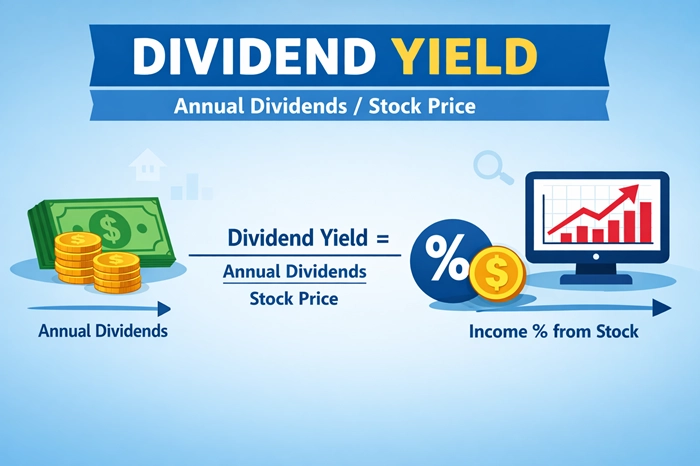
Dividend yield is a key concept that helps investors evaluate how much income they can earn from a stock relative to its price.
\text{Dividend Yield} = \frac{\text{Annual Dividend}}{\text{Share Price}} \times 100
This formula shows the percentage return you earn from dividends alone, without considering stock price appreciation.
For instance, if a company pays an annual dividend of ₹20 and its share price is ₹400, the dividend yield would be 5%. This means you earn a 5% return on your investment through dividends each year.
Dividend yield is especially useful for comparing different stocks and identifying income-generating opportunities.
Why Dividends Matter for Investors
Dividends play a significant role in helping investors build long-term wealth. One of the biggest advantages is that they provide a steady source of passive income. Unlike capital gains, which require you to sell your shares, dividends allow you to earn money while still holding your investments.
They also offer a sense of stability during market fluctuations. Even when stock prices are volatile, dividend-paying companies can continue to generate income for investors. This makes them particularly attractive during uncertain market conditions.
Another important benefit is compounding. When you reinvest your dividends into buying more shares, your investment grows faster over time. This snowball effect can significantly increase your wealth in the long run.
Why Dividends Matter for Companies
From a company’s perspective, dividends are more than just payouts—they are a strategic tool. Regular dividend payments help build a strong reputation in the market and increase investor confidence.
They also encourage shareholder loyalty. Investors are more likely to hold onto stocks that provide consistent returns, which reduces volatility in the company’s share price.
Additionally, dividends help companies manage excess cash effectively. Instead of making poor investment decisions with surplus funds, distributing dividends ensures that capital is used wisely.
Dividend vs Growth Stocks
| Feature | Dividend Stocks | Growth Stocks |
| Definition | Companies that regularly share profits with investors | Companies that reinvest profits to expand business |
| Primary Goal | Generate regular income | Achieve capital appreciation (price growth) |
| Investor Type | Income-focused investors (retirees, conservative investors) | Long-term investors seeking high returns |
| Profit Usage | Distributed as dividends | Reinvested into business growth |
| Risk Level | Generally lower risk | Higher risk due to volatility |
| Return Type | Steady income + moderate growth | High potential returns (but no guaranteed income) |
| Company Type | Mature, stable companies | Emerging or fast-growing companies |
| Examples | Coca-Cola, Hindustan Unilever | Tesla, Amazon |
| Dividend Payment | Regular (quarterly/annual) | Rare or none |
| Market Behavior | Less volatile | More volatile |
| Ideal For | Passive income and stability | Wealth creation over time |
Dividend Investing Strategy
If you’re planning to invest in dividend-paying stocks, it’s important to adopt a thoughtful approach. Instead of chasing high dividend yields, focus on companies with a consistent history of paying dividends.
Strong financial health is another crucial factor. Companies with stable earnings and low debt are more likely to sustain their dividend payments over time.
Reinvesting dividends can also make a huge difference. By using your earnings to buy more shares, you can take advantage of compounding and grow your investment faster.
Most importantly, dividend investing requires patience. It’s not a get-rich-quick strategy, but rather a long-term approach to building wealth.
Dividends in India
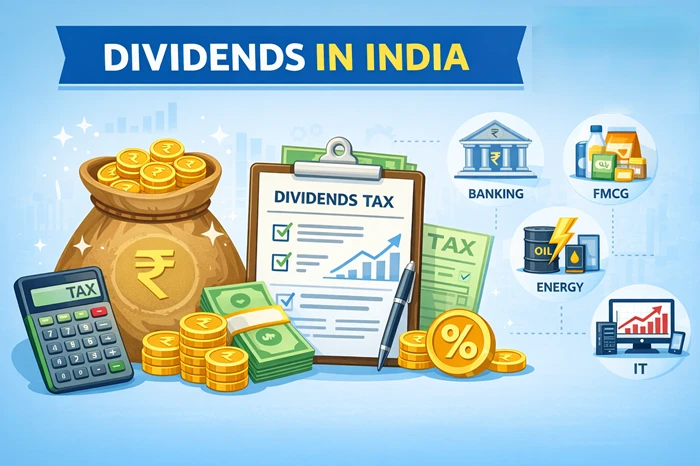
For investors in India, dividends are an important source of income but also come with certain tax implications. Dividends are taxable in the hands of investors, and companies may deduct TDS depending on the amount.
Dividend-paying companies are commonly found in sectors such as banking, FMCG, energy, and IT. These industries typically generate stable profits, making them ideal for consistent dividend payments.
Understanding the local tax rules and market trends can help Indian investors make better decisions when investing in dividend stocks.
Common Mistakes to Avoid
Many beginners make the mistake of focusing only on high dividend yields. While a high yield may seem attractive, it can sometimes indicate financial trouble within the company.
Another common error is ignoring the company’s fundamentals. A strong dividend is only sustainable if the company has solid earnings and financial stability.
Short-term thinking can also limit your success. Dividend investing works best when you stay invested for the long term and allow your returns to grow steadily.
FAQs About Dividends
1. What is a dividend in simple words?
A dividend is a portion of a company’s profit that is paid to its shareholders. It is essentially a reward for investing in the company.
2. How do I receive dividends?
To receive dividends, you must own shares of a company before the ex-dividend date. The payment is usually credited directly to your bank account.
3. Are dividends guaranteed?
No, dividends are not guaranteed. Companies decide whether to pay dividends based on their profits and financial condition.
4. Which companies pay dividends?
Generally, well-established and profitable companies pay dividends. These are often found in sectors like banking, energy, and FMCG.
5. Can I live off dividends?
Yes, many investors aim to build a portfolio that generates enough dividend income to cover their expenses. However, this requires significant investment and long-term planning.
6. What is a good dividend yield?
A dividend yield between 2% to 6% is generally considered healthy, but it depends on the industry and market conditions.
7. Are dividends taxable in India?
Yes, dividends are taxable in the hands of investors as per their income tax slab.
Conclusion
Dividends are one of the most powerful yet simple ways to earn money from the stock market. They provide a reliable source of passive income while also helping investors build long-term wealth.
For companies, dividends are a way to reward shareholders, build trust, and maintain financial discipline. For investors, they offer stability, income, and the potential for compounding growth.
Whether you are a beginner or an experienced investor, understanding dividends is essential. With the right strategy and a long-term mindset, dividend investing can play a key role in achieving financial freedom.
