Author: Riyaz Daga

  • The 20 Best Warehouse Management Companies

    The 20 Best Warehouse Management Companies

    Warehousing is not about putting products on shelves anymore. These days businesses need to get orders and know exactly how much stuff they have in stock to make sure their employees are working well and work smoothly with the people who supply them with products. If you have a store, a company that makes things or a retail business picking the right warehouse management partner can really affect how happy your customers are and how much money you make.

    Nowadays companies that manage warehouses have cool technology, automated systems, ways to track inventory and solutions for getting products from one place to another. They can help all kinds of businesses from ones that want to save money on warehouse space to big companies that have to manage products all over the world. There are warehouse management companies that can meet the needs of any business.

    In this guide we will look at 20 of the warehouse management companies that are helping businesses get better at keeping track of their inventory, saving money on operations and making their warehouses run more smoothly. Warehouse management companies are really important. We will explore how they can help your warehouse management needs. Warehouse management is a part of any business and these companies are experts in warehouse management.

    What Is a Warehouse Management Company?

    Warehouse management system dashboard displayed on a tablet.

    A warehouse management company helps businesses organize their warehouse. They use software, automation and consulting to make things run smoothly. These companies provide tools to manage inventory. They also help with workflows order accuracy and efficiency.

    Their solutions include:

    •  Warehouse Management Systems
    •  Inventory tracking
    •  Labor management
    •  Order fulfillment
    •  Shipping integrations
    •  Supply chain visibility

    The main goal of a warehouse management company is to move products through the warehouse. This means getting products from receiving to storage then to picking, packing and shipping. By making warehouses work better these companies help businesses save money. They also help businesses get work done and make customers happier.

    The warehouse management company ensures products move efficiently through every stage.

    They help businesses reduce costs and increase productivity.

    They deliver a customer experience.

    20 Best Warehouse Management Companies

    1. Manhattan Associates

    Home page of Manhattan Associates

    Manhattan Associates is a known company that makes really good warehouse management systems. They have a system that is on the cloud and it helps people who own businesses to keep track of the things they have in stock, get more work done by the people who work for them, fill orders correctly and make their warehouses run better. Manhattan Associates solutions are used by stores, people who make things and companies that move things from one place to another because these companies need to be very good at getting things done quickly and handling a lot of work. Manhattan Associates is used by these companies because they need to be very efficient and be able to handle a lot of things at the time. Manhattan Associates helps them do that.

     Key Features

    • Advanced inventory management
    • Warehouse automation support
    • Real-time visibility
    • Labor optimization tools

    2. Blue Yonder

    Home page of yonde

    Blue Yonder is known for combining artificial intelligence and machine learning with warehouse management technology. Its platform helps organizations improve inventory planning, demand forecasting, warehouse operations, and supply chain performance. Businesses benefit from greater operational visibility and data-driven decision-making that improves efficiency across the entire supply chain.

    Key Features

    • AI-driven analytics
    • Inventory optimization
    • Workforce management
    • End-to-end supply chain visibility

    3. SAP

    SAP offers enterprise-grade warehouse management capabilities through its extensive supply chain management ecosystem. Its solutions are particularly popular among large organizations that require seamless integration between warehouse operations, procurement, manufacturing, and logistics. SAP’s advanced features help businesses maintain accurate inventory records and improve warehouse productivity.

    Key Features

    • Enterprise-grade WMS
    • Integrated supply chain management
    • Real-time inventory tracking
    • Automation support 

    4. Oracle

    Oracle Warehouse Management Cloud provides businesses with a modern, scalable solution for managing warehouse operations. The platform delivers real-time inventory visibility, mobile warehouse functionality, and advanced analytics that help organizations improve inventory accuracy and accelerate order fulfillment processes.

    Key Features

    • Cloud-based deployment
    • Mobile warehouse operations
    • Inventory visibility
    • Advanced reporting

    5. Infor

    Infor offers flexible and scalable warehouse management solutions designed for businesses of all sizes. The platform helps organizations improve inventory accuracy, optimize labor utilization, and automate critical warehouse processes. Infor’s solutions are particularly valuable for companies looking to support growth while maintaining operational efficiency.

    Key Features

    • Inventory optimization
    • Labor management
    • Automation integration
    • Analytics dashboards

    6. Körber Supply Chain

    Körber Supply Chain provides advanced warehouse management solutions focused on adaptability and long-term scalability. Its software supports complex warehouse environments and integrates with automated systems, making it suitable for businesses seeking greater operational flexibility and improved warehouse performance.

    Key Features

    • End-to-end warehouse management
    • Automation compatibility
    • Inventory control
    • Custom workflows

    7. Tecsys

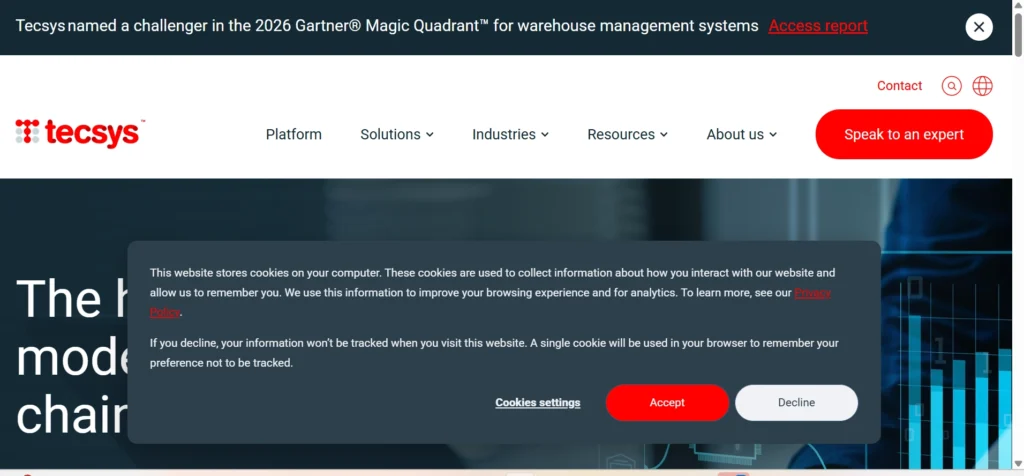
    Home page of  Tecsys

    Tecsys is a company that helps with managing warehouses and getting things from one place to another. They do this for places like hospitals and stores and other companies that sell things. The technology that Tecsys uses helps these businesses keep track of what they have, in stock, make sure they are sending the things to the right people and see what is going on with their supplies. Tecsys warehouse and distribution management solutions also help these companies deal with problems that’re specific to their industry like Tecsys does for the healthcare industry and Tecsys does for the retail industry and Tecsys does for the wholesale distribution industry 

    Key Features

    • Advanced inventory tracking
    • Order management
    • Supply chain visibility
    • Industry-specific solutions

    8. HighJump

    HighJump has built a strong reputation for helping businesses improve warehouse productivity through flexible and configurable warehouse management software. Its solutions allow organizations to customize workflows according to their operational requirements while maintaining real-time visibility into warehouse activities.

    Key Features

    • Flexible workflows
    • Real-time inventory updates
    • Labor tracking
    • Cloud deployment options

    9. Fishbowl

    Fishbowl is a tool, for managing warehouses. It helps small and medium-sized businesses control their inventory and manage their warehouses without breaking the bank.

    It has a simple and easy to use platform. This platform combines inventory management with manufacturing and order fulfillment.

    The main goal of Fishbowl is to make inventory control and warehouse management easy and affordable.

    It offers tools to help businesses track and manage their inventory.

    Fishbowl also helps with manufacturing and order fulfillment processes.

    It is designed to be user-friendly.

    This makes it easy for businesses to get started with managing their warehouses.

    Key Features

    • Inventory control
    • Order tracking
    • Manufacturing integration
    • User-friendly interface

    10. NetSuite

    NetSuite combines enterprise resource planning (ERP) capabilities with warehouse management functionality in a unified cloud platform. Businesses can manage inventory, orders, financials, and warehouse operations from a single system, helping improve efficiency and visibility across departments.

    Key Features

    • Inventory visibility
    • Warehouse automation support
    • Order management
    • Cloud accessibility

    11. Logiwa

    Logiwa is designed specifically for eCommerce businesses and third-party logistics providers. Its cloud-based platform helps companies manage high-volume order fulfillment, automate warehouse tasks, and maintain accurate inventory across multiple sales channels.

    Key Features

    • Multi-channel fulfillment
    • Real-time inventory tracking
    • Order automation
    • Shipping integrations

    12. 3PL Central

    3PL Central is a system that helps companies who handle shipping and storage for people. These companies are called third-party logistics providers. They need to keep track of what’s in the warehouse and who it belongs to. 3PL Central gives them the tools they need to do this.

    They can use 3PL Central to keep track of inventory and automatically send bills to clients. The system also gives them reports. Shows them what is going on in the warehouse. This makes it easier for logistics companies to work with a lot of customers. 3PL Central is really good at helping third-party logistics providers manage their warehouse operations and client inventory.

    Key Features

    • Client inventory management
    • Billing automation
    • Reporting tools
    • Warehouse visibility

    13. Cin7

    Cin7 is a cloud-based inventory and warehouse management platform designed for businesses operating across multiple sales channels. It synchronizes inventory data in real time, helping organizations prevent overselling, improve inventory accuracy, and streamline warehouse operations.

    Key Features

    • Inventory synchronization
    • Warehouse tracking
    • Sales channel integration
    • Automated workflows

    14. Deposco

    Deposco provides cloud-based warehouse and fulfillment solutions that help businesses improve operational efficiency and customer satisfaction. Its platform enables companies to optimize inventory management, order processing, and fulfillment workflows while gaining actionable business insights.

    Key Features

    • Inventory management
    • Fulfillment optimization
    • Analytics and reporting
    • Order orchestration

    15. Softeon

    Softeon delivers highly flexible warehouse management solutions for organizations with complex supply chain requirements. The platform helps businesses optimize warehouse operations, improve labor productivity, and support warehouse automation initiatives.

    Key Features

    • Warehouse optimization
    • Labor management
    • Inventory visibility
    • Automation support

    16. Generix Group

    The Generix Group provides companies with ways to manage their warehouses and supply chains. This helps businesses work better and get more done. The Generix Group technology helps with things like keeping track of inventory, managing transportation and running warehouses. It does this for different types of industries. The Generix Group solutions are used to make inventory control and transportation management easier for businesses. The Generix Group warehouse management is very helpful for companies.

     Key Features

    • Warehouse execution
    • Inventory tracking
    • Transportation integration
    • Supply chain optimization

    17. Reply

    Reply provides digital warehouse management solutions that help organizations improve inventory control, warehouse productivity, and operational visibility. Its scalable platform is suitable for businesses seeking long-term growth and digital transformation.

    Key Features

    • Cloud deployment
    • Automation integration
    • Inventory management
    • Performance monitoring

    18. Mecalux

    Mecalux combines warehouse management software with advanced automation technologies to create highly efficient warehouse environments. Its solutions support automated storage systems, inventory management, and warehouse optimization initiatives.

    Key Features

    • Automated storage systems
    • Inventory control
    • Warehouse optimization
    • Real-time monitoring

    19. SSI SCHAEFER

    AI-powered warehouse automation system with robotic workers handling inventory bins and conveyor operations in a smart warehouse.

    SSI SCHAEFER is a global leader in warehouse logistics and automation solutions. The company provides innovative technologies that help businesses improve inventory management, optimize picking processes, and increase overall warehouse efficiency.

    Key Features

    • Warehouse automation
    • Inventory management
    • Picking optimization
    • Supply chain solutions

    20. Dematic

    Dematic specializes in intelligent warehouse automation and supply chain optimization technologies. Its solutions incorporate robotics, automated fulfillment systems, and warehouse control software to help businesses increase efficiency, reduce errors, and scale operations effectively.

    Key Features

    • Robotics integration
    • Automated fulfillment
    • Warehouse control systems
    • Inventory visibility

    These warehouse management companies represent some of the most trusted names in the industry, offering solutions that help businesses improve inventory accuracy and cloud based accounting, streamline operations, reduce costs, and meet growing customer expectations in an increasingly competitive marketplace.

    How to Choose the Right Warehouse Management Company

    Every business has unique requirements. Before selecting a warehouse management provider, consider:

    1. Business Size

    Small businesses may need affordable and simple solutions, while enterprises often require advanced automation and analytics.

    2. Industry Requirements

    Some providers specialize in healthcare, manufacturing, retail, or eCommerce.

    3. Scalability

    Choose a solution that can grow alongside your business.

    4. Integration Capabilities

    Ensure the platform integrates with your ERP, CRM, eCommerce platforms, and shipping providers.

    5. Budget

    Consider both upfront implementation costs and ongoing subscription fees.

    6. Customer Support

    Reliable technical support is essential for minimizing downtime.

    Benefits of Working with a Warehouse Management Company

    Partnering with a reliable warehouse management company can help businesses streamline operations, reduce costs, and improve customer service. As supply chains become more complex and customer expectations continue to grow, having the right warehouse management partner can make a significant difference in overall business performance.

    Improved Inventory Accuracy

    Warehouse management companies use advanced tracking technologies such as barcode scanning, RFID systems, and real-time inventory monitoring to ensure accurate stock records. This reduces inventory discrepancies, prevents stockouts and overstocking, and helps businesses make better purchasing and planning decisions.

    Faster Order Fulfillment

    Efficient warehouse processes enable products to move quickly from receiving to storage, picking, packing, and shipping. Optimized workflows and automated systems help reduce processing times, allowing businesses to fulfill customer orders faster and meet delivery expectations more consistently.

    Reduced Labor Costs

    Four warehouse employees gathered around stacked packages, reviewing inventory records and coordinating warehouse operations in a large distribution center.

    Modern warehouse management solutions automate many repetitive tasks and improve workforce productivity. By optimizing employee schedules, reducing manual data entry, and streamlining warehouse operations, businesses can lower labor expenses while maintaining high levels of efficiency.

    Better Warehouse Space Utilization

    A warehouse management company can help businesses maximize available storage space through strategic inventory placement and efficient warehouse layouts. Better space utilization reduces congestion, improves accessibility, and allows companies to store more products without expanding their facilities.

    Increased Customer Satisfaction

    Customers expect accurate orders and fast deliveries. Effective warehouse management reduces shipping mistakes, improves order accuracy, and ensures products are delivered on time. This leads to a better customer experience, stronger customer loyalty, and more positive reviews.

    Enhanced Supply Chain Visibility

    Warehouse management providers give businesses tools to see what is going on. These tools show the inventory levels and the status of orders. They also show how the warehouse is doing. This helps managers make decisions. They can see what is happening. Fix problems with the supply chain quickly. Warehouse management is important because it helps managers know what is going on with the inventory levels and the warehouse performance. Warehouse management providers offer real-time dashboards and reporting tools to help with this. 

    Support for Business Growth

    As businesses get bigger, managing warehouses gets more complicated. A good warehouse management system can handle stock, more orders and extra warehouses without slowing down. This helps companies grow without losing control of their operations. They can add locations and still keep things running smoothly. 

    Reduced Shipping Errors

    Order mistakes can lead to returns, refunds, and dissatisfied customers. Warehouse management systems improve accuracy through automated verification processes, barcode scanning, and quality control checks. As a result, businesses experience fewer shipping errors and lower return-related costs.

    Stronger Competitive Advantage

    In today’s fast-paced market, efficient warehouse operations can be a key differentiator. Businesses that can deliver products quickly, accurately, and cost-effectively are better positioned to compete and retain customers. Working with a warehouse management company helps organizations build a more agile and responsive supply chain, creating a lasting competitive advantage.

    By investing in the right warehouse management partner, businesses can improve operational efficiency, reduce costs, and create a seamless experience for customers while preparing for future growth.

    Conclusion

    The best warehouse management companies use technology and automation to help businesses run their warehouses in a way. They have people who really know what they are doing.

    If you need a warehouse management system that you can access from anywhere or if you want to automate your warehouse or if you want a solution for your supply chain the companies listed above are good options for any size business.

    The best company for you depends on what kind of business you’re in, how complicated your operations are, what your plans are, for growing and how much money you have to spend.

    If you choose the warehouse management company to work with your business can do things more efficiently, save money and make your customers happier.

    Frequently Asked Questions (FAQs)

    1. What is a warehouse management company?

    A warehouse management company provides software, services, or technology that helps businesses manage inventory, storage, order fulfillment, and warehouse operations more efficiently.

    2. What does a Warehouse Management System (WMS) do?

    A WMS tracks inventory, manages warehouse workflows, optimizes storage space, and improves order accuracy and fulfillment speed.

    3. Which warehouse management company is best for small businesses?

    Fishbowl, Cin7, and Logiwa are often considered suitable options for small and growing businesses due to their ease of use and scalability.

    4. How much does warehouse management software cost?

    Costs vary depending on features, number of users, warehouse size, and deployment type. Pricing can range from a few hundred dollars per month to enterprise-level investments.

    5. Can warehouse management software integrate with eCommerce platforms?

    Yes. Most modern warehouse management solutions integrate with platforms like Shopify, Amazon, WooCommerce, and other online marketplaces.

    6. What industries use warehouse management solutions?

    Retail, eCommerce, manufacturing, healthcare, wholesale distribution, food and beverage, and logistics companies commonly use warehouse management systems.

    7. How does warehouse management improve inventory accuracy?

    By using barcode scanning, real-time inventory updates, automated tracking, and reporting tools, warehouse management systems significantly reduce human errors.

    8. What should businesses look for when choosing a warehouse management company?

    Businesses should evaluate scalability, integration options, automation capabilities, pricing, customer support, and industry-specific expertise before making a decision.

    9. Is cloud-based warehouse management software better than on-premise software?

    Cloud-based solutions typically offer easier updates, lower infrastructure costs, and greater accessibility, while on-premise systems provide more control over data and customization.

    10. Can warehouse management systems support automation?

    Yes. Many modern WMS platforms integrate with robotics, automated storage systems, conveyors, and AI-powered technologies to improve efficiency.
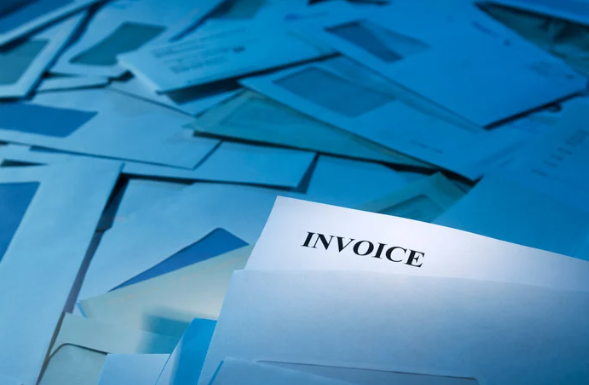
  • Best Practices to Keep Track of Invoices and Payments.

    Best Practices to Keep Track of Invoices and Payments.

    Keeping track of invoices and payments is one of the most important aspects of running a business. A solid invoicing system ensures steady cash flow, minimizes late payments, and helps maintain good relationships with clients. Without proper tracking, businesses can run into financial trouble, leading to unnecessary stress and operational disruptions.

    In this article, we’ll go over practical ways to manage invoices and payments effectively. Whether you’re a small business owner or managing finances for a larger company, these strategies will help you stay organized and ensure your accounts remain in good shape.

    Understanding Invoice Tracking

    What is Invoice Tracking, and Why is It Important?

    Invoice tracking refers to the process of monitoring outgoing invoices and incoming payments. It helps businesses keep a record of what they are owed, who has paid, and what is still pending. Without proper tracking, a business might lose track of unpaid invoices, resulting in cash flow issues.

    Having an efficient system in place ensures that:

    • Payments are received on time.
    • Unpaid invoices are followed up promptly.
    • Financial records remain accurate.
    • Businesses avoid disputes with clients over missing payments.

    What Happens When Invoice Tracking is Poorly Managed?

    If a business does not track invoices properly, it may face several challenges:

    • Late or missed payments: Without reminders or follow-ups, clients may forget to pay.
    • Cash flow problems: Inconsistent tracking can lead to unexpected financial shortfalls.
    • Strained relationships: Clients might lose trust in businesses that frequently mismanage invoices.
    • Tax and compliance issues: Missing financial records can cause trouble when filing taxes.

    15 Practical Tips for Effective Invoice and Payment Tracking

    1. Implement a Standardized Invoicing System

    Use a consistent format for invoices, including invoice numbers, issue dates, due dates, and detailed descriptions of services or products. A well-structured invoice makes it easier for both parties to process payments smoothly. Standardization helps avoid confusion, ensures accuracy, and provides a clear reference for both the business and the client. Having a defined template minimizes errors and speeds up the invoicing process, allowing businesses to focus on other important tasks.

    2. Utilize Digital Tools

    Manually tracking invoices can be time-consuming and prone to errors. Using invoicing software simplifies the process, reducing the chances of mistakes and ensuring better organization. Digital tools help automate invoice creation, track due dates, and send reminders, making the entire process more efficient. With automated systems, businesses can reduce paperwork, improve accuracy, and ensure timely payments from clients.

    3. Set Clear Payment Terms

    Clearly state your payment terms in each invoice. Mention due dates, accepted payment methods, and any late payment penalties to ensure clients understand their responsibilities. Well-defined terms prevent misunderstandings and encourage timely payments. Be transparent about fees for late payments to deter delays. Setting expectations early helps maintain professional relationships and reduces disputes over payments.

    4. Schedule Regular Reviews

    Conduct frequent checks on outstanding invoices. Set aside time each week or month to review unpaid invoices and send reminders when needed. Regular reviews help identify overdue payments early and take action before they become significant issues. Having a structured review schedule prevents invoices from slipping through the cracks and ensures cash flow remains steady.

    5. Maintain Detailed Records

    Keep thorough records of all invoices, including issue dates, due dates, and payment confirmations. This helps in case of disputes and ensures accurate financial reporting. A well-maintained record system allows businesses to track past transactions easily, identify trends in late payments, and provide documentation when needed for legal or tax purposes. Proper record-keeping also simplifies annual financial audits.

    6. Reconcile Accounts Frequently

    Regularly match invoices with received payments. This helps identify any missing payments or incorrect amounts and allows for quick correction. Reconciling accounts ensures that all transactions are accounted for and prevents accounting errors that could lead to financial discrepancies. This practice also helps in catching fraud or mistakes in financial reporting early.

    7. Communicate Proactively with Clients

    Send polite reminders before due dates. If a payment is overdue, follow up promptly but professionally to resolve any issues. Good communication reduces the chances of clients forgetting payments and demonstrates professionalism. Addressing concerns proactively builds trust with clients and encourages smoother financial transactions in the long run.

    8. Offer Multiple Payment Options

    Providing clients with various payment methods—bank transfers, credit cards, digital wallets—makes it easier for them to pay on time. Giving customers the flexibility to choose their preferred method increases the chances of timely payments. Businesses that accommodate different payment preferences tend to experience fewer delays in receiving funds.

    9. Monitor Cash Flow Diligently

    Keep a close eye on cash flow by tracking outstanding payments. Knowing what is due and when allows for better financial planning. Businesses that actively monitor cash flow can make informed decisions on spending, investments, and operational adjustments. Cash flow awareness prevents unexpected shortfalls and ensures financial stability.

    10. Train Staff Thoroughly

    Ensure employees handling invoices understand the process, software, and policies to minimize errors and delays. Training staff on proper invoicing procedures improves efficiency and reduces mistakes. A knowledgeable team can respond to invoicing issues quickly, preventing delays and ensuring clients receive accurate billing information.

    11. Utilize Cloud-Based Solutions

    Cloud-based invoicing tools allow you to access records from anywhere, making it convenient to manage invoices remotely. Businesses that adopt cloud-based solutions benefit from enhanced security, automatic backups, and accessibility from multiple locations. This is especially useful for companies with remote teams or multiple office locations.

    12. Set Up Automated Reminders

    Use software to send automated payment reminders to clients. This reduces manual follow-ups and increases the likelihood of on-time payments. Automated reminders take the burden off employees while ensuring clients receive consistent payment notifications. Timely reminders significantly reduce late payments and improve overall cash flow management.

    13. Establish a Collections Process

    If a payment is significantly overdue, have a step-by-step collections process in place. This could include sending multiple reminders, applying late fees, or escalating the issue if necessary. A structured collections process helps businesses recover unpaid invoices without damaging client relationships. Having clear procedures in place ensures fairness and consistency.

    14. Regularly Update Client Information

    Ensure client contact details are accurate to prevent miscommunication and lost invoices. Keeping an up-to-date database minimizes invoice delivery issues and ensures prompt communication. Regular updates also prevent administrative delays that can slow down the payment process and cause unnecessary confusion.

    15. Seek Professional Advice When Necessary

    If you struggle with invoice management, consult a financial expert or accountant to streamline the process. Professional guidance can help businesses optimize invoicing procedures, ensure tax compliance, and implement strategies to prevent late payments. Expert advice is particularly valuable for businesses looking to scale operations efficiently.

    Features to Look for in Invoice Tracking Software

    1. Automation Capabilities

    Good invoicing software should automate tasks like sending invoices, reminders, and receipts to save time and reduce errors.

    2. Integration with Accounting Systems

    The software should work well with your accounting tools to simplify financial management.

    3. Reporting and Analytics

    Tracking payment trends and outstanding invoices can help businesses make informed financial decisions.

    4. User-Friendly Interface

    A simple and easy-to-use platform ensures quick adoption and minimizes training needs.

    Addressing Common Questions

    How Can Small Businesses Manage Invoicing Effectively?

    Small businesses can benefit from using simple and affordable invoicing software. Setting clear payment terms and following up consistently can also help maintain smooth cash flow.

    What Are the Benefits of Electronic Invoicing?

    Electronic invoicing speeds up the payment process, reduces manual errors, and ensures better record-keeping.

    How Often Should Businesses Review Their Invoicing Processes?

    It’s a good practice to review invoicing and payment tracking methods monthly or quarterly to ensure efficiency.

    What Steps Can Be Taken If a Client Consistently Pays Late?

    Consider renegotiating payment terms, implementing late fees, or reassessing whether the client is worth the continued business relationship.

    Conclusion

    Accurate invoice and payment tracking is essential for keeping business finances stable. By following these best practices, businesses can avoid unnecessary delays, improve cash flow, and maintain positive relationships with clients. Using the right tools and strategies will make the entire invoicing process more efficient, helping businesses stay financially secure.

  • Best Accounting Software for Ecommerce Businesses

    Best Accounting Software for Ecommerce Businesses

    Running an ecommerce business isn’t just about selling products—it also involves keeping track of finances, taxes, and inventory. Without the right accounting software, handling these tasks can be overwhelming, leading to errors and financial losses. 

    Good accounting software helps ecommerce businesses track sales, manage expenses, automate tax calculations, and integrate with online stores. It saves time and ensures compliance with financial regulations. In this guide, we’ll review the best accounting software options for ecommerce businesses, their key features, and how they can help streamline your operations.

    E-COMMERCE BASKET

    Top Accounting Software Options for Ecommerce

    1. QuickBooks Online

    QuickBooks Online is one of the most popular accounting solutions for ecommerce businesses. It offers powerful features like sales tax automation, integration with platforms like Shopify, Amazon, and eBay, and tools for tracking expenses and generating invoices. The software is user-friendly and cloud-based, allowing multiple users to access financial data from anywhere.

    One of the key advantages of QuickBooks Online is its automation capabilities, which help businesses save time on bookkeeping tasks. For ecommerce brands handling high order volumes, tools like SaasAnt Transactions help automate bulk imports into QuickBooks Online from marketplaces, payment processors, and CSV or Excel files, cutting down even more manual work. It also provides detailed financial reports, enabling business owners to make informed decisions.

    However, QuickBooks Online comes at a higher price compared to some alternatives. While its automation features are excellent, some users have reported that customer support can be slow to respond. Despite this, its overall ease of use and strong integration options make it a top choice for ecommerce businesses looking for a reliable accounting solution.

    2. Xero

    Xero is another well-known accounting software with unlimited user access, making it a great option for growing ecommerce businesses. It includes inventory management, multi-currency support, seamless bank reconciliation, and detailed financial reporting. These features make it an excellent choice for ecommerce businesses that need accurate financial insights and streamlined bookkeeping processes.

    A key advantage of Xero is its affordability, often enhanced by the availability of a Xero Discount, as it offers competitive pricing for businesses of all sizes.. It integrates well with ecommerce platforms like Shopify and WooCommerce, allowing for easy synchronization of sales and expense data. Additionally, Xero offers a strong invoicing system, making it easier for businesses to manage payments from customers. However, it lacks some of the automation features found in QuickBooks, and its mobile app does not offer all the functionalities available on the desktop version. For a better understanding of how businesses can visualize and interpret their data, reviewing Xero dashboard examples can provide valuable insight into its reporting capabilities.
    Despite this, Xero remains a solid choice for businesses seeking an affordable and feature-rich accounting solution.

    3. Zoho Books

    Zoho Books is an affordable accounting solution designed for small and medium-sized businesses. It includes a mobile app that enables business owners to manage their finances on the go, along with tax compliance tools and automated workflows to simplify bookkeeping.

    One of the standout features of Zoho Books is its budget-friendly pricing, making it a great option for startups and small businesses. The software offers automated payment reminders, expense tracking, and real-time financial reporting. Its customer support is responsive, providing assistance when needed. However, Zoho Books has limited third-party integrations compared to QuickBooks and Xero, which might be a drawback for businesses that rely on multiple software tools. Additionally, some advanced features, such as project accounting, are only available in higher-tier plans. Despite these limitations, Zoho Books remains a reliable and cost-effective solution for ecommerce businesses looking for an easy-to-use accounting platform.

    4. FreshBooks

    FreshBooks is designed for businesses looking for a simple and easy-to-use accounting solution. It features a user-friendly interface, time tracking capabilities, automatic expense tracking, and invoicing tools. These features make FreshBooks a popular choice for freelancers, small businesses, and ecommerce store owners who need an efficient way to manage their finances.

    One of the biggest strengths of FreshBooks is its simplicity, making it accessible to users who may not have an accounting background. It integrates well with ecommerce platforms like Shopify and WooCommerce, allowing businesses to track their transactions effortlessly. FreshBooks also provides automated invoicing, making it easier to receive payments on time. However, while FreshBooks excels in invoicing and expense management, it lacks some of the advanced accounting features found in QuickBooks or Xero. Larger businesses may find its capabilities somewhat limited, especially in terms of financial reporting and automation. Despite this, FreshBooks remains an excellent choice for businesses that prioritize ease of use and efficient invoicing.

    5. A2X

    A2X is specifically built for ecommerce businesses that sell through marketplaces like Amazon, Shopify, and eBay. It automatically imports sales and fee data from these platforms, categorizes transactions, and simplifies tax calculations. A2X is ideal for businesses that need to automate transaction processing and bookkeeping, reducing manual data entry and minimizing errors.

    One of the key benefits of A2X is its ability to provide accurate financial reconciliation, ensuring that all ecommerce sales and fees are correctly recorded. This makes tax compliance and financial reporting easier for online sellers. The software also integrates with QuickBooks Online and Xero, making it a valuable addition for businesses that already use these accounting platforms. However, A2X can be costly for smaller businesses, as its pricing is higher than other accounting software options. Additionally, it is mainly suited for businesses focused on selling through major online marketplaces, rather than those with independent ecommerce stores. Despite this, A2X remains a powerful tool for businesses that require accurate and automated ecommerce accounting.

    6. SimplBooks

    SimplBooks is an accounting and compliance software designed primarily for small and medium-sized businesses in India. It focuses on simplifying day-to-day bookkeeping while ensuring compliance with Indian tax regulations, especially GST. SimplBooks allows businesses to record sales, purchases, expenses, and bank transactions, helping owners maintain accurate financial records without needing deep accounting expertise.

    One of the key benefits of SimplBooks is its strong GST functionality. It supports GST return preparation, tax calculations, and compliance tracking, making it easier for businesses to meet statutory requirements. The software also offers features such as invoicing, inventory management, and financial reporting, giving business owners clear visibility into their cash flow and performance. SimplBooks is user-friendly and cost-effective, which makes it attractive for startups and smaller businesses.

    Key Features to Consider in Ecommerce Accounting Software

    1. Integration with Ecommerce Platforms

    Choosing software that integrates seamlessly with platforms like Shopify, WooCommerce, Amazon, and eBay is essential. A well-integrated system allows automatic syncing of sales, expenses, and customer data, reducing manual entry and errors. Businesses working with shopify agency or Shopify ecommerce development services should ensure their accounting software is configured for seamless data synchronization from the initial setup phase. For businesses selling on Amazon, integrating Amazon EDI capabilities with ecommerce accounting software can further automate order processing, invoicing, and inventory updates—reducing manual work and improving accuracy across transactions.
    However, to fully leverage these backend integrations, businesses also need a user-friendly front-end interface that can display and manage this synchronized data efficiently. This is where hiring experienced React developers becomes crucial. React’s dynamic capabilities allow developers to create responsive dashboards and interactive components that display real-time financial and transactional data. These tailored interfaces ensure seamless data flow, enhance user experience, and support the automation of business workflows directly within the application, making complex processes accessible and manageable for users.

    2. Inventory Management

    Effective inventory tracking helps businesses maintain stock levels, reorder products on time, and manage supplier relationships. Some software options offer real-time inventory updates, ensuring that stock information remains accurate across multiple sales channels. When connected with personalized merchandising tools, inventory data can also help tailor product visibility based on customer behavior and preferences, leading to improved conversion and reduced overstock

    3. Sales Tax Automation

    Tax compliance can be complicated, especially for businesses selling in multiple states or countries. Accounting software with automated tax calculation ensures accurate collection and remittance of taxes based on customer locations, helping businesses stay compliant with regulations.

    4. Multi-Currency Support

    For ecommerce businesses dealing with international sales, multi-currency support is crucial. The right software should be able to handle different currencies, convert exchange rates automatically, and provide accurate financial reports. Working with a professional software development company ensures these multi-currency features are implemented correctly and optimized for global operations.

    5. User Access and Permissions

    Ecommerce businesses often have multiple team members handling finances. Software that allows customized user access ensures that employees can view or manage specific financial data without compromising sensitive information. This feature enhances security and improves workflow efficiency.

    6. Automated Expense Tracking

    Managing expenses efficiently is essential for financial control. Good accounting software should allow businesses to track expenses automatically, categorize them, and generate reports that help in budgeting and financial planning.

    7. Financial Reporting and Insights

    Detailed financial reports help businesses analyze profitability, revenue trends, and cash flow. The right software should offer customizable reporting tools, allowing users to generate balance sheets, profit and loss statements, and cash flow reports with ease.

    8. Customer Support and User Experience

    Reliable customer support and an intuitive user interface are key factors when selecting accounting software. Businesses should choose software that provides responsive customer service, easy-to-use dashboards, and comprehensive tutorials to help with onboarding.

    CUSTOMER SUPPORT AND USER EXPERIENCE

    People Also Ask

    What is the best accounting software for small ecommerce businesses?

    For small businesses, Zoho Books and FreshBooks offer budget-friendly solutions with essential accounting features. Xero is also a good choice for those needing more automation and advanced financial tools.

    Can accounting software integrate with my online store?

    Yes, most top accounting software options integrate with major ecommerce platforms. QuickBooks Online and A2X are particularly known for their strong integrations with Amazon, Shopify, and eBay, making them excellent choices for businesses that rely on these marketplaces. Many growing ecommerce brands also work with a Netalico Shopify Plus agency to optimize Shopify integrations and streamline financial reporting. Specialized development for Shopify project helps align integrations and reporting with your business logic.

    How does accounting software help with sales tax compliance?

    Accounting software automates sales tax calculations based on business locations and customer regions. This ensures accurate tax collection and remittance, helping businesses comply with tax regulations. QuickBooks Online and Xero offer…

    Is there free accounting software suitable for ecommerce?

    Yes, some free accounting tools like Wave Accounting and Zoho Books (with a free plan) offer basic features for small ecommerce businesses. However, they may have limitations compared to paid options in terms of automation and integrations.

    How secure is cloud-based accounting software?

    Cloud-based accounting software uses encryption, secure servers, and multi-factor authentication to protect financial data. Most reputable software providers follow strict security protocols to ensure data privacy and prevent unauthorized access.

    What factors should I consider when choosing accounting software for ecommerce?

    Consider integration capabilities, pricing, ease of use, automation features, customer support, and scalability. The right software should align with your business needs and support future growth.

    Conclusion

    Choosing the right accounting software is essential for managing an ecommerce business efficiently. The best solutions offer seamless integration with online stores, automate tax calculations, track inventory, and generate accurate financial reports. Whether you’re a small business looking for an affordable solution or a larger ecommerce company needing advanced automation, there are multiple options available to fit your needs. 

    By carefully assessing your business requirements, you can find accounting software that helps streamline financial management and improves overall efficiency.

  • How AI is Transforming Billing and Accounting Software.

    How AI is Transforming Billing and Accounting Software.

    The shift from manual bookkeeping to digital solutions brought significant improvements, yet businesses still faced challenges in accuracy and efficiency. Traditional methods required a great deal of human effort, leading to errors and inefficiencies. The adoption of digital tools helped reduce paperwork and automated some tasks, but human involvement was still needed for critical financial processes.

    AI has changed the way businesses handle financial data by introducing automation, predictive insights, and better accuracy. Instead of relying on accountants for repetitive tasks, AI-powered tools can now process large amounts of financial data quickly and efficiently. As more companies embrace AI, they are experiencing smoother workflows, fewer mistakes, and enhanced compliance with financial regulations. Modern AI systems are also transforming financial planning through advanced cash flow forecasting software, giving businesses clearer visibility into future inflows and outflows.

    Key Benefits of AI Integration

    One of the biggest advantages of AI in billing and accounting is automation. Tasks that used to take hours, such as data entry and invoice processing, are now handled by AI in minutes. This not only saves time but also reduces the chances of errors that can lead to financial discrepancies.

    Automation can also extend to capturing accurate billing and shipping details, where using an address autocomplete API helps ensures that you easily autocomplete the address correctly while minimizing manual effort.

    AI-driven software can read invoices, extract relevant details, and update financial records without human intervention, especially when paired with AI powered enterprise search to surface the right data instantly. By leveraging AR and AP automation, businesses can streamline their entire billing cycle, ensuring faster payments and more accurate financial reporting.

    Another major benefit is improved accuracy and compliance. Human errors in accounting can cause significant financial losses or legal issues. AI helps eliminate these risks by identifying mistakes before they become major problems. It ensures that financial reports comply with regulations and tax laws, reducing the burden on businesses.

    AI also provides real-time financial insights, helping businesses make better decisions. With up-to-date financial data, companies can track expenses, manage cash flow, and plan budgets more effectively. AI-driven reports allow business owners to see trends and anticipate potential financial challenges before they arise. This is where the importance of AI Software Integration Services becomes evident for businesses. Some platforms now include enterprise search capabilities, allowing finance teams to retrieve records, invoices, or compliance documents instantly across multiple data sources.

    AI-Powered Features in Modern Software

    Modern billing and accounting software, much like advanced ITSM tools, comes with AI-powered features that simplify financial management, but ensuring their security also requires reliable penetration testing tools to identify potential weaknesses.. Upskilling teams through AI courses helps finance departments adopt automation responsibly and improve day-to-day workflows. Automated data entry eliminates the need for manual input by scanning receipts, invoices, and bank statements. Invoice scanning software, for example, reduces errors and speeds up financial record-keeping.

    Predictive analytics tools, allowing businesses to forecast cash flow, expenses, and revenue trends. By analyzing past financial data, AI can help companies plan their budgets more effectively and prepare for future financial needs.

    Smart reconciliation further enhances accuracy by matching financial transactions automatically, reducing the chances of mismatched records. B2B SaaS billing software, such as Younium and other software are the best SaaS accounting software that uses AI technology to automate the whole billing process for SaaS businesses.

    Natural language processing (NLP) makes AI-driven accounting software even more user-friendly. Instead of navigating complex menus, users can simply type a question or request, and the AI provides the needed financial reports or insights instantly. This simplifies financial management for business owners who may not have an extensive accounting background.

    Leading AI-Driven Billing and Accounting Tools

    Several AI-driven billing and accounting tools are making a significant impact in the financial world. Numeric Software is one such tool, known for its ability to automate invoicing and bookkeeping. Businesses that use Numeric Software experience faster financial processes and more efficient workflows.

    Intuit’s QuickBooks has also integrated AI features to enhance bookkeeping and tax preparation. With AI-powered smart categorization, QuickBooks automatically sorts expenses and income, reducing the need for manual input. Many businesses have adopted QuickBooks due to its ease of use and AI-driven insights.

    Sage Intact is another leading tool that leverages AI to provide cloud-based accounting solutions. It is particularly beneficial for growing businesses, as it offers scalable financial management solutions. By incorporating AI, Sage Intacct helps businesses streamline financial forecasting and compliance processes.

    Challenges and Considerations

    Despite its benefits, AI adoption in billing and accounting comes with certain challenges. One of the biggest concerns is data security and privacy. To enhance these results even further, some organizations pursue generative ai consulting to build domain-specific models capable of interpreting financial patterns, predicting anomalies, and supporting more adaptive decision-making across billing and accounting operations.AI systems rely on vast amounts of financial data, making them potential targets for cyber threats. Businesses must implement strong security measures to protect sensitive financial information and comply with data protection laws.

    Another challenge is integrating AI with existing accounting systems. To implement these capabilities effectively and tailor them to complex financial environments, many organizations rely on AI consulting services that guide model selection, integration processes, and long-term optimization strategies. Many businesses already use traditional accounting software, and transitioning to AI-powered solutions can be complex. Companies must ensure that AI tools integrate seamlessly with their current systems without disrupting operations. Proper training is also necessary to help employees adapt to AI-driven accounting processes.

    Cost is another important consideration. While AI-powered software offers long-term savings by improving efficiency, the initial investment can be high. Businesses need to evaluate the return on investment (ROI) to determine whether AI adoption aligns with their financial goals. However, as AI technology advances, the costs are gradually decreasing, making it more accessible for small and medium-sized businesses. To navigate these complexities effectively, many organizations choose to hire AI developers who specialize in creating tailored solutions that fit their unique accounting needs.

    Future Trends in AI and Accounting

    AI adoption in billing and accounting is expected to grow significantly in the coming years. More small businesses are beginning to use AI-driven accounting software, breaking the misconception that AI is only for large enterprises. As AI becomes more affordable and user-friendly, artificial intelligence developers are helping businesses of all sizes benefit from its capabilities.

    Advancements in AI will continue to bring new features to financial management software. Improved fraud detection, better tax planning tools, and enhanced automation will make accounting processes even more efficient. Businesses will also need to stay updated on regulatory changes, as governments may introduce new financial standards influenced by AI integration.

    FAQs

    How is AI used in accounting?
    AI is used to automate bookkeeping, data entry, invoice processing, financial analysis, and compliance monitoring. It helps businesses reduce manual workload and improve accuracy in financial records.

    What are the benefits of AI in billing systems?
    AI improves efficiency by automating repetitive tasks, reduces errors, ensures compliance, provides real-time financial insights, and enhances decision-making through predictive analytics.

    Which accounting software uses artificial intelligence?
    Popular accounting software with AI capabilities includes QuickBooks, Numeric Software, Sage Intacct, and several cloud-based financial management tools.

    What are the challenges of implementing AI in accounting?
    Challenges include data security concerns, integration with existing systems, high initial investment, and the need for employee training to use AI-driven tools effectively.

    Conclusion

    AI is revolutionizing billing and accounting software by automating repetitive tasks, improving accuracy, and providing real-time insights. Businesses that adopt AI-driven solutions can experience increased efficiency, reduced errors, and better financial decision-making. While challenges such as data security, integration, and costs exist, the benefits of AI outweigh the risks.

    As AI technology continues to evolve, businesses should consider how they can incorporate AI into their financial processes. Whether it’s through automated invoicing, predictive analytics, or smart reconciliation, AI offers valuable tools to enhance financial management. The future of billing and accounting lies in AI-driven solutions that simplify and improve financial operations for businesses of all sizes.

  • Objectives of Inventory Management: Challenges +strategies.

    Objectives of Inventory Management: Challenges +strategies.

    Inventory management is the process of tracking, storing, and controlling stock to ensure that businesses have the right products at the right time. It involves managing raw materials, work-in-progress items, and finished goods to avoid shortages or excess stock.

    Importance of Effective Inventory Management in Business Operations

    Managing inventory properly helps businesses reduce costs, improve cash flow, and keep customers happy. Poor inventory management can lead to lost sales, wasted money on unsold products, and disruptions in supply chains. By maintaining the right balance, businesses can operate smoothly and increase profitability.

    Key Objectives of Inventory Management

    1. Ensuring Optimal Stock Levels

    One of the main goals of inventory management is to keep just the right amount of stock. Having too much can lead to wasted storage costs, while too little can cause delays and lost sales. Businesses need to analyze past sales and trends to maintain a balanced inventory. Regularly reviewing stock levels, using forecasting tools, and setting reorder points help businesses avoid stock-related issues and ensure smooth operations.

    2. Reducing Holding Costs

    Storing inventory comes with expenses, such as rent, insurance, and maintenance. By managing stock effectively, businesses can reduce these costs. Strategies like storing only high-demand items and using efficient warehousing techniques can help lower expenses. Implementing a system to track slow-moving products and discontinuing items with low demand can also help minimize storage costs, freeing up capital for other essential business activities.

    3. Enhancing Customer Satisfaction

    Customers expect fast and reliable service. If a business runs out of stock or takes too long to deliver, it risks losing customers. By managing inventory well, companies can ensure that products are available when customers need them, leading to repeat business and positive reviews. A well-stocked inventory improves order fulfillment speed, reduces cancellations, and builds trust, encouraging long-term customer relationships and higher sales.

    4. Improving Cash Flow

    Tying up too much money in unsold stock can hurt a business’s cash flow. Inventory management helps free up cash by ensuring that money isn’t wasted on slow-moving products. Businesses can focus on stocking fast-selling items and reducing excess inventory. Selling off outdated or slow-moving stock through promotions or discounts can further optimize cash flow, helping companies maintain financial stability and reinvest in growth.

    5. Preventing Losses Due to Theft and Wastage

    Stock losses due to theft, spoilage, or mismanagement can be costly. Implementing security measures, tracking inventory with software, and conducting regular audits can help reduce these losses. Keeping an accurate record of stock ensures that businesses are not losing money unknowingly. Businesses should also train employees on proper handling and storage techniques to minimize accidental damage, further reducing inventory shrinkage.

    6. Supporting Demand Planning

    Understanding customer demand is essential for stocking the right products. Inventory management uses past data to predict future sales trends. This helps businesses prepare for seasonal demand spikes and avoid overstocking during slow periods. Analyzing customer preferences and external market trends allows businesses to make informed stocking decisions, ensuring they meet demand while avoiding unnecessary stock accumulation.

    7. Streamlining Operations

    A well-organized inventory system improves efficiency in storage, picking, and order fulfillment. By reducing unnecessary steps, businesses can save time and resources, making their supply chain more efficient. Using barcode scanning, automated tracking, and proper shelf labeling reduces errors and speeds up inventory handling, leading to faster deliveries and fewer mistakes in the order process, ultimately improving overall productivity.

    Common Challenges in Inventory Management

    1. Handling Demand Fluctuations

    Customer demand can be unpredictable. Seasonal trends, market changes, and external factors can all impact inventory needs. Businesses need to stay flexible and adjust their stock levels based on data analysis.

    2. Managing Lead Times

    Some products take longer to restock due to shipping delays or supplier issues. Businesses must plan ahead and set reorder points to avoid running out of important stock.

    3. Dealing with Obsolete Stock

    Keeping outdated or slow-moving items in storage takes up space and money. Businesses should regularly review their stock and find ways to sell or repurpose older items to minimize losses.

    Strategies to Achieve Inventory Management Objectives

    1. Implementing Inventory Management Software

    Technology makes inventory management easier. Software solutions help track stock levels, set reorder points, and analyze sales trends. Businesses using inventory management tools can reduce errors and improve efficiency.

    2. Adopting Just-In-Time (JIT) Inventory

    JIT inventory means keeping minimal stock and ordering only when needed. This reduces storage costs and prevents excess inventory. However, it requires strong supplier relationships to ensure timely deliveries.

    3. Conducting Regular Audits

    Regular inventory checks help identify missing or outdated items. Physical counts, cycle counting, and using barcode scanning can keep records accurate and prevent losses.

    4. Utilizing ABC Analysis

    Not all inventory items are equally important. ABC analysis helps categorize stock based on value and demand.

    • A-category items: High-value, low-quantity items that require close monitoring.
    • B-category items: Moderate-value products with steady demand.
    • C-category items: Low-cost, high-quantity goods that don’t require frequent tracking.

    By prioritizing inventory this way, businesses can focus their resources on the most important products.

    Frequently Asked Questions (FAQs)

    What are the primary goals of inventory management?

    The main objectives are to maintain optimal stock levels, reduce costs, improve cash flow, prevent losses, and enhance customer satisfaction.

    How does inventory management impact profitability?

    Good inventory management reduces waste, lowers storage costs, and ensures that high-demand products are always available, leading to higher sales and better profit margins.

    What tools are essential for effective inventory management?

    Inventory management software, barcode scanning systems, and real-time tracking tools help businesses monitor stock and automate processes.

    How can small businesses implement efficient inventory management practices?

    Small businesses can start by using simple tools like spreadsheets, setting reorder points, and organizing stock by priority. As they grow, investing in automation can further improve efficiency.

    Conclusion

    Inventory management is a key part of running a successful business. By keeping stock levels balanced, reducing waste, and using the right tools, companies can improve efficiency and boost profits. Every business, big or small, can benefit from setting clear inventory goals and following best practices.

  • Inventory Control Strategies: Objectives and Methods

    Inventory Control Strategies: Objectives and Methods

    Inventory control refers to the process of managing stock levels efficiently to ensure that businesses have the right products available at the right time. It involves tracking inventory, maintaining stock balance, and minimizing costs while meeting customer demand.

    Importance of Effective Inventory Management in Business Operations
    Managing inventory effectively helps businesses reduce storage costs, prevent overstocking or stockouts, and improve cash flow. A well-organized inventory system ensures smooth operations, enhances customer satisfaction, and optimizes profitability.

    1. Key Objectives of Inventory Control

    Ensuring Adequate Stock Levels to Meet Customer Demand
    Having the right amount of stock is essential to prevent lost sales due to stockouts. Maintaining adequate inventory ensures smooth production and order fulfillment, ultimately enhancing customer satisfaction.

    Minimizing Holding and Storage Costs
    Reducing warehousing and storage expenses is a crucial goal of inventory control. Businesses can avoid unnecessary stock accumulation, leading to more efficient use of storage space and financial resources.

    Reducing Instances of Overstocking and Stockouts
    Balancing stock levels prevents excess inventory and shortages. By maintaining optimal stock, companies can reduce the risk of perishable goods going to waste and avoid urgent restocking challenges.

    Improving Cash Flow and Profitability
    Effective inventory control prevents excess capital from being tied up in unused stock. This helps businesses allocate their financial resources efficiently, improving overall cash flow and profitability.

    Enhancing Customer Satisfaction Through Timely Order Fulfillment
    A well-managed inventory system ensures quick deliveries and meets customer expectations. Businesses that fulfill orders on time build a reliable reputation and improve customer loyalty.

    Common Methods of Inventory Control

    Just-In-Time (JIT) Inventory
    The Just-In-Time (JIT) method involves restocking inventory only when needed, reducing storage costs and waste. While it minimizes excess inventory, it also requires an efficient supply chain to ensure timely deliveries.

    Economic Order Quantity (EOQ)
    The Economic Order Quantity (EOQ) model helps businesses determine the optimal order quantity to minimize costs. By using the EOQ formula, companies can balance ordering costs and storage expenses while ensuring sufficient stock availability.

    ABC Analysis
    ABC analysis categorizes inventory based on value and turnover rates. High-value, low-quantity items fall under category A, moderate-value items under category B, and low-value, high-quantity items under category C. Prioritizing management efforts on A items, closely monitoring B items, and automating C items help optimize inventory control.

    First-In, First-Out (FIFO) and Last-In, First-Out (LIFO)
    The FIFO method ensures that older inventory is used first, reducing spoilage and waste. On the other hand, the LIFO method allows newer inventory to be used first, which can be beneficial for cost-saving during inflation. FIFO is recommended for perishable goods, while LIFO is suitable for cost management in fluctuating markets.

    Two-Bin System
    The two-bin system helps businesses prevent stock shortages by maintaining a backup supply. One bin is used for daily operations, while the second bin serves as a reserve to ensure uninterrupted supply.

    Steps to Implement Effective Inventory Control

    Conducting Regular Inventory Audits
    Performing routine inventory audits ensures accuracy and helps identify discrepancies such as theft, damage, or mismanagement. This step is crucial in maintaining stock integrity and optimizing inventory processes.

    Utilizing Inventory Management Software
    Automating inventory tracking and ordering processes using inventory management software reduces human errors and enhances operational efficiency. These tools provide real-time insights into stock levels and demand trends.

    Setting Reorder Points and Safety Stock Levels
    Determining reorder points helps maintain optimal stock levels, preventing sudden shortages. Safety stock acts as a buffer against unexpected demand spikes or supply chain disruptions.

    Training Staff on Inventory Handling Best Practices
    Proper training in inventory management ensures staff members handle stock efficiently, reducing losses and improving coordination within the supply chain. Educated employees help streamline inventory processes. Implementing mentoring software can further support ongoing learning and provide real-time guidance, helping staff apply best practices consistently.

    Establishing Strong Relationships with Suppliers
    Building strong supplier relationships guarantees timely deliveries and better pricing. Reliable suppliers provide flexibility in urgent restocking situations and help businesses maintain steady inventory flow.

    Challenges in Inventory Control and How to Overcome Them

    Dealing with Demand Variability
    Unpredictable customer demand can lead to stock imbalances. Using demand forecasting tools and historical sales data helps businesses plan inventory more accurately and mitigate stock issues.

    Managing Lead Times and Supplier Reliability
    Delayed shipments can disrupt inventory levels. Working with multiple suppliers and maintaining buffer stock minimizes risks associated with supply chain disruptions.

    Handling Obsolete or Slow-Moving Stock
    Excess inventory of unsellable products can lead to financial losses. Businesses can address this issue by implementing discounting strategies or negotiating return agreements with suppliers.

    Strategies to Address These Challenges Effectively
    Real-time inventory tracking reduces last-minute stock issues, and diversifying suppliers helps prevent dependency on a single source. Implementing these strategies ensures smoother inventory control processes.

    Benefits of Effective Inventory Control

    Cost Savings Through Reduced Waste and Optimized Stock Levels
    Efficient inventory control minimizes waste and excess stock, lowering overall costs. Businesses save money by avoiding unnecessary storage and disposal expenses.

    Improved Operational Efficiency
    Streamlined inventory management enhances business operations by ensuring the right products are available when needed. This leads to better workflow and productivity.

    Enhanced Ability to Meet Market Demand
    With an optimized inventory system, businesses can quickly respond to customer demands, reducing delays and improving satisfaction.

    Strengthened Competitive Advantage
    A well-managed inventory system helps businesses stay ahead of competitors by ensuring product availability, cost efficiency, and superior customer service.

    Frequently Asked Questions (FAQs)

    What are the main objectives of inventory control?
    The primary objectives are maintaining adequate stock levels, reducing costs, improving cash flow, and ensuring customer satisfaction through timely order fulfillment.

    How does Just-In-Time inventory differ from traditional inventory methods?
    JIT minimizes storage costs by ordering stock only when needed, whereas traditional methods involve maintaining higher stock levels.

    What is the Economic Order Quantity and how is it calculated?
    EOQ determines the optimal order quantity to minimize total inventory costs, calculated using a specific formula that balances ordering and holding costs.

    Why is ABC analysis important in inventory management?
    ABC analysis helps prioritize stock management by categorizing inventory based on value and turnover rates, ensuring efficient resource allocation.

    How can businesses overcome common inventory control challenges?
    Using demand forecasting, diversifying suppliers, and implementing inventory management software are effective ways to address inventory challenges.

  • ERP vs. Accounting Software – Key Differences & Benefits

    ERP vs. Accounting Software – Key Differences & Benefits

    Accounting software or ERP systems to handle financial records, track transactions, and streamline operations. While both serve essential functions, they are not the same.

    Understanding Accounting Software

    Accounting software is designed to manage a company’s financial activities. It automates tasks like tracking income and expenses, generating financial reports, and ensuring compliance with tax laws.

    Accounting software helps businesses maintain financial records and streamline operations. It records daily transactions, manages invoices, calculates wages and tax deductions, and generates financial reports like profit and loss statements and balance sheets.

    Accounting software is best suited for small to medium-sized businesses that need a straightforward way to manage their finances without additional complexity.

    Understanding ERP (Enterprise Resource Planning) Systems

    An ERP system is a more comprehensive business management tool that goes beyond accounting. It integrates multiple functions, such as finance, supply chain management, customer relations, and human resources, through efficient ERP software development into one system.


    ERP systems offer financial management capabilities similar to accounting software but with added features for budgeting and forecasting. They also include supply chain management, allowing businesses to track inventory, procurement, and logistics efficiently. Human resources management is another essential component, helping companies manage employee records, payroll, and recruitment processes. Additionally, ERP systems include customer relationship management (CRM) tools that assist in sales tracking and customer interactions.


    ERP systems are more suitable for medium to large businesses that require a unified platform to manage various operations across multiple departments.

    Key Differences Between ERP and Accounting Software

    • 1. Scope and Functionality

    Accounting software primarily focuses on managing financial processes such as accounts payable, accounts receivable, general ledger, and financial reporting. It’s designed specifically to handle bookkeeping tasks and generate financial statements to help businesses track their financial health.

    In contrast, ERP (Enterprise Resource Planning) systems offer comprehensive business management solutions that extend far beyond finance. They integrate multiple functions including accounting, human resources, inventory management, supply chain, customer relationship management, and manufacturing processes into a single cohesive system. This holistic approach enables businesses to manage all aspects of operations through one platform. Increasingly, AI for enterprise is being incorporated into these systems to provide smarter analytics, automate routine tasks, and improve decision-making across departments.

    • 2. Integration Capabilities

    Accounting software typically operates as a standalone solution with limited integration options. While modern accounting programs may offer some API connections to third-party applications, these integrations often require additional configuration and may not provide seamless data flow.

    ERP systems are built with integration at their core. They create a unified ecosystem where information flows automatically between different departments and modules. This eliminates data silos, reduces double-entry, and ensures all stakeholders have access to the most current information for decision-making purposes.

    • 3. Scalability

    Accounting software works well for businesses with straightforward financial requirements and predictable growth patterns. However, as companies expand, these solutions may struggle to handle increased transaction volumes or more complex financial structures.

    ERP systems are designed to scale alongside growing businesses. They can accommodate increasing data volumes, additional users, more complex processes, and even expansion into new markets or business lines. The modular structure of most ERP solutions allows companies to add functionality as needed, making them suitable for long-term business evolution.

    • 4. Cost and Implementation

    Accounting software is generally more budget-friendly, with many solutions offering tiered pricing models that accommodate small businesses. Implementation is typically straightforward, often requiring minimal IT expertise and limited customization.

    ERP systems represent a significant investment, both financially and in terms of organizational resources. Implementation can take months or even years for complex deployments, requiring dedicated project teams, extensive training, and sometimes business process reengineering to align with the software’s capabilities.

    • 5. Reporting and Analytics

    Accounting software provides standard financial reports such as income statements, balance sheets, and cash flow statements. While many modern solutions offer some customizable reporting, their analytical capabilities are primarily focused on financial metrics.

    ERP systems deliver comprehensive business intelligence through advanced reporting and analytics features. They can provide cross-functional insights by combining data from various departments, enabling predictive analytics, and supporting strategic decision-making through customizable dashboards and KPIs that span the entire organization.

    • 6. Compliance and Regulations

    Accounting software typically handles basic compliance requirements related to financial reporting and tax regulations. They’re designed to help businesses meet standard accounting principles and tax obligations.

    ERP systems often include more sophisticated compliance capabilities, addressing industry-specific regulations, international accounting standards, and complex reporting requirements. They can manage compliance across multiple jurisdictions, currencies, and regulatory frameworks, making them valuable for businesses operating in highly regulated industries or across international borders.

    Advantages of Accounting Software

    1. Cost-Effective

    Most accounting tools have affordable plans that cater to small businesses.

    2. User-Friendly

    They come with simple interfaces that are easy to learn and use.

    3. Quick Setup

    Many cloud-based accounting solutions can be set up within minutes.

    Advantages of ERP Systems

    1. Centralized Data

    With ERP, all business data is stored in one place, making decision-making easier.

    2. Better Collaboration

    Different departments can work together smoothly by accessing shared data.

    3. Process Automation

    ERP systems help automate routine tasks, reducing manual work and errors.

    4. Improved Compliance

    They help businesses follow tax laws and industry regulations by keeping records accurate and up to date.

    Factors to Consider When Choosing Between ERP and Accounting Software

    1. Business Size and Complexity

    If you run a small business with simple financial needs, accounting software is enough. Larger companies with multiple departments will benefit from an ERP system.

    2. Business Needs

    Consider whether you only need financial tracking or require additional features like inventory management, HR, and CRM.

    3. Budget

    ERP systems cost more upfront but offer long-term benefits. If budget is a concern, starting with accounting software may be a better option.

    4. Future Growth

    If your business is growing fast, an ERP system will prevent future headaches by integrating all operations into one system.

    Frequently Asked Questions (FAQs)

    1. What are the main functions of accounting software?

    Accounting software helps businesses track income and expenses, generate invoices, manage payroll, and create financial reports.

    2. How does an ERP system integrate different business processes?

    ERP systems connect finance, HR, sales, supply chain, and other departments, allowing businesses to manage operations from a single platform.

    3. Can small businesses benefit from ERP systems?

    Yes, but it depends on the business’s complexity. Small businesses with multiple departments may find ERP useful, while simpler operations may do well with accounting software.

    4. What are the costs associated with ERP implementation?

    ERP systems have higher costs due to setup, licensing, and maintenance. Prices vary based on features and company size.

    5. How do I determine which system is right for my business?

    Assess your business needs, budget, and future plans. If you need basic financial management, go for accounting software. If you require a complete business management tool, choose ERP.

    Conclusion

    Choosing between ERP and accounting software depends on your business needs. Accounting software is best for financial tracking, while ERP systems provide a broader range of features for growing businesses. Carefully assess your requirements and budget before making a decision.

  • What is an Operating Lease?

    An operating lease is a rental agreement where a company uses an asset without owning it. The company (lessee) pays the owner (lessor) to use the asset for a set time. After the lease ends, the asset goes back to the owner. This type of lease is common for things like vehicles, equipment, or office space.

    Key Features of an Operating Lease:

    • No Ownership Transfer: The company uses the asset but doesn’t own it. Ownership stays with the lessor during and after the lease.
    • Short-Term Use: Operating leases are usually for a shorter part of the asset’s total useful life. This allows companies to use assets without a long-term commitment.
    • Off-Balance Sheet Financing: Traditionally, operating leases didn’t show up as liabilities on a company’s balance sheet. However, accounting rules have changed, and now many leases need to be reported as both assets and liabilities.

    Benefits of Operating Leases:

    • Flexibility: Companies can update or change assets more easily, which is helpful for items that can become outdated quickly.
    • Lower Costs: Since there’s no need to buy the asset, companies can avoid large upfront costs. This is useful for businesses that need expensive equipment but want to keep costs down.
    • Maintenance and Support: Often, the lessor handles maintenance and support, reducing the lessee’s responsibilities.

    Operating Lease vs. Finance Lease:

    In a finance lease (also known as a capital lease), the lessee usually takes on more responsibilities, and the lease often covers most of the asset’s useful life. Ownership may transfer to the lessee at the end. In contrast, an operating lease is more like a rental agreement, with no ownership transfer and typically shorter terms.

    Example:

    A company needs computers for its staff. Instead of buying them, it enters into an operating lease with a supplier. The company uses the computers for a set period and makes regular payments. At the end of the lease, the company returns the computers to the supplier and can choose to lease newer models.

    In summary, an operating lease allows companies to use assets without owning them, providing flexibility and reducing upfront costs. It’s a practical option for businesses that need access to equipment or property for a limited time.

  • What are Prepayments?

    Prepayments are payments made before their due date. This can apply to settling debts early or paying for goods and services in advance. For instance, paying off a loan ahead of schedule or covering several months of rent upfront are examples of prepayments.

    Types of Prepayments:

    1. Loan Prepayments: Borrowers might choose to pay off loans, like mortgages or car loans, before the scheduled due date. This can reduce the total interest paid over time. However, some lenders may charge penalties for early repayment.
    2. Expense Prepayments: Businesses often pay for expenses like rent or insurance in advance. These payments are recorded as assets on the balance sheet and are expensed over the period they cover.

    Benefits of Prepayments:

    • Interest Savings: Paying off loans early can lead to significant savings on interest.
    • Financial Planning: Prepaying certain expenses helps in budgeting and provides a clearer picture of available funds.

    Considerations:

    • Prepayment Penalties: Some loans come with penalties for early repayment. It’s essential to review loan terms before making prepayments.
    • Cash Flow Impact: While prepaying can offer benefits, it’s crucial to ensure that it doesn’t strain your cash flow, especially for businesses that need liquidity for daily operations.

    In summary, prepayments involve settling financial obligations before they are due, which can offer advantages like interest savings and better financial management. However, it’s important to be aware of potential penalties and the impact on cash flow.

  • What is a Debenture?

    A debenture is a type of debt instrument companies use to raise funds from the public or private investors. It works like a loan where the company borrows money and agrees to pay it back with interest over a specific period. These instruments are widely used in the financial world due to their simplicity and flexibility in meeting funding needs.

    Unlike loans from banks, debentures are issued directly to individuals or institutions without requiring physical assets as security. This makes them an attractive option for companies that want to maintain operational control over their resources while securing necessary funds.


    Detailed Features of a Debenture

    1. Fixed Returns
      Debenture holders receive a fixed interest income, making it a predictable and consistent investment option.
    2. Unsecured Nature
      Most debentures don’t require collateral. The repayment relies solely on the company’s ability to meet its financial obligations.
    3. Marketable Instrument
      Debentures can often be sold or transferred in financial markets, allowing investors to exit their investment before maturity.
    4. Maturity Period
      Debentures have defined timelines, typically ranging from five to ten years, ensuring clarity for both issuers and investors.
    5. Rank in Payments
      In case of company liquidation, debenture holders are paid before shareholders but after secured creditors.

    Types of Debentures

    1. Registered Debentures
      These are issued to specific individuals whose names are recorded in the company’s register. They are not transferable without formal procedures.
    2. Bearer Debentures
      These are not registered to any individual, making them transferable by mere delivery, much like cash.
    3. Zero-Coupon Debentures
      These do not pay interest but are issued at a discount to their face value, and the difference acts as the return.
    4. Perpetual Debentures
      These have no fixed maturity date and provide interest payments indefinitely, as long as the company exists.

    Advantages of Debentures for Investors

    • Stable Returns
      With fixed interest rates, debentures provide reliable income for investors, especially those seeking low-risk opportunities.
    • Less Volatility
      Unlike stocks, debentures are not subject to market price fluctuations, offering a stable investment option.
    • Liquidity
      The ability to trade debentures in the market allows investors flexibility to convert their holdings into cash when needed.
    • Priority During Liquidation
      Debenture holders are prioritized over equity shareholders when a company faces financial trouble.

    Advantages of Debentures for Companies

    • Cost-Effective
      Issuing debentures can be cheaper than taking loans as companies avoid asset pledging.
    • Preserves Ownership
      Companies retain full ownership since debenture holders are creditors, not shareholders.
    • Flexible Terms
      Companies can customize the terms of debenture issuance, such as interest rates and repayment schedules.
    • Wide Appeal
      Since debentures attract both individual and institutional investors, they widen the company’s funding sources.

    Risks Associated with Debentures

    1. Default Risk
      If the company faces financial challenges, it might struggle to meet interest payments or repay the principal.
    2. Interest Rate Risk
      If market interest rates rise, the fixed interest on debentures may become less attractive, reducing their market value.
    3. Lack of Collateral
      For unsecured debentures, investors rely entirely on the company’s creditworthiness, which could change over time.
    4. Inflation Impact
      Fixed returns may lose purchasing power over time due to inflation, especially in long-term debentures.

    How Debentures Differ From Shares

    AspectDebenturesShares
    OwnershipNo ownership; creditors onlyRepresents ownership in the company
    ReturnsFixed interest paymentsDividends, which vary with profits
    Risk LevelLower, due to fixed returnsHigher, linked to market performance
    Priority on LiquidationPaid before shareholdersPaid last after all creditors