


You bought a property with multiple income streams to build wealth. Maybe it is a duplex. Maybe a house with a granny flat out back. Or maybe it is a commercial shopfront downstairs with two residential flats upstairs.
Whatever the setup is, you bought it for the cash flow. You did not buy it to become a stressed out part-time accountant. But the moment you add a second or third income stream to a single title, your bookkeeping complexity multiplies.
If you mess this up, you leak money. You miss tax deductions. You pay your accountant double to untangle your mess at the end of the financial year.
Here is exactly how you need to handle the books to keep the ATO happy and your sanity intact.

Separate the Chaos Immediately
You cannot treat a multi-income property like a standard single household rental. You just cannot.
Take the current trend of a co living investment model. People love the high yields of renting out a property room by room. It looks great on paper. But think about the daily reality. You have four different tenants paying rent on different days. You have shared electricity bills. You have internet costs. You have a cleaner coming in every fortnight for the common areas.
If you dump all of that income and all of those expenses into one generic ledger code, you are flying completely blind. How do you know if Room B is actually turning a profit after maintenance? You have absolutely no idea.
You need to track income and direct expenses per lease agreement. Set up tracking categories in your software. Tag every single dollar of rent to the specific tenant or space it belongs to.
One Property Means One Bank Account
This sounds incredibly basic. Yet you would be shocked at how many smart investors fail here.
Never run your rental property income through your personal everyday bank account. When you mix your Friday night beer money with your tenant’s water bill payment, you create a nightmare.
The last time I tried fixing a client’s DIY spreadsheet for a triplex, I found personal grocery bills mixed up with legitimate plumbing repairs. It took me three full days to untangle.
Open a dedicated bank account for the property. Every cent of rent goes in there. Every council rate, strata levy, and repair bill comes out of there. If you need to pay yourself the profit, transfer a lump sum to your personal account and label it clearly. Keep the transaction trail pristine.
Ditch the Spreadsheet and Pay for Software
Spreadsheets are free right up until the ATO audits you. Then they become very expensive.
Stop using manual data entry. It is 2026. You need a proper cloud-based accounting ledger. I always push my clients towards Xero or QuickBooks because they integrate directly with your bank.
Connect your property bank account to the software. Set up bank rules. When the property management fee comes out, the software recognizes it and codes it automatically.
I moved a client off a messy spreadsheet and onto a proper cloud ledger with receipt capture late last year. We cut their monthly admin time from 18 hours down to just four. That is 14 hours they got back every single month just by paying a cheap software subscription. Buy the right tools.
Hold Your Property Manager Accountable
Many investors think having a property manager means they do not need to do bookkeeping. This is a massive trap.
Property managers handle the rent collection and basic maintenance. They send you a monthly statement. But their statement is not a substitute for your own financial records.
I have seen property management agencies make mistakes. They charge the wrong commission rate. They accidentally pay a repair bill for someone else’s property using your rental income. If you blindly hand their end of financial year summary to your accountant without checking it, you pay for their mistakes.
You must reconcile their monthly statements against your actual bank deposits. Make sure the numbers match exactly. Keep them honest.
Apportioning Shared Expenses the Right Way
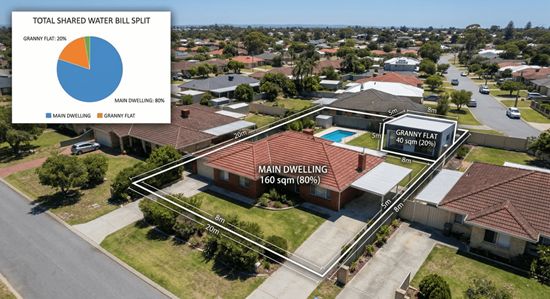
Properties with multiple streams usually share single bills. You might get one council rates notice for a house and a granny flat. You might get one water bill.
How do you split it? You cannot just guess.
You need a clear and documented apportionment method. Usually, this is based on floor area. If the main house is 150 square meters and the granny flat is 50 square meters, you split the shared bills 75 percent to 25 percent.
Document this formula. Keep it on file. Apply it consistently to every shared expense. If the tax man comes knocking, you just hand them the formula. No panic. No stress.
This applies to depreciation too. Your quantity surveyor must provide a breakdown for each income-producing space. You claim the wear and tear on the granny flat appliances completely separately from the main house.
The Compliance Nightmare You Want to Avoid
Multi-income properties get even stickier when you hold them in complex structures.
Let us say you hold a mixed commercial and residential building inside an SMSF Property investment structure. The auditor is going to scrutinize every single cent of that property. The rules governing self-managed super funds are brutally strict.
You have to prove all transactions are at arm’s length. You have to ensure commercial rent is entirely separated from residential rent because the compliance rules treat them differently. If your bookkeeping is sloppy and you mix fund money with personal money, you breach compliance. The penalties for this are massive.
Pristine records are not optional here. They are your only defense against getting penalized.
Stop Bleeding Cash on Avoidable Mistakes
Good bookkeeping is not sexy. It does not get clicks on property blogs. But it absolutely pays the bills.
Clear systems protect your assets. They ensure you claim every single tax deduction you are legally entitled to. They stop you from paying your accountant a small fortune just to clean up your mess.
Get your bank accounts sorted. Buy proper software. Stop treating your property portfolio like a casual hobby. Treat it like a business.
