
Over the past few years, while monitoring digital advertising trends, I have seen a trend where agencies and companies place greater trust on the algorithm through the whole targeting process. There is an adaptive quality to the advertising ecosystem of Meta, where precision targeting has become the main factor influencing evolutionary developments in that area. However, prior to the debate on the algorithms, it is of great importance to point out that the audience and campaign performance are affected by other factors in the digital advertising industry.
One of such factors is that if a brand runs Meta ads, it is likely that they also partner with an amazon ppc management agency, an amazon ppc agency, or services providing amazon ppc. Some even utilize amazon ppc advertising services or hire an amazon ppc expert for managing cross-platform campaigns. These multiple approaches provide brands with a wider range of visibility, and according to what I know, Meta advertising algorithms are increasingly playing a role in the amplification of these results.
With this background, let us consider the function of algorithms in making it possible for a Meta advertising agency to perform more precise and efficient audience targeting.
Understanding the Power of Meta Advertising Algorithms
Meta has a very powerful system of algorithms in place that are able to analyze and interpret vast amounts of different kinds of data like behavioral, demographic, and psychographic data. According to my market research, such algorithms are capable of analyzing the user interaction with posts, videos, pages, ads, and even external websites. This data is, then, used to predict the user’s intention and put the ad in front of the person who is most likely to act. Based on my experience with the study of algorithmic systems, the technology used by Meta is not just the one that depends on fixed audience segments; it is the one that constantly learns and changes according to the real-time user behavior.
This ability to learn dynamically is the reason why brands often report better results when the campaigns are run for a longer period. The system collects more signals, discovers valuable patterns, and optimizes the audience for the ads. According to my information, this is what makes Meta ads so powerful for businesses that are looking for a scalable and long-term advertising strategy.
How Algorithms Improve Audience Segmentation
In the past, traditional audience segmentation was mainly based on demographic filters that included factors like age, gender, income, and location. These filters are still being used but to a lesser extent; Meta has started using machine learning to come up with even deeper, behavior-based segments. The platform monitors users’ every move, such as their content engagement, video viewing duration, link clicks, and online product views.
By user actions, interests, and conversion possibility, Meta’s algorithm clusters users. Thus, it allows the agencies to target the audience not only on the basis of intention but also on a very realistic basis. My market research states that this behavior-based segmentation is much stronger than the audience created by manual means, as it is continuously adapting with the changes in user behavior.
To that end, a Meta advertising agency utilizes such knowledge to design campaigns that correspond accurately with particular user journeys. They do not target wide groups rather, they focus on micro-segment of people that are more likely to engage and convert which, in turn, increases the probability of engagement and conversion.
Lookalike Audiences Built with Algorithmic Precision
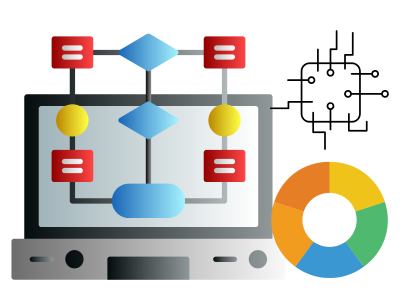
The Lookalike Audience system developed by Meta has gained a reputation as one of the most effective marketing tools for advertisers. According to my information, the algorithm pinpoints the traits that are common among the already existing high-value customers and then proceeds to detect the new potential ones who are likely to act in the same way. My studies have shown that the algorithm scrutinizes a large number of data points such as users’ online activities, past purchases, and interaction with the content patterns.
Thus, this method enables companies to increase their exposure while still being able to target the right audience. A Meta advertising agency takes advantage of Lookalike Audiences to assiduously up the ante on the campaigns that are already performing well without incurring excessive costs. The accuracy of the algorithm is significantly improved when it is used together with server-side tracking or conversions API since it receives more precise data.
Moreover, the Lookalikes get updated on their own as the customer habits change, thus making sure that the targeting is always up-to-date and appropriate.
Real-Time Optimization Through Machine Learning
Through constant evaluation of campaign performance and ad delivery adjustment, Meta’s machine learning models are always looking for ways to deliver the best results. According to my research, the optimization in real-time is cutting through the ad delivery of the people who are more likely to do the desired action, be it to buy, register, or watch a video.
This situation of being in the right place at the right time eliminates the manual work and thereby the campaign turns highly efficient. The advertising agency that works with Meta gets this automation advantage where the strategists can channel their efforts into the areas of creative enhancement, landing page optimization, and conversion paths.
As per my knowledge, with the longer campaigns, the algorithm gets to know the user behavior through predicting user behavior super precisely. That means the cost per result is slashed and the ROI is improved by a remarkable percentage.
Predictive Behaviors and Intent Modeling
Meta’s prediction technologies are geared towards a clear understanding of the future actions of the users. According to my studies, the system looks at the history of the user’s actions to make a guess on the user’s decision, whether he is likely to buy a product, join a newsletter, or get an app.
By preventing insights, agencies can match users with the right message at the right time. For instance, the ads showing the product’s good side might reach the user who is always checking the reviews, while the one who left some items in the cart might get a retargeting ad with a limited-time offer.
Such a high degree of personalization heightens the relevance and thus lifts the conversion rates. According to my market research, intent-based modeling is one of the primary reasons for Meta advertising to consistently outperform many other digital channels.
Creative Matching Using Algorithmic Insights
Meta’s algorithm goes beyond delivering advertisements to users; it also pairs users with the most appealing and corresponding creative to their personality. Through this, Meta’s Dynamic Creative Optimization (DCO) makes use of machine learning to instantly test variations of headlines, images, videos, and call-to-actions.
From my knowledge, the algorithm rapidly picks out the combinations that are generating the most engagement and then gives priority to the respective variations. This is at the core of a Meta advertising agency’s operations, as the agency usually depends on this feature to cut down on testing time and performance optimization without incurring extra workload.
On the basis of my research, the creative pairing is decidedly beneficial for brands looking to reach out to different audience segments or conducting campaigns across multiple devices. The algorithm guarantees that the suitable creative appears for the appropriate person at the right moment.
Retargeting Powered by Algorithmic Intelligence
Retargeting is one of the biggest benefits of Meta advertising. The platform, through algorithmic intelligence, analyzes user activity across websites, shopping carts, product pages, and app interactions.
User signals are the markers that point out the audience who are warmer and have already shown some form of interest. According to my market research, this really helps to significantly increase the chances of conversion. Tapping into this information, a Meta advertising agency formulates retargeting funnels that re-engage potential buyers and lead them back to the point of purchase.
Based on my understanding, Meta’s retargeting is extremely effective when used in conjunction with catalog ads, especially for e-commerce brands that deal with numerous SKUs.
Algorithmic Learning That Improves Over Time
A continuous learning cycle is one of the main advantages of Meta’s system. The system gathers more and more data, it goes on getting progressively more intelligent. It follows the seasonal habits, the popular content, and the shifts in user engagement, thus gaining better and better understanding of the whole situation.
This constant development of the system makes sure that the campaigns are still able to compete even when the market is really crowded with similar products. A Meta advertising agency, for example, makes use of this continuous learning to ensure a stable long-term performance and to be able to increase the scale of their campaigns in a proper manner.
Conclusion
Based on my research, Meta’s advertising algorithms are extremely important for the agencies to be able to deliver very accurate, potent and scalable audience targeting. These systems are capable of processing complicated data, making predictions about user behavior, ‘real-time’ optimizing campaigns, and matching the right creatives with the corresponding personas. According to my knowledge, it is mainly due to this algorithmic power that brands are able to unlock faster growth and become more competitive in the digital world.
The targeting capabilities of Meta become even more important when they are combined with the overall paid media strategies. Numerous brands are using ecommerce ppc, hiring an ecommerce ppc agency, or investing in ecommerce ppc management and ecommerce ppc services to enhance their advertising performance in general. Along with these activities, Meta’s algorithmic targeting comes into play by attracting very good quality traffic and raising the rates of conversion. This method has been in a perfect sync with the increasing demand for advanced ppc for ecommerce which makes Meta advertising a must-have in the current performance marketing landscape.
