

If you’ve spent any time searching for a new venture, you’ve probably noticed that most “unique business ideas” lists aren’t that unique. They recycle the same 50 suggestions (dropshipping, virtual assistant, candle making) and call it a day.
This list is different. Each of these 12 unique business ideas takes an existing business model and points it at a specific customer with a specific problem.
That’s what actually makes something unique: not that nobody’s ever thought of it, but that you’re solving a narrow problem better than the generic version does.
Below, you’ll find a quick comparison table, then a full breakdown of each idea covering startup costs, required skills, how to land your first customers, and how to know if the demand is real before you spend a dollar.
12 Unique Business Ideas
1. AI Workflow Setup Service for Small Businesses
What the business does
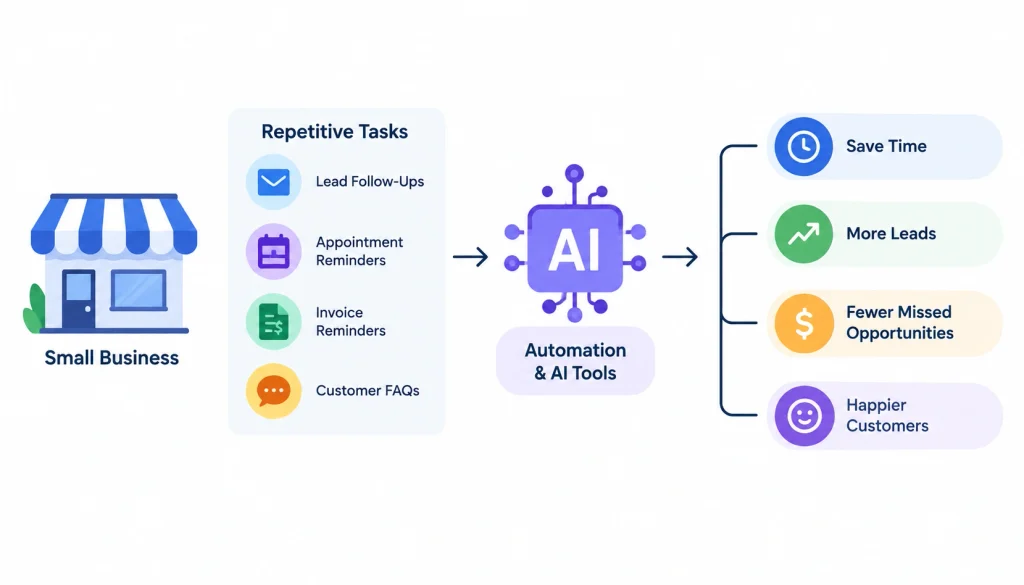
You help small businesses automate repetitive tasks (lead follow-up, appointment reminders, invoice reminders, customer FAQs) using AI tools and simple automation platforms. You’re not selling “AI.” You’re selling hours saved and leads no longer falling through the cracks.
Who pays for it
Local service businesses (contractors, clinics, salons, real estate agents) that get enough inquiries to need a system, but not enough volume to justify hiring a full-time ops person.
Examples of workflows to automate
Missed-call text-back, appointment confirmation and reminders, review requests after a job is completed, lead qualification through a chat widget, and basic customer support for common questions.
Startup costs
Under $500. Most of the tools you’ll use (Zapier, Make, a CRM’s built-in automation) run on monthly subscriptions, and many have free tiers while you’re learning and building your first client project.
Skills required
Comfort with no-code automation tools, basic understanding of how small businesses operate day to day, and enough writing skill to draft the automated messages customers will actually receive.
How to get the first 3 customers
Pick one industry (say, dental clinics) and offer a free audit of their booking and follow-up process to two or three local businesses. Build one working automation as a demo, then convert that into a paid engagement.
How to scale it
Once you’ve built a workflow for one industry, you can package it as a template and resell it to similar businesses with light customization, instead of starting from scratch each time.
Expert angle: Sell a defined outcome, like “we recover 15% of missed calls,” not a vague service called “AI consulting.” Buyers pay for results they can picture, not for technology.
2. Senior Technology Concierge Service
What problem does it solve?
Many older adults own smartphones, tablets, and smart TVs they don’t fully know how to use, and they’re often uncomfortable calling a generic tech-support line. A patient, in-person concierge service fills that gap.
Services you can offer
Device setup, password and account management, video-call training so they can see grandchildren, scam and phishing awareness, and ongoing monthly check-ins.
Ideal customers
Adults 65+ living independently, and their adult children who often pay the bill on their parents’ behalf.
Startup equipment
A laptop, a simple toolkit of cables and adapters, and a car. This is one of the lowest-cost businesses on this list to start.
Pricing model
Hourly visits, a monthly retainer for ongoing support, or a one-time “new device setup” package.
Customer acquisition through referrals
Senior centers, assisted-living communities, churches, and local Facebook groups for caregivers are strong first channels. Word of mouth among adult children tends to be the biggest long-term driver.
Scaling a personal service
This business scales less easily than a digital one, because trust and personal rapport are a big part of the offer. A discussion on r/Entrepreneur describes exactly this challenge: one founder running an in-home tech support business for seniors talked through pricing, word-of-mouth growth, and how hard it is to hand the service off to another person without losing that trust (source).
Treat that as one founder’s real experience, not a guarantee of how it’ll go for you. It’s still a useful preview of the actual day-to-day.
3. Niche Digital Product Studio
What you can sell
Templates, calculators, checklists, planners, and other resources built for one specific profession or hobby: a cash-flow spreadsheet for freelance photographers, or a client-intake template for massage therapists.
Finding a profitable niche
Look for a group of people who already pay for tools or software related to their work. If they’re used to spending money to solve problems, a well-made template is an easy add-on purchase.
Where to sell
Etsy, Gumroad, or your own simple storefront. Etsy gives you built-in search traffic; your own site gives you better margins once you have an audience.
Startup costs
Close to $0 beyond your time, if you’re building templates in tools you already know like Canva, Google Sheets, or Notion.
How to validate before creating dozens of products
Build one product first. Post it in a relevant online community or share it with your own network, and watch whether people actually ask to buy it before you build the next nine.
4. Microlearning Business for Professionals
What is microlearning?
Short, focused lessons (five to fifteen minutes) that teach one specific skill instead of a full multi-hour course. It fits into a lunch break or a commute, which is exactly why busy professionals prefer it.
Profitable niche examples
A weekly Excel formula for finance analysts, a client-communication script of the week for consultants, or a compliance update tailored to one industry.
Course formats
Short video lessons, an email series, or a private community feed. You don’t need studio-quality production. Clarity beats polish here.
Platforms and technology
Podia, Teachable, or even a private Substack newsletter with embedded video can work as your delivery platform.
Pricing
A modest monthly subscription tends to work better for microlearning than a large one-time course price, because the ongoing content is what keeps people paying.
How to acquire your first students
Share free lessons publicly on LinkedIn or in relevant professional groups. The free content proves your teaching is useful before anyone has to pay for it.
5. Pet Travel Logistics Service
The problem you’re solving
Moving a pet internationally, or even on a long domestic move, involves health certificates, airline-specific crate rules, and paperwork most pet owners have never dealt with. It’s confusing enough that people will pay someone to manage it.
Services to provide
Booking pet-friendly flights, coordinating vet paperwork and health certificates, sourcing approved travel crates, and managing customs requirements for the destination country.
Target customers
Expats, military families relocating, and international adoptive pet owners.
Partnerships to build
Veterinary clinics, pet relocation specialists overseas, and airlines’ cargo or pet-travel desks are natural referral partners.
Local vs. national opportunities
You can start locally, serving pet owners moving out of your city, and expand into a fully remote consulting model once you understand the process well enough to handle any destination.
Regulatory and insurance considerations
Requirements vary significantly by country and even by airline, so this is a business where you’ll want to stay current on regulations rather than memorize a fixed set of rules. Build a habit of checking official government and airline sources before every booking.
6. Life-Transition Home Reset Service
What is a home reset service?
A service that helps people reorganize, declutter, or set up their home during a major life change. It’s not routine cleaning, but a focused project tied to a specific transition.
Target niches
New parents preparing a nursery and reorganizing storage, seniors downsizing into smaller homes, families moving into a new house, and remote workers converting a spare room into an office.
Service packages
A single-day “reset” for one room, a full-home project spanning several days, or an ongoing maintenance visit once a month.
Startup costs
Low. You mainly need organizing supplies, a reliable vehicle for donation drop-offs, and basic liability insurance.
Local marketing strategy
Partner with real estate agents (for movers), pediatricians’ offices (for new parents), and senior-living placement services (for downsizers), since each group already interacts with your ideal customer at the exact right moment.
Referral partnerships
Movers and real estate agents are especially strong partners, because a home reset naturally happens right before or after they’ve already worked with the same client.
7. Hyperlocal Specialty Food Brand
Finding a local product niche
Look at what your region already does well (a local ingredient, a regional recipe, a food tradition) and build a packaged product around it that isn’t already sold locally.
Product examples
A hot sauce made with a local pepper variety, a spice blend tied to a regional cuisine, or small-batch preserves using fruit from local farms.
Farmers markets and online sales
Start at farmers markets to test flavors and pricing with real customers face to face, then move to online sales through Shopify or Etsy once you know which products actually sell.
Packaging and branding
Simple, clear labeling that tells the story of the ingredient or region tends to outperform generic packaging, especially at markets where customers are buying the story as much as the product.
Food licensing and compliance
Most regions require a food handler’s permit and, depending on the product, a licensed commercial kitchen. Check with your local health department before you sell your first jar. Requirements vary a lot by state and product type.
How to test demand before scaling
Sell in small batches at markets for a few months before investing in larger production runs or wholesale accounts. Let actual repeat purchases, not compliments, tell you what’s working.
8. Creator Back-Office Service
What creators need help with
Full-time content creators are often good at making content and bad at (or too busy for) the administrative side: scheduling, tracking analytics, repurposing content across platforms, and managing sponsorship deals.
Services you can bundle
Content scheduling and publishing, performance reporting, repurposing long videos into clips, and handling sponsorship outreach or contract logistics.
Finding creator clients
Mid-size creators (big enough to need help, not yet big enough to have a full team) are your best fit. Look on YouTube, TikTok, and newsletter platforms like Substack for creators in that range.
Pricing models
A monthly retainer covering a defined set of tasks tends to work better than hourly billing, since creators want predictable costs.
Turning a service into an agency
Once you have a repeatable process, you can hire contractors to handle individual tasks (editing, scheduling) while you manage client relationships and quality control.
9. Niche Research Subscription
What is a research subscription?
A paid newsletter or report service that tracks one narrow industry closely and delivers regular, digestible updates, the kind of research a company would otherwise need a full analyst to produce in-house.
Industries that could benefit
Any industry that moves fast and has fragmented information sources: niche B2B software categories, specific regulatory areas, or emerging consumer trends within one category.
What subscribers receive
A weekly or monthly digest of what changed, why it matters, and what to watch next: curated and explained, not just a pile of links.
Subscription pricing
B2B research subscriptions can command higher prices than consumer newsletters, often in the range of $20–$200 per month, because they save a business real research hours.
Research workflow
Set a consistent schedule for monitoring sources, industry publications, regulatory filings, and relevant discussions, then summarize the same way every issue so subscribers know what to expect.
How to prove value before launching
Publish a few free issues first. If people forward them to colleagues or ask when the next one is coming, that’s a signal the paid version will have takers.
10. Sustainable Event-Rental Business
What can you rent?
Reusable dinnerware, decor, and furniture for weddings and corporate events, positioned as the alternative to single-use, disposable event supplies.
Sustainable positioning
Many event planners and couples are actively looking to cut waste at their events, and a rental model is inherently more sustainable than buying disposable goods, which gives you a real, honest story to tell rather than a marketing gimmick.
Inventory strategy
Start with a small, versatile inventory (neutral colors and classic styles) that can work across many event themes instead of niche pieces that only fit one aesthetic.
Storage and logistics
You’ll need dry, secure storage space and a reliable way to transport, clean, and inspect items between events. This is one of the higher-overhead ideas on this list.
Partnerships with event planners
Wedding planners and corporate event coordinators are repeat referral sources once they trust your inventory quality and reliability.
How to calculate rental ROI
Track how many times each item rents before it needs replacing, and compare that lifetime rental income against the original purchase and cleaning costs to know which pieces are actually profitable.
11. Specialized Compliance Support Service
Choose one regulation or industry
Pick a specific, well-defined regulatory area, such as data privacy for small healthcare practices or food safety documentation for small food producers, rather than offering general “compliance consulting.”
What businesses need help with
Understanding which rules actually apply to them, building the required documentation, and staying current as regulations change.
Where expertise is required
This is one of the higher-skill ideas on the list. You need real, verifiable knowledge of the regulation you’re working in, ideally backed by prior professional experience or certification.
Tools and workflows
Templates for required documentation, a tracking system for renewal and audit dates, and a habit of monitoring the regulating body’s official updates.
Pricing
Project-based fees for initial compliance setup, plus an ongoing retainer for monitoring and updates as rules change.
Legal limitations and when to involve professionals
Be clear with clients about where your support ends and where they need an actual attorney or licensed professional. Compliance consulting that strays into legal advice without a license creates real risk for both you and your client.
12. Cultural Consulting for Global Businesses
What cultural consulting involves
Helping companies communicate, negotiate, and market effectively in a specific country or cultural context they’re trying to enter or already operate in.
Potential clients
Companies expanding into a new international market, remote teams working across countries, and marketing agencies localizing campaigns for a new region.
Services you can provide
Communication style training for cross-border teams, marketing message review for cultural fit, and negotiation coaching for a specific market.
Required expertise
Deep, lived familiarity with the culture and language you’re consulting on. This is a business built on genuine background, not a script you can memorize.
Finding international clients
LinkedIn is particularly strong here, since it’s where global business development and HR teams actually search for this kind of expertise.
Building recurring revenue
Move clients from one-off training sessions into ongoing retainers that review campaigns, communications, or hiring practices on a regular basis as their international presence grows.
Quick Comparison: 12 Unique Business Ideas
Costs and timelines below are estimates. Your actual numbers will depend on where you live, how you price your offer, and how fast you move.
| # | Business idea | Startup cost | Skill level | First revenue | Model |
| 1 | AI Workflow Setup Service | Low | Medium | Fast | Service |
| 2 | Senior Technology Concierge | Low | Medium | Fast | Local service |
| 3 | Niche Digital Product Studio | Low | Medium | Medium | Digital products |
| 4 | Microlearning Business | Low | Medium | Medium | Education |
| 5 | Pet Travel Logistics Service | Low–Medium | Medium | Medium | Service |
| 6 | Life-Transition Home Reset Service | Low | Low–Medium | Fast | Local service |
| 7 | Hyperlocal Specialty Food Brand | Medium | Medium | Medium | Product |
| 8 | Creator Back-Office Service | Low | Medium | Fast | B2B service |
| 9 | Niche Research Subscription | Low | High | Medium | Subscription |
| 10 | Sustainable Event-Rental Business | Medium | Medium | Medium | Rental |
| 11 | Specialized Compliance Support | Low–Medium | High | Medium | B2B service |
| 12 | Cultural Consulting for Global Businesses | Low | High | Fast | Consulting |
What Makes a Business Idea Truly Unique?
1. Unique doesn’t mean nobody else is doing it
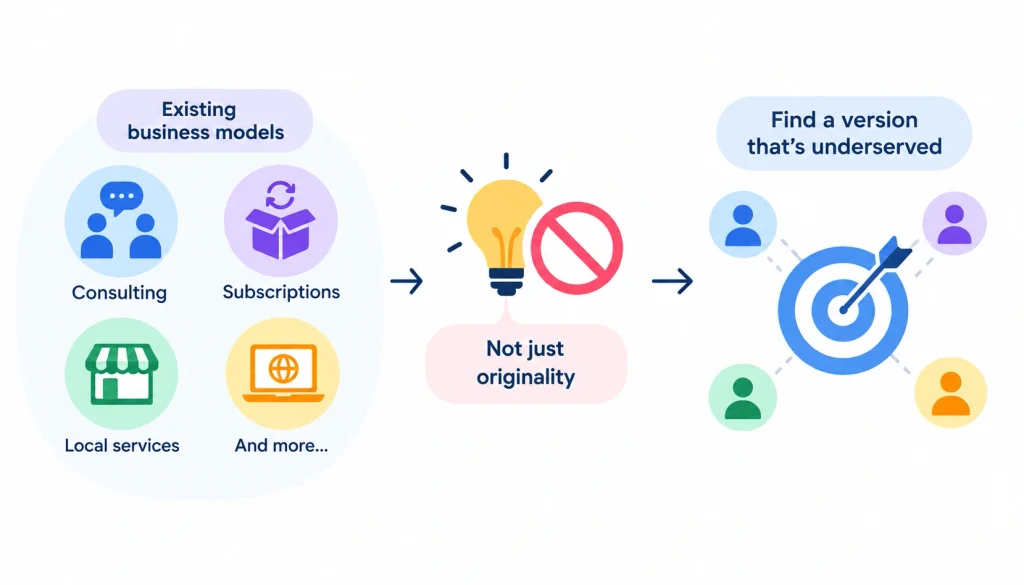
Almost every business model already exists in some form. Consulting exists. Subscriptions exist. Local services exist. What makes an idea worth pursuing isn’t originality for its own sake, it’s finding a version of that model that the market is currently underserving.
2. Solve a narrow problem for a specific customer
“I help small businesses with marketing” is a crowded, forgettable pitch. “I set up automated lead-qualification workflows for local HVAC companies” is a specific offer with a specific buyer. The narrower you go, the easier it is to find, sell to, and become known among your first customers.
3. Differentiate through delivery, positioning or niche
You can build a unique business without inventing a new product category. Change who it’s for (a niche), how it’s delivered (in person vs. done-for-you vs. subscription), or how it’s positioned (outcome-based instead of hourly). Any one of those three levers can turn a common business into a differentiated one.
4. How to tell whether an idea is already saturated
Search the business type plus your city or niche and see what comes up. If you find ten nearly identical competitors with active reviews and no gaps in their offer, that’s a sign the space is crowded. If you find competitors but they’re all generalists, there’s usually still room for a specialist.
How to Choose the Right Unique Business Idea
1. Start with your existing skills
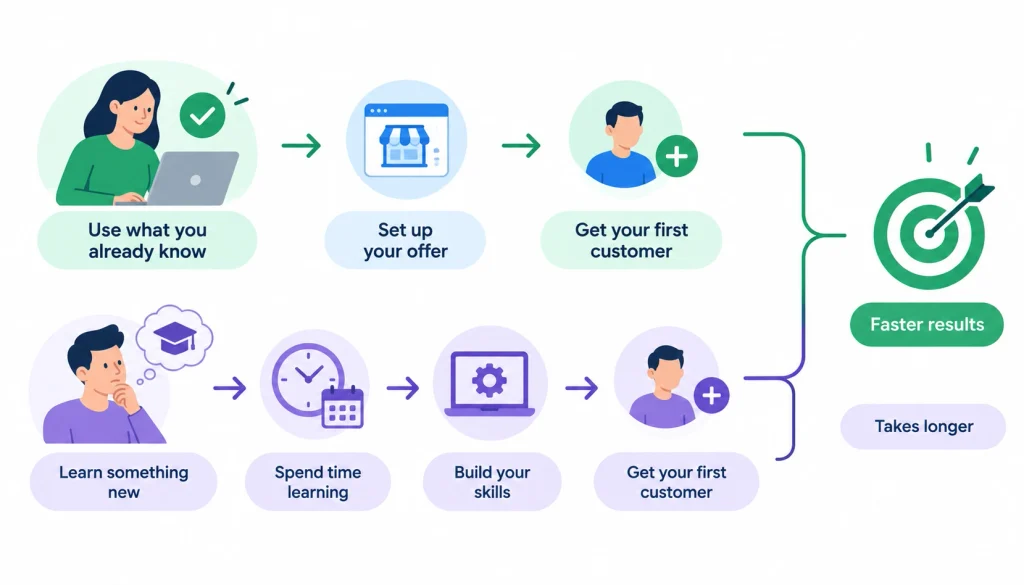
The fastest path to your first paying customer is usually a business built on something you already know how to do, not something you’d need a year to learn first.
2. Match the idea to your available capital
Some of these ideas need under $500; others, like the event-rental business, need real inventory investment. Be honest about what you can afford to lose if the first version doesn’t work.
3. Decide how much time you can commit
A side-hustle pace and a full-time pace call for different ideas. Subscription and digital-product businesses can grow slowly in the background; service businesses usually need more consistent hands-on time from day one.
4. Choose B2B or B2C
Selling to businesses generally means fewer customers, higher prices, and longer sales cycles. Selling to consumers usually means more customers, lower prices, and faster (but noisier) feedback.
5. Consider local vs. online delivery
Local services build trust quickly through in-person interaction but cap your customer pool to one area. Online businesses can reach anyone but take longer to build the same level of trust. If you’re specifically looking for businesses you can operate from home, explore these work-from-home business ideas for additional options.
6. Assess your customer-access advantage
Do you already know people in your target market: a professional network, a community, a former employer’s client base? That existing access is often worth more than the idea itself.
7. Simple decision framework
Work through it in order: Skills → Problem → Customer → Cost → Distribution → Revenue model → Scalability. If you get stuck at any step, that’s usually the part of the idea that needs more thought before you start.
How to Validate a Unique Business Idea Before Spending Money
Step 1: Define the customer problem
Write down, in one sentence, exactly whose problem you’re solving and why it’s painful enough that they’d pay to fix it.
Step 2: Interview 10–20 potential customers
Ask about how they currently handle the problem, not whether they like your idea. People are polite in interviews and will tell you your idea sounds great even when they’d never actually buy it, their current behavior is the more honest signal.
Step 3: Analyze competitors and substitutes
Even a “unique” idea usually has indirect competition. Figure out what people use instead today, and why your version needs to be better, cheaper, or more convenient than that.
Step 4: Build a minimum viable offer
Create the smallest version of your product or service that still solves the core problem: a single template, one client engagement, one small batch of product.
Step 5: Create a landing page
A simple page describing the offer, with a way to sign up or join a waitlist, tells you how many strangers are interested before you’ve built anything elaborate. If you’re building an online presence for your new venture, understanding what a business website does can help you create a page that builds trust and makes it easier for potential customers to take action.
Step 6: Try presales or paid pilots
Ask a handful of prospects to pay upfront, even at a discount, for the first version. Money on the table is a far stronger signal than “I’d probably buy that.”
Step 7: Measure willingness to pay
Track conversion from interest to actual payment, not just likes or positive comments. That gap is usually bigger than people expect.
Step 8: Set a go/no-go decision date
Pick a date in advance to review your results and decide honestly whether to continue, adjust the offer, or move on. Without a deadline, it’s easy to keep tweaking an idea indefinitely instead of deciding.
How Much Does It Cost to Start a Unique Business?
1. Businesses under $500
Digital products, microlearning, senior tech concierge, and the AI workflow service can all realistically start on a few hundred dollars, mostly software subscriptions and basic tools.
2. Businesses under $2,000
Home reset services, pet travel logistics, and creator back-office services usually need a modest budget for marketing, insurance, and professional tools.
3. Businesses requiring $2,000–$10,000+
Hyperlocal food brands (licensing, ingredients, packaging) and sustainable event rentals (inventory, storage) carry the highest upfront costs on this list.
4. One-time vs. recurring costs
Separate your true one-time setup costs (equipment, initial inventory) from recurring costs (software, storage rent, insurance) when you’re budgeting, since recurring costs are what determine your break-even point.
5. Hidden costs beginners overlook
Business insurance, licensing fees, payment processing fees, and the cost of your own unpaid time during the slow early months are the ones people forget to budget for.
How to Get Your First 10 Customers
Start with your existing network
Tell people you already know what you’re doing before you tell strangers. Referrals from people who already trust you convert faster than cold outreach.
Direct outreach
For B2B ideas especially, personally messaging a short list of well-matched prospects usually beats broad advertising in the first few months.
Local partnerships
For location-based businesses, partnering with a complementary local business that already serves your target customer can bring in referrals faster than any ad campaign.
Referral marketing
Ask happy early customers directly for introductions. Most won’t think to refer you unless you ask.
Communities and social media
Relevant subreddits, LinkedIn groups, and Facebook communities are often where your first customers already gather. Answer questions genuinely there before pitching anything.
Search and content marketing
Answering the exact questions your customers are searching for through a blog, videos, or social posts can build a steady stream of inbound interest. Learn more about why SEO for business matters when building long-term visibility.
Paid advertising only after validating the offer
Wait until you know your offer converts organically before you pay to send strangers to it. Ads amplify what’s already working, they rarely fix an offer that isn’t.
Common Mistakes When Starting a Unique Business
1. Confusing novelty with demand
An idea being interesting doesn’t mean people will pay for it. Test actual demand before assuming novelty equals opportunity.
2. Building before selling
It’s tempting to perfect the product before showing it to anyone. Sell the unfinished version first, and let real customer feedback shape what you build next.
3. Targeting everyone
“Anyone who needs X” isn’t a customer. The narrower your first target customer, the easier it is to find them and speak directly to their problem.
4. Underpricing
New business owners often underprice out of fear of rejection, then struggle to raise prices later once customers are anchored to the low number.
5. Ignoring customer acquisition
A great product with no plan for reaching customers doesn’t become a business. Budget as much thought for acquisition as you do for the product itself.
6. Spending too much before validation
Save the bigger investments (inventory, equipment, a polished website) for after you’ve confirmed people will actually pay.
7. Assuming AI automatically creates differentiation
Adding “AI-powered” to an otherwise generic business description doesn’t make it unique. The differentiation still has to come from the specific problem you solve and for whom, with AI as a tool rather than the pitch itself.
Frequently Asked Questions About Unique Business Ideas
What are 12 unique business ideas?
An AI workflow setup service, a senior technology concierge, a niche digital product studio, a microlearning business, a pet travel logistics service, a life-transition home reset service, a hyperlocal specialty food brand, a creator back-office service, a niche research subscription, a sustainable event-rental business, specialized compliance support, and cultural consulting for global businesses.
What is the easiest unique business to start?
The senior technology concierge and the niche digital product studio are typically the easiest to start, since both need minimal equipment and can begin within days of deciding to launch.
What unique business can I start with no money?
A niche digital product studio built with free or already-owned tools (Canva, Google Sheets) comes closest to a no-cost start, though you’ll still eventually want a small budget for a selling platform.
What business can I start from home?
The digital product studio, microlearning business, niche research subscription, and creator back-office service can all run entirely from home.
How do I find a unique business idea?
Look at problems you’ve personally run into, skills you already have, and groups of people whose needs are currently served by generic, one-size-fits-all options.
Final Takeaway
Don’t pick a business idea simply because it sounds unusual or different. A truly promising opportunity starts with a problem you understand, a specific customer you can realistically reach, and a business model you can test without putting a large amount of money at risk. Before investing heavily in equipment, software, inventory, or advertising, use the validation steps above to see whether people actually want what you’re offering and are willing to pay for it.
That process helps you separate an interesting idea from a viable business opportunity. An idea might look exciting on paper, but if customers don’t have a strong enough problem, you can’t reach them efficiently, or the economics don’t work, it will be difficult to turn it into a sustainable business.
The goal, then, isn’t simply to find the most unusual idea on a list. It’s to find one of these 12 unique business ideas that matches your skills, resources, and target market, and then prove that people will buy it before you commit significant time and money.
