


Managing one business location is complicated enough. Managing dozens or hundreds creates a different set of challenges, especially when security, employee safety, operational consistency, incident investigations, and physical assets must all be monitored across locations that may be hundreds of miles apart.
The broader shift toward cloud infrastructure is accelerating this change. Flexera’s 2026 State of the Cloud Report found that enterprises now run about 54% of workloads in the public cloud, while SMB public-cloud workloads reached 63%. At the same time, physical security pressures remain significant. The National Retail Federation’s 2025 research found a 19% increase in combined external shoplifting and merchandise theft incidents from 2023 to 2024. More than half of the retailers surveyed operated at least 500 stores, highlighting the scale at which these problems must increasingly be managed.
Traditional surveillance systems were rarely designed for that environment. Separate recorders, passwords, storage systems, maintenance schedules, and monitoring procedures can leave regional and corporate teams with fragmented visibility.
Cloud-connected video is changing that model. Instead of treating cameras as isolated security equipment, multi-site organizations can increasingly use video as a centralized management resource for security, operations, investigations, compliance, and everyday decision-making.
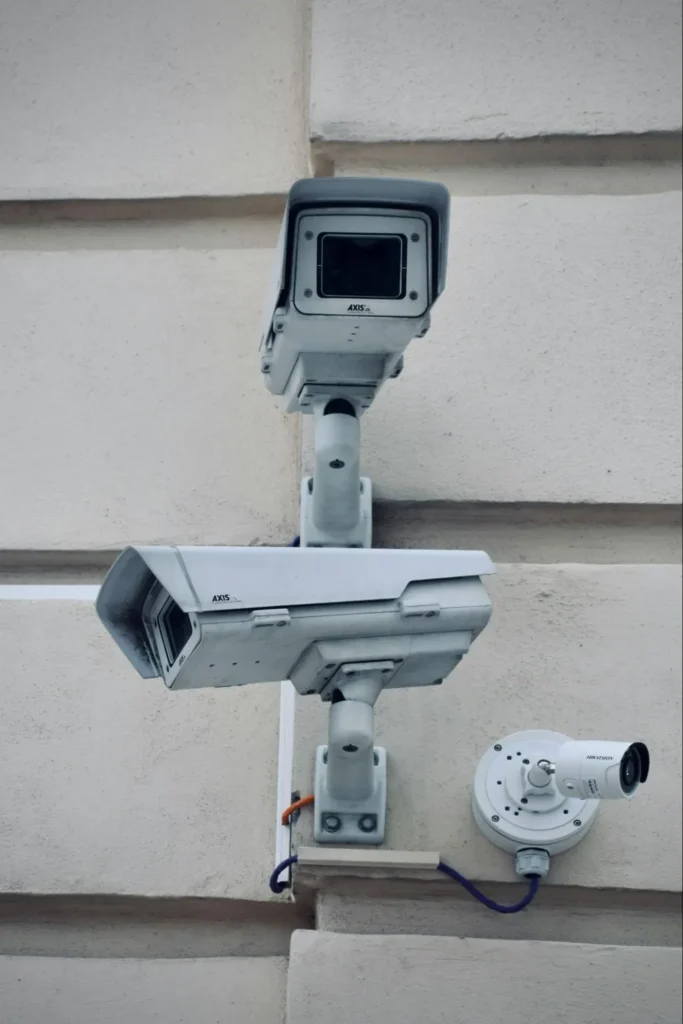
Centralized Visibility Is Changing Multi-Site Management
For years, video surveillance was primarily managed at the individual location level. A store manager, warehouse supervisor, or facility security team would review footage through equipment installed inside the building. Corporate teams often became involved only after an important incident occurred.
Cloud management changes the structure. Authorized employees can access cameras from multiple locations through a centralized interface rather than physically visiting each site or connecting to separate local recording systems. This is particularly useful for businesses operating retail stores, warehouses, offices, healthcare facilities, restaurants, automotive locations, and other distributed properties.
The operational difference becomes significant as the business expands. Adding ten more facilities to an organization should not require ten completely separate surveillance management processes. Centralized administration allows security leaders to create more consistent practices while still giving local managers appropriate access to their own sites.
The same visibility can also support management beyond security. Regional leaders can investigate incidents, verify whether facilities opened on time, review loading areas, examine customer traffic patterns, or understand what occurred during an operational disruption without waiting for somebody at the site to export footage.
Faster Investigations Reduce the Burden on Local Teams
Recorded video has little operational value if retrieving the correct footage takes several hours. Traditional systems frequently require employees to know approximately when an event happened, locate the appropriate camera, manually move through the timeline, export a clip, and then send a large video file to another department.
Across many locations, this process becomes difficult to scale. A corporate loss-prevention team investigating repeated incidents across 40 stores may have to contact multiple store managers and collect footage from separate systems. Similar problems occur when HR investigates a workplace incident or when a warehouse manager needs video connected to damaged merchandise.
Modern cloud video platforms increasingly make recorded footage searchable and remotely accessible. This means an authorized manager can begin an investigation from another office rather than asking employees at the affected facility to become temporary video investigators.
The need for more efficient investigation tools is becoming especially visible in retail. NRF’s 2025 report found that retailers tracking incidents experienced an 18% increase in shoplifting incidents and a 12% increase in merchandise theft incidents between 2023 and 2024. Shoplifting apprehensions increased 28% during the same period. When incident volumes rise across hundreds of sites, reducing the time required to locate and review evidence becomes an operational issue as much as a security issue.
Connecting Video Across Locations Creates a Broader Management System
The real value of cloud surveillance appears when organizations stop thinking about each camera as a separate device. Cameras across entrances, parking areas, warehouses, production floors, loading docks, offices, and customer spaces can become part of a larger stream of operational information.
Centralized video makes it easier to standardize who can view footage, how incidents are investigated, how clips are shared, and how new locations are added. It also reduces the problem of individual sites developing completely different surveillance procedures simply because they use different hardware or local configurations.
Platforms such as Coram illustrate how cloud based security cameras can fit into this multi-site model. According to its cloud camera overview, Coram can work with an organization’s existing camera infrastructure rather than requiring every camera to be replaced. Its system supports scaling from one location to multiple sites and allows users to search, rewind, and share footage. The page also describes its Discover and Journey tools for locating relevant footage and following people or assets across cameras.
The larger management principle extends beyond any single platform. When video can be accessed and managed consistently across locations, organizations can establish common investigation processes, reduce dependence on individual sites, and give regional or corporate teams a more complete picture of what is happening across the business.
Real-World Deployments Show Why Centralization Matters
The benefits become clearer when looking at businesses that already operate across multiple facilities. Autoco Group, for example, has deployed cloud-managed video security across 13 automotive sites covering mechanical, tyre, and suspension workshops. According to its published customer case study, managers and HR teams can retrieve recorded footage from different locations while after-hours checks can be performed remotely.
Sook Retail provides another example. The company operates flexible retail spaces in the UK and consolidated previously separate systems so that multiple sites could be accessed through a centralized platform. In that case, video was also used to provide operational information about how retail spaces were being used, showing how surveillance infrastructure can serve purposes beyond investigating theft.
This wider use of video is important for multi-site businesses. A camera positioned at a loading dock might help investigate theft, but the same footage could also explain delivery delays, unsafe working practices, damaged goods, or congestion during a busy period.
Over time, these small operational improvements can accumulate across locations. When managers can identify recurring problems across several stores or facilities rather than treating every incident individually, video becomes useful for identifying patterns and improving procedures throughout the organization.
Cloud Video Can Improve Consistency Across Growing Businesses
Expansion often exposes weaknesses in physical security management. An organization may acquire another company, open new branches, or inherit buildings with different cameras, recorders, policies, and maintenance arrangements.
Managing each location independently creates duplication. IT teams may maintain different software versions, regional managers may follow different incident processes, and permissions may become difficult to track as employees change roles.
A centralized approach provides an opportunity to standardize these processes. Corporate teams can establish clearer access policies, define which employees should see particular locations, and create more consistent procedures for reviewing and sharing footage.
This is particularly valuable when business risk varies by location. One retail store may experience frequent theft while another has greater parking-lot concerns. A manufacturing facility may focus on workplace safety, while a distribution center may prioritize loading docks and inventory movement. Centralization does not require every site to be treated identically. Instead, it gives management a common framework within which individual locations can be managed according to their risks.
The NRF’s 2025 research shows why flexibility matters. 61% of surveyed retailers had already increased perimeter or exterior security measures, including cameras and license plate readers, while 53% had increased interior security measures. Another 57% planned to increase exterior measures during the following 18 months.
Cloud Adoption Still Requires Careful Governance
Moving video management into the cloud does not automatically solve every surveillance problem. Organizations still need appropriate camera placement, clear policies, trained staff, secure user accounts, sufficient network capacity, and well-defined procedures for accessing sensitive footage.
Connectivity is particularly important. A business should understand what happens to recording when a location temporarily loses internet access and how footage is synchronized once connectivity returns. Some modern architectures combine local recording with cloud management specifically to maintain recording continuity during network interruptions.
Privacy also becomes more important as centralized systems give employees access to footage from multiple locations. Access should follow job responsibilities rather than convenience. A local store manager may need access to one site, while a loss-prevention director may legitimately require visibility across an entire region.
Retention policies deserve similar attention. Organizations should determine how long footage needs to be stored, what information should be preserved following an incident, and how local privacy or employment regulations affect surveillance practices.
Finally, businesses should assess migration realistically. Replacing every camera across dozens of sites simultaneously can create unnecessary expense and disruption. A phased strategy often makes more sense, beginning with locations where existing surveillance creates the greatest operational problems and expanding after the organization has established standards for permissions, investigations, training, and maintenance.
The Future of Cameras Is Closely Connected to Business Operations
Cloud management is likely to make video increasingly useful outside traditional security departments. Operations teams can use visual information to investigate workflow problems, safety teams can review workplace incidents, regional managers can verify conditions remotely, and loss-prevention teams can examine patterns across multiple sites.
Retail provides an early indication of this direction. Modern video analytics can already help organizations evaluate customer movement, queue formation, staffing requirements, and other activity without requiring cameras to serve only as passive recording devices. This allows existing visual infrastructure to contribute to operational metrics as well as physical security.
For distributed organizations, the next step is likely to involve connecting video with a wider set of business workflows. Instead of an incident generating hours of manual investigation, relevant information can increasingly be surfaced more quickly for the person responsible for responding.
That does not mean cameras should replace human judgment. Their value comes from giving managers better information at the moment decisions need to be made. The strongest multi-site strategies will combine centralized technology with clearly defined responsibilities at both local and corporate levels.
FAQs
What are cloud-based security cameras?
Cloud-based security cameras connect surveillance infrastructure with cloud software or storage so authorized users can remotely manage live and recorded video. Depending on the architecture, some or all footage may also be stored locally while the cloud provides centralized management and remote access.
Why are cloud cameras useful for businesses with multiple locations?
They reduce the need to manage every site’s surveillance system independently. Corporate, regional, and local teams can access appropriate locations through a more consistent management environment, making investigations, administration, and expansion easier.
Can businesses use existing cameras with a cloud platform?
In some deployments, yes. Compatibility depends on the platform, existing cameras, network architecture, and recording equipment. Businesses should conduct an inventory of their current infrastructure before deciding whether cameras can be retained, upgraded, or replaced.
What should multi-site businesses consider before moving video management to the cloud?
Important factors include cybersecurity, internet connectivity, permissions, video retention, privacy requirements, camera compatibility, storage costs, and staff training. Organizations should also decide how recording will continue during network interruptions.
Are cloud-managed cameras only useful for security?
No. Depending on the system and deployment, video can also support workplace safety investigations, facility management, operational reviews, customer-flow analysis, logistics, training, and other management functions. The key is using video for clearly defined business purposes rather than collecting footage without an operational objective.
Conclusion
Cloud-connected video is becoming increasingly relevant to multi-site businesses because the management problem has changed. Organizations no longer need cameras simply to document what happened at one building. They increasingly need visibility that can be accessed, investigated, and managed across an entire network of locations.
The organizations that gain the most value will be those that treat video as part of a broader management strategy. Centralized access, faster investigations, consistent policies, responsible data governance, and thoughtful integration can turn surveillance from isolated site equipment into a practical source of operational awareness across the business.
