

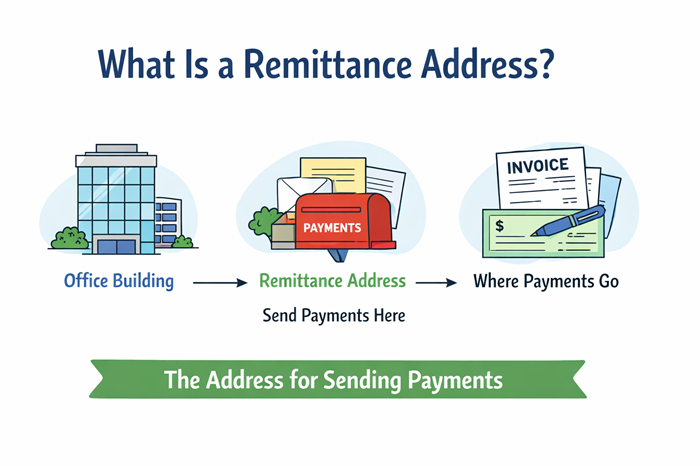
A remittance address is the specific address where a business wants to receive payments. It is commonly labeled as “Remit To” on invoices and billing documents.
Instead of sending payments to a company’s main office or headquarters, customers are instructed to send money directly to this designated address. This helps businesses streamline their payment collection process and avoid confusion.
In many cases, the remittance address is not even the same as the company’s physical location. It could be a P.O. box, a lockbox managed by a bank, or a dedicated payment processing center.
Think of it this way:
A company may operate from one location, but it prefers to receive money at another location specifically designed for handling payments.
Why Is a Remittance Address Important in Billing and Payments?
At first glance, a remittance address might seem like a small detail. However, it has a significant impact on how efficiently a business manages its finances.
A. Improves Payment Accuracy
When customers send payments to the correct address, the chances of errors drop significantly. There’s less risk of payments being lost, delayed, or misdirected.
This is especially important for businesses handling a high volume of transactions, where even small mistakes can create major disruptions.
B. Speeds Up Payment Processing
A dedicated remittance address ensures that payments go directly to the team or system responsible for processing them. This eliminates unnecessary steps and speeds up the entire workflow.
Faster processing means:
- Quicker invoice reconciliation
- Better cash flow management
- Improved financial visibility
C. Enhances Organization
Separating payment handling from daily business operations allows companies to stay organized. Financial documents, checks, and payment confirmations are all managed in one place.
This makes bookkeeping and auditing much easier over time.
How a Remittance Address Works in Real Life
Imagine you receive an invoice from a service provider. The invoice includes two addresses:
- A company office address
- A “Remit To” address
Even though both belong to the same business, you should always send your payment to the remittance address.
Why? Because that address is specifically set up to receive and process payments efficiently.
For example, a company based in Mumbai might use a remittance address in Bangalore where its finance team or banking partner handles incoming payments.
What Does a Remittance Address Include?
A remittance address looks like a standard mailing address but is clearly labeled for payments.
It usually contains:
- Business or recipient name
- Street address or P.O. Box
- City, state, and postal code
- Country (for international payments)
The key difference is not the format—it’s the purpose. This address is exclusively used for receiving money.
Remittance Address vs Billing Address
Many people confuse a remittance address with a billing address, but they serve completely different purposes.
Remittance Address
This is where payments are sent. It appears on invoices and is used by businesses to collect funds.
Billing Address
This is the address associated with your payment method, such as a credit or debit card. It is used for verification and fraud prevention.
To put it simply:
- Billing address = who is paying
- Remittance address = where the payment goes
Understanding this distinction is essential to avoid payment errors and delays.
Remittance Address vs Other Address Types
In business transactions, multiple addresses may be used, and each serves a unique role.
A mailing address is used for general communication. A shipping address is where goods are delivered. A corporate address represents the official business location.
The remittance address, on the other hand, is strictly for receiving payments.
Keeping these addresses separate helps businesses operate more efficiently and reduces confusion for customers.
The Role of Remittance Address in Business Operations
A remittance address plays a critical role in maintaining smooth financial operations.
1. Better Cash Flow Management
When payments are received and processed quickly, businesses can maintain a steady cash flow. This is essential for covering expenses, paying employees, and investing in growth.
2. Simplified Accounting
Having a centralized location for payments makes it easier to track transactions, manage records, and prepare financial reports.
3. Reduced Administrative Burden
By directing payments to a specific location, businesses reduce the time spent sorting mail, correcting errors, and following up on missing payments.
Remittance Address in Digital Payments
With the rise of digital payments, the concept of a remittance address has evolved.
Today, businesses often use a remittance email address or include payment instructions in digital invoices. Instead of sending physical checks, customers can transfer money electronically while still referencing the remittance details.
Modern accounting software allows businesses to:
- Add remittance information automatically
- Track payments in real time
- Send reminders to clients
This integration improves efficiency and reduces manual work.
Common Mistakes to Avoid
Even though the concept is simple, people often make mistakes with remittance addresses.
1. Sending Payment to the Wrong Address
Always double-check the “Remit To” section on invoices.
2. Confusing It With Billing Address
Using your billing address instead of the remittance address can delay payments.
3. Ignoring Updates
Businesses sometimes change their remittance address—so always use the latest invoice.
4. Missing International Details
For global payments, ensure:
- Country name is included
- Postal codes are correct
When Do You Need a Remittance Address?
You’ll encounter remittance addresses in several situations:
- Paying invoices (freelancers, vendors, utilities)
- Sending business payments
- Making international transfers
- Receiving payments as a business owner
If you run a business, you should consider creating one when:
- You receive frequent payments
- You want better organization
- You’re scaling operations
Example of a Remittance Address in Business
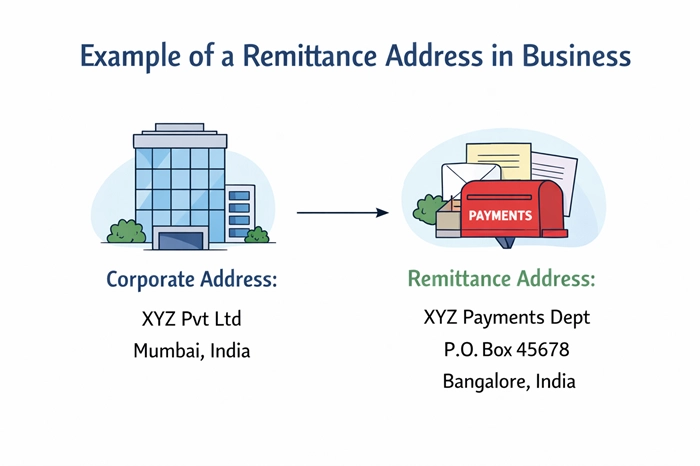
Here’s a simplified example:
Corporate Address:
XYZ Pvt Ltd
Mumbai, India
Remittance Address:
XYZ Payments Dept
P.O. Box 45678
Bangalore, India
In this case:
- The corporate office handles operations
- The remittance address handles payments
This separation ensures smoother financial workflows.
How to Set Up a Remittance Address
If you’re a business owner, setting up a remittance address is straightforward.
Step 1: Choose a Location
Options include:
- Office address
- P.O. Box
- Bank processing center
Step 2: Update Your Invoices
Clearly label the address as:
“Remit To”
Step 3: Inform Clients
Make sure customers know where to send payments.
Step 4: Monitor the Address
Check it regularly to avoid missed payments.
Frequently Asked Questions (FAQs)
Q. What is a remittance address in simple terms?
A remittance address is the address where a business asks you to send payments. It is usually listed on invoices under “Remit To.”
Q. Is a remittance address the same as a billing address?
No, they are different. A billing address is linked to your payment method, while a remittance address is where the payment is sent.
Q. Can a remittance address be different from a business address?
Yes, and in many cases, it is different. Businesses often use separate addresses to manage payments more efficiently.
Q. Do digital payments use remittance addresses?
Yes. Even in digital payments, businesses provide remittance details such as bank information or email addresses to receive payments.
Q. What happens if I send payment to the wrong address?
Sending payment to the wrong address can result in delays, lost payments, or additional processing time. Always check the invoice carefully before making a payment.
Q. Why do companies use P.O. boxes as remittance addresses?
P.O. boxes are secure and easy to manage. They allow businesses to collect payments in one centralized location without exposing their main office address.
Q. Is a remittance address required for small businesses?
While not mandatory, it is highly recommended. It helps small businesses stay organized and ensures smoother payment processing.
Final Thoughts
A remittance address is the specific location where a business receives payments, clearly mentioned on invoices to guide customers on where to send money. It may differ from the company’s main office and is often used to streamline payment processing.
Its relevance in billing and payments is significant because it ensures accuracy, reduces delays, and improves overall financial organization. By directing payments to a dedicated address, businesses can process transactions faster, maintain better cash flow, and avoid confusion. Whether in traditional or digital payments, using the correct remittance address helps both businesses and customers complete transactions smoothly, making it an essential part of efficient financial management.
