


Warehouse operations are really important for businesses that sell things. If a company sells stuff online or makes things the warehouse is where everything gets sorted out. The people in charge of the warehouse make sure that products get to the customers quickly.
This is a deal because people want their stuff fast. So companies have to make their warehouses work well if they want to stay in business.
Warehouse operations are all about getting things in storage, keeping track of them and then sending them out to people who ordered them. This includes things like counting how much stock we have and filling customer orders. Every single thing that happens in the warehouse helps the business run smoothly. Makes customers happy.
This guide is about warehouse operations, what they are and how they work. It also talks about the parts of warehouse operations, the good things about them, the problems and the best ways to make warehouses work better. Warehouse operations are the key to making sure that products move smoothly from the people who make them to the customers who buy them. By understanding how warehouse operations work businesses can improve their warehouse performance. Make their customers happy.
Why Warehouse Operations Matter
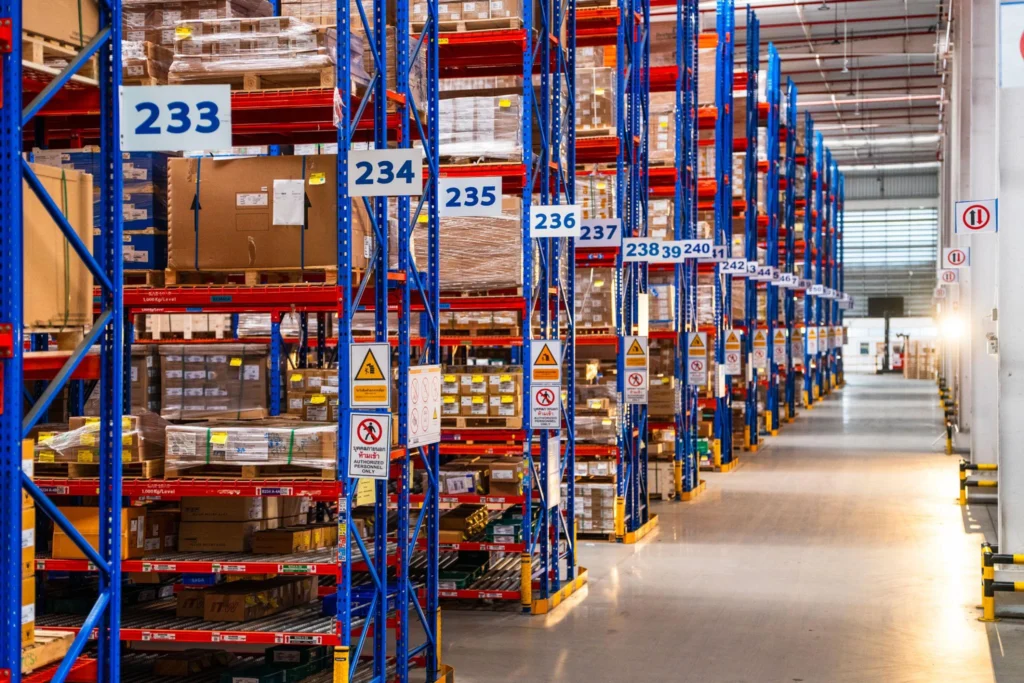
When a warehouse does not run well it costs a business a lot of money. Orders get to the customers late. Sometimes products even get lost in the warehouse. This makes the customers very frustrated. The costs just keep going up.
On the other hand , a warehouse that runs well does the exact opposite. It helps the business get orders to the customers faster, it reduces mistakes and it helps control the costs. It keeps the customers happy. These days people who shop expect to get their things in two days or even on the day. This means that warehouses have a lot of pressure on them to perform well.
For businesses that sell things online the warehouse is an important place. This is where the business can either make the customer happy or unhappy. If the warehouse is run well then the orders will go out on time, they will be in condition and they will have the right things inside. The warehouse is really where the customer experience is made or broken for ecommerce businesses.
Role in the Supply Chain
A warehouse is right in the middle of the supply chain. It is between the people who make things and the people who buy them. Things come into the warehouse from the people who make them or the people who sell them. Then they get put away. Organized. After that they go out to the stores to warehouses or right to the people who are going to use them.
The warehouse helps when people want more or less of something. If a factory makes much of something the warehouse holds onto the extra. When people want a lot of something all of a sudden the warehouse can send it out quickly.
The warehouse is very important to the supply chain. Without a warehouse it would be hard for businesses to get things to people when they need them.. With a warehouse businesses can make plans and get things ready. They can also deal with problems when they happen. This makes it easier for them to do business with confidence.
Warehouse Operations vs Warehouse Management

These two terms are related but not the same. Understanding the difference helps businesses make better decisions about tools, processes, and staffing.
Key Differences
Warehouse operations refers to the physical, day-to-day activities in the warehouse — receiving, picking, packing, shipping, and so on. It’s about what happens on the floor.
Warehouse management refers to the planning, oversight, and strategy that makes those operations possible. It includes staffing decisions, technology selection, performance monitoring, layout planning, and process improvement. It’s about how the floor is organized and led.
In short: operations is the doing, management is the directing.
Comparison Table
| Factor | Warehouse Operations | Warehouse Management |
| Focus | Day-to-day tasks | Strategy and oversight |
| Who does it | Warehouse staff | Managers and supervisors |
| Time horizon | Immediate | Short to long term |
| Examples | Picking orders, scanning barcodes | Setting KPI targets, choosing WMS software |
| Goal | Execute accurately and quickly | Improve efficiency and reduce costs |
When Each Becomes Important
When orders are coming in like during the season or when a lot of products are being sold warehouse operations are really important. If something goes wrong with the operations the shipments just stop.
Warehouse management is important when a company is growing, changing how it does things or trying to spend money. If the warehouse company is not doing well as it should be or if it has been a long time since anyone looked at how things are done then the people in charge need to think about how to fix things.
Most companies need to have both operations and good management at the same time. When the management is good it helps the operations run smoothly. Warehouse management and warehouse operations are like two things that go together. Strong warehouse management helps make warehouse operations.
The Complete Warehouse Operations Workflow
A warehouse doesn’t work in isolated steps, it’s a continuous flow. Here’s how goods move through a warehouse from arrival to delivery (and sometimes back again).
1. Receiving Inventory
When a shipment gets to the warehouse that is when everything starts. The people who work at the warehouse take the goods out of the trucks or containers. They count all the items. Check them to make sure they match what was ordered. This part is very important. If the warehouse staff make mistakes here it will cause problems with the shipment.
A good system for getting the goods into the warehouse captures all the information, like the SKU, how many items there are and what kind of condition they are in. It does this quickly and correctly. A lot of warehouses use scanners that read barcodes or RFID readers to make this process go faster with the shipment and the warehouse staff.
2. Quality Inspection
Before inventory goes to storage, it needs to pass a basic quality check. Are the items undamaged? Do they match the specifications? Is the quantity correct?
This step catches problems at the source. Discovering a defective shipment is far better than discovering it when a customer opens their order.
3. Putaway
Once goods are checked and accepted, they move to their designated storage location. This process, called putaway, sounds simple but has a big impact on efficiency.
Smart putaway places fast-moving items close to packing and shipping areas. Slower-moving inventory goes further back. Done well, putaway reduces the travel time pickers spend walking the warehouse floor later.
4. Storage
Goods stay in their assigned places until the company needs them. Storage is not about putting things away, it needs to be organized. Each location has to have a label on it. The inventory system has to show what is where. The company has to use the space in a way.
Different products need to be stored in different ways. Big items are stored on pallet racks that’re on the floor. Small items that are used a lot are often stored in bins. Goods that are sensitive to temperature need to be stored in a place with controlled temperature.
Receiving is where all the inventory comes into the company. The staff checks the shipments that come in against the orders that were placed. They write down how many items were received and what kind of condition they are in. They also make a note if something is not right. A good receiving process is the step to preventing mistakes with the inventory.
It is an idea to use a barcode scanner to record every item as it comes in and to check it against the order that was placed using a computer instead of using paper.
5. Inventory Tracking
Throughout storage, the warehouse must know exactly what it has and where it is. Inventory tracking can be done with a spreadsheet (in very small operations), a warehouse management system (WMS), barcode scanning, or RFID, often a combination.
Accurate inventory tracking prevents two major problems: stockouts (running out of something customers need) and overstock (holding too much of something that isn’t moving).
6. Order Picking
When a customer places an order, someone (or something) needs to go find the items and retrieve them. This is picking and it’s often the most labor-intensive part of warehouse operations.
Pickers work from pick lists or handheld devices that guide them to the right location. Accuracy here is everything. Picking the wrong item means a wrong order, a return, and an unhappy customer.
7. Packing
After picking, items are packed for shipment. This involves selecting the right packaging (box, bubble mailer, poly bag), protecting the contents, and inserting any required documentation like packing slips.
Good packing minimizes damage in transit and keeps shipping costs down by avoiding unnecessarily large or heavy boxes.
8. Shipping
Packed orders move to a shipping area where they’re labeled, sorted by carrier, and loaded onto outbound trucks. This step often includes carrier integration where the WMS or shipping software communicates with UPS, FedEx, or other carriers to generate labels and schedule pickups.
Timing matters. Miss a carrier cutoff and the order is a day late before it even leaves the building.
9. Returns Processing

When customers send items back, the warehouse processes those returns. Items are inspected, sorted, and either restocked, refurbished, or written off. Returns are a significant part of ecommerce especially in fashion and electronics and managing them well protects both inventory accuracy and margin.
Core Warehouse Operations Explained
1. Putaway
Putaway determines where inventory lives in the warehouse. Effective putaway strategies consider pick frequency (fast movers near the front), product weight (heavy items at floor level), and product family (related items near each other).
Best practice: use a WMS to direct putaway rather than letting staff choose storage locations. This ensures consistent, optimized placement.
2. Storage
Storage is about keeping inventory in condition and, in places that are organized and easy to access.This means using the storage systems labeling where things are stored so it’s clear and keeping walkways clear so people can move around safely.
Best practice: do checks to make sure the actual stock matches what’s on the records. If small mistakes are not fixed they can add up quickly.
3. Inventory Management
Inventory management helps to keep the stock levels accurate and optimal so that we can fulfill the demand for the inventory without using much money. This is done by doing things like counting parts of the inventory on a basis, which is called cycle counting instead of counting everything at once every year. We also need to set points at which we should reorder the inventory and keep track of the expiry dates of the inventory when it is necessary.
Best practice is to stop doing physical counts of the inventory and start doing continuous cycle counting of the inventory instead. This way is less disruptive to our work. It helps us to find mistakes faster. We can move to cycle counting of the inventory to make things better. Inventory management and cycle counting of the inventory are important, for keeping the inventory levels accurate.
4. Picking
Picking is retrieving ordered items from storage. There are several picking methods: single-order picking (one picker per order), batch picking (one picker handles multiple orders at once), zone picking (each picker works a defined area), and wave picking (orders are grouped and released in timed batches).
Best practice: match the picking method to your order profile. High volumes of small orders often benefit from batch or zone picking.
5. Packing
Packing is preparing picked items for safe transport. It involves selecting the right packaging size, cushioning fragile items, and ensuring the right packing slip or documentation is included. Packing also has a direct impact on shipping costs; dimensional weight pricing means oversized boxes cost more to ship.
Best practice: use packaging automation or pack station guidance software to standardize box selection and reduce waste.
6. Shipping
Shipping is the final handoff from warehouse to carrier. Labels are generated, packages are sorted by carrier or destination zone, and trucks are loaded. Many warehouses have carrier cutoff windows times by which orders must be ready for pickup to make same-day or next-day delivery commitments.
Best practice: integrate your WMS with carrier systems so labels are generated automatically at the pack station, reducing the risk of labeling errors.
7. Reverse Logistics
Reverse logistics covers everything that flows backward returns, exchanges, recalls, and end-of-life products. Efficient reverse logistics reduces the cost of returns and allows sellable items to be restocked quickly.
Best practice: create a dedicated returns processing area and a clear decision workflow (restock, refurbish, or dispose) for each returned item category.
8. Receiving
Receiving is the first step in warehouse operations and sets the foundation for everything that follows. It involves unloading incoming shipments, inspecting products for damage, verifying quantities against purchase orders, and recording inventory into the warehouse management system (WMS). Accurate receiving helps prevent inventory discrepancies, stock shortages, and fulfillment errors later in the process.
Best practice: Implement barcode scanning or RFID technology during receiving to verify products quickly and accurately. This reduces manual data entry errors and ensures inventory records are updated in real time.
Warehouse Organizational Structure
A well-run warehouse has clear roles and responsibilities. Here’s who typically works in a warehouse and what each person does.
1. Warehouse Manager
The warehouse manager oversees the entire operation. They’re responsible for hitting performance targets, managing staff, controlling costs, ensuring safety compliance, and coordinating with other departments (procurement, logistics, customer service). In larger operations, they may also be responsible for technology decisions and long-term capacity planning.
2. Operations Supervisor
The operations supervisor is the manager’s right hand on the floor. They translate high-level goals into daily execution, assign tasks to teams, handle shift handovers, and troubleshoot problems in real time. In many warehouses, supervisors manage specific departments (inbound, outbound, returns).
3. Inventory Controller
The inventory controller is responsible for the accuracy of stock records. They manage cycle counts, investigate discrepancies, coordinate with purchasing and sales, and maintain the integrity of the WMS. This role is often underestimated but critical inventory errors cascade through the entire operation.
4. Pickers and Packers
Pickers locate and retrieve items from storage to fulfill orders. Packers prepare those items for shipment. In smaller warehouses, one person may do both. In larger facilities, they’re often separate roles with dedicated workstations and equipment.
Speed and accuracy are the key metrics for pickers and packers. Both matter fast but error-prone performance is ultimately more costly than slightly slower, highly accurate work.
5. Forklift Operators
Forklift operators move bulk inventory, load and unload trucks, and handle pallet-level storage and retrieval. They require formal training and certification in most jurisdictions. In larger warehouses, forklift operators may specialize some work exclusively in receiving, others in bulk storage or trailer loading.
Types of Warehouse Operations
Not all warehouses are built the same. The type of goods, customer base, and supply chain requirements shape how operations are structured.
1. Ecommerce Warehouses
Ecommerce warehouses (sometimes called fulfillment centers) are built around speed and order accuracy. They handle huge numbers of small, individual orders destined for consumers. The focus is on fast picking, same-day or next-day shipping, and managing returns. Space efficiency and technology adoption are especially important here.
2. Retail Warehouses
Retail warehouses (or distribution centers) supply stores rather than individual consumers. They handle larger shipments in case quantities or pallets rather than single-unit picks. The emphasis is on accurate, timely replenishment of retail locations rather than rapid individual order fulfillment.
3. Manufacturing Warehouses
Manufacturing warehouses store raw materials, work-in-progress inventory, and finished goods. They work closely with production schedules and inventory must arrive just in time to feed the production line without creating excessive stockpiles. Inventory accuracy is critical because a missing component can halt production entirely.
4. Cold Storage Warehouses
Cold storage warehouses maintain controlled temperatures for perishable goods: food, pharmaceuticals, flowers, and other temperature-sensitive products. Operations here must be especially precise and fast goods can’t sit in a warm staging area while paperwork is sorted out. Energy management is also a major operational consideration.
5. Pharmaceutical Warehouses
Pharmaceutical warehouses operate under strict regulatory requirements. Temperature and humidity must be monitored and logged. Lot numbers and expiry dates must be tracked meticulously. Access is controlled. Handling protocols are designed to prevent contamination or mix-ups. Compliance with standards like GDP (Good Distribution Practice) is non-negotiable.
6. Third-Party Logistics Warehouses
Third-party logistics (3PL) warehouses operate on behalf of multiple clients. Rather than owning a warehouse, a brand outsources its storage and fulfillment to a 3PL. The 3PL must manage multiple inventories, multiple workflows, and often multiple carrier relationships simultaneously. Flexibility, technology, and client reporting are key operational priorities. Providers like Agile 3PL fulfillment company build their entire operation around exactly this model, coordinating storage, shipping, and client reporting so brands never have to run warehouse operations themselves.
Warehouse Technology and Systems
Technology is transforming what warehouses can do and how efficiently they can do it.
Warehouse Management Systems (WMS)
A warehouse management system (WMS) is software that controls and monitors warehouse operations. It tracks inventory locations, directs staff to putaway and pick locations, manages receiving and shipping workflows, and provides reporting on performance.
Benefits of WMS
A WMS reduces errors, speeds up operations, and provides real-time visibility into inventory. It replaces paper-based processes with digital workflows, making it easier to train new staff and standardize processes. A WMS also enables more sophisticated strategies like wave picking, slotting optimization, and multi-location inventory management.
Popular WMS Platforms
Well-known WMS platforms include Manhattan Associates, Blue Yonder, SAP Extended Warehouse Management, Oracle Warehouse Management, and Fishbowl (popular for smaller businesses). Many ecommerce businesses also use purpose-built fulfillment platforms like ShipBob, Linnworks, or Extensiv.
Barcode Scanning
Barcode scanning is the backbone of modern warehouse data collection. Handheld scanners or wearable ring scanners allow staff to capture item data instantly and accurately at every step — receiving, putaway, picking, packing, and shipping. Scanning eliminates manual data entry errors and creates an automatic audit trail of every inventory movement.
RFID Tracking
RFID (Radio Frequency Identification) goes further than barcodes. RFID tags can be read without line-of-sight, meaning multiple items can be scanned simultaneously as they pass through a reader gate. This speeds up receiving, enables real-time inventory tracking throughout the warehouse, and can eliminate entire manual scanning steps. RFID is more expensive to implement than barcodes but delivers much richer data.
IoT Sensor
IoT (Internet of Things) sensors monitor warehouse conditions in real time temperature, humidity, light levels, door status, and equipment performance. In cold storage and pharmaceutical warehouses, IoT sensors are essential for compliance. More broadly, IoT data can be used to optimize energy consumption, predict equipment failures, and monitor environmental conditions.
Warehouse Robotics
Robots are increasingly common in warehouses. Goods-to-person systems bring shelving units to stationary pickers, dramatically cutting travel time. Automated conveyor and sorting systems route packages to the right packing or staging area. Robotic picking arms handle repetitive pick-and-place tasks. These systems improve speed and consistency and help address labor shortages.
AI-Powered Operations
Artificial intelligence is making warehouses smarter. AI can forecast demand to optimize inventory levels, suggest optimal slotting arrangements based on order patterns, identify picking route inefficiencies, and flag inventory anomalies before they become problems. As AI tools mature, they’re becoming more accessible to warehouses of all sizes, not just large enterprises.
Warehouse Layout and Space Optimization
How a warehouse is laid out has a direct impact on how efficiently it operates. The layout determines travel distances, traffic flow, safety, and how easily the operation can scale.
1. U-Shaped Layout
In a U-shaped layout, receiving and shipping docks are on the same wall, with storage in between. Staff and goods flow in a U-pattern. This layout is efficient for cross-docking (moving goods directly from inbound to outbound), keeps dock areas close together for easier management, and works well for facilities where space is limited.
2. I-Shaped Layout
In an I-shaped (or through-flow) layout, receiving is on one end of the building and shipping is on the opposite end. Inventory flows in a straight line from arrival to departure. This layout separates inbound and outbound traffic completely, which reduces congestion. It works best in large, rectangular facilities with high throughput.
3. L-Shaped Layout
In an L-shaped layout, receiving and shipping are on adjacent walls rather than opposite or same walls. This configuration suits irregular building footprints and can work well when the facility needs to accommodate both large inbound shipments and many small outbound orders simultaneously.
4. Slotting Optimization
Slotting is the process of assigning SKUs to the most efficient storage locations based on pick frequency, order patterns, product dimensions, and weight. A well-slotted warehouse places top-selling items close to packing stations, groups frequently co-ordered items near each other, and keeps heavy items at ergonomic heights. Slotting should be reviewed regularly; seasonal demand shifts mean the optimal arrangement changes over time.
Warehouse Operations KPIs
Key performance indicators (KPIs) tell you whether your warehouse is working well or falling short. The most important ones focus on accuracy, speed, and cost.
1. Inventory Accuracy
Inventory accuracy measures how closely your system records match physical stock. It’s usually expressed as a percentage: (system count / physical count) × 100. Best-in-class warehouses target 99%+ inventory accuracy. Anything below 95% is a serious problem.
2. Order Accuracy
Order accuracy measures how often the right items, in the right quantities, are shipped to the right customers. Again expressed as a percentage. Order errors are expensive they trigger returns, replacements, and customer service costs, and they damage customer trust.
3. Dock-to-Stock Time
Dock-to-stock time measures how long it takes from when a shipment arrives at the dock to when its items are available in the system and physically stored. Faster dock-to-stock means inventory is available for sale sooner, reducing the risk of stockouts.
4. Picking Productivity
Picking productivity measures how many picks (or order lines) a picker completes per hour. This KPI helps managers identify top performers, spot training needs, and evaluate the impact of process or technology changes.
5. On-Time Shipment Rate
On-time shipment rate tracks what percentage of orders are shipped by the promised carrier cutoff time. Late shipments are one of the most common causes of customer complaints in ecommerce. This KPI should be monitored daily.
6. Cost Per Order
Cost per order divides total warehouse operating costs by the number of orders processed. It’s the most comprehensive cost efficiency metric. Breaking it down further (cost per pick, cost per ship) helps identify where inefficiencies are costing the most.
Common Warehouse Operations Challenges
Every warehouse faces operational challenges. Knowing what they are and why they happen is the first step to solving them.
1. Inventory Inaccuracies
Misscanned items, unrecorded movements, returns that weren’t restocked correctly, and cycle count errors all contribute to inventory inaccuracies. Over time, small errors compound. The result is stock the system says you have but you don’t and vice versa.
2. Labor Shortages
Warehousing is physically demanding work. Many regions face persistent shortages of warehouse labor, which drives up wages, reduces operational capacity, and increases reliance on temporary staffing that requires ongoing training. Labor challenges have accelerated interest in automation across the industry.
3. Seasonal Demand Fluctuations
Many warehouses see dramatic swings in volume holiday peaks, promotional events, seasonal product cycles. Scaling up quickly (hiring, training, expanding capacity) is difficult. Scaling down afterward can mean excess staffing costs. Forecasting and planning for these swings is a constant challenge.
4. Space Constraints
As businesses grow, warehouses fill up. Poor slotting, excess slow-moving inventory, and inefficient racking configurations all waste space. When physical expansion isn’t an option, better space utilization through vertical storage, mezzanine floors, or tighter slotting becomes critical.
5. Order Errors
Wrong items, wrong quantities, wrong addresses order errors are costly in multiple ways. They trigger returns and replacements, generate customer service work, and damage brand reputation. Most order errors trace back to picking mistakes, labeling problems, or poor quality checks.
6. Rising Fulfillment Costs
Labor costs, carrier rate increases, packaging costs, and returns handling all push the cost of fulfilling an order upward. As customer expectations for fast, free shipping grow, margin pressure intensifies. Warehouses must find ways to reduce cost per order while maintaining or improving service levels.
Best Practices for Efficient Warehouse Operations
Improving warehouse operations doesn’t always require big technology investments. Often, the biggest gains come from process discipline and consistency.
1. Standardize Processes
Document how each operation should be performed and make sure every team member follows the same process. Standardization reduces variability, makes training easier, and ensures that quality doesn’t depend on who’s working that day. Standard operating procedures (SOPs) are the foundation of a scalable warehouse.
2. Optimize Picking Routes
Picking routes that crisscross the warehouse waste time. Optimize routes so pickers move through the warehouse in a logical, efficient path typically a serpentine (back and forth) pattern through aisles. A WMS can generate optimized pick sequences automatically.
3. Use Real-Time Inventory Tracking
Don’t wait for the end of the day or the end of the week to update inventory records. Real-time tracking through scanning at every movement gives you an accurate picture of inventory at any moment. This prevents stockouts, reduces overstock, and makes cycle counting much more manageable.
4. Train Warehouse Staff
Untrained or undertrained staff make more errors, work more slowly, and have more accidents. Invest in proper onboarding and ongoing training. Cross-train staff to handle multiple functions this creates flexibility during absences and peak periods.
5. Adopt Automation Strategically
Automation is valuable, but not every warehouse needs the same level of it. Identify your highest-cost, highest-error, or most labor-intensive processes and evaluate automation there first. Start with the basics (barcode scanning, WMS) before investing in robotics or AS/RS systems.
6. Monitor KPIs Regularly
KPIs only improve if they’re tracked and acted on. Review key metrics daily (shipment rates, order accuracy) and weekly (productivity, cost per order). Share results with the team staff who see the numbers and understand what they mean and tend to care about them more.
Warehouse Automation: The Future of Operations
Automation is no longer a luxury for large enterprises only. As technology costs fall and labor challenges persist, more warehouses of all sizes are adopting automated systems.
1. Automated Storage and Retrieval Systems
Automated Storage and Retrieval Systems (AS/RS) use mechanical systems to store and retrieve inventory without human involvement. Goods-to-person systems bring storage bins or shelving units to stationary pick stations. Vertical carousels and vertical lift modules make efficient use of ceiling height. AS/RS dramatically reduces travel time and enables very high pick rates in compact spaces.
2. Autonomous Mobile Robots
Autonomous Mobile Robots (AMRs) navigate warehouse floors independently, using sensors and mapping technology to avoid obstacles and find efficient routes. They can carry inventory to pickers, transport goods between zones, and assist with putaway. Unlike traditional conveyor-based automation, AMRs are flexible and can be redeployed as warehouse layouts change.
3. AI Demand Forecasting
AI-driven demand forecasting analyzes historical sales patterns, seasonal trends, promotional calendars, and external data (like weather or economic indicators) to predict what inventory will be needed and when. More accurate forecasting reduces both stockouts and overstock, improving both service levels and cash flow.
4. Predictive Maintenance
Instead of scheduling maintenance on a fixed calendar, predictive maintenance uses sensor data and machine learning to anticipate when equipment is likely to fail. This reduces unexpected downtime on forklifts, conveyors, and other critical equipment, keeping operations running smoothly.
5. Smart Warehousing
Smart warehousing integrates all these technologies, WMS, IoT sensors, robotics, AI, and real-time data dashboards, into a connected, self-optimizing system. A smart warehouse doesn’t just execute processes; it continuously learns from operational data and adjusts to improve performance. This is where warehouse operations are heading, and the pace of adoption is accelerating.
Real-World Warehouse Operations Example
How an Ecommerce Warehouse Processes an Order
Let’s walk through exactly what happens when a customer places an online order with a mid-sized ecommerce retailer.
Step 1 – Order received. The customer clicks “buy.” The order flows from the website into the order management system (OMS), which communicates with the WMS.
Step 2 – Pick list generated. The WMS creates a pick task and assigns it to an available picker. The picker receives a task on their handheld scanner showing item locations.
Step 3 – Picking. The picker walks to the bin location, scans the barcode on the item, and confirms the pick. If there’s a mismatch, the scanner alerts them. If the location is empty, a stock discrepancy alert is triggered.
Step 4 – Packing. The picker brings the item to a pack station (or a packer retrieves it from a consolidation area). The packer scans the order, selects the right box size, places the item inside with cushioning, prints and inserts the packing slip, seals the box, and applies the shipping label.
Step 5 – Shipping. The packed order moves to a carrier sort lane. The warehouse’s shipping software has already communicated with the carrier to confirm pickup. At cutoff time, the truck is loaded and departs.
Step 6 – Tracking update. The WMS sends a shipment confirmation to the OMS, which triggers an automated email to the customer with a tracking number.
Step 7 (if needed) – Returns. The customer initiates a return. The package arrives back at the warehouse, is inspected, scanned, and either restocked, set aside for quality review, or marked for disposal.
Example Workflow Diagram
The high-level flow looks like this:
Order Placed → Pick Task Created → Item Picked → Item Packed → Label Applied → Shipped → Delivered
↓
Return (if needed)
↓
Inspect → Restock or Dispose
Key Lessons
A few things stand out from this workflow. First, every step involves a scan technology that makes accuracy possible at speed. Second, the WMS connects every step; without it, each step would be isolated and error-prone. Third, the process only works well if the inventory data going in is accurate garbage in, garbage out. Finally, returns are part of the process, not an afterthought. Building returns handling into the operation from the start saves significant cost and chaos later.
Warehouse Operations Checklist
Running a tight operation means staying on top of tasks at every time horizon daily, weekly, and monthly.
Daily Checklist
- Confirm all inbound shipments for the day are expected and dock appointments are confirmed
- Verify sufficient pick and pack staffing for projected order volume
- Check that all handheld scanners and workstations are charged and functional
- Review previous day’s order accuracy and shipment rate
- Clear any open discrepancy alerts from receiving or inventory
- Confirm carrier cutoff times and ensure outbound staging is on track
- Inspect dock doors, forklifts, and conveyor equipment for obvious issues
- Ensure aisles are clear and safety equipment (fire exits, emergency stops) is accessible
Weekly Checklist
- Conduct cycle counts for the designated SKU group of the week
- Review picking productivity by individual and team
- Audit top-moving SKU storage locations are fast movers slotted optimally?
- Check packaging supply levels and reorder if needed
- Review open returns and clear backlog
- Hold a brief team meeting to share performance data and address any issues
- Review staffing levels for the coming week relative to projected order volume
- Check and log equipment maintenance logs
Monthly Checklist
- Full review of all major KPIs against targets (inventory accuracy, order accuracy, cost per order, on-time shipment rate)
- Slotting review identify SKUs that should be repositioned based on last month’s pick frequency
- Review and update all SOPs for any processes that have changed
- Assess any recurring error patterns and trace root causes
- Evaluate technology performance any WMS issues, scanner downtime, or integration failures to address
- Review staffing capacity relative to projected growth
- Check compliance requirements safety training records, temperature logs (if applicable), equipment certifications
- Budget review compare actual costs against plan
Frequently Asked Questions
What are warehouse operations?
Warehouse operations are all the activities involved in receiving, storing, managing, and shipping goods within a warehouse. This includes receiving inventory from suppliers, inspecting it, putting it away in the right location, tracking it throughout its time in storage, picking items to fulfill orders, packing them securely, shipping them to customers, and processing any returns. Essentially, warehouse operations are everything that happens between goods arriving at the facility and leaving it.
What are the main warehouse processes?
The main warehouse processes are receiving, quality inspection, putaway, storage, inventory management, order picking, packing, shipping, and returns processing. Each process feeds into the next a problem in one step (like a receiving error) creates problems in steps that follow (like inaccurate inventory data). Running each process cleanly and consistently is what makes the overall operation work.
What is warehouse workflow?
Warehouse workflow refers to the sequence of steps goods and information follow as they move through the warehouse. A typical workflow starts when a purchase order is placed with a supplier and ends when the customer receives their order. In between, it flows through receiving, putaway, storage, picking, packing, and shipping. Workflows also exist for exceptions and special cases like returns, damaged goods, or rush orders. A well-designed workflow minimizes handoffs, reduces waiting time, and ensures nothing falls through the cracks.
What is warehouse optimization?
Warehouse optimization is the ongoing process of improving warehouse operations to increase efficiency, reduce costs, and improve accuracy. It can involve physical changes (redesigning the layout, improving slotting), process changes (adopting new picking methods, standardizing SOPs), technology improvements (implementing a WMS, adding barcode scanning), or staffing improvements (better training, smarter scheduling). Optimization is not a one-time project the best warehouses review and improve their operations continuously.
What technologies improve warehouse operations?
The most impactful warehouse technologies include warehouse management systems (WMS), barcode scanning, RFID tracking, IoT sensors, conveyor and sorting systems, autonomous mobile robots (AMRs), automated storage and retrieval systems (AS/RS), and AI-powered forecasting and analytics. The right technology for any given warehouse depends on its size, order volume, product mix, and budget. Most warehouses start with a WMS and barcode scanning, then add more advanced technologies as they scale.
