


A Performance Improvement Plan is an important document at work. Most people whether they are managers writing one or employees getting one do not know how to deal with it
This guide will cover what a Performance Improvement Plan actually is. It will also cover how to create one. You will learn how to survive one and check if it worked.
A Performance Improvement Plan is a document. It finds out what an employee needs to improve on. It sets goals that can be measured. It also sets a timeline for getting better. The plan includes support that’s available.
There are rules for success. A Performance Improvement Plan is not like a warning. It is not, like a performance review. It makes a record. The manager and employee agree on the problem. They agree on what success looks like. They agree on a review process. The manager and the employee commit to it.
Purpose of a PIP
The core purpose of a PIP is to give an underperforming employee a documented, structured path to meet job expectations before more serious action is considered.
Organizations use PIPs to:
- Create a clear record of the performance issue and the steps taken to address it
- Give the employee a fair opportunity to course-correct
- Protect the organization legally if termination becomes necessary
- Maintain consistency across teams and departments
When Organizations Use PIPs
PIPs are an option when an employee keeps missing their targets and casual guidance hasn’t worked.
They are not meant for one-time mistakes or small errors.
Some common reasons for PIPs include:
- failing to meet key targets
- Constant attendance problems
- Work quality that is not up to par
- Behavioral issues that impact the team
These performance issues should be addressed with a PIP to get the employee back on track.
Why Performance Improvement Plans Matter
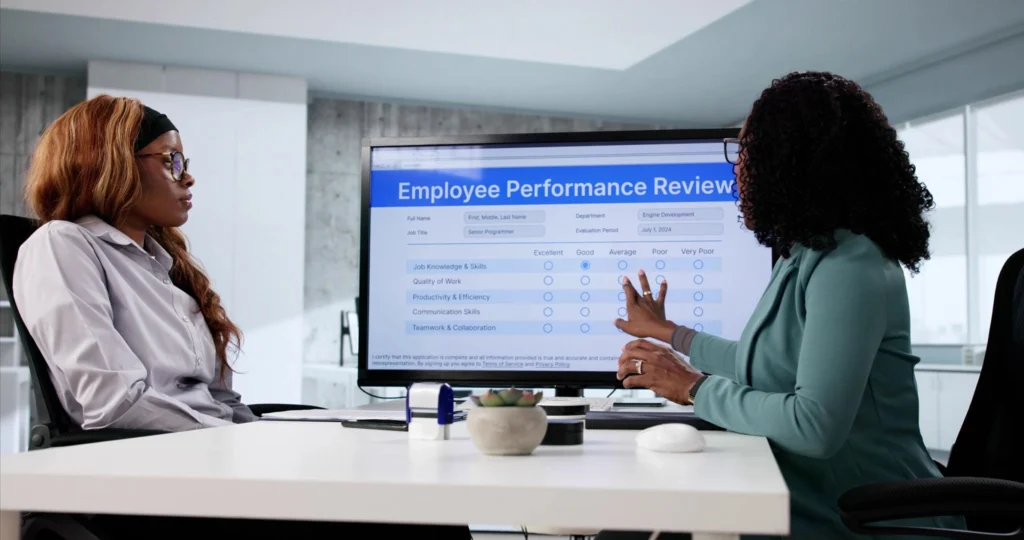
Benefits for Employers
A Performance Improvement Plan or PIP helps a company in two ways: managing employee performance and reducing legal risks. By writing down the problems, goals, support provided and results employers make a record.
This record protects them if an employee disputes their termination later. PIPs also help managers have conversations with employees. They provide a plan to follow.
Without a PIP performance problems can drag on. Affect how the team works together and how much they get done. It impacts team morale and productivity. Managers use PIPs to handle conversations in a structured way. A PIP makes it easier to manage performance issues.
Benefits for Employees
From the employee side a Performance Improvement Plan while it can be uncomfortable gives the employees something they really need: clarity. A lot of employees who are not doing well just do not know what they are doing wrong. A Performance Improvement Plan helps by saying what the employees need to do and when they need to do it.
It also tells the employees that the organization has not decided to let them go yet. If the organization had already decided to fire someone then a Performance Improvement Plan would not make sense.
Risks of Not Using a PIP
When you do not use the PIP process and there are performance issues this creates problems. The managers might put off having talks with the employees until the situation gets really bad. If you do not write down what is happening it can be hard to let someone go without getting into trouble.. If you do not have a plan to help the employees get better some of them will not get the chance to succeed even though they could have if they were given the chance. The PIP process is important because it helps the managers and the employees. Without the PIP process things can get out of hand. The PIP process is a way to help the employees who are not doing well. It is also a way to protect the company.
Common Reasons Employees Are Put on a PIP

Productivity Issues
This employee is really struggling. They are not getting work done quickly as we expect. They often miss deadlines. They need a lot of supervision to stay focused.
This is the common reason for concern. The employee is not completing work at the expected rate. They are missing deadlines regularly. They require a lot of supervision.
Attendance Problems
Patterns of missing work without a reason being late all the time or leaving early without telling anyone are in this category. Note that absences, for reasons or protected leave must be handled separately under the laws that apply to employment.
Quality Concerns
When the work that someone does is not good enough. It makes customers unhappy or it is not as good as what the team usually does. That is a common reason for a Performance Improvement Plan in jobs where getting things right and doing high quality work are very important. This kind of thing happens in roles where accuracy and quality’re central to the job. If the output is bad and it keeps happening it can cause a lot of problems. The team standard is what matters. If someone’s work is not meeting that standard it can be a big issue. In jobs where accuracy and quality’re central this kind of thing is especially important.
Behavioral Issues
When people at work do not get along or when someone does not follow the rules or when their actions cause problems for the team they may need a Performance Improvement Plan. This is especially true when we have already talked to them about the problem, in a way and they still do not change their behavior. The Performance Improvement Plan is used to help the person understand what they need to do to improve. The Performance Improvement Plan is a way to help people at work do their jobs better.
Missed KPIs
When you are working in sales or customer service or operations the company sets numbers you need to meet. These numbers are, like goals that you have to reach. If you do not meet these numbers all the time the company may ask you to follow a plan, which is called a PIP. This plan is made for you. It tells you what you need to do to get better at meeting those customer service numbers or sales numbers or operations numbers. The plan helps you improve so you can reach the targets that the company sets for customer service or sales or operations.
Key Components of an Effective PIP
A PIP is only as useful as what it contains. Vague plans with no measurable targets almost always fail to produce change and often create legal exposure.
Performance Issues
Describe the specific gap clearly and factually. Avoid general language like “attitude problems” or “not meeting expectations.” Instead, state what was expected, what actually occurred, and the measurable difference between the two.
Example: “The sales target for Q2 was 40 closed deals. The employee closed 18, a shortfall of 55%.”
SMART Goals
Every improvement goal should be clear, trackable, doable matter. Have a deadline. These are called goals. They are the base of any Performance Improvement Plan. Here is an example of a goal:
“Improve sales performance.”
A SMART goal example is:
“Get at least 30 deals done per month for the next 90 days. This starts on July 1.
Timeline
Most PIPs run 30, 60, or 90 days. The right length depends on the complexity of the improvement required. A behavioral issue may be addressable in 30 days. A skills gap that requires training may need 90 days or longer.
Success Metrics
Define exactly what successful completion looks like. This removes subjectivity when the evaluation period ends. If the metrics are met, the PIP is resolved. If they are not, the next step, whether extension, reassignment, or termination, follows logically.
Support Resources
List everything the organization will provide to help the employee succeed: training, coaching, additional supervision, mentoring, tools, or adjusted workload. A PIP without a support plan looks punitive rather than corrective.
Review Schedule
Include specific checkpoint dates, not just a final evaluation. Weekly or bi-weekly check-ins allow managers to course-correct early and give employees the feedback they need to stay on track.
How to Create a Performance Improvement Plan
Step 1: Identify the Problem
Before you start writing anything you need to gather all the facts. Look at things like performance data, email records, the work that has been completed, attendance logs and what the customers have to say. The problem statement in the Performance Improvement Plan must be based on things that are actually written down, not just what you think. It has to be based on evidence like the data and records, not just what you feel or think about the situation. The Performance Improvement Plan needs to have a problem statement that is based on documented evidence.
Step 2: Gather Documentation
To really show the difference in performance we need to find examples. It is better to use dates, numbers and things that have been written down to prove a point. These things are more believable. Will hold up better if there is a problem. We should use these examples to show the performance gap because they are more credible than just saying something general. The performance gap is what we are trying to show so we need to use these examples to make our point about the performance gap.
Step 3: Define Measurable Goals
We need to set goals using the SMART criteria. These goals should be things that we can achieve. When we do it will show that the performance gap has been resolved. Let us keep the number of goals, like two to five so the employee can really focus on them.
We want to make sure the employee can do a job so we do not want to give them too many things to work on at the same time. If we use the SMART criteria to write our goals we can make sure they are clear and easy to understand. This way the employee will know what the performance gap goals are. They can work to meet them. The SMART criteria performance gap goals are important because they will help us see if the employee is doing a job.
Step 4: Create an Action Plan
The employee needs to take some steps. The manager and the organization will also do things to help the employee. This part of the document changes the Performance Improvement Plan from a warning, to a real tool to help the employee get better. The Performance Improvement Plan is supposed to help the employee so the employee and the Performance Improvement Plan will work together. The manager and the organization will support the employee and the Performance Improvement Plan.
Step 5: Establish Checkpoints
Set dates for progress reviews, throughout the plan period. These dates should be fixed in the calendar at the beginning.
That way both parties are committed to them. The progress reviews help to track progress.
Step 6: Monitor Progress
At each checkpoint write down what the employee has done far and what they have not done yet. If the employee is doing a job and is on track let them know that they are doing well. If the employee is falling behind, talk to them about it and do not wait until the very end to say something. This way the employee and you can figure out what the employee needs to do to get on track, with the employee’s work.
Step 7: Conduct Final Evaluation
At the end of the Performance Improvement Plan period we review how the employee did compared to the goals we set. We write down the results in a document. If the employee did well, needed time or did not meet the goals our decision should be based on the facts we collected during the plan period. The employee’s performance is evaluated against the stated metrics.
The outcome of this evaluation determines the steps. We make sure our decision is fair and directly supported by the evidence gathered.
Performance Improvement Plan Template
Basic PIP Template
Employee Name: Job Title: Department: Manager Name: PIP Start Date: PIP End Date:
Performance Issue: [Describe the specific performance gap with dates and data]
Improvement Goals:
- [SMART Goal 1]
- [SMART Goal 2]
- [SMART Goal 3]
Action Plan: [Steps the employee will take / support the organization will provide]
Checkpoint Schedule:
- Week 2: [Date]
- Week 4: [Date]
- Final Review: [Date]
Success Criteria: [What must be achieved for the PIP to be resolved]
Signatures: Employee: _______________ Date: ___________ Manager: _______________ Date: ___________ HR Representative: _______________ Date: ___________
Manager Template (Condensed)
For managers creating PIPs in high-volume departments, a condensed template focuses on three fields: the documented performance gap, two to three SMART goals with a 90-day timeline, and a bi-weekly check-in schedule with a final evaluation meeting.
Remote Employee Template
Remote PIPs require additional specificity around how performance will be tracked. Include:
- Communication expectations (response time, availability windows)
- Output tracking method (project management tool, weekly deliverables report)
- Virtual check-in schedule with video meeting links
- Documentation of how the employee’s work output will be measured independently of in-office visibility
Real Performance Improvement Plan Examples
Sales Representative Example
Performance Issue: The employee achieved 42% of their monthly quota over three consecutive months (January through March), against a target of $80,000 per month.
Goals:
- Achieve a minimum of $60,000 in closed revenue in Month 1 of the PIP period
- Achieve a minimum of $70,000 in Month 2
- Complete two sales skills training sessions within the first 30 days
Support: Weekly pipeline review with sales manager, access to sales training platform, and bi-weekly role-play coaching sessions.
Customer Service Example
Performance Issue: The employee received satisfaction scores of 52% over 60 days, against a department standard of 80%. Twelve escalations were attributed to this employee during the same period, compared to a team average of three.
Goals:
- Achieve a minimum satisfaction score of 72% by Day 45
- Reduce escalations to five or fewer per month within 60 days
- Complete one customer communication skills course within the first two weeks
Software Developer Example
Performance Issue: The employee has missed four of six sprint delivery commitments in the current quarter, with incomplete code reviews cited in two retrospectives.
Goals:
- Deliver all committed sprint tasks on time for four consecutive sprints
- Complete code reviews within 24 hours of assignment for the PIP period
- Attend two structured pair-programming sessions per week for 30 days
Team Leader Example
Performance Issue: Team engagement scores for this leader’s group dropped to 54% in the Q1 survey, the lowest in the department. Three team members filed informal concerns about unclear communication and missed one-on-ones.
Goals:
- Hold all scheduled one-on-ones without cancellation for 60 consecutive days
- Achieve a team engagement score of at least 65% in the Q3 survey
- Complete a leadership communication workshop within the first 30 days
PIP Goals Examples by Job Function
Sales Goals
- Close a minimum of [X] deals per month
- Maintain a pipeline of at least [X] active opportunities at all times
- Achieve an average deal size of [X] by end of the plan period
Customer Support Goals
- Achieve a first-call resolution rate of [X]%
- Maintain an average handle time at or below [X] minutes
- Receive a customer satisfaction rating of [X]% or higher
Marketing Goals
- Deliver campaign assets on time for [X]% of projects
- Achieve a lead generation target of [X] per month
- Reduce copy revision cycles to no more than two rounds per deliverable
Engineering Goals
- Achieve on-time sprint delivery for [X] consecutive sprints
- Reduce bug recurrence rate by [X]% within 60 days
- Maintain test coverage at or above [X]% for all submitted code
Operations Goals
- Reduce processing errors to below [X]% per week
- Complete all daily workflow tasks without escalation for [X] consecutive days
- Submit all reports by the stated deadline for the duration of the plan period
What Employees Should Do After Receiving a PIP
First 24 Hours
Read the document carefully before you sign it. When you sign the document it means you got the document it does not mean you agree with everything in the document. If something in the PIP is not correct, write it down in a few days. Take your time to understand what the PIP is really asking for before you get upset about the PIP.
Meeting With Your Manager
Prepare questions before this conversation. Ask for clarification on any goal you do not understand. Ask how progress will be measured and who will be evaluating it. Request all agreed-upon support resources in writing.
Creating a Success Strategy
Treat the PIP goals as your actual job for the duration of the plan. Break each goal into weekly sub-targets so you can track your own progress independently, not just wait for manager feedback. Log your own work daily.
Tracking Progress
Keep a record of your performance metrics throughout the PIP period. Write down when you are doing well and meeting or exceeding expectations. If you are not doing well as you should be, at any checkpoint tell your manager about it. Do not wait for your manager to notice that you are having trouble. Tell your manager away. This way Performance Improvement Plan issues can be fixed quickly. Performance Improvement Plan progress is very important.
What Managers Should Avoid
Vague Expectations
When we think about goals, things like being more professional or improving your attitude are really tough to measure. These goals will not work if we need to prove something in court or in a real life situation. Every single thing we expect from someone has to be clear enough so that someone else who is not involved can easily say yes or no it was done. We need to make sure our goals are specific like the goal of improving your skills or the goal of improving your attitude so that a neutral third party can look at them and say if they were met or not. This is important for goals, like improving your skills and improving your attitude.
Unrealistic Timelines
A thirty-day plan to fix a skills gap that took years to form is unrealistic. It sets the employee up for failure. This implies the Performance Improvement Plan or PIP was never meant to work. A realistic timeline should match the complexity of the required improvement.
- The timeline should be long enough to allow for growth and development.
- It should consider the years it took to create the skills gap.
- A proper PIP should have goals and a fair timeline.
- This way the employee has a chance to improve and succeed.
Lack of Documentation
Verbal check-ins are basically useless if they are not written down. So make sure to document every checkpoint.
- Write down what was talked about
- Note the progress made
- Also note what needs to be done next
This way both the manager and the organization are protected.
Inconsistent Reviews
If you are going to schedule a review then you should really stick to it. Canceling or rescheduling check-ins a lot is not an idea. It can actually cause some problems and the organization may get in trouble with the law. So it is very important to keep the schedule you set for these reviews. Sticking to the review schedule is crucial because canceling or rescheduling check-ins repeatedly can undermine the process and may expose the organization to legal risk.
PIP vs Other Performance Management Tools
| Tool | Purpose | Formality | Typical Trigger |
| PIP | Correct a specific performance gap | High | Persistent underperformance |
| Coaching Plan | Develop skills or capabilities | Low to medium | Growth or development need |
| Performance Review | Evaluate overall performance | Medium | Scheduled cycle |
| Corrective Action Plan | Address policy or conduct violations | High | Policy breach |
| Employee Development Plan | Build future capabilities | Low | Career planning |
A PIP is the most formal option in this list. A coaching plan is appropriate before performance issues become serious. A corrective action plan may run alongside a PIP if the performance issue involves policy violations. An employee development plan is not a remediation tool at all.
Legal Considerations for Performance Improvement Plans
Documentation Requirements
When someone’s job is ended the company usually needs to show that the employee knew about the problem with their work, had a chance to get better and got the help they needed to improve. A good Performance Improvement Plan or PIP does all of these things.
The company should keep every piece of paper from the time the PIP was used: the plan that was signed, notes from meetings to check on progress information, about how the employee was doing and the last review of how they did.
Equal Treatment
PIPs need to be applied. Putting employees from groups on PIPs more often or expecting them to meet different standards can lead to serious discrimination issues.
HR teams must review how PIPs are being used to make sure they are being applied equally across all groups.
Termination Risks
If an employee loses their job after going through a Performance Improvement Plan and the paperwork is not done correctly or it does not make sense or it shows that the goals they were given were never something they could really achieve then the company is, in trouble. The company has to make sure the Performance Improvement Plan is real and not a bunch of papers to make it look like they tried to help the employee before they decided to let them go. The Performance Improvement Plan has to be fair and honest not something the company does because they have already decided to fire the employee.
HR Compliance Best Practices
HR must check every Performance Improvement Plan (PIP) before giving it to the employee.
This check helps find goals that’re hard to measure timelines that are too tight and words that could be seen as unfair. It also helps to make sure the language used is not biased or unfair to groups of people.
Many companies also make HR agree with the result before making any decision, about firing someone. HR review is important to make sure everything is fair and correct. It helps to protect the company and the employee.
Measuring PIP Success
Success Metrics
PIP success should be measured at the individual level (did this employee meet the stated goals?) and the program level (are our PIPs producing lasting improvement?). Both require data.
At the individual level, success means the stated metrics were met by the final evaluation date. At the program level, success means employees who complete PIPs are still performing at standard six months and twelve months later.
Completion Rates
Organizations that track PIP data typically find that completion rates vary widely by manager, department, and how the plan was written. Low completion rates in a specific team often indicate that PIPs are being used as a termination process rather than a genuine improvement process.
Retention Impact
Employees who complete a PIP successfully and remain with the organization often become reliable long-term contributors. The improvement process, when handled well, can strengthen commitment by demonstrating that the organization invested in them rather than replacing them.
Long-Term Performance Tracking
Set a reminder to review the performance of PIP completers at six months and twelve months post-completion. This data is valuable both for refining how PIPs are written and for identifying managers who need coaching on performance conversations.
The Future of Performance Improvement Plans

AI in Performance Management
HR platforms like Workday, BambooHR, and SAP SuccessFactors now offer continuous performance tracking features that flag performance trends before they become serious enough to require a PIP. AI-assisted tools can identify patterns in output data, project completion rates, and feedback scores that a manager reviewing spreadsheets might miss.
The practical implication is that organizations with strong performance management technology may use fewer traditional PIPs, replacing them with real-time coaching prompts and micro-feedback loops that address issues earlier.
Continuous Feedback Models
Many organizations are moving away from annual reviews and toward continuous feedback cycles. In this model, performance expectations are revisited quarterly, and course corrections happen in smaller increments. This does not eliminate PIPs, but it means that fewer employees should reach the point where a formal 90-day improvement plan is the first structured intervention they have received.
Remote Workforce Challenges
Managing remote employee performance requires different tools than managing in-office performance. Output-based metrics matter more when direct observation is not possible. For remote PIPs specifically, managers need to be especially precise about how performance will be tracked and documented, since proximity-based assessments are unavailable.
Building a Fair and Effective PIP Process
A PIP is only as effective as the process around it. Organizations that use PIPs well share a few common practices: they involve HR before presenting the plan, they set goals that are genuinely achievable, they provide the stated support resources, and they document every step.
For managers, the hardest part is often the initial conversation. Being direct about the performance gap while remaining respectful and focused on improvement is a skill that takes practice. The goal of that conversation is not to make the employee feel judged but to make them understand exactly what needs to change and that you are invested in helping them change it.
For employees, the best response to receiving a PIP is to treat it as the serious professional signal it is. Whether the outcome is success or eventual departure, responding with professionalism and effort protects your reputation and maximizes your options.
Performance improvement plans, when designed and executed well, are one of the few HR tools that can genuinely benefit both parties. The organization retains an employee it has invested in. The employee gets a clear path to meeting expectations rather than a sudden termination. Getting that balance right is what separates a well-run PIP process from one that is simply a paper trail for a decision already made.
Frequently Asked Questions
Does a PIP Mean You Are Getting Fired?
Not necessarily. A PIP means the organization has identified a performance gap and is taking a formal step to address it. Whether it leads to termination depends on whether the employee meets the stated goals. Some PIPs lead to full resolution. Others lead to termination. The outcome depends on the individual’s response to the plan.
Can You Negotiate a PIP?
You can, and in many cases you should. If a goal is unclear or a timeline seems unrealistic, raising that professionally and in writing is appropriate. Most managers would rather adjust a goal than have it fail for the wrong reasons. The best time to raise concerns is before the plan period starts, not after.
How Long Should a PIP Last?
Thirty days is typical for behavioral issues or clear attendance problems. Sixty to ninety days is more appropriate for performance gaps that require skills development or behavior change. Plans longer than ninety days are uncommon but not unheard of for complex situations.
What Happens If You Fail a PIP?
Outcomes vary. In most cases, failing to meet the stated goals results in termination. In some cases, the organization may extend the plan, reassign the employee to a different role, or reduce their responsibilities. The outcome depends on the organization, the role, and whether partial progress was made.
Can HR Remove a PIP?
Yes. If an HR review determines that the goals were unrealistic, the process was applied inconsistently, or the documentation does not support the stated concerns, the PIP can be voided. This is relatively rare but does happen, particularly when an employee formally disputes the plan and HR investigates.
