

Managing business finances can feel overwhelming—especially when expenses start piling up from different departments, employees, and projects. Whether you’re a small business owner, freelancer, or part of a growing company, keeping track of where your money goes is essential.
That’s where a business expense report comes in.
In this comprehensive guide, you’ll learn:
- What a business expense report is
- Why it matters for your business
- The ideal expense report format
- Best practices to streamline your reporting process
What Is a Business Expense Report?
A business expense report is a document that tracks and records all the expenses incurred by a company or its employees over a specific period.
It typically includes details such as:
- Date of expense
- Amount spent
- Category (travel, meals, office supplies, etc.)
- Business purpose
- Payment method
- Supporting receipts
In simple words, it’s a structured way to answer one key question:
“Where is the business money going?”
According to financial best practices, expense reports help businesses track spending, manage budgets, and ensure accurate reimbursements for employees.
Why Are Business Expense Reports Important?
You might think expense tracking is just for accountants—but it plays a much bigger role in your business.
1. Better Financial Control
Expense reports give you a clear overview of your spending. This helps you identify unnecessary costs and make smarter financial decisions.
2. Accurate Employee Reimbursements
When employees spend their own money for business purposes, expense reports ensure they get reimbursed quickly and fairly.
3. Budget Planning and Forecasting
Tracking expenses helps you understand spending patterns and plan future budgets more effectively.
4. Tax Compliance
Proper documentation ensures you can claim deductions and stay compliant with tax regulations.
5. Fraud Prevention
A structured expense report makes it easier to detect duplicate or unauthorized expenses.
6. Business Insights
Expense reports help identify trends and patterns in spending, allowing businesses to make data-driven decisions.
Types of Business Expense Reports
Before diving into the format, it’s helpful to understand the different types of expense reports businesses commonly use:
1. Travel Expense Reports
Used for tracking travel-related costs like flights, hotels, meals, and transportation.
2. Employee Expense Reports
Submitted by employees for reimbursement of business-related purchases.
3. Project-Based Expense Reports
Used to track expenses tied to a specific project or client.
4. Monthly or Quarterly Expense Reports
Provide a summary of all business expenses over a specific period.
Business Expense Report Format (Step-by-Step)
A well-structured expense report is easy to read, verify, and approve. The best format follows a logical flow: context first, numbers second, and exceptions last.
Here’s the ideal structure:
1. Header Section (Basic Information)
This section provides context about the report.
Include:
- Employee name
- Employee ID or department
- Report submission date
- Reporting period (e.g., March 1–15)
- Manager or approver name
These details help identify who submitted the report and for what time frame.
2. Expense Summary
This is a quick overview of total expenses.
Include:
- Total amount spent
- Total reimbursable amount
- Number of transactions
This section helps reviewers quickly understand the overall expense value.
3. Itemized Expense Table
This is the most important part of the report.
A standard table should include:
- Date of transaction
- Vendor or merchant name
- Expense category
- Description or business purpose
- Amount (including taxes)
- Payment method (cash, card, etc.)
- Receipt status
A structured table ensures consistency and makes it easier to audit expenses.
4. Expense Categories
Categorizing expenses helps in budgeting and analysis.
Common categories include:
- Travel
- Meals and entertainment
- Office supplies
- Software subscriptions
- Marketing expenses
5. Receipts and Supporting Documents
Every expense should be backed by proof.
This can include:
- Receipts
- Invoices
- Tickets or booking confirmations
Many companies now use digital tools to attach scanned receipts.
6. Approval Section
This section includes:
- Manager approval
- Finance team verification
- Signature or digital approval
It ensures accountability and compliance.
7. Notes or Exceptions
Use this section to explain:
- Unusual expenses
- Missing receipts
- Policy exceptions
Example of a Business Expense Report
Here’s a simple example format:
| Date | Category | Description | Amount | Payment Method | Receipt |
| 01/03/2026 | Travel | Taxi to client meeting | $25 | Card | Yes |
| 02/03/2026 | Meals | Lunch with client | $40 | Cash | Yes |
| 03/03/2026 | Office Supplies | Printer ink | $60 | Card | Yes |
Total: $125
How to Create a Business Expense Report
Creating an expense report doesn’t have to be complicated. Follow these steps:
Step 1: Choose a Format
You can use:
- Excel spreadsheets
- Accounting software
- Expense management tools
Step 2: Add Basic Details
Start with employee and reporting information.
Step 3: Record Expenses Regularly
Don’t wait until the end of the month—log expenses as they occur.
Step 4: Attach Receipts
Always include proof of purchase.
Step 5: Review and Submit
Double-check entries before submission.
Best Practices for Business Expense Reports
To make your expense reporting process efficient and error-free, it’s important to follow a set of proven best practices. These not only simplify the process but also improve accuracy, save time, and ensure compliance with company policies.
First, always keep your expense reports simple and clear. Avoid overly complicated formats or unnecessary details that can confuse employees and reviewers. A clean, well-structured report makes it easier to understand, speeds up approvals, and reduces the chances of errors.
It’s equally important to standardize your format across the organization. Using the same template for all expense reports ensures consistency and makes it easier for finance teams to review and process them. When everyone follows the same structure, it minimizes confusion and improves efficiency.
Submitting reports on time is another essential habit. Delayed submissions can slow down reimbursements and disrupt accounting workflows. Setting clear deadlines and encouraging employees to stick to them helps maintain a smooth financial process.
Maintaining accurate records is equally critical. Every expense report should include correct dates, precise amounts, and proper categorization. Even small mistakes can lead to compliance issues or delays in approval, so attention to detail is key.
Tracking expenses in real-time is a smart approach that many businesses are adopting. Recording expenses as they occur helps prevent missed entries and reduces the stress of compiling reports at the end of the month. It also ensures better accuracy and transparency.
Regular audits are another important practice. Periodic reviews of expense reports help identify duplicate entries, detect potential fraud, and ensure compliance with company policies. This adds an extra layer of control and accountability.
Key Components of an Expense Report
A well-structured business expense report includes several essential components that ensure clarity, accuracy, and easy processing. Understanding these key elements helps both employees and finance teams maintain consistency and avoid errors.
1. Employee and Report Details
This section includes basic information such as the employee’s name, department, employee ID (if applicable), and the reporting period. It provides context and helps identify who submitted the report and for what timeframe.
2. Expense Summary
The summary gives a quick overview of the total expenses incurred. It typically includes the total amount spent, the reimbursable amount, and sometimes the number of transactions. This helps reviewers quickly assess the overall report.
3. Itemized Expense List
This is the core of the expense report. Each expense is listed individually with important details such as the date, vendor name, category, description or business purpose, amount, and payment method. Itemization ensures transparency and makes verification easier.
4. Expense Categories
Categorizing expenses—such as travel, meals, office supplies, or software—helps in organizing data and analyzing spending patterns. It also ensures alignment with company policies and budgets.
5. Receipts and Supporting Documents
Every expense should be backed by proof, such as receipts, invoices, or booking confirmations. These documents validate the expense and are essential for audits and reimbursements.
6. Approval and Authorization
This section includes manager or supervisor approval, along with finance team verification if required. It ensures that all expenses comply with company policies before reimbursement.
7. Notes or Additional Comments
Sometimes, certain expenses may need further explanation—such as missing receipts or unusual charges. This section allows employees to provide context and clarify any exceptions.
By including these key components, businesses can create clear, organized, and reliable expense reports that streamline approvals and improve financial control.
Common Mistakes to Avoid
Even with the best systems, mistakes can happen. Here are some common ones to watch out for:
1. Missing Receipts
Always keep proof of purchase.
2. Incorrect Categorization
Misclassifying expenses can lead to inaccurate reports.
3. Delayed Submissions
Late reports slow down reimbursements.
4. Incomplete Information
Missing details can lead to rejection of reports.
5. Ignoring Company Policies
Not following guidelines can result in non-reimbursement.
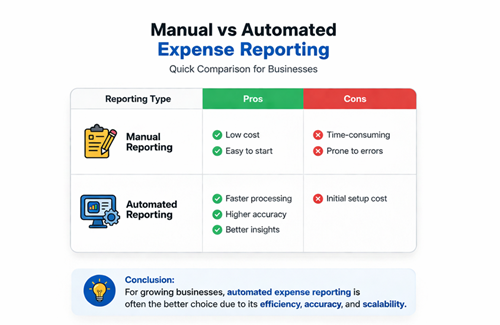
Manual vs Automated Expense Reporting
Final Thoughts
A business expense report is more than just a document—it’s a powerful financial tool that helps you stay in control of your business spending. By using the right format and following best practices, you can simplify expense tracking, improve accuracy, save valuable time, and ensure compliance with financial regulations.
Whether you’re running a startup or managing an established company, building a strong and efficient expense reporting system is essential for long-term success and sustainable growth.
FAQs
a. What is included in a business expense report?
It includes expense details such as date, amount, category, business purpose, and receipts.
b. How often should expense reports be submitted?
Most businesses require monthly submissions, but it can vary depending on company policy.
c. Can small businesses use expense reports?
Yes, they are especially useful for small businesses to track spending and manage budgets.
d. What is the best tool for expense reporting?
Excel works for beginners, but automated tools are better for scaling businesses.
