

Fundraising ideas for nonprofit organizations are campaigns and activities that raise money for a charitable mission. Common examples include crowdfunding, peer-to-peer campaigns, charity auctions, corporate sponsorships, matching gifts, and monthly giving programs.
The hard part is not finding ideas. A quick search gives you hundreds. The hard part is picking the few that fit your budget, your team, and your donors.
That matters more now than it did a few years ago. The Fundraising Effectiveness Project reported that total giving grew about 5.0% in 2025, yet the number of donors fell about 3.6%. In plain words, more money came from fewer people.
So this guide does more than list ideas. For each one, you will see who it suits, what it costs, and how to start. Then you will learn how to choose, run, and measure a campaign.
What Are Fundraising Ideas for Nonprofit Organizations?
Think of a fundraising idea as a repeatable way to turn supporter goodwill into funds. It can be a one-day bake sale or a year-round monthly giving program. Wikipedia’s overview of fundraising is a good primer if you want a wider background.
The best ideas share one trait: they match what your supporters already like to do. Runners join a 5K. Local business owners sponsor a team. Loyal donors give monthly when it is easy.
Why Fundraising Matters for Nonprofits
Money is not the only prize. A good campaign also builds the base you need to survive a bad year.
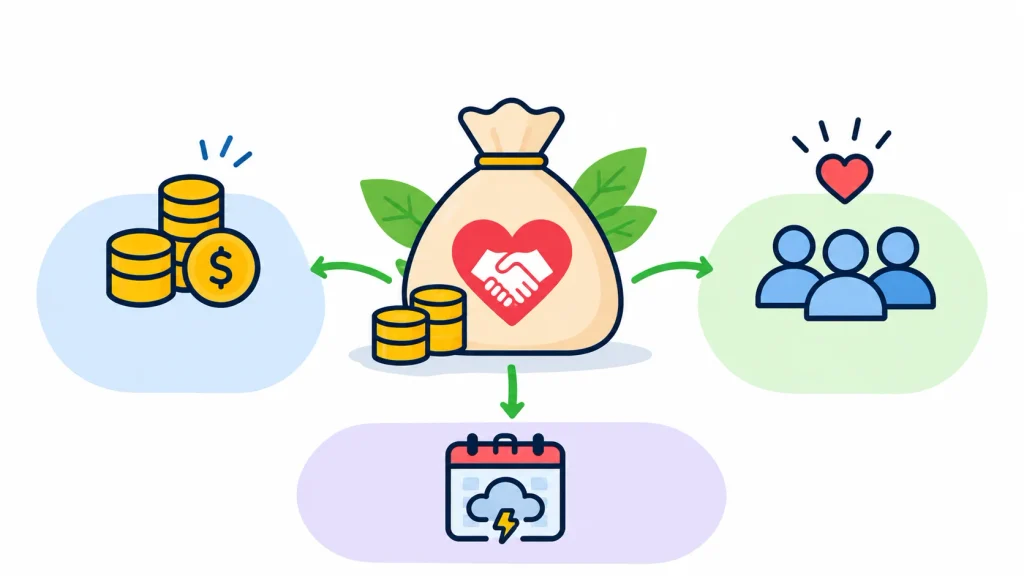
- Stability: Steady income lets you plan staff and programs.
- Growth: New funds pay for new services.
- Community: Campaigns turn passive fans into active supporters.
- Resilience: Several income streams protect you if one dries up.
Main Types of Nonprofit Fundraising
Most income falls into seven buckets. A healthy nonprofit usually mixes three or four of them.
- Individual giving: Gifts from donors, from $5 to major gifts.
- Online fundraising: Donation pages, crowdfunding, email, and social media.
- Events: Galas, walks, auctions, and community days.
- Corporate support: Sponsorships, matching gifts, and cause marketing.
- Grants: Funds from foundations and government programs.
- Recurring giving: Monthly or annual gifts that repeat automatically.
- Earned revenue: Income from products, classes, or services tied to your mission.
50 Best Fundraising Ideas for Nonprofit Organizations
The ideas below are grouped by how you run them. Each entry says what it is, who it suits, and the main thing to get right. Costs and results vary a lot, so treat every rating here as a planning estimate, not a promise.
A. Online Fundraising Ideas for Nonprofits
Online ideas reach supporters far beyond your zip code. They also give you easy tracking. Most need only a donation page from a tool like Donorbox, Givebutter, or Classy.
- Crowdfunding campaign. Raise money for one clear project, such as a new van or a winter coat drive. Set a firm goal and deadline, then share progress updates every few days. Crowdfunding works best when people can picture exactly what their gift buys.
- Peer-to-peer fundraising. Supporters build their own pages and ask friends to give. It stretches your reach because each person taps a network you do not have. Give them a ready-made kit: a photo, a short story, and sample messages.
- Social media challenge. Ask supporters to do something simple, post it, and tag friends to donate. Instagram and TikTok suit this well. Keep the task easy and the ask clear.
- Text-to-give. Supporters text a keyword to donate from their phone. It works well at events and on printed flyers, where a link is awkward.
- Online merchandise store. Sell shirts, mugs, or tote bags with your logo. Print-on-demand keeps your upfront cost close to zero. Merchandise also turns supporters into walking advertisements.
- Birthday and celebration fundraisers. Invite supporters to give up their birthday gifts and ask friends to donate instead. It is cheap, personal, and easy to repeat.
- Livestream fundraiser. Gamers, musicians, and local personalities can raise money live on platforms like Twitch or Facebook. Pick a host who already has an audience that trusts them.
- Online auction. Auction donated items such as gift baskets, experiences, or services. Start collecting items at least six weeks ahead. Late bids and good photos drive the final prices.
- Virtual workshop or class. Sell tickets to a cooking class, a writing session, or a talk from your staff. This suits groups with real expertise to share.
- Email fundraising series. A short sequence of three to five emails beats one big ask. Tell a story, show the need, make the ask, and share results. Email is still one of the cheapest ways to reach existing donors.
B. Low-Cost Fundraising Ideas for Small Nonprofits
Small teams often lack time more than money. These ideas need little cash and few helpers. If you want to see what other small organizations are trying, the r/nonprofit community on Reddit regularly hosts candid threads on what has and has not worked.
- Community donation drive. Collect food, clothes, or supplies, or ask for cash toward a specific need. Name the exact items so donors know what to bring.
- Bake sale. It is old-fashioned and still works at schools, churches, and neighborhood events. Keep prices simple and offer a card reader so buyers can round up.
- Garage or rummage sale. Volunteers donate items, and you keep the sales. Pick a busy weekend and advertise on local community boards.
- Dollar-a-day challenge. Ask supporters to give $1 a day for a month. The small ask feels easy, and it introduces the habit of regular giving.
- Handwritten donor appeals. A personal note to your top 20 supporters can beat a mass mailing. It costs almost nothing and shows donors you see them as people.
- Volunteer car wash. Teens, scout troops, and youth groups run this well. Partner with a local business that lets you use its parking lot.
- Community change jars. Place sealed jars at local shops, with a short note about your cause. Collect them monthly and tell the shop owners the total.
- Skill-sharing workshop. Volunteers teach a skill, such as knitting, basic coding, or budgeting, for a small fee.
- Shoe or clothing drive. Some companies pay by the pound for gently used shoes. Check each buyer’s terms before you start.
C. Creative Fundraising Event Ideas
Events take more planning, but they build relationships that last. In its 2026 outlook, Bonterra, working with OneCause, reported that 97% of surveyed nonprofits held an event in 2025, and 77% of those met or beat their event goals. (source) Organizations that held no events were far more likely to miss their overall targets.
- Charity gala or dinner. Your biggest earner if you have an established donor base. It needs a venue, a program, sponsors, and often a paid auction or paddle raise.
- Silent and live auctions. Add them to almost any event. A live auctioneer lifts energy, while silent bidding lets everyone take part.
- Charity walk or run. Combine ticket fees with peer-to-peer pages for the strongest return. Secure permits early.
- Community fun fair. Games, food stalls, and local performers make it a family day out. Sell stall space to local businesses to cover costs.
- Trivia night. Teams pay to enter, and you sell snacks. It suits a pub, school hall, or office. Easy to repeat each quarter.
- Bingo night. Popular with older supporters and community groups. Check your state’s rules on gaming before you sell cards for prizes.
- Benefit concert. Ask local bands or a school choir to perform. Ticket sales, a raffle, and a donation table all add up.
- Golf tournament. Teams and hole sponsors raise most of the money. It needs a course partner and a strong sponsor list.
- Themed party. A murder-mystery night, a costume party, or a decade-themed dance. Pick a theme your supporters will enjoy.
- Sports tournament or film screening. A kickball league, a pickleball day, or an outdoor movie night. Sell tickets and concessions, and add a donation ask before the main event.
D. Corporate Fundraising and Partnership Ideas
Businesses want to be seen as good neighbors. That gives you a real opening. Start with companies your supporters already use, and offer something concrete in return, like a logo on your event shirts or a thank-you post.
- Corporate sponsorship. Local companies fund an event or program in exchange for visibility. Send a one-page proposal with your goal, your audience size, and two or three sponsor levels.
- Employee matching gifts. Many employers match what staff donate. Many donors never ask, so add a matching-gift search tool to your donation page.
- Workplace giving campaign. Ask a company to run a short giving drive among its staff. A friendly internal competition between departments helps.
- Payroll giving. Employees give a small amount from each paycheck. It is steady and nearly effortless once set up.
- Cause marketing. A business donates a share of sales on a set day or product. Cause marketing works best when the cause and the brand fit naturally.
- Restaurant fundraiser night. A local restaurant gives a percentage of sales during a set evening. You supply the flyers and the crowd.
- Corporate volunteer fundraising. Employees take part in your walk, run, or build day and raise pledges. It deepens the tie beyond a single check.
- In-kind donations. Businesses give goods or services instead of cash, such as printing, food, or event space. This cuts your costs directly and is easy for small firms to say yes to.
E. Recurring Donation and Long-Term Fundraising Ideas
One-time gifts feel good. Regular gifts keep the lights on. The Fundraising Effectiveness Project’s Q4 2025 data put overall donor retention near 43%, but first-time donor retention near 19%. (source) Recurring programs help close that gap.
- Monthly giving program. Invite donors to give a small amount each month, and name the program, such as a “Champions Circle.” Predictable income lets you plan with more confidence.
- Membership program. Offer yearly membership levels with simple perks like updates, early event access, or a member-only call.
- Donor recognition program. Thank givers publicly, with their permission, through a website wall, newsletter, or annual report. Recognition encourages the next gift.
- Tribute and memorial gifts. Make it easy for people to give in honor of someone. These gifts often bring in new donors from a grieving family’s circle.
- Legacy and planned giving. Ask loyal supporters to remember you in their will. Planned giving takes years to grow, so start the conversation early and gently.
F. Seasonal and Holiday Fundraising Ideas
Seasonal hooks give people a reason to act now. Pick two or three that suit your mission, rather than trying all of them.
- GivingTuesday. A global day of giving was held the Tuesday after Thanksgiving. GivingTuesday falls on December 1 this year. Line up a matching donor and a clear goal before the day.
- Year-end appeal. Many people give in December, partly for tax reasons. Send a story-led appeal in early December and a reminder in the last week.
- New Year campaign. January is good for fresh-start themes, such as a “first gift of the year” drive.
- Valentine’s Day fundraiser. Sell cards, flowers, or messages of love. It suits animal shelters, schools, and community groups.
- Earth Day campaign. Tree planting, clean-ups, and sustainable merchandise fit environmental groups best.
- Summer community event. Outdoor movie nights, block parties, and lemonade stands draw families when schedules are loose.
- Back-to-school drive. Collect supplies or fund scholarships. Educational and youth groups see strong response in August.
- Thanksgiving or holiday drive. Food, coat, and toy drives are simple to explain and popular with churches and community groups.
Best Fundraising Ideas for Different Types of Nonprofits
The ideas above work across the board, but some fit certain missions better. Here is where to start if you work in one of these areas.
1. Animal Shelters
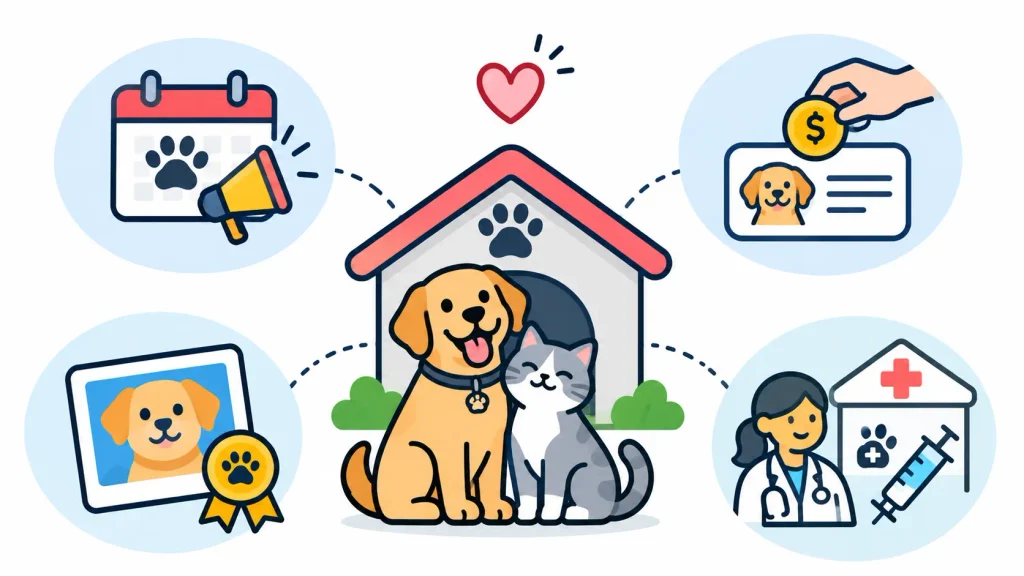
People give to animals with their hearts. Try pet adoption days with a donation table, pet sponsorship programs where donors “sponsor” a long-stay animal, and a pet photo contest with paid entries. Partner with a local vet for a low-cost vaccine clinic that supports your shelter.
2. Educational Nonprofits
Scholarship drives, alumni appeals, and book fairs fit well. Back-to-school supply drives are easy to explain. Paid workshops for parents or teachers can also bring in steady earned revenue.
3. Healthcare Nonprofits
Charity walks, awareness events, and patient-story campaigns tend to work. Be careful with privacy: always get written consent before you share a patient’s story or photo. Ask local clinics and hospitals about sponsorship.
4. Environmental Organizations
Tree-planting pledges, clean-up days, and Earth Day campaigns connect directly to your work. Sell reusable items like water bottles or tote bags. Ask eco-minded local businesses to sponsor each clean-up.
5. Churches and Religious Organizations
Mission drives, community dinners, and recurring giving programs are natural fits. Many congregations already give regularly, so make recurring gifts simple through an online form.
6. Homeless Shelters and Community Organizations
Food drives, coat drives, and emergency winter campaigns are easy for the public to understand. Let donors see exactly what a gift provides, such as “$25 buys a night of shelter” if your real cost supports that figure. Never use numbers you cannot back up.
How to Choose the Right Fundraising Idea for Your Nonprofit
Here is a mistake I see often. A team picks a gala because another group raised a lot with one, then discovers they have no sponsors, no venue, and six weeks. Start with your own situation instead. Ask four questions.
- What is the goal? A quick emergency fund calls for crowdfunding. Steady operating income calls for monthly giving.
- What can we afford? Count cash, staff hours, and volunteer time. Time is the cost most teams forget.
- Who are our donors? Older donors may prefer mail and events. Younger supporters often respond to social media and mobile giving.
- Does it fit our mission? A campaign that feels natural to your cause is easier to explain and to promote.
Cost and Difficulty Comparison
This table gives qualitative planning estimates. Your results will depend on your donors, your region, and how well you run the campaign.
| Fundraising idea | Startup cost | Difficulty | Earning potential | Best for |
| Crowdfunding | Low | Easy | Medium to high | Most nonprofits |
| Peer-to-peer campaign | Low | Moderate | High | Groups with active supporters |
| Monthly giving | Low | Moderate | High over time | Long-term stability |
| Email appeal series | Low | Easy | Medium | Groups with an email list |
| Bake sale | Low | Easy | Low to medium | Schools and community groups |
| Online auction | Low to medium | Moderate | Medium to high | Groups with donor networks |
| Corporate sponsorship | Low to medium | Moderate | High | Groups with business contacts |
| Charity walk or run | Medium | Moderate | Medium to high | Community organizations |
| Charity gala | High | Hard | High | Established nonprofits |
Online vs. Offline Fundraising
You do not need to pick one. Most strong programs use both.
| Online fundraising | Offline fundraising | |
| Reach | Wide, often national | Mostly local |
| Scaling | Easier to grow | Needs more people and logistics |
| Tracking | Automatic with digital tools | Often manual |
| Costs | Platform and processing fees | Venue, supplies, and staff time |
| Relationship feel | Good for quick, broad contact | Strong for personal, face-to-face bonds |
How to Organize a Successful Nonprofit Fundraising Campaign
To organize a successful fundraiser, set a clear goal, pick a method that fits your resources, tell a strong story, promote it, track results, and thank every donor. Here are those steps in more detail.
- Define your goal. Make it specific: “Raise $15,000 by December 31 to fund 10 weeks of after-school tutoring.” A goal with a purpose and a date is easier to promote than “raise money.”
- Identify your audience. List who is most likely to give: past donors, volunteers, board members, local businesses, and families you serve. Start with the people who already know you.
- Choose the method. Match the idea to your budget, team size, and time. Use the comparison table above to narrow your list to one or two options.
- Set a budget. Include marketing, supplies, platform fees, payment processing fees, and staff time. Know your costs before you spend. Digital accounting tools can also help organizations monitor their income and expenses more efficiently. Learn how cloud accounting supports financial tracking and helps maintain better visibility into financial activities.
- Craft your message. Tell one person’s story, show the problem, and explain exactly what a gift does. Keep it honest and specific.
- Promote it. Use email first, then social media, your website, local news, and partner businesses. Ask your board to share the campaign with their own contacts.
- Track progress. Watch donations daily during the campaign. Post updates and a progress bar, and adjust if you are behind.
- Thank you and report back. Thank donors within 48 hours, share the total, and show what the money did. This one step does more for repeat giving than almost anything else.
A Simple Example
Picture a small animal rescue with two staff members and a modest email list. It wants $8,000 for a medical fund. It picks a four-week peer-to-peer campaign, because it costs little and uses volunteers’ networks.
The rescue recruits 15 volunteers, gives each a template message and a photo of a rescued dog, and sets a $500 goal per person. It sends weekly updates and thanks every donor by name. This is an illustration of a plan, not a promise of results, but it shows how a small team can run a focused campaign without a big budget.
Best Tools and Platforms for Nonprofit Fundraising
You do not need every tool on the market. You need one place to take donations and one place to keep donor records. Add more only when a real need appears.
1. Donation and Crowdfunding Platforms
These tools handle donation pages, recurring gifts, receipts, and peer-to-peer pages. GoFundMe is well known for crowdfunding. Donorbox and Givebutter are popular with small and mid-sized groups. Compare how each handles fees, since you may pay a platform fee on top of card processing.
2. Donor Management (CRM) Software
A CRM stores who gave, when, and how much, so you can thank and follow up well. Bloomerang focuses on donor relationships. Blackbaud serves larger organizations with complex needs. Salesforce suits teams that want deep customization and have technical help.
3. Marketing Tools
A basic email platform and a social scheduler cover most needs. Also check whether you qualify for Google Ad Grants, a program that gives eligible nonprofits free search advertising. Rules and limits change, so read the current requirements before you apply. For matching gifts, tools such as Double the Donation let donors check whether their employer will match.
4. How to Choose Fundraising Software
Before you buy, check seven things:
- Total price, including payment processing fees
- Support for recurring gifts
- Connection to your CRM and email tool
- Clear reports you can actually read
- Data security and donor privacy
- How easy it is for volunteers and donors to use
- Real help from the vendor when something breaks
Ask for a trial. Run one small test campaign before you commit for a year.
How to Measure Nonprofit Fundraising Success
Total dollars raised is not enough. A campaign that raises $10,000 but costs $9,000 is a poor use of your time. Track these five numbers, and define each one the same way every time.
We will use one example throughout: a campaign raised $10,000 from 125 donors, of whom 50 were new. It cost $2,000 in total, and $1,500 of that went to finding the new donors. These figures are illustrative.
1. Average Gift Size
Divide total raised by the number of gifts. It shows whether your ask amounts are right.
\text{Average gift} = \frac{\text{Total raised}}{\text{Number of donors}} = \frac{\$10{,}000}{125} = \$80
2. Donor Acquisition Cost
This is what you spend to win one new donor. Compare it with what a donor gives over time.
\text{Donor acquisition cost} = \frac{\text{Acquisition expenses}}{\text{New donors}} = \frac{\$1{,}500}{50} = \$30
3. Donor Retention Rate
This shows how many donors give again. It is one of the most important numbers you can track. The Fundraising Effectiveness Project’s Q4 2025 report put the sector-wide rate near 43%, though it is much lower for first-time donors.
\text{Retention rate} = \frac{\text{Donors who gave again}}{\text{Donors in the prior period}} \times 100
For example, if 159 of last year’s 300 donors gave again, your retention rate is 53%.
Maintaining accurate financial records also helps organizations monitor incoming donations, manage expenses, and improve financial transparency. Understanding the basics of financial record management can make this process easier.
4. Fundraising ROI
ROI compares your net gain with your cost.
\text{ROI} = \frac{\text{Net revenue}}{\text{Fundraising expenses}} \times 100 = \frac{\$10{,}000 – \$2{,}000}{\$2{,}000} \times 100 = 400\%
This is a simplified view. Decide as a team whether you measure net revenue or total return, and then stay consistent so you can compare campaigns fairly. Reviewing assets, liabilities, and equity can provide a broader understanding of an organization’s financial position and support better financial planning.
5. Cost Per Dollar Raised
Another handy check: $2,000 spent to raise $10,000 is $0.20 per dollar raised. Lower is better, but a long-term program like major gifts can cost more up front.
6. Recurring Revenue Growth
Track your monthly recurring revenue and how many monthly donors stay for 12 months. If these numbers grow, your income becomes easier to predict.
Nonprofit Fundraising Calendar: Plan Your Year
A calendar keeps you from running three campaigns at once and tiring out your donors. Aim for one major campaign per quarter, with smaller touches in between. Use this as a starting point and adjust it to your mission.
| Month | Fundraising opportunity |
| January | New Year giving campaign |
| February | Valentine’s Day fundraiser |
| March | Community fundraising challenge |
| April | Earth Day campaign |
| May | Charity walk or run |
| June | Summer community event |
| July | Online crowdfunding drive |
| August | Back-to-school fundraiser |
| September | Monthly giving launch |
| October | Halloween or fall festival |
| November | GivingTuesday preparation and launch |
| December | Year-end appeal |
Common Nonprofit Fundraising Mistakes to Avoid
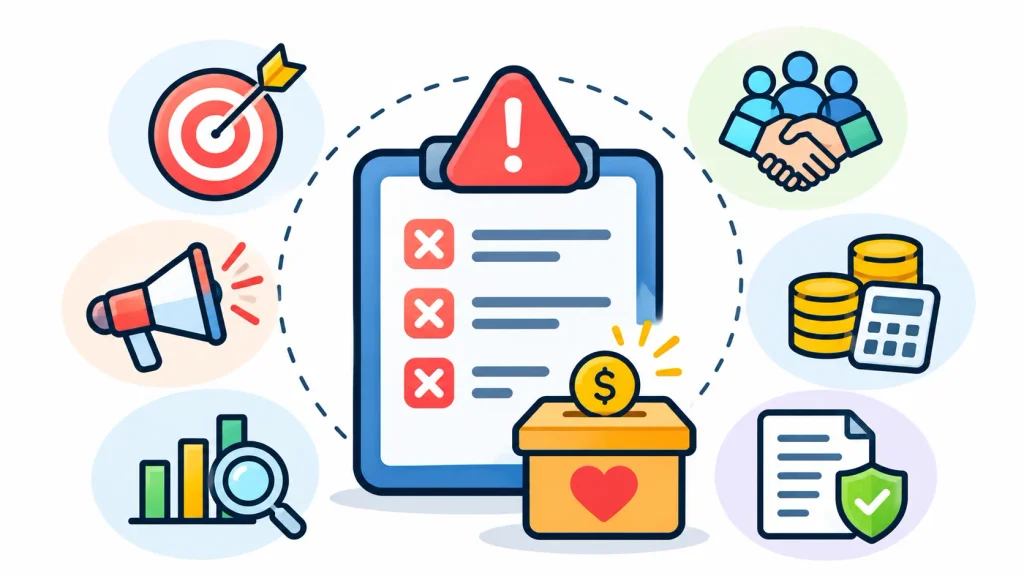
Even well-planned fundraising campaigns can fall short when nonprofits overlook important details. Understanding common mistakes can help organizations use their resources effectively, build stronger donor relationships, and generate more consistent financial support.
- Setting Unrealistic Fundraising Goals: Setting a target that is too high without considering your organization’s resources, donor base, or previous campaign results can discourage staff and volunteers. Establish achievable goals based on historical fundraising performance, audience size, and available resources. You can gradually increase targets as your donor network grows.
- Ignoring Donor Relationships: Focusing only on collecting donations can make supporters feel like their contributions are not valued. Donors are more likely to support an organization again when they feel connected to its mission. Build relationships through personalized thank-you messages, regular updates, and clear communication about how their contributions make a difference.
- Choosing Fundraising Ideas Without a Budget: Not every fundraising activity is suitable for every nonprofit. Events, campaigns, and promotional activities can involve expenses such as venue rentals, marketing, materials, and staff time. Estimate all potential costs before selecting an idea to ensure the campaign can generate enough revenue to justify the investment.
- Failing to Promote Fundraising Campaigns Effectively: Even a valuable fundraising initiative may struggle if potential donors are unaware of it. Relying on a single promotional channel can limit your reach. Use a combination of email newsletters, social media, your nonprofit website, community networks, and local partnerships to increase campaign visibility and encourage participation.
- Not Explaining Where Donations Go: Donors want to understand how their money will support your organization’s mission. Vague statements about helping people or supporting a cause may not build enough confidence. Explain how donations will be used and provide specific examples, such as how a $50 contribution could help purchase educational materials or provide essential supplies.
- Overlooking Donor Retention: Constantly searching for new donors while neglecting existing supporters can make fundraising more expensive and less sustainable. Encourage repeat contributions by sharing campaign outcomes, recognizing donor support, providing regular impact updates, and offering convenient recurring donation options.
- Failing to Measure Fundraising Performance: Without tracking campaign results, nonprofits cannot identify which activities generate the most revenue or attract valuable long-term supporters. Monitor metrics such as total donations, average gift size, donor acquisition cost, donor retention rate, and fundraising ROI. Use these insights to improve future campaigns and allocate resources more effectively.
- Ignoring Fundraising Compliance Requirements: Nonprofits must understand the legal and financial requirements associated with collecting donations. Depending on their location and fundraising activities, these may include charitable solicitation registration, accurate donation receipts, raffle and event regulations, tax-related requirements, and donor data protection. Review applicable federal, state, and local rules before launching a campaign to avoid penalties and maintain donor trust.
Trust and Compliance Basics for US Nonprofits
Donors give to groups they trust. Protect that trust with a few habits.
- Be transparent. State your goal, how funds will be used, and any platform fees.
- Issue receipts. For a single gift of $250 or more, a donor needs written acknowledgment to claim a deduction. If a donor gets goods or services worth more than a small amount in return for a gift over $75, you must disclose the value. See IRS Publication 1771.
- Do not assume deductibility. Only gifts to eligible organizations, such as qualifying 501(c)(3) groups, are tax-deductible. Check your status at the IRS charities page.
- Check state rules. Many states require charities to register before they solicit. The National Council of Nonprofits is a good starting point.
- Be careful with raffles and games. Rules differ by state. The IRS also has guidance on gaming for exempt groups in Publication 3079.
- Protect donor data. Use secure payment tools and share information only when needed.
- Explain recurring gifts. Say clearly how to change or cancel a monthly gift.
This section is general information, not legal or tax advice. Talk to a qualified attorney or accountant about your situation.
Frequently Asked Questions About Nonprofit Fundraising Ideas
1. What are the best fundraising ideas for nonprofit organizations?
The best ideas depend on your size and donors, but the most reliable ones are crowdfunding, peer-to-peer campaigns, monthly giving, corporate sponsorships, matching gifts, and charity auctions. Pick one or two that match your budget and team, then test them.
2. How can a small nonprofit raise money with no budget?
Use what you already have: people and relationships. Send a personal email appeal, run a donation drive, ask volunteers to host birthday fundraisers, and invite local businesses to give in-kind support. These cost time, not cash.
3. What is the most profitable fundraising idea?
No single idea wins for everyone. Corporate sponsorships, galas, peer-to-peer campaigns, and monthly giving often bring the most money, but they also take more setup or time. Judge profit by net return, not just total raised.
4. How can nonprofits raise $10,000 quickly?
Break the goal into pieces. As an example, five sponsors at 500(2,500), 50 donors at 100(5,000), and 100 smaller gifts at 25(2,500) reach $10,000. Then build a short, focused campaign around those gift levels.
5. What are some unique online fundraising ideas?
Try a livestream with a local personality, a social media challenge, a paid virtual workshop, or a birthday fundraiser. Pick one that fits your supporters’ habits rather than chasing a trend.
6. How can nonprofits attract corporate sponsors?
Start with companies that already serve your community. Send a short proposal that names your goal, your audience, and clear sponsor levels. Make a specific ask, follow up politely, and report results after the event.
7. How can nonprofits increase recurring donations?
Offer a monthly option on every donation page, and name the program. Explain what a monthly gift does. Thank monthly donors in a special way and make it easy for them to update their details.
Final Thoughts on Choosing the Best Fundraising Ideas for Nonprofit Organizations
Good fundraising does not mean doing more. It means doing the right few things well. The best fundraising ideas for nonprofit organizations match your mission, your budget, and the people who already care about your work.
Mix online and offline methods, put donor relationships first, and track your results. A healthy program builds several income streams so that no single campaign carries everything.
Here is my suggestion: pick two or three ideas from this list, run them for a season, and measure the outcome. Keep the ones that raise money without burning out your team, and drop the rest. Then thank every donor, and invite them back.
