

Businesses no longer use accounting software only for bookkeeping and tax filing. Modern companies want real-time dashboards, advanced reporting, cash flow forecasting, AI-powered insights, and data-driven financial planning. That is why the demand for accounting software with strong analytics features is growing rapidly.
Whether you run a startup, small business, eCommerce store, agency, or enterprise company, the right accounting software can help you understand your numbers better and make faster business decisions.
In this guide, we’ll explore the best accounting software for analytics in 2026, compare their features, pricing, strengths, and limitations, and help you choose the right platform for your business.
Why Analytics Matter in Accounting Software
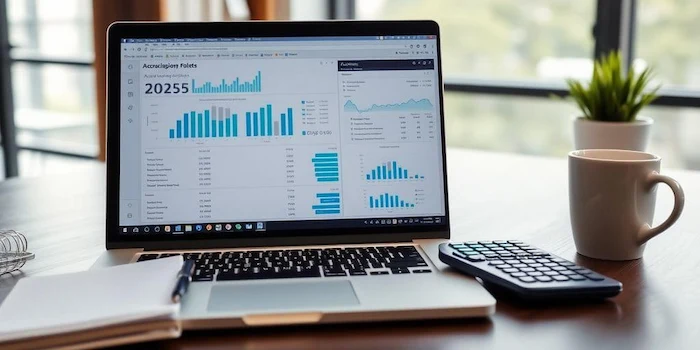
Traditional accounting software mainly focused on recording transactions. Today, businesses need much more than that.
Modern accounting analytics help companies:
- Track revenue trends
- Monitor expenses in real time
- Forecast future cash flow
- Identify profit leaks
- Analyze customer profitability
- Create financial dashboards
- Generate custom reports instantly
- Make faster strategic decisions
Instead of waiting until month-end reports arrive, business owners can now monitor performance daily.
For example, a retail business can instantly see which product categories generate the highest profit margins. A marketing agency can track client profitability in real time. An eCommerce store can monitor inventory costs and cash flow before problems appear.
This shift from reactive accounting to proactive financial intelligence is why analytics-driven accounting software and custom software development service solutions have become essential for modern businesses
What to Look for in Accounting Software With Analytics
Before choosing suitable accounting software, it’s important to understand which analytics features truly matter.
1. Real-Time Dashboards
Good accounting software should provide visual dashboards showing:
- Revenue
- Expenses
- Cash flow
- Profit margins
- Outstanding invoices
- Budget performance
Real-time visibility helps business owners react quickly.
2. Custom Reporting
Every business tracks different KPIs. Look for software that allows customizable reports instead of fixed templates.
3. AI and Predictive Insights
Many modern platforms now use AI for:
- Cash flow forecasting
- Expense categorization
- Fraud detection
- Budget predictions
- Trend analysis
These tools reduce manual work and improve accuracy.
4. Integrations
The best accounting software connects with:
- CRM platforms
- Payroll systems
- eCommerce platforms
- Banking apps
- ERP systems
- BI tools like Power BI and Tableau or other Omni Analytics alternatives.
Integrations create a centralized data ecosystem.
5. Scalability
Choose software that grows with your business. Switching accounting systems later can become expensive and complicated.
6. Ease of Use
Advanced analytics should not require a finance degree. The ideal software offers powerful insights with a clean interface.
Best Accounting Software for Analytics in 2026
Here are the top accounting software platforms for analytics and Knowledge Base Software tools, evaluated based on features, usability, scalability, integrations, and reporting capabilities.
1. QuickBooks Online Advanced
Best Overall Accounting Software for Analytics
QuickBooks Online Advanced remains one of the strongest accounting platforms for businesses that want a balance of usability and analytics.
Its reporting system gives businesses access to customizable dashboards, advanced KPI tracking, revenue analysis, and detailed cash flow reporting.
Key Analytics Features
- Real-time business dashboards
- Advanced custom reporting
- Revenue and expense tracking
- Automated financial insights
- Cash flow forecasting
- KPI monitoring
- Integration with Power BI and other analytics tools
Pros
- Easy to use
- Strong reporting features
- Excellent third-party integrations
- Suitable for small and mid-sized businesses
- Cloud-based accessibility
Cons
- Advanced plans can become expensive
- Limited deep enterprise analytics compared to ERP systems
Best For
Small and medium-sized businesses that need strong reporting without enterprise-level complexity.
Pricing
Starts with lower-tier plans, while Advanced plans cost more depending on users and features.
2. Xero
Best for Visual Financial Dashboards
Xero has become extremely popular because of its user-friendly interface and visual analytics tools.
The platform simplifies complex financial data into understandable reports, making it ideal for business owners who are not accounting experts.
Key Analytics Features
- Interactive dashboards
- Business snapshot analytics
- Cash flow prediction tools
- Financial performance reports
- Budget tracking
- Bank reconciliation insights
- Real-time financial monitoring
Pros
- Very intuitive dashboard
- Strong mobile experience
- Excellent integrations
- Good collaboration features
- Ideal for startups and freelancers
Cons
- Some advanced analytics require add-ons
- Payroll features vary by country
Best For
Startups, freelancers, agencies, and growing small businesses.
Pricing
Affordable entry-level plans with scalable premium options.
3. Zoho Books
Best Budget-Friendly Analytics Accounting Software
Zoho Books offers impressive analytics capabilities at a much lower price than many competitors.
Its reporting engine is especially useful for small businesses that need strong insights without paying enterprise-level costs.
Key Analytics Features
- Custom financial dashboards
- Profit and loss analytics
- Expense analysis
- Inventory insights
- Project profitability tracking
- Workflow automation
- AI-powered business assistance
Pros
- Affordable pricing
- Strong automation tools
- Excellent ecosystem integrations
- Good mobile apps
- Easy to customize
Cons
- Some advanced features require higher plans
- Less popular among large enterprises
Best For
Small businesses, freelancers, consultants, and online businesses.
Pricing
Offers free and low-cost plans with scalable upgrades.
4. Sage Intacct
Best for Advanced Financial Analytics
Sage Intacct is designed for companies that require deeper financial intelligence and multi-dimensional reporting.
Unlike basic accounting software, Sage Intacct focuses heavily on advanced financial analysis.
Key Analytics Features
- Multi-entity reporting
- Advanced dimensional analysis
- AI-powered financial forecasting
- Real-time KPI dashboards
- Automated financial consolidations
- Compliance reporting
- Custom business intelligence tools
Pros
- Enterprise-grade reporting
- Powerful automation
- Excellent scalability
- Highly customizable analytics
- Strong security and compliance
Cons
- Higher learning curve
- Expensive for small businesses
Best For
Mid-sized and enterprise businesses with complex financial operations.
Pricing
Custom enterprise pricing.
5. NetSuite ERP
Best Enterprise Accounting and Analytics Platform
NetSuite combines accounting, ERP, CRM, and analytics into one ecosystem.
Large organizations choose NetSuite because it delivers a unified view of business performance across departments.
Key Analytics Features
- Enterprise dashboards
- Real-time business intelligence
- Advanced forecasting
- Multi-currency reporting
- Global financial consolidation
- AI-powered analytics
- Inventory and operational insights
Pros
- All-in-one enterprise solution
- Highly scalable
- Strong automation
- Advanced data visualization
- Excellent global business support
Cons
- Expensive
- Requires implementation expertise
- Can feel overwhelming for small teams
Best For
Large businesses and enterprises with global operations.
Pricing
Custom pricing based on company requirements.
6. FreshBooks
Best for Freelancers and Service Businesses
FreshBooks is known for simplicity, but it also includes useful analytics for freelancers and service-based companies.
Its clean interface makes financial reporting easy to understand.
Key Analytics Features
- Revenue tracking
- Expense monitoring
- Invoice analytics
- Time tracking reports
- Client profitability analysis
- Tax summary reporting
Pros
- Extremely beginner-friendly
- Great invoicing tools
- Excellent customer experience
- Useful for service businesses
Cons
- Limited enterprise analytics
- Not ideal for complex inventory management
Best For
Freelancers, consultants, agencies, and creative professionals.
Pricing
Monthly subscription plans based on features and clients.
7. Microsoft Dynamics 365 Finance
Best for Large Businesses Using Microsoft Ecosystems
Businesses already using Microsoft products often prefer Dynamics 365 because of its integration with Power BI, Excel, Teams, and Azure.
This creates a powerful analytics environment.
Key Analytics Features
- AI-powered financial insights
- Advanced forecasting
- Real-time dashboards
- Deep Power BI integration
- Budget analysis
- Enterprise-level reporting
- Operational analytics
Pros
- Excellent Microsoft integration
- Powerful analytics capabilities
- Enterprise scalability
- Strong automation features
Cons
- Complex implementation
- Higher costs
- Requires technical expertise
Best For
Large enterprises already invested in Microsoft systems.
8. Wave Accounting
Best Free Accounting Software With Basic Analytics
Wave is one of the best free accounting solutions for startups and solo entrepreneurs.
Although it lacks advanced enterprise analytics, it still provides useful financial reporting features.
Key Analytics Features
- Basic financial dashboards
- Revenue tracking
- Expense categorization
- Cash flow summaries
- Invoice reporting
Pros
- Free core accounting tools
- Simple interface
- Good for startups
- Easy setup process
Cons
- Limited advanced reporting
- Fewer integrations
- Not ideal for scaling businesses
Best For
Freelancers, startups, and very small businesses.
Comparison Table: Best Accounting Software for Analytics
| Software | Best For | Analytics Strength | Ease of Use | Scalability |
| QuickBooks Online Advanced | SMBs | Strong | Easy | High |
| Xero | Dashboards and startups | Strong | Very Easy | Medium |
| Zoho Books | Budget-conscious businesses | Good | Easy | Medium |
| Sage Intacct | Advanced finance teams | Excellent | Moderate | Very High |
| NetSuite ERP | Enterprises | Excellent | Moderate | Excellent |
| FreshBooks | Freelancers | Basic to Moderate | Very Easy | Medium |
| Dynamics 365 Finance | Large enterprises | Excellent | Moderate | Excellent |
| Wave Accounting | Startups | Basic | Very Easy | Low |
Best Accounting Software by Business Type
Choosing software based only on popularity is a mistake. The best solution depends on your business model.
a. Best for Small Businesses
- QuickBooks Online
- Xero
- Zoho Books
These platforms balance affordability, automation, and reporting.
b. Best for Enterprises
- NetSuite ERP
- Sage Intacct
- Dynamics 365 Finance
These systems support complex financial structures and large datasets.
c. Best for Freelancers
- FreshBooks
- Wave Accounting
They simplify invoicing, expense tracking, and client reporting.
d. Best for eCommerce Businesses
- QuickBooks Online
- Xero
- NetSuite ERP
Strong integrations with Shopify, Amazon, and inventory systems are essential.
e. Best for Agencies and Service Businesses
- FreshBooks
- Zoho Books
- Xero
Project profitability tracking becomes especially important here.
How Analytics Improve Financial Decision-Making
Analytics-driven accounting software changes how businesses operate.
Faster Reporting
Instead of manually building spreadsheets, businesses can instantly generate reports.
Better Cash Flow Management
Predictive forecasting helps businesses avoid liquidity problems.
Improved Profitability
Analytics identify:
- Unprofitable products
- Expensive processes
- Overspending areas
- High-performing revenue channels
Smarter Budget Planning
Historical financial data helps companies build more accurate budgets.
Real-Time Monitoring
Business owners can monitor performance daily instead of waiting until month-end.
Accounting Software Trends in 2026
The accounting software industry is evolving rapidly.
Here are the biggest trends shaping the future.
A. AI-Powered Accounting
Artificial intelligence is automating repetitive accounting tasks like:
- Invoice processing
- Expense categorization
- Fraud detection
- Financial forecasting
AI also improves reporting accuracy.
B. Predictive Analytics
Modern platforms now predict future financial outcomes using historical data patterns.
C. Cloud-Based Financial Management
Cloud accounting continues dominating because it allows:
- Remote access
- Real-time collaboration
- Automatic updates
- Better security
D. Integration With Business Intelligence Tools
Companies increasingly connect accounting platforms with:
- Power BI
- Tableau
- Looker
- Qlik Sense
This enables deeper data analysis.
E. Automation and Workflow Optimization
Businesses want software that reduces manual work and saves time.
Automation is now a core buying factor.
Common Mistakes to Avoid When Choosing Accounting Software
Many businesses choose software too quickly and regret it later.
Here are common mistakes to avoid.
1. Choosing Based Only on Price
Cheap software may lack important reporting features.
2. Ignoring Scalability
A system that works for five employees may fail when your company grows to fifty.
3. Overlooking Integrations
Disconnected systems create data silos and manual work.
4. Ignoring User Experience
Complicated software reduces team adoption.
5. Not Considering Analytics Depth
Some accounting tools offer only basic reports, while others provide advanced business intelligence.
Always evaluate your long-term reporting needs.
How to Choose the Right Accounting Analytics Software
Here’s a simple framework to make the right decision.
Step 1: Identify Your Business Needs
Ask yourself:
- Do you need inventory management?
- Do you require multi-currency support?
- Will multiple departments use the system?
- Do you need advanced forecasting?
Step 2: Define Your Budget
Consider:
- Monthly subscription costs
- Add-on expenses
- Implementation fees
- Training costs
Step 3: Test the User Experience
Most platforms offer free trials.
Test:
- Dashboard usability
- Reporting speed
- Navigation simplicity
- Mobile accessibility
Step 4: Evaluate Integrations
Check compatibility with your existing business tools.
Step 5: Compare Analytics Features
Focus on:
- Custom reports
- KPI dashboards
- AI insights
- Predictive forecasting
- Visualization quality
Final Verdict: Which Accounting Software Is Best for Analytics?
The best accounting software for analytics depends on your business size, budget, and reporting needs. Small and medium-sized businesses will benefit most from QuickBooks Online Advanced and Xero because they offer strong dashboards, automation, integrations, and easy-to-use reporting tools. Businesses looking for a budget-friendly option can choose Zoho Books, while freelancers and service providers may prefer FreshBooks for its simplicity and client-focused features.
For larger organizations with complex financial operations, platforms like NetSuite ERP, Sage Intacct, and Microsoft Dynamics 365 Finance provide advanced analytics, forecasting, and enterprise-level reporting capabilities.
Modern accounting software does far more than basic bookkeeping. It helps businesses track performance, forecast cash flow, improve profitability, and make smarter financial decisions using real-time insights. As AI and automation continue shaping the accounting industry, choosing the right analytics-focused platform can give businesses a major competitive advantage in 2026 and beyond.
Frequently Asked Questions
1. What is the best accounting software for analytics?
QuickBooks Online Advanced, Xero, Sage Intacct, and NetSuite are among the best accounting software platforms for analytics.
2. Which accounting software has the best dashboards?
Xero and QuickBooks Online provide highly visual and user-friendly dashboards.
3. What is the best free accounting software with analytics?
Wave Accounting is one of the best free accounting tools with basic analytics capabilities.
4. Can accounting software integrate with Power BI?
Yes. QuickBooks, Dynamics 365, NetSuite, and several other platforms integrate with Power BI.
5. Which accounting software is best for small businesses?
QuickBooks Online, Xero, and Zoho Books are excellent options for small businesses.
6. Is cloud accounting software better for analytics?
Yes. Cloud accounting platforms offer real-time data access, automation, remote collaboration, and easier integration with analytics tools.